From Linosa with love: Protecting the Mediterranean's seabirds
Italian naturalist Giacomo Dell'Omo has monitored and protected Scopoli's shearwaters on the remote island of Linosa for 20 years, working to safeguard one of the Mediterranean's most vital seabird colonies.
It’s the beginning of October, and we are on Linosa Island. A wooden sign reading Sentiero delle Turriache (the Shearwater’s Path) points toward a trail that disappears into the island’s black, volcanic terrain. Brambles dot the rugged field, while the sea shifts quietly in the distance. Italian naturalist and researcher Giacomo Dell’Omo is somewhere among the rocks, busy with his morning rounds.
We don’t see him at first, but only a few minutes later, we spot him behind a ridge, his clothes streaked with dust, his sun hat worn backwards. Most of his work happens close to the ground, inside rock cavities and caves that may look empty to an untrained eye. It’s these very same hollows that sustain one of the Mediterranean’s most important seabird colonies.
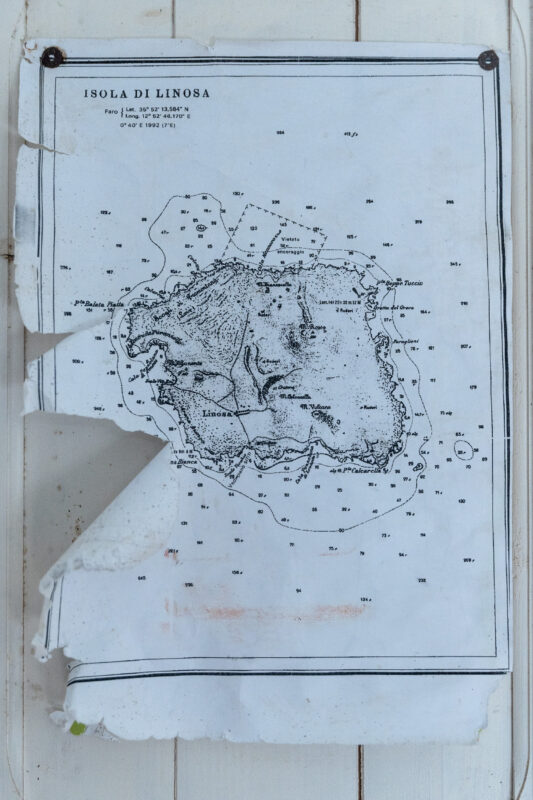
“A rock in the sea.” This is how residents describe Linosa, their volcanic home of 5.4 km2 lying in the middle of the Mediterranean Sea. The island displays a raw wildness, tamed by the warm colours of its peculiar architecture and its welcoming inhabitants. An air of remoteness is stuck to this place. Here, the sea sets the rhythm of life and people must adapt to nature’s will.
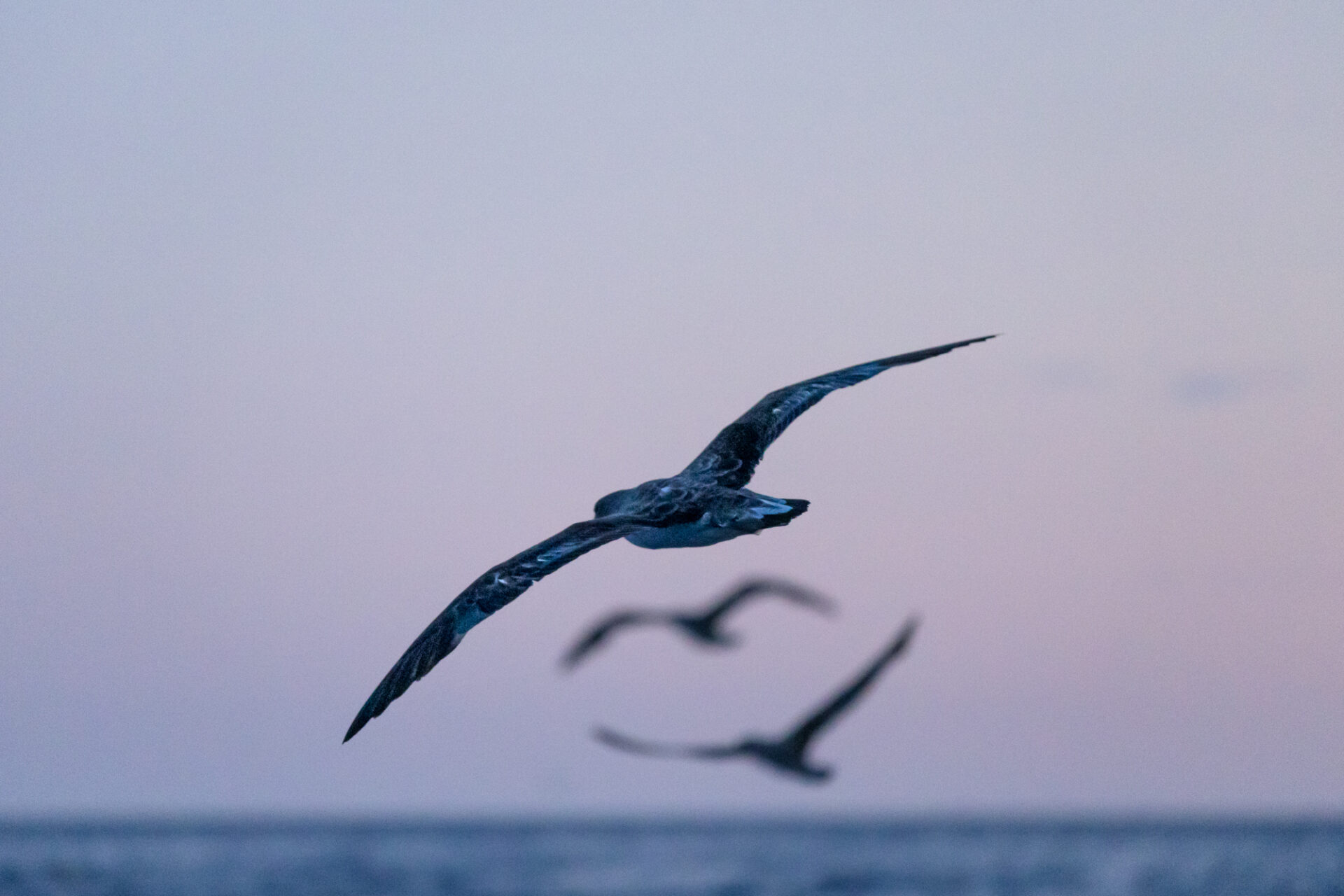
Giacomo first came to Linosa 20 years ago to protect and monitor the conservation status of Scopoli’s shearwaters (Calonectris diomedea), the island’s symbolic animal species. Shearwaters are long-lived seabirds that belong to the order Procellariiformes, identified by their white underwing and pale yellow bill. Each spring, monogamous pairs breed on Linosa, nesting in narrow crevices within tunnels of lava rock, where they recognise their own nest among hundreds of others. In each crevice, a pair raises a single chick before departing in October for the Atlantic Ocean, where they will spend the entire winter without ever touching ground.
While shearwaters are adept at foraging in open sea, capable of gliding on water for hours without a wingbeat, they are quite clumsy – and so vulnerable – on land. Only darkness protects them from predators during their night visits to the nests. On moonless evenings, their calls – somewhere between a baby’s cry and a siren’s call – echo across their rocky home.
Shearwaters have lived on Linosa for thousands of years, but Giacomo’s presence is made necessary due to the growing number of threats they face, both at sea and on land. For two decades, he has worked to reduce external pressures wherever possible.
More features
A Colony Under Pressure
Every working day on Linosa begins at a base camp Giacomo built right next to the colony. Part research station, part personal archive of field mementos and textbooks, it has a double bed inside so he can be close to the birds when needed, or simply to hear them sing at night. Every morning, he reviews the day’s plan with his team – PhDs, collaborators or volunteers – and loads his backpack.
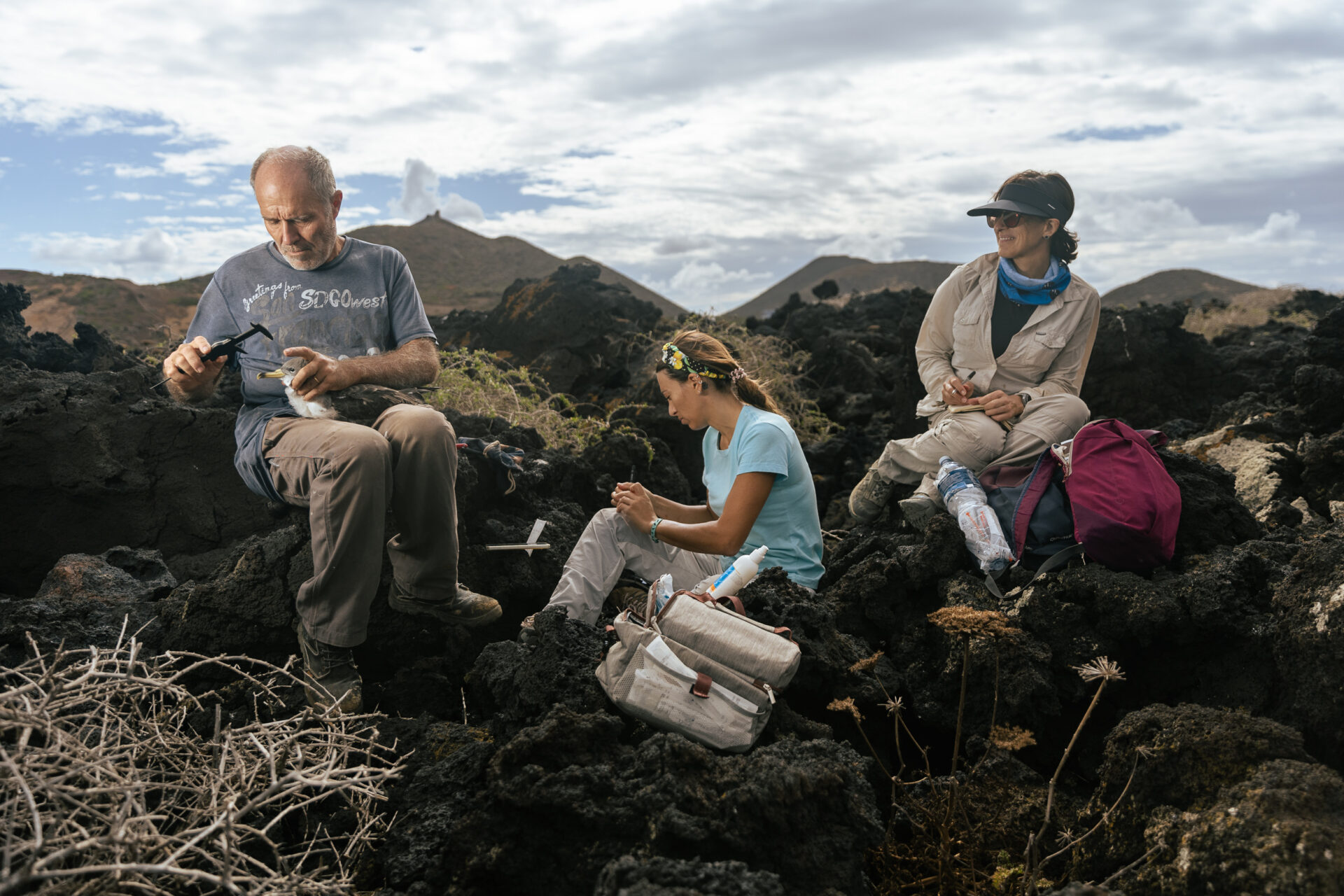
In October, during fledgling season, the essentials are a calliper, pliers, a cloth sack, rings, and a notebook. Watching them prepare, it’s hard not to feel their strong sense of responsibility. They are people who, each year, isolate themselves for months to help shearwaters, and choose to dedicate a huge amount of attention to one single species on one single remote island. To them, it’s a mission.
Shearwaters caught Giacomo’s attention because of their poor conservation status, and the mounting pressures they face in their Mediterranean breeding grounds and oceanic wintering ranges. As top marine predators, they help gauge the health of the wider Mediterranean marine ecosystem, already under severe strain and losing much of the biodiversity it hosts. At sea, shearwaters face fisheries bycatch, plastic ingestion and pollution, together with the effects of climate change on their prey availability and habitat. On land, they are no safer. Predators that were mostly absent from Linosa before human populations arrived – especially rats and feral cats – now live and breed on the island, and their impact on fledglings must be carefully managed.
Giacomo and his team focus on what they can control on land. When they arrive on the island during breeding, hatching and fledgling seasons, they visit the colony every day. “There are thousands of nests, many of them still unknown to us. We focus on a mapped area of 400 metres and check each nest to see how the chicks are doing.”
The Work in the Field
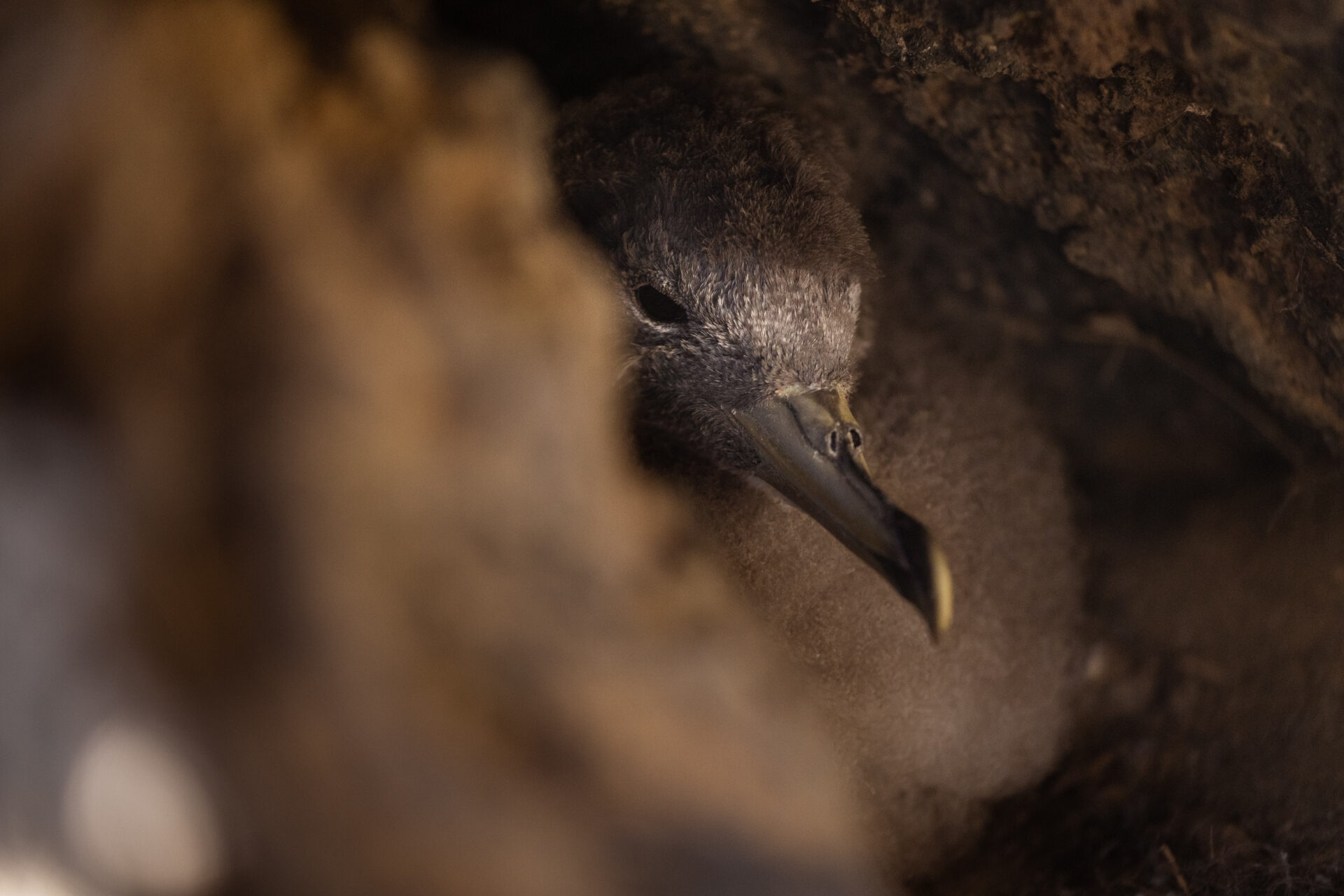
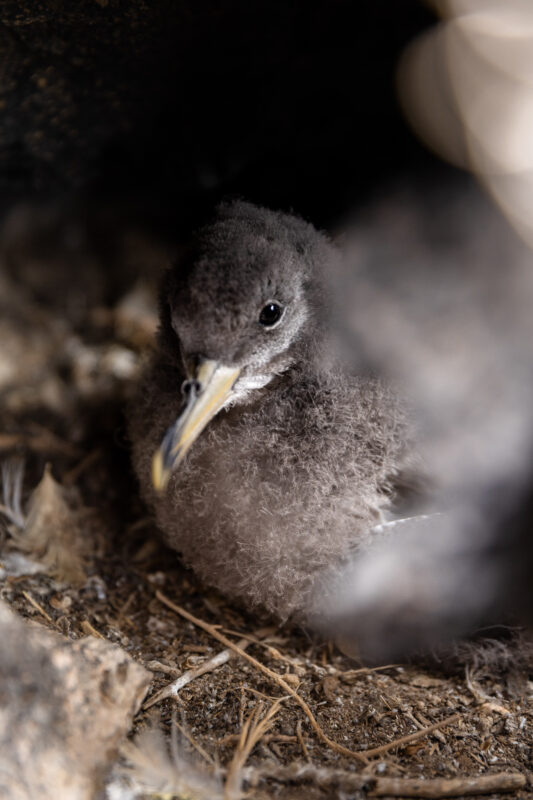
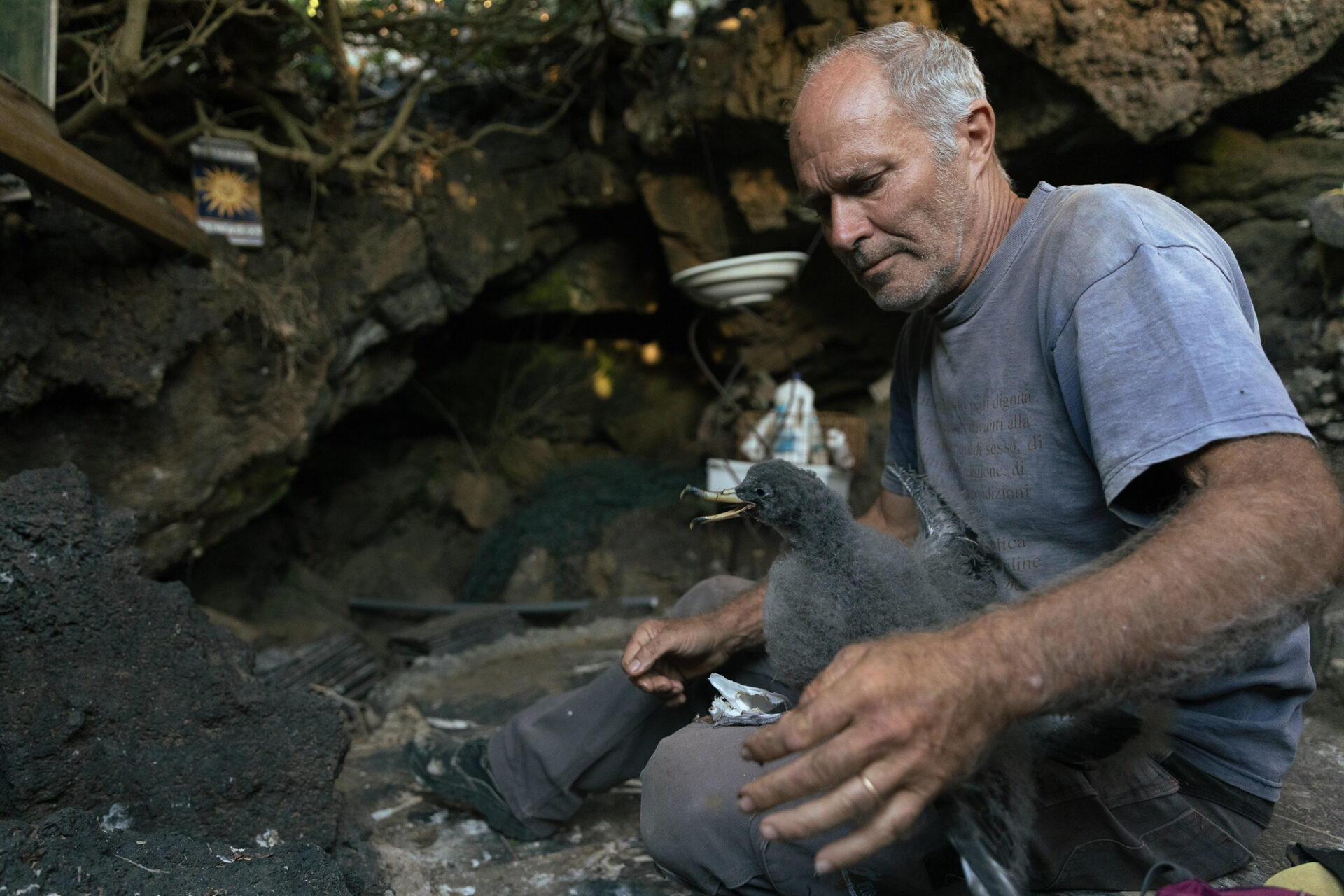
Giacomo doesn’t need a map anymore. We watch him move without hesitation between nests. Not all are easy to reach. He winces when a chick sits beyond his grasp or brambles block an entrance. Every time he stops to check a nest, he wonders what he will find. He kneels and peers into the darkness. If he’s lucky, two bright eyes and a yellow beak will appear, and a grey, fluffy chick will stare back at him, unaware of all dangers. For now, the youngster sits still and safe in its cradle of black rock, with no knowledge of the sea or what a fish looks like.
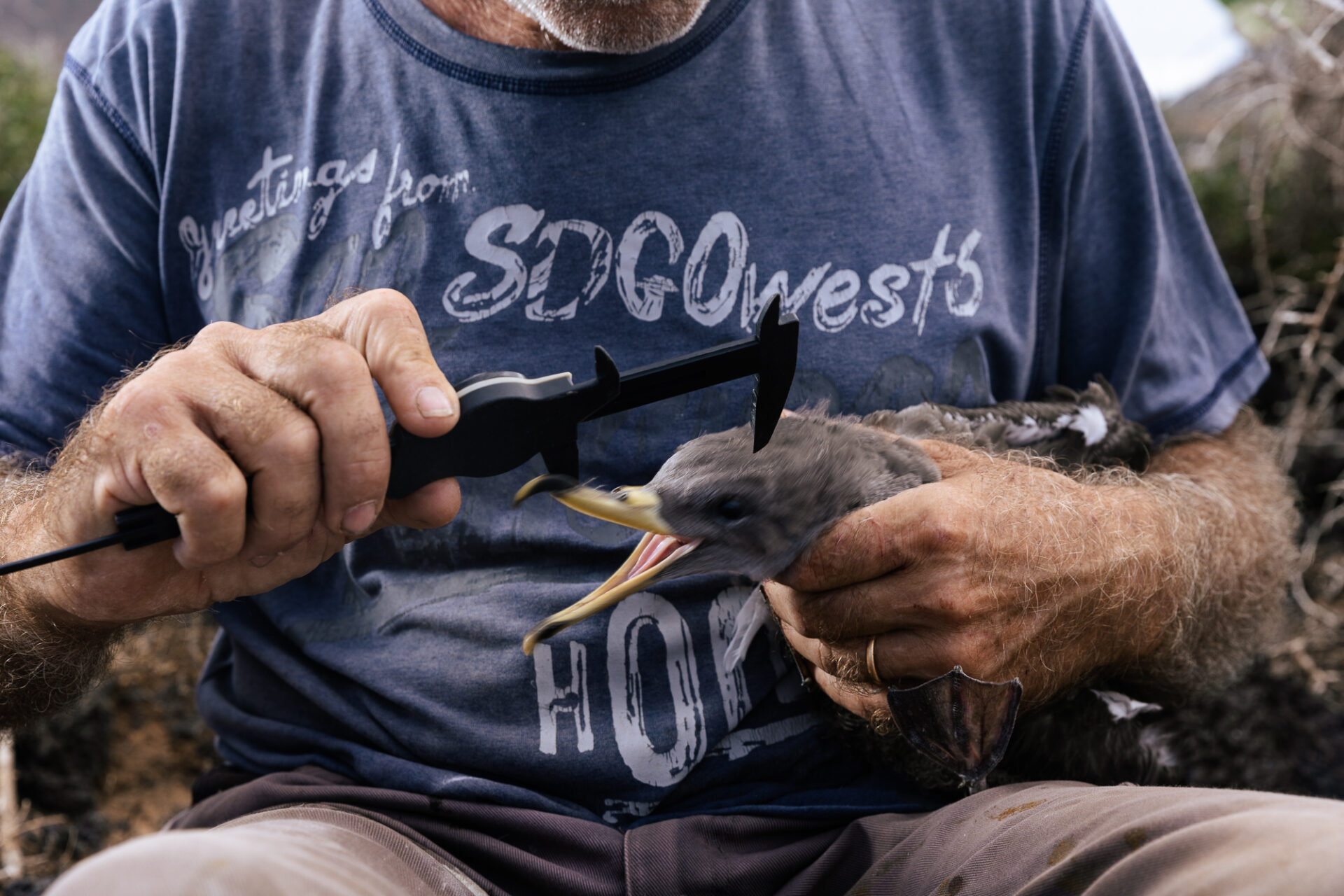
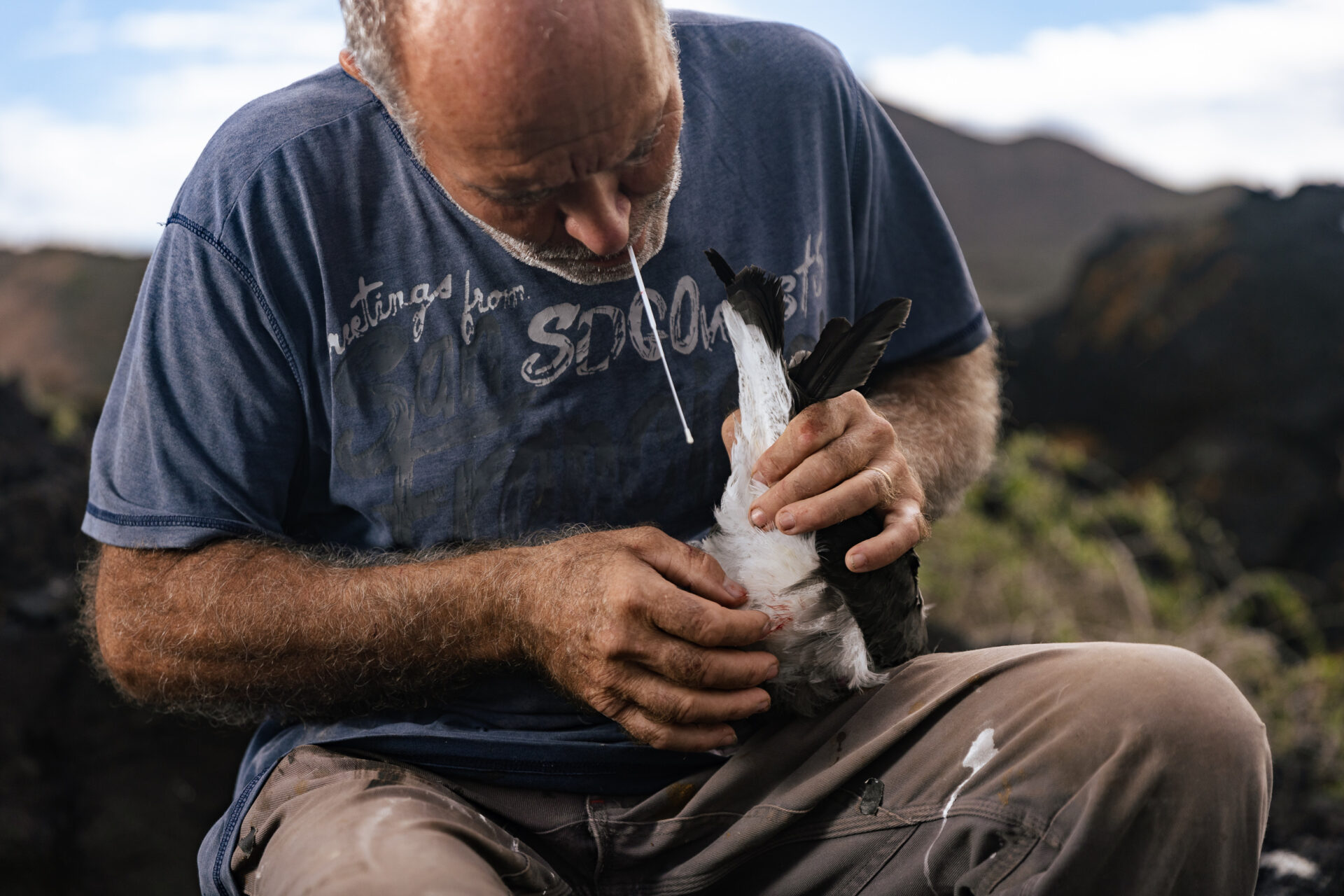
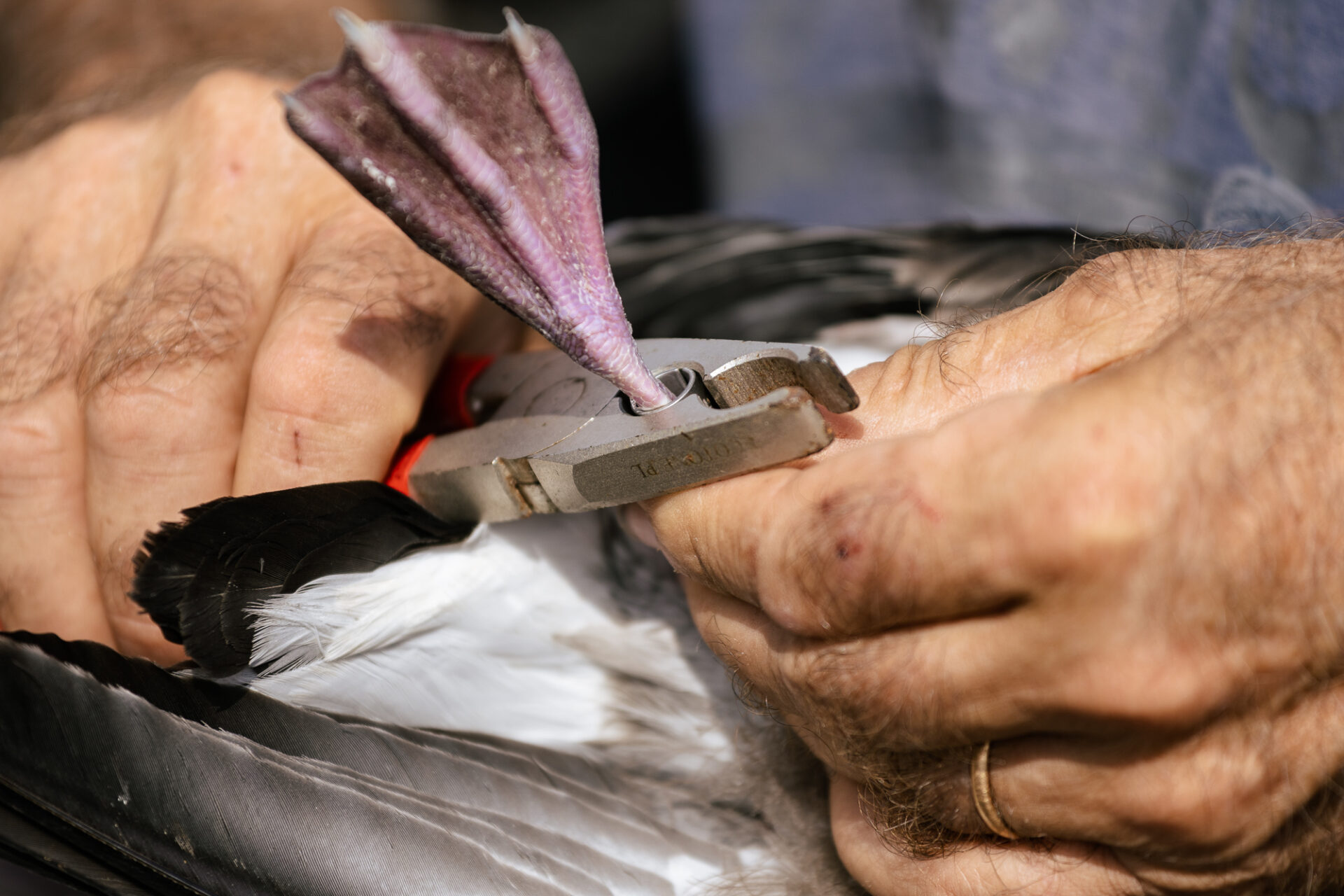
“In October we ring the birds,” Giacomo explains. “It helps us identify them when, or better if, they return to the colony, perhaps six years later.”
The chick is gently removed from the nest and put inside a cloth sack. Weight, tarsus, and beak are measured. This is how the team assesses if a fledgling is developing well, and if it’s properly fed by the parents. Shearwaters have different personalities: some cry and wriggle during the process, others calm down within minutes.
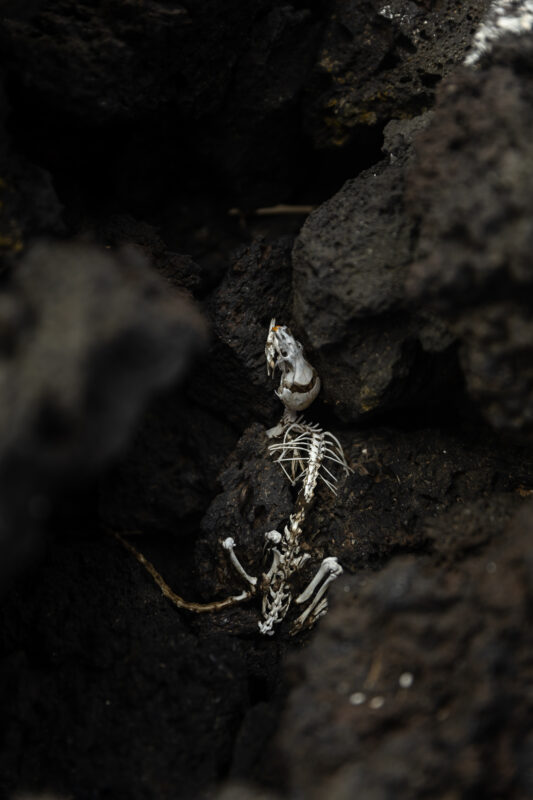
“We don’t always find a fledgling inside” he continues. “The egg might not hatch for natural reasons, or for rising temperatures. Cats and rats might reach the colony and prey on the chicks. We try to keep their numbers in check. Cats are neutered or brought somewhere else, rats are caught in traps.”
While balance is not easy to maintain, the work has not been without its victories. When Giacomo first arrived, some islanders still collected shearwater eggs as a source of protein. There was little to no awareness of shearwaters’ vulnerability, or that each monogamous pair produces only a single egg per year. Today, the practice is illegal and long abandoned, but it took many years to shift mindsets and build trust.
The Future of the Colony
The future of the colony rests on a complex balance between local action and forces far beyond the researchers’ control. Giacomo is candid about the limits of what his team can achieve.
“We strive to do our best, but our conservation work is confined to Linosa. What goes on beyond the island can undermine many of our efforts. Mortality is very high: fewer than 10% of the chicks we ring do come back.”
Yet, local engagement has given precious results. Once an outsider, Giacomo now knows most of Linosa’s residents, their stories and what they’ve come to understand about the birds over the years. The importance of conservation is more strongly felt on the island today than it was two decades ago, and while reaching younger and older generations remains a constant effort, Giacomo and colleagues are no longer the only safekeepers of the colony.
Giacomo’s work is defined above all by presence: being in the field next to the birds during the most critical moments of their lives, and remaining engaged with the people who share the island with them. Shearwaters may have survived for millennia, but in an age shaped by human pressure, that survival can no longer be taken for granted.
When we ask Giacomo what will happen when he can no longer continue, he is hopeful. What began as a one-man effort has grown into a network of researchers, volunteers, and islanders who have made the colony their own concern.
“The shearwaters of Linosa reproduce only on Linosa. This is their home,” Giacomo says. “I followed them here because I follow birds wherever they need me,” he continues, with a chuckle. Then, he pauses. “Without the shearwaters, I don’t think I would have returned to Linosa so many times. It’s thanks to them that I now have a second home.”
Before we part for the day, our attention goes to a broad inclined rock surface nearby. Giacomo notices us looking. “Oh, I built that for the chicks,” he says. “They are really clumsy. It helps them practice for their first flight.”

Printed editions
Current issue
Back issues

Enjoy so much more from Oceanographic Magazine by becoming a subscriber.
A range of subscription options are available.
