One voice: Falklanders fighting 'big salmon' for marine protection
A court-ordered consultation over a 200,000-tonne salmon farming proposal has left the Falklands' marine protection plans in limbo – and a community that thought it had already won this fight bracing for round two.
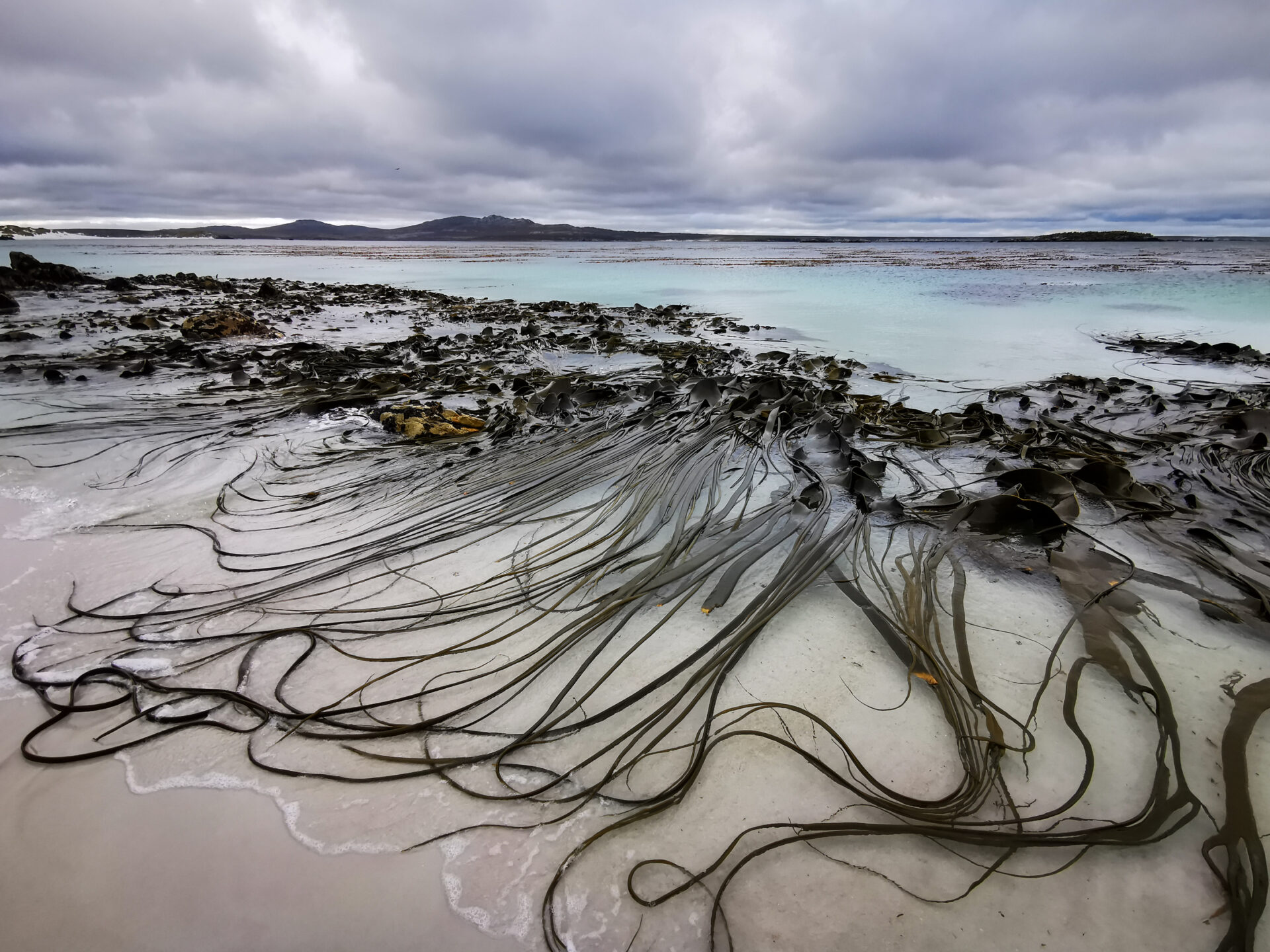
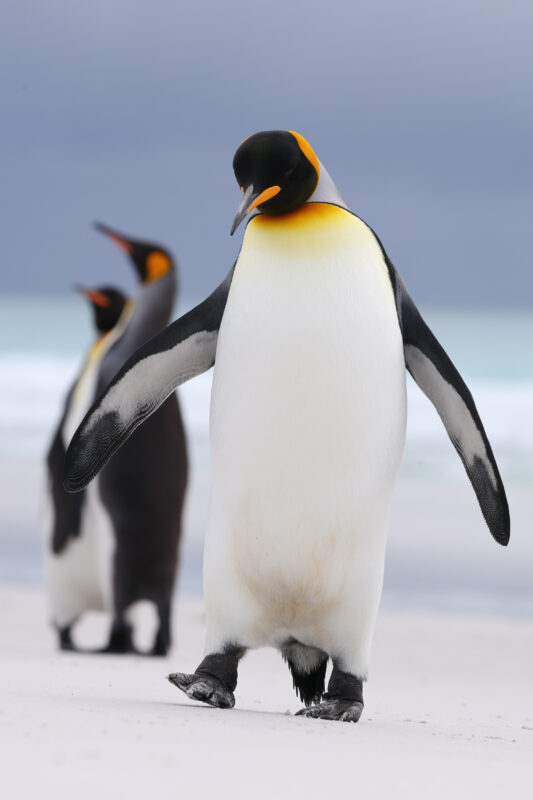
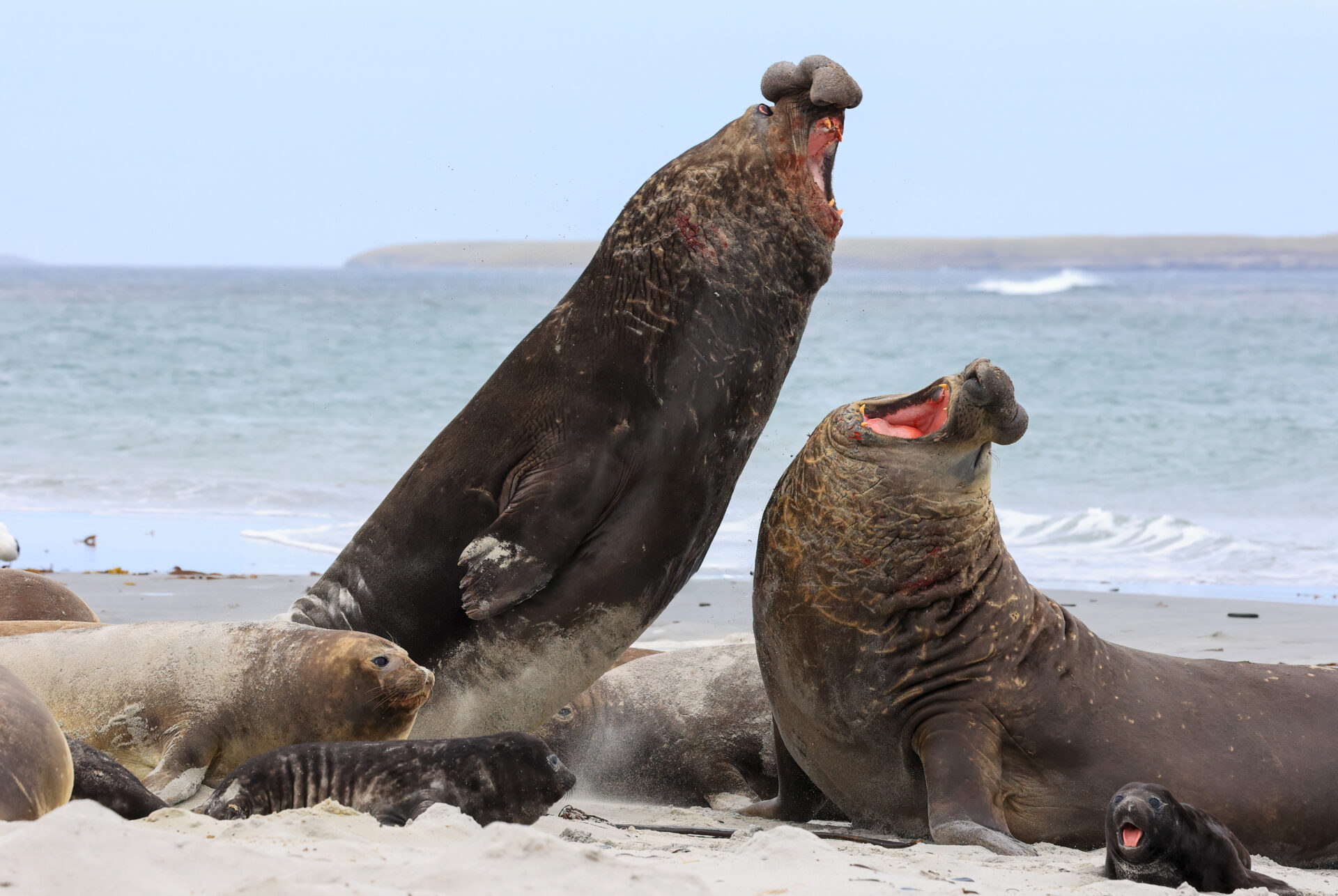
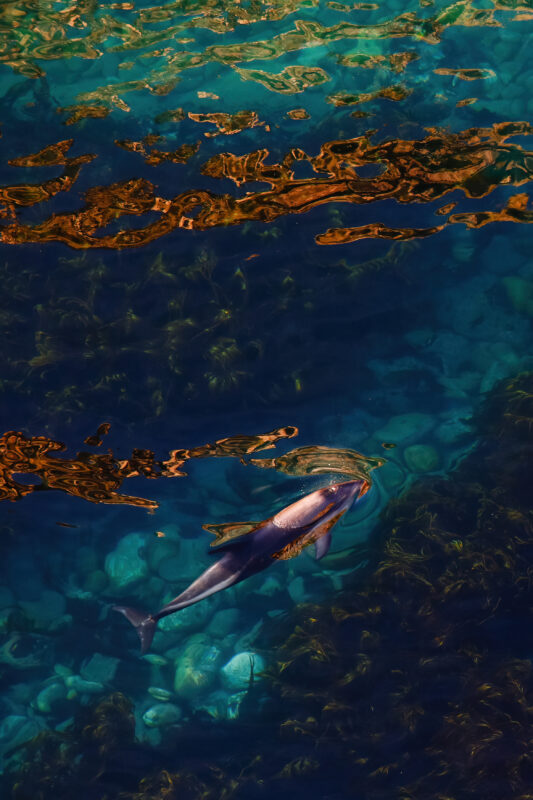
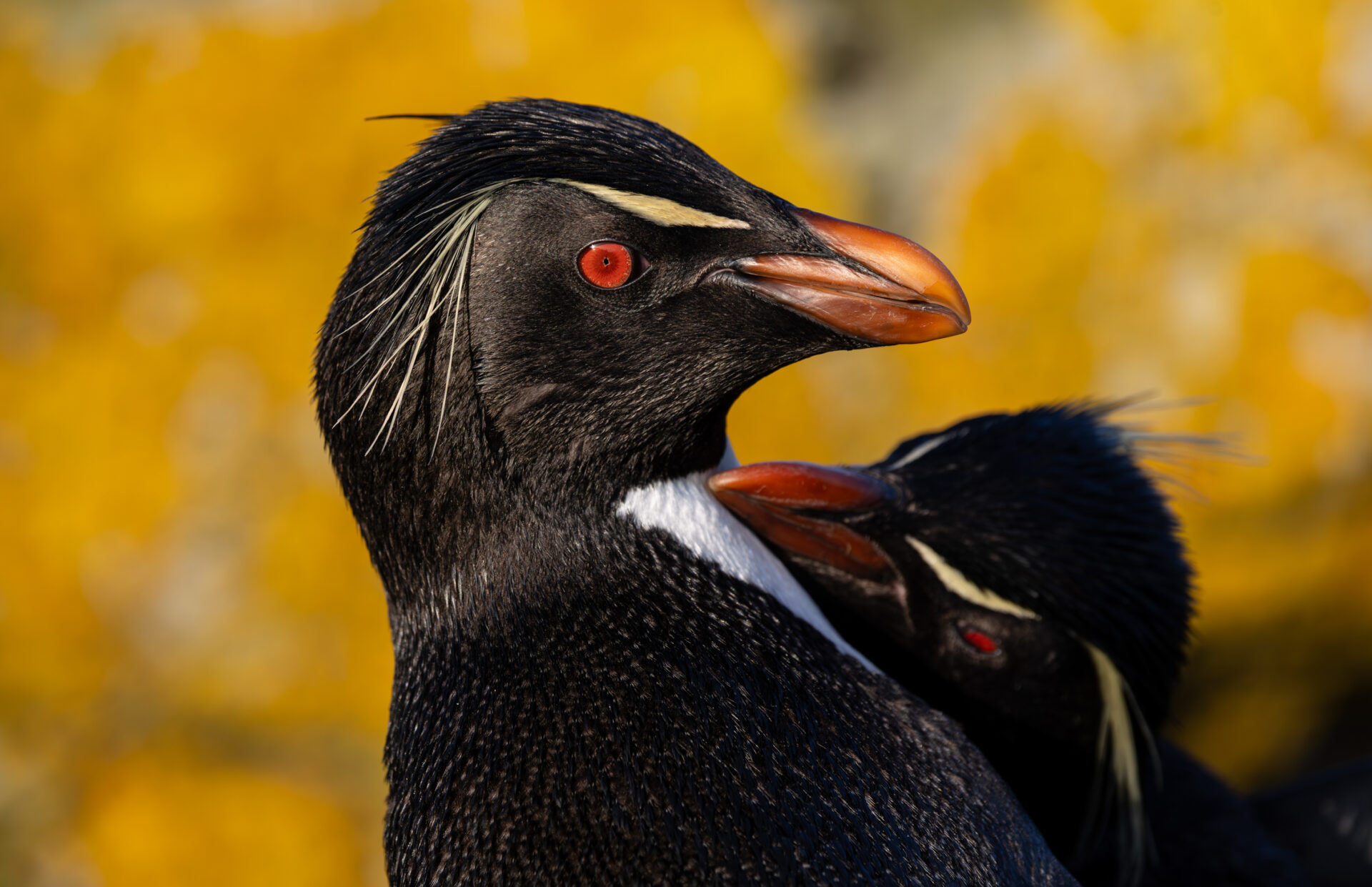
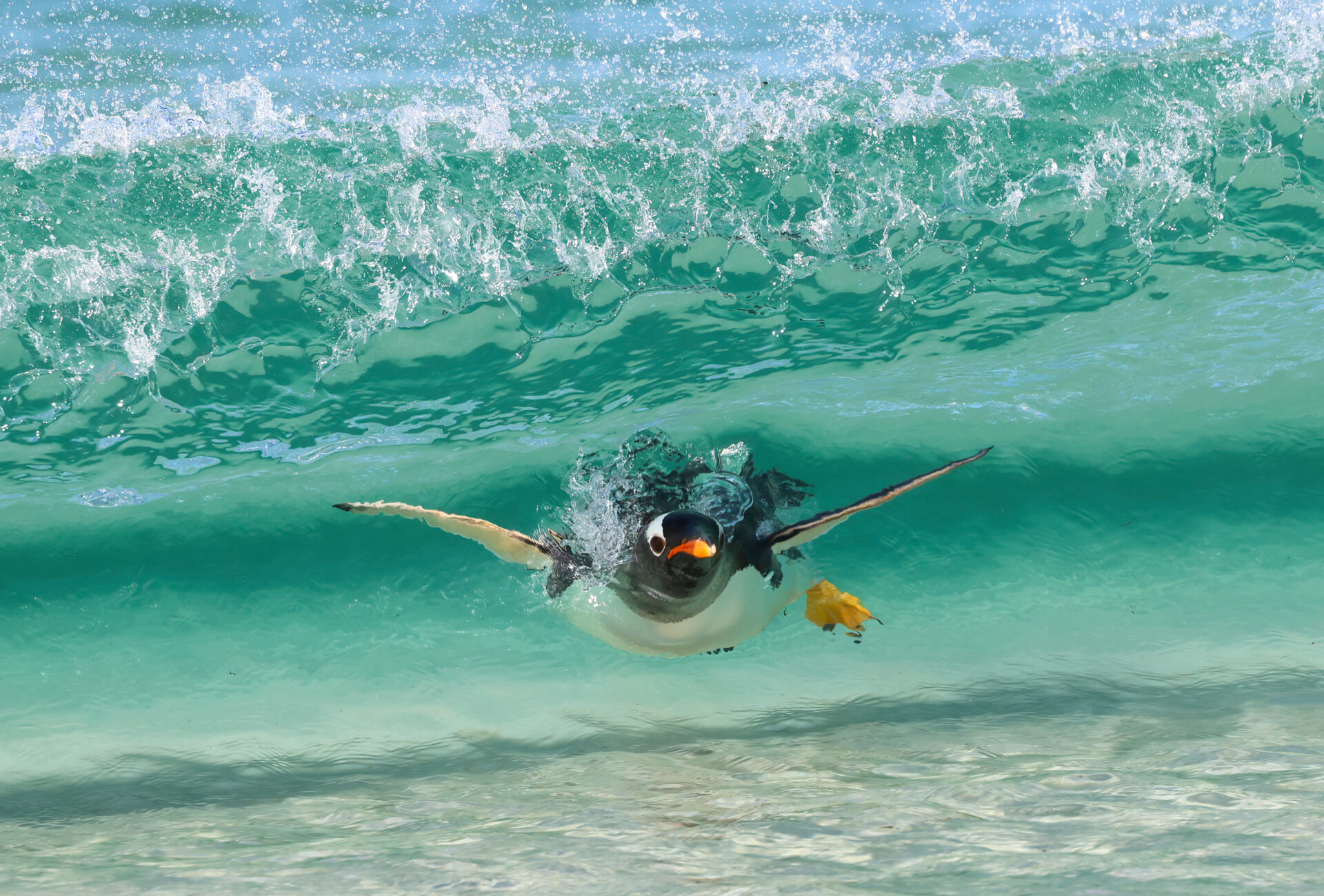
Ride one minute out of Stanley – the Falkland Islands’ only town with its population of just 3,000 – and you’re on a beach with penguins. Sit on the sand dunes for five minutes and you’ll likely see wild dolphins, seals, and albatross. The waters around the islands support not just one of the Southern Ocean’s most important squid fisheries but a biodiversity that ranges from five species of penguin to southern right whales, and a marine ecosystem so intact that scientists use it as a baseline for what healthy cold-water seas look like.
The waters surrounding the Falkland Islands could easily be described as one of the last untouched frontiers on Earth. Yet, plans to formally protect that ecosystem have been shelved. Not because its government has decided against it, but because the areas under consideration overlap with the ambitions of an industry the islands have spent years trying to keep at bay. That industry is open-net pen salmon farming.
In a recent interview with Falkland Islands’ local media, Penguin News, Falkland Island politician and Member of the Legislative Assembly, Michael Goss confirmed that work on Marine Managed Areas (MMAs) in the region has been paused “until we find out what happens at the end of the consultation phase for the salmon.”
A draft MMA policy was approved for consultation in September 2025. That consultation has still not run.
“The biggest issue is that a fair amount of the areas identified could potentially have a knock on point in regards to salmon farming as well. The two things are – in a very strange way – intrinsically linked, but obviously completely separate,” he told local media.
The islands’ increasingly vocal anti-salmon farming movement believes this to mean only one thing; future plans for introducing the MMAs will be totally designed around the ambitions of the salmon industry.
“They’ll put the salmon farms in first, and then go and protect the bits that are left,” says Sally Poncet, founder of the environmental campaign group, Salmon Free Falklands. “Right now, our marine protected areas are zero – a big, fat zero. We don’t have a single one.”
Of course, any suggestion that profit is being prioritised over protection has been rejected by the Falkland Islands government. When asked directly by Penguin News, Goss said it is “not in any way, shape, or form down to profit margins.” Instead, he insists, the government is working to ensure that the consultation phase it is currently going through is “adhered to, to the letter of the law.”
He added that running both consultations in tandem would have “mired down the system even more” and had a ‘detrimental effect’, boiling it down to “one of those unfortunate circumstances where we’re just having to set that one on the back burner for now.”
Whatever the intention, the effect is the same. One that Ken Passfield, co-founder of Salmon Free Falklands, describes as a marine area sitting exposed while the government works through a legal process that the salmon industry itself set in motion.
And that scepticism might be understandable; this is a government that has been burned before. In 2019, Unity Marine – a joint venture between the local fishing company Fortuna Ltd and the Danish firm, F-Land ApS – first approached the Falkland Islands government when it submitted a proposal for a 200,000-tonne aquaculture operation in the islands’ coastal waters.
The community responded with letters and electoral pressure – and, for a time, it worked. Islanders elected a government in November 2021 that was largely considered to be an “anti-salmon” government. In March 2022, the top policy-making executive body of the Falkland’s Government opposed the aquaculture proposal, stating it was “not minded to agree to any large-scale fish farming.”
But the industry went to court, arguing the government had reneged on a promised public consultation before the rejection. A judge ruled the case could proceed to a full judicial review, finding Unity Marine had acted reasonably in timing its challenge.
As a result, a Court Consent Order now governs the current consultation – a legal mechanism which compels the government to hold a full public consultation before any new decision is made. The government is working alongside Unity Marine in finalising how that consultation would be run.
Bart Veldink, a retired businessman and founder of the anti-salmon farming campaign Abby Says No, sees this as a familiar sequence. “There are six steps that the salmon industry generally follows in order to get their industry installed,” he says. “This is just step three or four in their modus operandi.
“First they apply, then they do this, then they judicially review. This was the first judicial review they did. And I don’t believe this is the first country where that happened.”
He is, in fact, correct. Similar patterns have played out across Norway, Chile, and Tasmania. In British Columbia – where a legislated ban on open-net pens has already been pushed back once – operators are now reportedly seeking billions of dollars in compensation for lost licence years.
“You can’t afford to invite this industry here,” Veldink says, “because you can’t pay for them to leave when you need them to leave.”
Other features


No new generation
Salmon Free Falklands, for its part, has found the ongoing consultation process opaque. “The industry has been allowed to be part of the design of the consultation process,” Sally Poncet says. “They’ve had sight of reports belonging to government consultants, and they have been allowed to comment on those reports. We don’t know what the comments were or what edits were made. It has not been a transparent process.”
The ecological argument against open-net pen farming is pretty much an open-shut case. Farmed salmon are fed high-protein pellets at industrial volume; according to a landmark 2012 study led by marine scientist Xianxiong Wang, roughly 45 per cent of the nitrogen in that feed is expelled through the fish’s gills, with the remainder settling on the seabed as waste. In an enclosed bay, that nitrogen acts as fertiliser, triggering explosive growth of filamentous algae that smothers kelp forest – the same kelp forest the islands’ economically vital loligo squid fishery depends on to lay its eggs.
“If the kelp forest gets covered with filamentous algae, and if that bay has pesticides in it, the loligo cannot attach its eggs anymore,” Veldink says. “There will be no new generation. And if you’re really unlucky, they could disappear altogether.”
The chemical treatments used against sea lice add a further threat. And there is a host of scientific research that has found anti-sea lice drugs to have an adverse impact on crustaceans, interfering with the shells of animals like crabs, lobsters, krill, shrimp and prawns – a primary food source for the abundant marine life found in the Falklands’ waters.
This is all before the carbon footprint of the salmon industry is calculated. “You’re going to have to ship 125,000 tonnes of feed to the Falklands, which is a long way from anywhere, to ship 50,000 tonnes of salmon back in the other direction to markets on the other side of the world,” says Passfield. “That’s a hell of a carbon input, and a massive impact, just to bring food here to convert it into salmon, all because we have the right water. It just seems crazy.”
Just like the sequence of events, the arguments made by the salmon industry seem to follow the same script. Among them is the benefit the installation of an open-pen net salmon farm would bring to the local economy. Local campaigners suggest, however, that it won’t be the Falklanders feeling the benefit. Unity Marine is a partnership between Danish-owned firm F-Land ApS and locally owned fishing company Fortuna Ltd. With the latter owning just 25% of the joint venture, the majority of the 75% Danish-owned profits, will be sent the same direction as the farmed salmon itself. Overseas.
As for Fortuna Ltd itself, Veldink believes the main motivator is money. “Squid doesn’t bring much money for them, salmon does,” he explains.
“Show there is resistance”
Despite feeling aggrieved by the opaqueness of the ongoing consultation process, local wildlife photographer Georgina Strange, explains that local Falklanders have a hardiness born from the bracing climate they live in. They are not a community which rolls over easily.
“The personality of the community is one of those real ‘stick your feet in the mud’ types. Very strongly opinionated – the kind of people who can survive in a place like this, because it is definitely not for everyone. It is not an easy place to live,” Strange explains.
And the scale of visible opposition in the community has grown in recent weeks. The campaign ‘Abby Says No’ is named after a fictional islander whose stance has become a low-friction way for real islanders to signal their opposition to salmon-farming. In a community of 3,000, the page is reportedly reaching 2,000 viewers. In Veldink’s own words it has gone “completely viral by Falklands standards.”
“You don’t have to say the words ‘I am against salmon farming,'” Veldink explains. “It’s completely clear to everybody what it means when you say ‘I am Abby’”.
Strange echoes Veldink’s observations: “People are really angry. The feeling around is of extreme frustration and anger that we found ourselves in this position again because we shouldn’t be here. We shouldn’t be having to go through this again.”
Poncet, whose own organisation Salmon Free Falklands has campaigned for longer through more traditional means, describes a community-wide shift: “No one here wants it, and if they do, they’re keeping very quiet… people have got that access to information and they themselves have looked at what the industry is doing elsewhere in the world.”
Campaigners’ calls for a binding referendum on the salmon industry making its home in the Falkland’s waters have been rejected by the government, who have said there is no legal requirement for one, and pointed instead to the democratic role of the elected Legislative Assembly. They added departing from the process set out in the Court Consent Order “could create legal uncertainty and risk further challenge.”
Salmon Free Falklands says it has been formally recognised as a consultation stakeholder and she describes their engagement with the government as constructive.
Abby Says No, despite its far larger public reach, was initially told it would not receive the same status. The reason, Veldink believes, is that the government is caught between a Court Consent Order it cannot ignore and an opposition it may privately share. He suspects the obstacle is less political will than legal capacity: “They need a mandate from the public. When I speak to them, they say: help us out. Show there is resistance. So that’s what we’re doing.”
Strange explains that some of the local anger comes from a feeling that the consultation processes are tipped in favour of industry. Strange herself has doubts about the consultation’s questionnaire, which can be filled out by anyone in the world without verification.
Some of what she describes as the “most well-informed opposition” to salmon farming have abstained from completing the form due to their scepticism. She is also concerned by the fact that some questions do not allow you to disagree outright with the principle of salmon farming. To verify this claim, Oceanographic undertook the survey, and found the question Strange was referring to, which simply sought public opinion on how salmon farms should best deal with wildlife like seals breaking into salmon pens.
Just the first step
The government has faced criticism from outsiders too – including from Dr Tom Appleby, head of governance and legal affairs at Blue Marine Foundation – that the consultation’s reports rely on data that isn’t independently verified, the government did not dispute that some of the underlying data came from the applicant.
“In some areas, consultants used data provided by Unity Marine, such as workforce and infrastructure estimates and bathymetric information, where they considered it to be the best available data for the Falkland Islands,” Falkland Islands Government spokesperson Stacy Bragger said, adding that this information “was not relied upon in isolation” but “assessed alongside other available sources and the consultants own professional expertise and judgement.”
Asked more broadly the current process guards against being shaped disproportionately by Unity Marine, Bragger, added: “The consultation process was designed and managed by the Government, with opportunities provided for a range of viewpoints to be heard.”
According to Bragger, five public meetings held during the formal engagement period, from 27 July to 6 August, featured only “consultants commissioned by the Government.” Those are Hatch and MEP, independent global consulting firms hired by the government to conduct a comprehensive assessment of the potential introduction of large-scale salmon farming in the territory.
Both Unity Marine and Salmon Free Falklands were also invited to a separate series of public drop-in sessions, and both attended, alongside running their own public events during the engagement period.
As to why Veldink’s campaign, Abby Says No was refused the same stakeholder status held by Salmon Free Falklands, the government told us this was a decision made to ensure proportionate representation of a particular viewpoint, and that recognising Abby Says No could have ‘raised concerns about the fairness of the consultation process’. The government also noted that stakeholder status is not required to submit a consultation response.
And asked whether a separate approval stage – with fresh public consultation – would apply to actual farm sites, the government confirmed the current consultation is only the first gate. “The current consultation concerns whether, and if so how, a large-scale commercial salmon farming industry should be developed in the Falkland Islands,” it said.
“If the decision is to proceed, the Government would need to establish an appropriate regulatory and legislative framework before any applications could be considered,” with “the precise approval processes that would apply to any future proposals” still undetermined.
Unity Marine and its parent company, Fortuna Ltd, dispute both the framing of the consultation and the picture of community opinion painted by campaigners.
“Since first meeting with the Falkland Islands Government in 2018, Unity Marine’s expectation has always been that consideration of whether to pursue salmon farming is provided a fair and informed process, with all community members (including business leaders, critical organisations, and proponents) afforded the time and opportunity to participate in an informed decision-making process. Unity Marine will support whatever decision is made, provided it is borne from an informed process and is defensible,” a Unity Marine spokesperson added.
In a statement, James Wallace, managing director of Fortuna Ltd, said that Unity Marine did not apply for a license to operate, but rather allowed the Falkland Islands Government the requested time to investigate the feasibility of commercial scale salmon farming. This, they said, includes the social, environmental and economic impacts, while the government requested a business plan from Unity Marine.
“We are now in that investigative process, with independent preliminary reports published and public consultations happening,” they added.
“It is our expectation that an informed decision-making process about whether salmon farming at scale is right for the Falkland Islands must include a robust environmental impact assessment, that can answer the specific questions raised by local residents in public consultations to help determine if the risks can be successfully mitigated and that the benefits are truly realised.
“We are committed to exploring this opportunity for the Falkland Islands using an inclusive, science-driven approach to informed decision making,” he added.
Whatever the argument, the Falkland Islands government’s decision deadline creeps closer, while the ticking of an ecological clock grows ever louder. The climate is changing, food webs are shifting, and marine areas are in increasingly-desperate need of protecting. With zero MMAs currently in place, and the salmon consultation’s timeline still open-ended, the waters around the Falkland Islands suddenly appear more vulnerable than ever.
“Nobody wants this,” says Veldink. “Especially if you explain it a little better.”
Printed editions
Current issue
Back issues
Enjoy so much more from Oceanographic Magazine by becoming a subscriber.
A range of subscription options are available.