Meet the hairy-legged, red-eyed sea spiders new to science
University of British Columbia researchers have discovered two new sea spider species in the Salish Sea - the first described there in nearly a century - shedding light on a poorly understood marine group.
Two new species of sea spider have been discovered in the Salish Sea – the first to be described there in almost a century – filling a longstanding gap in scientific understanding of one of the ocean’s most overlooked animal groups.
The species, documented and genetically analysed by researchers at the University of British Columbia (UBC), are described in a study recently published in Organisms Diversity & Evolution.
“I was interested in how sea spiders are impacted by climate change and human disturbance, because marine invertebrates in the Salish Sea are particularly at-risk, and I couldn’t find anything,” said lead author Cormac Toler-Scott, who carried out the research as part of his master’s degree in zoology at UBC. “That’s largely because people don’t know much about what species exist here and what their lifestyle is.”
Toler-Scott says the knowledge gap extends well beyond sea spiders to marine arthropods more broadly. “In order to understand how marine invertebrates are being impacted by things like climate change and how we can better protect these key elements of the ecosystem, we have to be able to identify them.”
Sea spiders are, in fact, distant relatives of scorpions, spiders and horseshoe crabs, having evolved roughly 500 million years ago and remained in the ocean ever since. They share their arachnid cousins’ leggy build – with as many as 12 limbs in some species – alongside a distinctive sucking proboscis. Size varies dramatically across the group, from less than a centimetre to more than 70cm in Antarctic waters, where the largest species hunt smaller prey in the deep.
Many of the smaller, shallow-water species have adopted a parasitic lifestyle, living on larger host organisms.
“They’ve retained some weird traits,” said Toler-Scott. “A lot of the shallow water species are quite small, and so they’ll live as parasites on larger organisms, and they use this weird apparatus called a proboscis to suck the juices out of their host.”

In other news
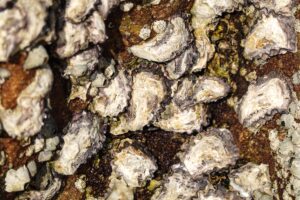
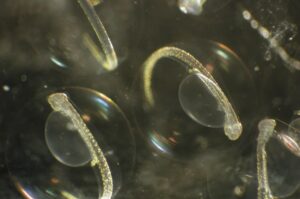
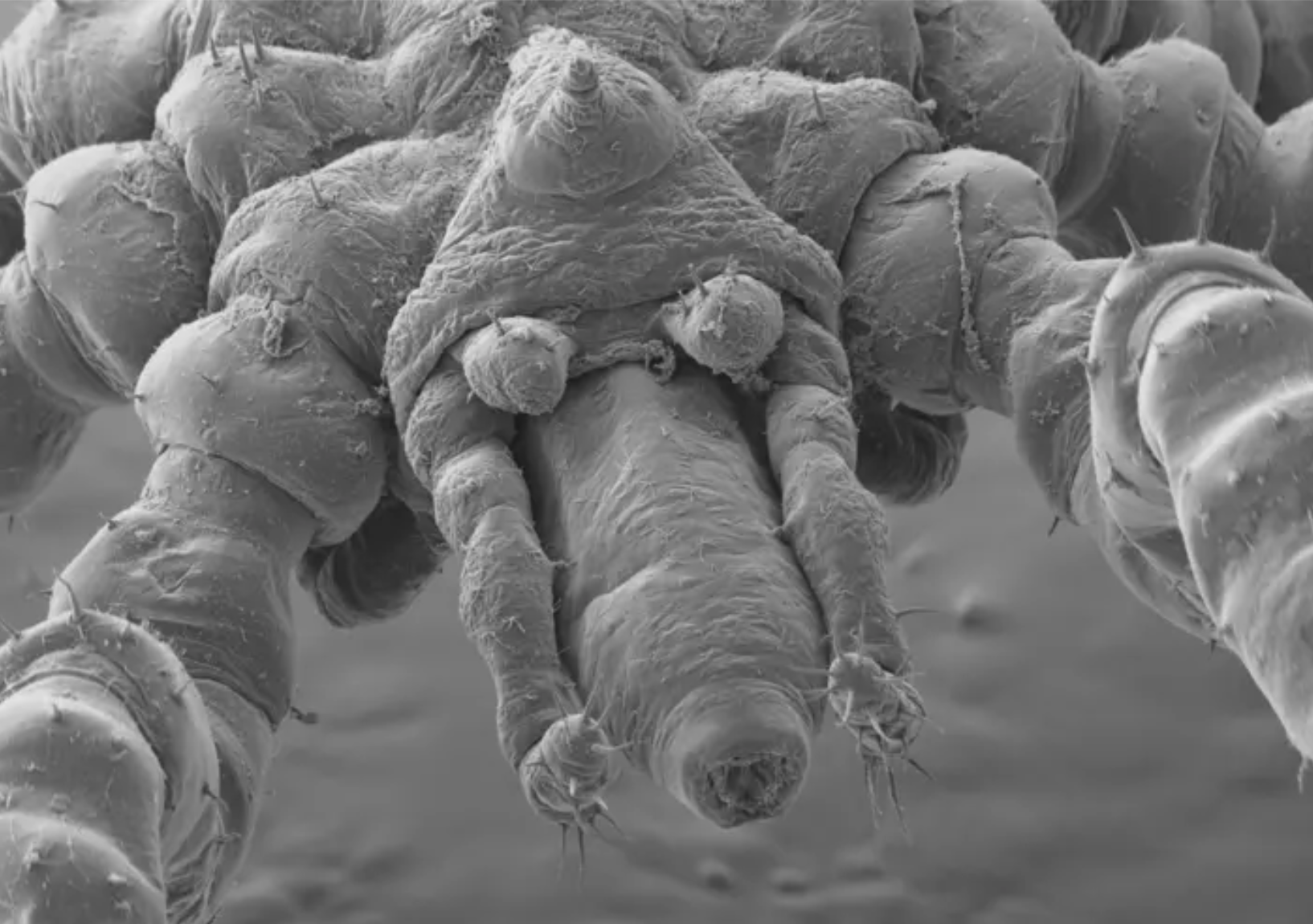
Sea spiders breathe through their skin, and it is the males, not the females, who rear the young. Females carry ovaries distributed throughout their limbs, producing eggs that emerge through a dedicated pore. During mating, males use a specialised pair of limbs called ovigers, positioned at the base of the head, to collect the eggs, coat them in a glue secreted from their legs, and attach them to their own bodies in clusters for rearing.
The newly described species were collected between September 2023 and August 2024, during dives to depths of up to 18 metres across a range of habitats, including sites at Quadra Island, Vancouver, Bamfield and Victoria.
The first, Callipallene pilosuspedes, is named for the long, curved spines covering its lower legs – a nod to the Latin for “hairy feet.” It has red eyes, a short claw-tipped proboscis for grasping food before biting, and a triangular, three-lipped mouth lined with sensory tendrils. It also possesses unusually dexterous ovigers, which researchers observed being used as grooming tools, wrapped around the legs to sweep away debris with attached comb-like spines. Only a single specimen of the species has so far been found.
The second, Tanystylum kiixin, takes its name from the ancient Indigenous village site near where the first specimens were collected. Pronounced “kee-hin,” the name derives from the sound of waves breaking at the base of the village site. Unlike its counterpart, this species has smaller, less dexterous egg-carrying limbs and is unable to groom itself effectively – researchers frequently found it coated in debris and playing host to its own tiny parasites, forming what Toler-Scott describes as “an ecosystem within an ecosystem within an ecosystem.”
The study represents the first comprehensive assessment of sea spiders in the Salish Sea to combine detailed imaging with DNA analysis. In the process, the team generated genetic data for several previously unsequenced species and produced an identification guide for sea spiders in the region.
Both new species have been registered in a global taxonomic database, but Toler-Scott believes many more remain undocumented. “I only had one field season but there’s definitely more diversity out there that we haven’t documented.”


"*" indicates required fields
Printed editions
Current issue
Back issues
Enjoy so much more from Oceanographic Magazine by becoming a subscriber.
A range of subscription options are available.