Ministers accused of 'choosing' to run down Britain's fish stocks
More than 60% of UK fish stocks have declined in the last ten years, with a new report claiming most catch quotas are still being set above scientific advice, despite Brexit promising greater control over British waters.
The government has repeatedly failed to manage Britain’s fish stocks, campaigners have said. Their new report warns over 60% of the UK’s fish have declined in the last 10 years, despite Brexit offering an opportunity to change course.
The report, which analysed stock assessment data from the International Council for the Exploration of the Sea (ICES), found the majority of catch quotas are still being set above scientifically advised sustainable levels. Celtic Sea cod and Irish Sea plaice stocks have been impacted the most, declining by 98% and 88% respectively since 2016.
It has been ten years since Britain voted to leave the EU. While Brexit was expected to give the UK greater control over its fisheries, the management of many shared stocks continues to involve annual negotiations with the EU and other coastal states.
The charity looked at the estimated total weight of all mature fish able to reproduce in and around British waters in 2025 compared with 2016.
The total weight of herring in West of Scotland waters had dropped by 93%, while mackerel in the north-east Atlantic was down 78%. Some species, such as sole, seabass and boarfish, have seen increases across different waters, while the estimated total weight of haddock in the North Sea and Rockall has also risen over the period.
In what has been described by campaigners as a ‘continued pattern’, quotas in 2025 were set above scientifically advised catch rates: 46 of the 79 fishing quotas were set above scientific advice.
“When ministers set catch limits above scientific advice, they are choosing to run down our seas, endangering the wildlife, fishing communities and good food that depend on them,” said English celebrity chef and broadcaster Hugh Fearnley-Whittingstall.
Blue Marine Foundation’s Fisheries Policy Lead, Jonny Hughes said the blame lies in a political governance failure and what he describes as a democratic deficit, which creates a lack of transparency over how consumers understand the health of UK fish stocks.
Hughes explained what he saw as a “domino-like” sequence in the Celtic Sea. In 2018, warnings were issued that cod stocks were dropping to dangerous levels. Despite this, fishing continued in order to protect whiting quotas; then whiting was sacrificed to protect haddock, and haddock collapsed too.
“It is baffling that the UK and EU can continue to ignore scientific advice, make the same mistakes, see the same dreadful outcomes and then claim they did not see it coming,” he added.
Mike Cohen, chief executive of the National Federation of Fishermen’s Organisations, told the Yorkshire Post that Blue Marine Foundation’s report “misrepresents a complex picture,” and criticised its timing, describing how these types of reports get published annually before industry has had a chance to review the evidence or before negotiations have even started, adding that they “attack the fishing industry remorselessly.”
Cohen also criticised the restricted time frame of the report, which he said does not take into account how population spikes affect the data. He added that the headline scientific advice from the International Council for the Exploration of the Sea (ICES) is the “most restrictive of the multiple different catch option scenarios that the ICES for every fishery” and that governments can adhere to other scenarios that these reports produce. We have contacted the ICES for comment on the difference between the headline “advice sentences” in their reports, and the purpose of the “catch scenarios” they produce below.
Cohen further criticised the data used by Blue Marine Foundation, arguing that the report includes fish stocks which are “data deficient”, i.e., meaning they have not studied them recently. This has been refuted by Blue Marine Foundation.
“A sensationalist approach does nothing to advance the cause of sensible and appropriately cautious fisheries management that is environmentally, socially and economically sustainable,” he added.
In other news


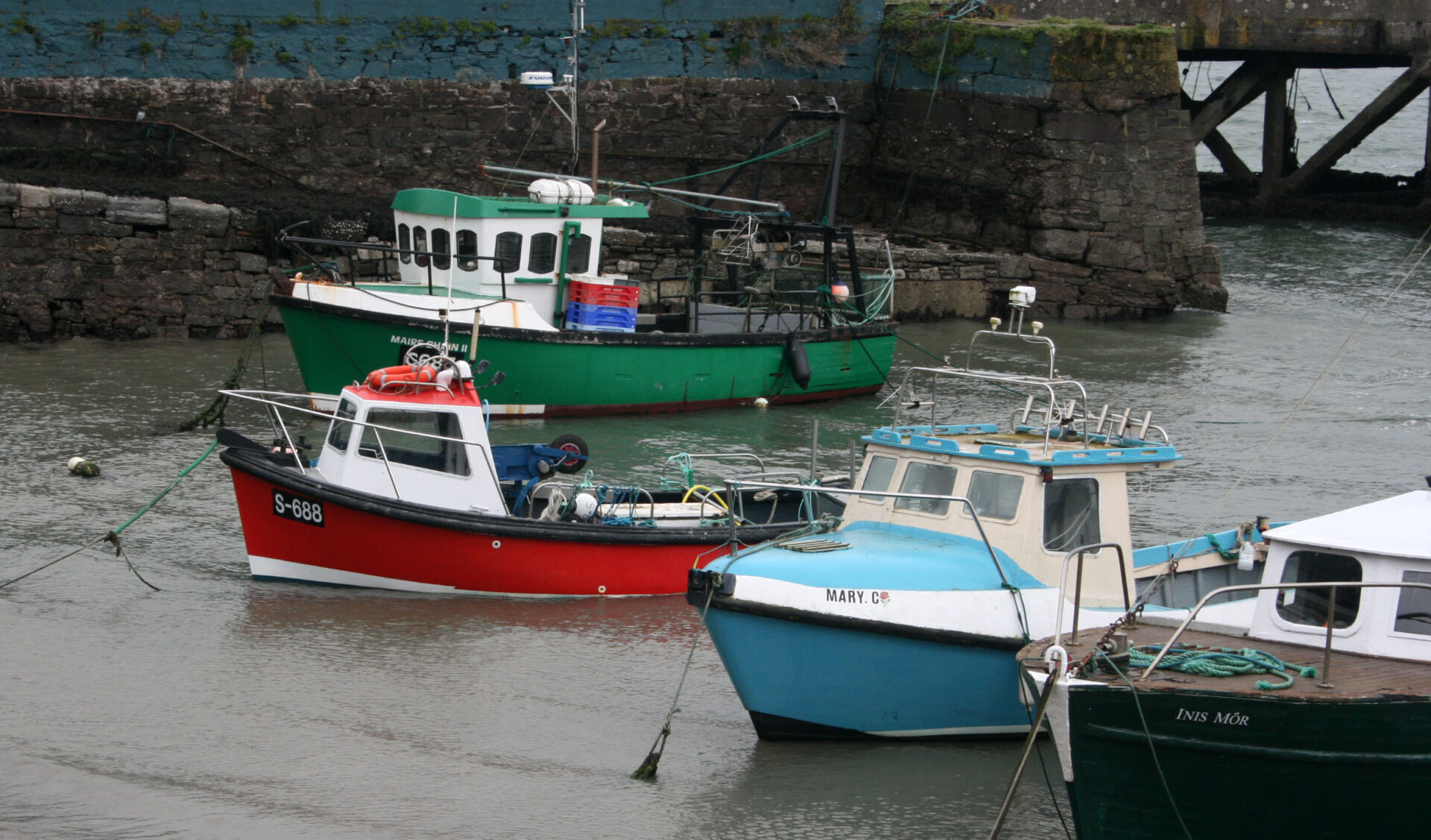
Blue Marine Foundation’s report found that 67% of fish stocks have declined since scientists first started measuring them in. Hughes cites political inconvenience as the key barrier in the UK to setting sustainable quotas, and points to a communication failure between the government and the general population about the true health of Britain’s fish stocks.
Under the EU-UK Trade and Cooperation Agreement, if the two sides fail to reach agreement on certain shared stocks by the relevant deadline, provisional catch limits are generally based on ICES advice, subject to provisions for special stocks. Blue Marine Foundation argues that the UK could refuse to agree to catch limits above scientific advice.
UK supermarkets including Waitrose and Aldi have pulled their supplies of mackerel over concerns about overfishing. The UK, Norway, Iceland and the Faroe Islands signed a four-party agreement which reduced mackerel catch levels by 48%, but this was still 72% higher than what scientists deemed safe.
“It’s pretty telling that Waitrose and Aldi take the sustainability of marine life more seriously than the Department for the Environment,” Hughes told us.
This week, news broke that UK supermarkets are legally selling tins of a different, unrelated fish species under the ‘mackerel’ name, following a December 2025 rule change.
Regulations were changed late last year to allow a South American fish belonging to the Carangidae family – rather than the mackerel’s Scombridae family – to be called “jack mackerel”. Previously it was required to be marketed as “scad”, “jack” or “horse mackerel”.
“That’s misleading, and frustrating, because people suddenly see ‘mackerel’ again and reasonably assume the problem’s been resolved,” Hughes told us.
A YouGov poll for Blue Marine found that 71% of UK adults support making it illegal for catch limits to exceed scientific advice, while just 3% oppose the move.
Quotas are managed differently in places such as the US, New Zealand and Australia. In the US, scientific advice caps the quotas so fish stocks are strictly kept within sustainable levels.
Blue Marine is demanding a similar system from the UK government, wanting catch limits set at sustainable levels that do not exceed scientific advice. It also wants monitoring of large industrial fishing vessels to ensure the rules are properly enforced, and a concrete recovery plan for depleted fish populations, with sustainable fishing practices incentivised.
“Make scientifically advised catch limits the law, enforce them properly and let our seas recover. Fish left in the sea today are the foundation of thriving fisheries and coastal communities tomorrow,” Fearnley-Whittingstall added.
A Defra spokesperson said: “We use the best available scientific advice when setting catch limits to restore our fish stocks to sustainable levels and support the long-term viability of the UK fishing industry.”
“In addition, we are working closely with our fishing and seafood sectors to ensure they are vibrant, profitable and sustainable, while supporting a healthy and productive marine environment,” they added.


"*" indicates required fields
Printed editions
Current issue
Back issues

Enjoy so much more from Oceanographic Magazine by becoming a subscriber.
A range of subscription options are available.