Modular reefs turn Dutch sea wall into a marine life haven
100 modular reefs and 66 tidal pools by ReefSystems are transforming a stretch of the Lauwersmeerdijk in the Netherlands, turning coastal defence infrastructure into thriving habitat for Wadden Sea marine life.
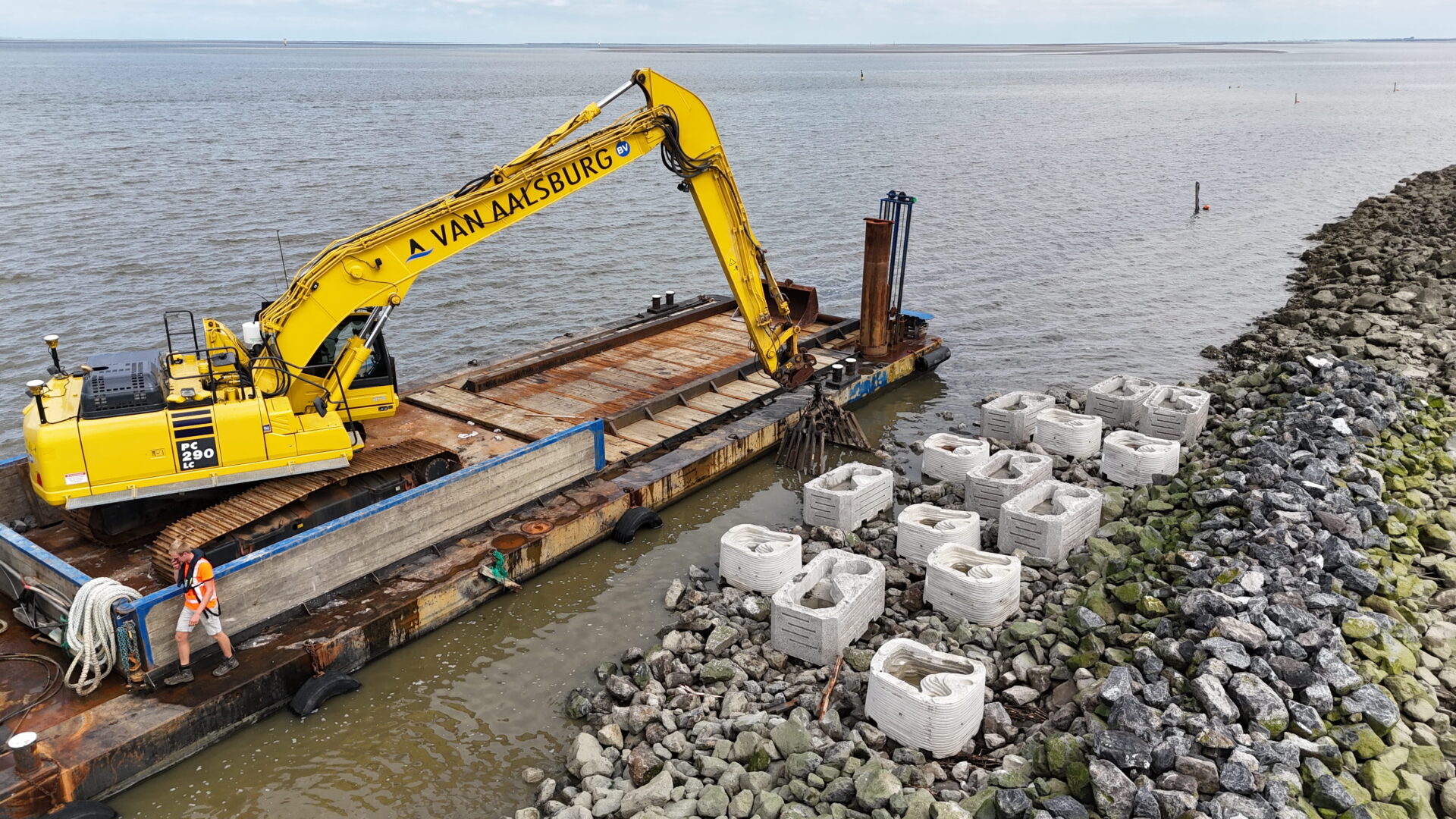
Along the edge of the Wadden Sea, a stretch of reinforced coastline is beginning to look less like a barrier and more like a reef. One hundred modular reef structures and 66 tidal pools have been built into the Lauwersmeerdijk sea wall, giving fish, shellfish, crustaceans, algae, and other marine organisms a foothold on infrastructure that would otherwise offer them none.
The installation is the culmination of a pilot that began in 2021, when researchers first set out to test whether engineered reef structures could restore ecological complexity to hard coastal defences.
Over several years, scientists from the University of Groningen and Van Hall Larenstein University of Applied Sciences tracked how quickly those pilot structures were colonised. The results, according to the team, were swift.
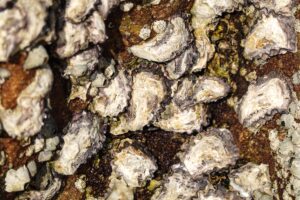
Mussels, oysters, barnacles, seaweeds, and tunicates settled directly onto the reefs, while the cavities and textures they created drew in mobile species – offering shelter and feeding grounds for fish and crustaceans.
Encouraged by the findings, the project has now scaled up considerably. The Dutch marine restoration company ReefSystems has delivered 100 MOSES reef plates – comprising 5,600 individual reef modules – along with 66 tidal pools, all built into the dyke as part of the wider Lauwersmeerdijk reinforcement works.
The MOSES system – short for Modular Sealife System – is designed to reintroduce the physical complexity that coastlines typically lose when they’re replaced by hard engineering. Its cavities, textured surfaces and the gaps between modules create a range of microhabitats, giving different species room to settle, feed, and shelter.

In other news
The project is a showcase in how coastal protection and ecological restoration can work hand-in-hand.
“When we build coastal infrastructure, we inevitably change the underwater environment. But that doesn’t mean infrastructure has to remain ecologically poor,” said Jesse de Bont, founder of ReefSystems.
“At Lauwersmeerdijk we’re showing that engineered coastlines can also provide space for marine ecosystems to develop.”
The site sits alongside the Wadden Sea UNESCO World Heritage Site, one of the largest intertidal ecosystems on Earth – lending the experiment added weight as a model for nature-inclusive design in sensitive coastal zones.
For ReefSystems, the Lauwersmeerdijk installation stands as proof of concept for an approach the company hopes to extend well beyond the Netherlands and to sea walls, ports, and offshore infrastructure wherever coastlines are engineered rather than left wild.


"*" indicates required fields
Printed editions
Current issue
Back issues
Enjoy so much more from Oceanographic Magazine by becoming a subscriber.
A range of subscription options are available.