Niue and Barcelona 2026 Earthshot Prize Finalists for ocean work
Niue Ocean Wide Trust and the City of Barcelona have both been named 2026 Earthshot Prize finalists in the Revive Our Oceans category, for pioneering ocean financing and coastal climate adaptation respectively.
Two coastlines – one, a remote Pacific nation managing 327,000-square-kilometres of ocean, the other one of Europe’s busiest urban waterfronts – have been named 2026 finalists in the Earthshot Prize’s Revive our Oceans category.
Both Niue and Barcelona have been recognised for tackling two of the toughest problems being faced by ocean conservation right now: how to fund protection for the long-term, and how to make crowded coastlines resilient to a changing climate.
The Earthshot Prize, founded by Prince William in 2020, recognises solutions from different geographies, sectors and stages in their life cycle, dedicated to solving the planet’s greatest environmental challenges. This year’s 15 finalists were drawn from nearly 7,000 nominations across 169 countries, with five winners to be announced at the 2026 Awards Night in Mumbai this November.
Financing ocean protection for the next 20 years
Niue’s marine territory spans 327,000 square kilometres – an area just over the size of Norway, and 1,200 times the size of the country’s landmass – within the Blue Pacific, 30 million square kilometres of ocean that supplies half the world’s tuna and ranks among its healthiest marine ecosystems. Yet island nations managing waters at this scale often do so with limited, short-term finance, even as illegal fishing, near-shore overexploitation, rising seas and ocean acidification pile on the pressure.
Niue Ocean Wide Trust’s answer is Ocean Conservation Commitments (OCCs): a long-term, Indigenous-led financing model that calculates the real annual cost of protecting Niue’s ocean and converts it into a ‘per-square-kilometre contribution’, one to be sustained over 20 years.
Priced at NZ $250 per unit, OCCs are designed to be accessible to individuals and companies as well as governments and philanthropies. Around 40,000 have been sponsored to date by more than 800 stakeholders, contributing toward a NZ$32 million endowment intended to fund the Trust in perpetuity.
All of Niue’s ocean territory is now under full sustainable management through the Niue Nukutuluea Multipurpose Marine Park, with roughly 40% – some 127,000 square kilometres – protected as the Niue Moana Mahu no-take marine protected area. A 2023 marine survey recorded a 10% increase in coral cover, a 60% rise in fish biomass, and a 45% increase in top predators since 2016.
“Niueans do not see the ocean as separate from us; it is part of our identity, our knowledge and our responsibility to future generations,” said Coral Pasisi, Vice Chair of Niue Ocean Wide Trust and co-architect of the OCC model.
“We did not want protection to remain a promise dependent on the next grant. We wanted finance that matched the length of that responsibility.”
Brendon Pasisi, the Trust’s Manager, said: “The challenge was creating a way to fund the daily work of protection year after year – the patrols, science, village plans, training and recovery after climate shocks. Ocean Conservation Commitments make that responsibility visible and give people far beyond Niue a practical way to help carry it.”
The Trust has raised 41.4% of its endowment target and hopes Earthshot recognition will help secure the rest, while offering other small island nations a model to adapt for their own waters.

In other news

Redesigning a coastline for rising seas
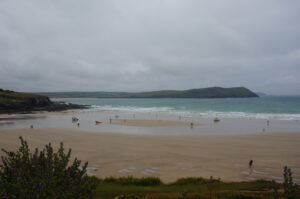
Barcelona’s challenge, meanwhile, may look different, but it shares the same root cause. With 10% of the world’s population living in coastal zones, cities are facing sea-level rise, stronger storms, flooding and extreme heat – pressures Barcelona has confronted directly after severe storms damaged its waterfront in 2023 and roughly 70% of the artificial sand added to its beaches in 2010 has since disappeared.
Rather than continuing to rebuild a vulnerable shoreline, the city is redesigning it. Its Pla Litoral strategy includes more than 60 coastal adaptation projects, backed by €1.8 billion in public investment through 2030 – the largest climate budget in the city’s history.
At the centre of the work is Mar Bella, on the Sant Martí seafront, where the city is intentionally moving parts of the waterfront inland – including relocating a popular football pitch – so wider beaches can act as natural infrastructure, absorbing wave energy and creating space for storms and rising seas.
The project will restore 1.8 kilometres of seafront, plant more than 2,700 climate-adapted trees, and use around 17,000 tonnes of recycled material, while avoiding an estimated 15,525 tonnes of CO2. Nearby, regeneration of a degraded seabed at Port Olímpic created habitat for more than 100 marine species within 12 months.
The transformation directly benefits around 240,000 residents of Sant Martí, one of the city’s most heat-vulnerable districts, where free public beaches serve as a critical refuge during heatwaves. More than 200 residents and stakeholders helped shape the design.
“Being selected as an Earthshot Prize Finalist recognises a choice the City of Barcelona has made: to make climate a core policy,” said Jaume Collboni, Mayor of Barcelona. “This means not simply to defend the coast, but to adapt with nature and improve the waterfront for everyone. That choice has never been more important. This summer, Barcelona recorded its highest temperature in more than a century, while the Mediterranean is warming around 20% faster than the global average.”
María Buhigas, Chief City Architect of Barcelona, said the city had chosen to “give space back to the beach and to natural processes, while creating a healthier waterfront for nature and people to thrive together. This is not a defensive structure added to the edge of the city; it is a new piece of climate-resilient public infrastructure designed for everyone to enjoy.”
Prince William, President and Founder of The Earthshot Prize, said: “Every year, our Finalists give me renewed optimism. They show us that, even as the environmental challenges remain urgent, extraordinary people around the world are already proving that progress is possible.”


"*" indicates required fields
Printed editions
Current issue
Back issues
Enjoy so much more from Oceanographic Magazine by becoming a subscriber.
A range of subscription options are available.