OceanEye: Nations pledge €211m to strengthen ocean observation
Von der Leyen and Carney have launched the OceanEye International Alliance, with over 30 countries pledging €211 million to strengthen global ocean observation and drive data-led ocean recovery.
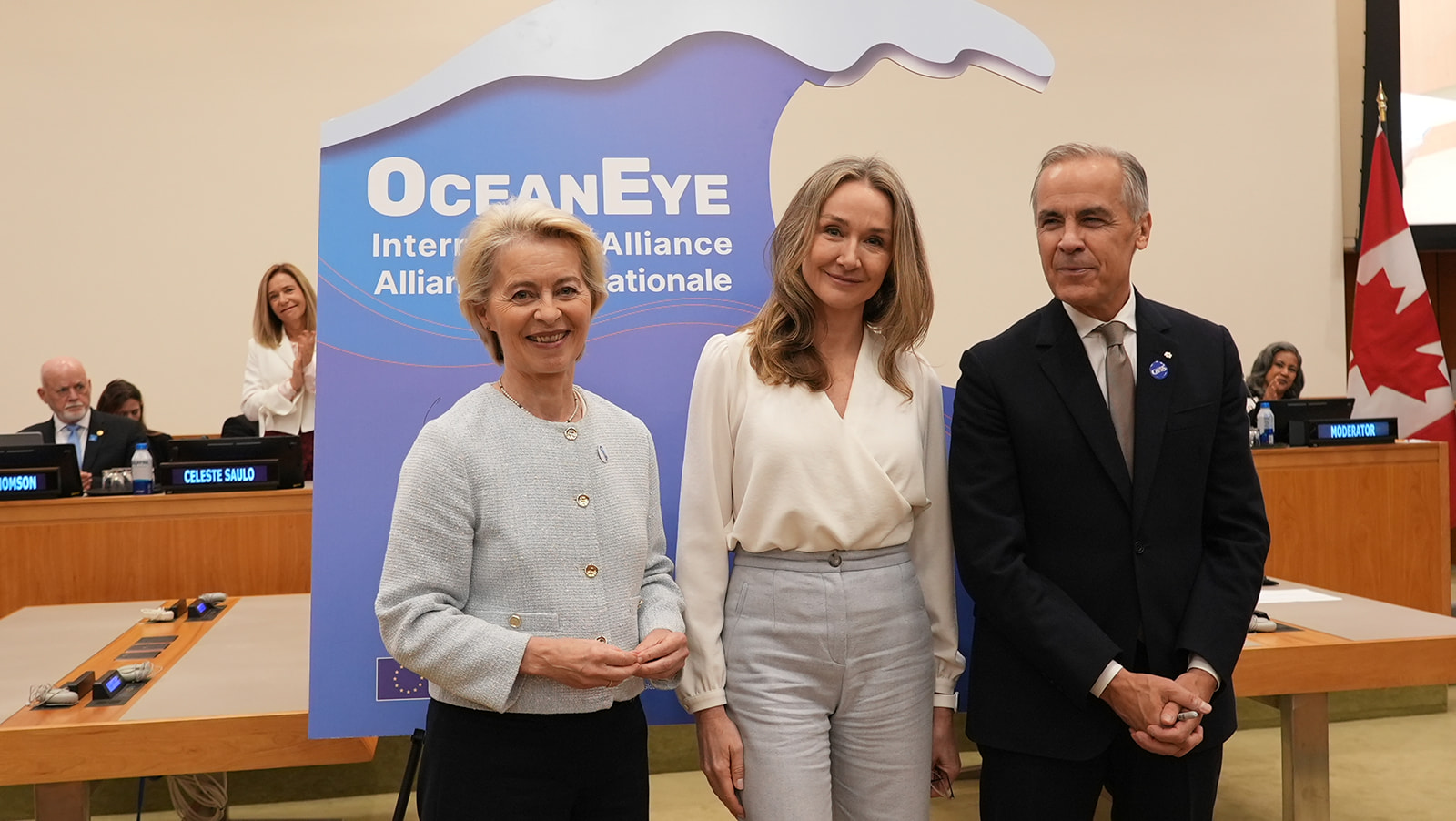
More than 30 countries have pledged upwards of €211 million to strengthen global ocean observation, as European Commission President Ursula von der Leyen and Canadian Prime Minister Mark Carney launched the OceanEye International Alliance at the United Nations General Assembly this week.
The alliance, formally announced on Wednesday, aims to close critical gaps in ocean monitoring, broaden financial and in-kind support for the Global Ocean Observing System, and improve countries’ access to the ocean data needed to prepare for extreme weather, manage marine resources, and strengthen coastal resilience.
Countries across Europe – including the UK – as well as Africa and the Americas signed on at launch.
Alexandra Cousteau, ocean advocate and Senior Advisor to Oceana, joined von der Leyen and Carney for the announcement, and called on governments to put improved ocean knowledge to work accelerating protection and restoration efforts.
“We welcome President von der Leyen’s and Prime Minister Carney’s leadership on OceanEye and global ocean observation. Better information gives us something enormously powerful: the ability to see what is happening in the ocean, where recovery is possible, and what it will take to accelerate it,” she said.
“At Oceana, we see every day how better information can lead to better decisions. From tracking fishing activity and exposing illegal fishing to protecting marine habitats and rebuilding fisheries, good data can turn what happens far offshore and beneath the surface into something governments can understand and act upon.”
Cousteau’s involvement continues a family legacy of ocean exploration spanning three generations – her grandfather Jacques-Yves Cousteau and father Philippe Cousteau helped reveal the ocean to millions, while her own work over the past two decades has focused on restoring ocean abundance. As climate change and other pressures reshape marine ecosystems, understanding what is changing, where recovery is taking hold, and what interventions work is becoming central to effective ocean protection and restoration.

In other news



OceanEye is a key initiative under the European Ocean Pact, designed to strengthen ocean observation, research and knowledge. Launched by the European Commission in 2026, it aims to position the EU as a global leader in ocean intelligence, with a target of providing 35% of the global ocean observing system by 2035.
At its centre is the OceanEye International Alliance, bringing together countries and international partners to strengthen the Global Ocean Observing System, mobilise investment and expand international cooperation. The data generated through ocean observation feeds into weather and climate forecasting, maritime safety, coastal resilience, sustainable ocean economies, and efforts to protect and restore marine ecosystems.
Tom Pickerell, Global Director of WRI’s Ocean Program and a member of the European Commission’s European Ocean Board, welcomed the scale of the response:
“The consequences of an ocean altered by climate change are playing out in real time: record surface temperatures, more intense storms, shifting fisheries and growing threats to people’s food and livelihoods, all exacerbated by an unprecedented El Niño.
“Countries can be far better prepared to withstand these impacts. That starts with better data and monitoring to understand how the ocean is changing — and how fast. The OceanEye Alliance will strengthen the vital, yet unsung, ocean observation systems that economies depend on. These systems underpin everything from countries’ weather forecasts and disaster warnings to maritime safety, food security and sustainable ocean management.
“More than 30 countries signing on is a powerful show of support for a stronger, more connected global ocean observing system. Much of the existing global ocean observation system still depends on short-term funding concentrated in too few places. The OceanEye Alliance can help protect the observing networks and decades of ocean records already in place, while expanding access to data and strengthening cooperation between countries.
“Better ocean data means better decisions. It helps governments spot risks earlier, protect communities and livelihoods, and build more resilient economies in the face of extreme weather. For Ocean Panel member countries and others committed to 100% sustainable management of their national waters, better data keeps Sustainable Ocean Plans grounded in reality — showing where risks are growing, whether action is working and when governments need to change course.”
In Europe, the forthcoming Ocean Act is being positioned as the mechanism to convert that stronger data foundation into concrete policy, translating a deeper understanding of the ocean into measures that support its recovery and the coastal communities that depend on it.
Vera Coelho, Vice-President and Executive Director of Oceana in Europe, said:
“At a moment when international scientific cooperation is under pressure, and when the climate crisis is being directly felt by millions of Europeans, the international effort behind OceanEye demonstrates a serious and timely recognition of the importance of the ocean for humanity.
“Europe now has an opportunity to match better knowledge with stronger action. A binding Ocean Act can help turn that knowledge into healthier seas, rebuilt fish populations, and a more secure future for coastal communities.”
Oceana is calling for a binding and enforceable Ocean Act that strengthens ocean protection and restoration, rebuilds fish populations, gives low-impact fishers preferential access to coastal waters, and makes ocean health an overarching objective of EU policy. Taken together, the organisation argues, stronger ocean knowledge and stronger policy can help Europe accelerate ocean recovery while supporting prosperous and resilient coastal communities.


"*" indicates required fields
Printed editions
Current issue
Back issues


Enjoy so much more from Oceanographic Magazine by becoming a subscriber.
A range of subscription options are available.