Reef protections are slowing crown-of-thorns starfish outbreaks
One of the most extensive marine conservation initiatives ever undertaken on the Great Barrier Reef is starting to deliver some positive impact and helping to reduce the scale of crown-of-thorns starfish outbreaks thanks to increased levels of reef protections.

One of the most extensive marine conservation initiatives ever undertaken on the Great Barrier Reef is starting to deliver some positive impact and helping to reduce the scale of crown-of-thorns starfish outbreaks thanks to increased levels of reef protections.
The study – led by CSIRO and the Australian Institute of Marine Science (AIMS) – uses advanced ecosystem modelling to show that zoning reforms and tighter fisheries management introduced in 2004 likely played a pivotal role in rebuilding key fish populations, reducing crown-of-thorns Starfish (CoTS) outbreaks, and buffering the Reef from additional coral loss.
Dr Scott Condie, CSIRO researcher and lead author, said CoTS remain one of the most significant natural threats to Reef health, with multiple outbreaks recorded over the past four decades.
“Certain fish, such as emperors, prey on crown-of-thorns starfish. Protective measures, including expanding no-take zones to 33% and tightening fishing regulations in 2004, were designed to support these predatory species,” Dr Condie explained.
“Our model shows that these initiatives likely averted a catastrophic tipping point – one that could have left the Reef with fewer large fish, triggering continuous CoTS outbreaks and far greater coral loss. Long-term monitoring consistently shows that outbreak frequency is lower in protected zones.”
AIMS researcher Dr Daniela Ceccarelli said the findings reinforce that protection measures are working, emphasising the critical importance of continued management and sustained monitoring.
In other news





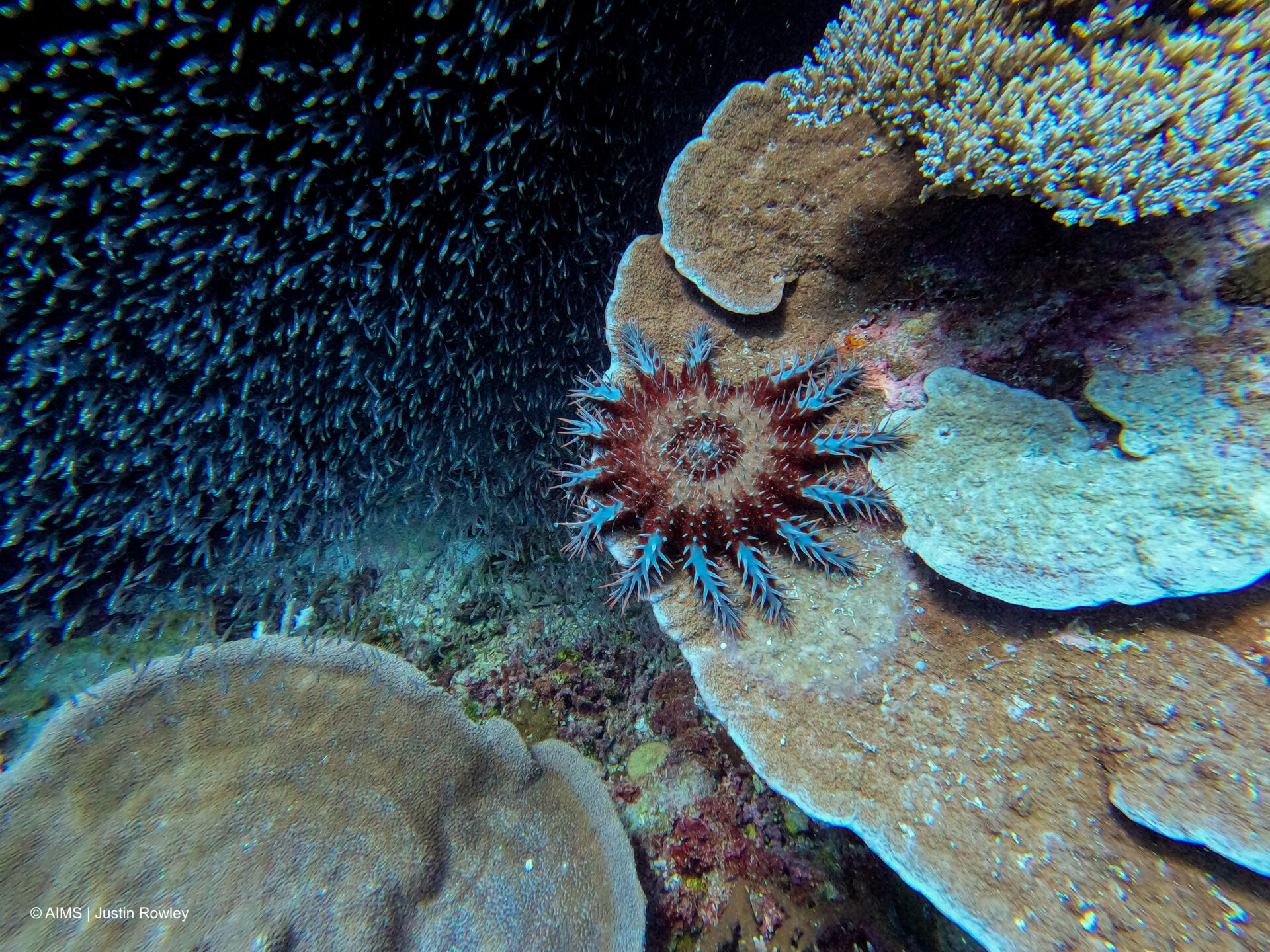
“Model projections to 2050 indicate that, without these fish-protection strategies, the proportion of reefs experiencing CoTS outbreaks could increase four-fold,” said Dr Ceccarelli. “Without intervention over the past 20 years, the model also shows that grouper and emperor populations would have steadily declined under mounting fishing pressure.
“This modelling is a crucial step toward understanding how crown-of-thorns management can help safeguard the Reef as climate pressures intensify.”
The research also examined the growing impact of direct CoTS control, which has evolved significantly since the 1980s – from manual removal on individual reefs, to targeted culling at tourism hotspots, to today’s large-scale CoTS Control Program led by the Great Barrier Reef Marine Park Authority.
Each year, multiple specialist vessels operate across more than 200 priority reefs, with mounting evidence confirming the program’s effectiveness.
Published in Nature Ecology and Evolution, the study was supported by the CoTS Control Innovation Program, funded through the partnership between the Australian Government’s Reef Trust and the Great Barrier Reef Foundation.


"*" indicates required fields
Printed editions
Current issue
Back issues


Back Issues
Issue 43 Sir David Attenborough’s ‘Ocean’


Back Issues
Issue 41 Holdfast to the canopy
Enjoy so much more from Oceanographic Magazine by becoming a subscriber.
A range of subscription options are available.
