Scientists find Spitsbergen a key Bowhead whale breeding ground
Acoustic research by the Alfred Wegener Institute shows bowhead whales likely breed under sea ice northwest of Spitsbergen, using the eastern Fram Strait for migration. AI analysis of whale songs reveals critical Arctic habitats increasingly threatened by climate change and human activity.
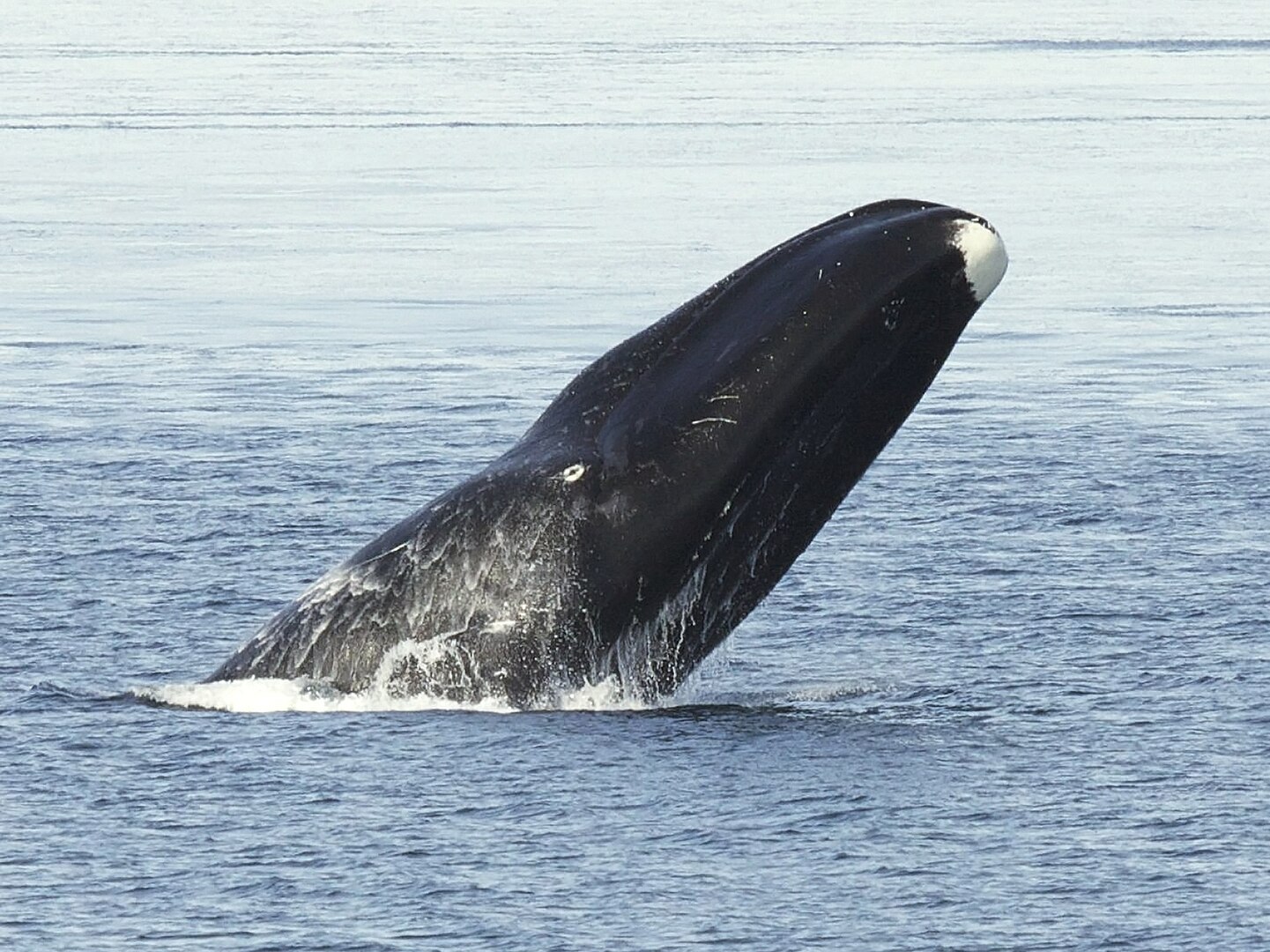
Acoustic research compiled of underwater sound recordings analysed by artificial intelligence suggests that bowhead whales are likely breeding beneath the sea ice northwest of Spitsbergen, while using the open waters of the eastern Fram Strait as a migratory corridor.
These are the findings of a long-term study led by the Alfred Wegener Institute (AWI) and now published in the scientific journal, Scientific Reports.
Spitsbergen is the largest island of the Svalbard archipelago, located in the high Arctic Ocean roughly halfway between mainland Norway and the North Pole. The surrounding waters, including the Fram Strait between Spitsbergen and Greenland, form a critical gateway between the Arctic and North Atlantic oceans and are strongly influenced by shifting sea-ice conditions.
The study was led by researchers from AWI’s Ocean Acoustics Group, who use underwater hydrophones to monitor marine life in remote polar regions year-round. Bowhead whales, which occur exclusively in the Arctic Ocean, are known for producing complex and varied vocalisations.
High song diversity in a given area is widely considered a strong indicator of breeding activity.
Across the vast, partially ice-covered Arctic Ocean, AWI scientists have deployed hydrophones capable of continuously recording underwater sounds. These instruments allow researchers to document whale presence and behaviour without being physically present, offering rare insight into habitats that are difficult or impossible to access by conventional observation.
A team led by first author Marlene Meister focused on the bowhead whale population around Spitsbergen – a population that was heavily depleted during commercial whaling, falling from an estimated 33,000 – 65,000 animals to just a few hundred. Although protected since the 1930s, the population has shown limited signs of recovery.
Bowhead whales are particularly vulnerable to the ongoing loss of Arctic sea ice, which provides both feeding opportunities and refuge from predators such as orcas.
“If the ice disappears, the population will lose a central habitat,” says AWI biologist Marlene Meister. “It is likely not possible for the whales to simply move farther north, as food availability there is very limited.”
At the same time, shrinking ice cover is opening the Arctic Ocean to increased shipping activity, raising the risk of noise pollution, oil contamination, and ship strikes.

In other news



To better understand how bowhead whales use habitats with different ice conditions, the researchers compared two contrasting regions of the Fram Strait. One study area lay northwest of Spitsbergen in predominantly ice-covered waters, using acoustic data from 2022 and 2023. The second was located in the ice-free eastern Fram Strait, where recordings spanning 2012 to 2023 were available.
The team converted audio recordings into spectrograms and applied an AI-based image recognition system trained to identify bowhead whale calls. The detected calls were then examined in detail, particularly in the ice-covered region northwest of Spitsbergen, where singing activity occurred between October and April.
Researchers manually classified the songs into distinct types and analysed how they changed over time and in relation to sea-ice conditions. As many as 12 different song types were identified northwest of Spitsbergen, each persisting for days to weeks. Song diversity increased steadily from October, peaking in February with eight distinct songs recorded in a single month.
“One possible explanation is that more animals were present in the region in February and produced a broader array of songs, which increased overall song diversity. Another possibility is that individual whales sang more diversely in February, potentially gaining a reproductive advantage if females prefer males with more diverse song repertoires.”
The rise in song diversity coincided with a retreat of sea ice near the study area. In December, the recording equipment was positioned up to 200 kilometres inside the pack ice, while by February it was located directly at the ice edge. “The close link between song diversity and distance from the ice edge was a surprising result for us,” says Marlene Meister.
In contrast, only simple calls – and no songs – were detected in the ice-free eastern Fram Strait. “Bowhead whales were regularly present in the ice-free eastern Fram Strait, but the reason for their presence there remains unclear,” Meister explains. “It is possible that the animals are merely passing through the area and call to maintain contact with each other. The fact that we did not detect any songs there also suggests that the eastern Fram Strait is not a breeding ground.”
The findings provide valuable insight into bowhead whale migration and habitat use, helping to identify key breeding and feeding areas that could benefit from targeted conservation measures as Arctic conditions continue to change.


"*" indicates required fields
Printed editions
Current issue
Back issues




Enjoy so much more from Oceanographic Magazine by becoming a subscriber.
A range of subscription options are available.