Surfers Against Sewage challenges UK bathing water reforms
Surfers Against Sewage has launched a legal challenge against UK bathing water reforms, warning new designation rules could leave popular swimming spots unmonitored, weakening water quality protections and risking public health.
Campaign group Surfers Against Sewage (SAS) has launched an urgent legal challenge against the UK government over planned changes to the country’s bathing water designation rules, warning the reforms could leave popular swimming spots unmonitored and unprotected.
The environmental charity has filed a judicial review claim against the Secretary of State for Environment, Food and Rural Affairs and Welsh ministers, arguing that the proposed reforms to the Bathing Water Regulations 2013 could reduce the number of designated bathing sites and weaken safeguards designed to protect public health.
Under current rules, locations expected to attract large numbers of swimmers can be designated as official bathing waters. Once designated, these sites must be monitored for pollution and managed to meet minimum water quality standards, helping ensure that beaches, rivers and other sites used for wild swimming and water sports are brought up to safe conditions.
But SAS warns that reforms due to come into force in spring 2026 could shift the emphasis away from improving polluted waters and instead limit which sites receive designation in the first place.
The proposed changes were first introduced to Parliament in November 2024, with further amendments presented in late 2025. They are set to take effect on 1 April 2026 in Wales and 15 May 2026 in England.
Currently, bathing waters classified as “poor” are subject to improvement plans aimed at addressing pollution. Under the new framework, however, authorities would first assess whether improving water quality at a site is feasible before granting designation, a change intended to avoid “poor value for money”.
SAS and community groups argue that introducing this feasibility requirement risks undermining the purpose of the legislation by allowing heavily polluted sites to fall outside the monitoring system entirely.
The charity warns that swimmers, surfers and other water users are likely to continue visiting popular coastal and river locations even if they are not designated bathing waters. Without official status, however, those sites may not be monitored for harmful bacteria such as E. coli – leaving the public without reliable information about water quality.

In other news





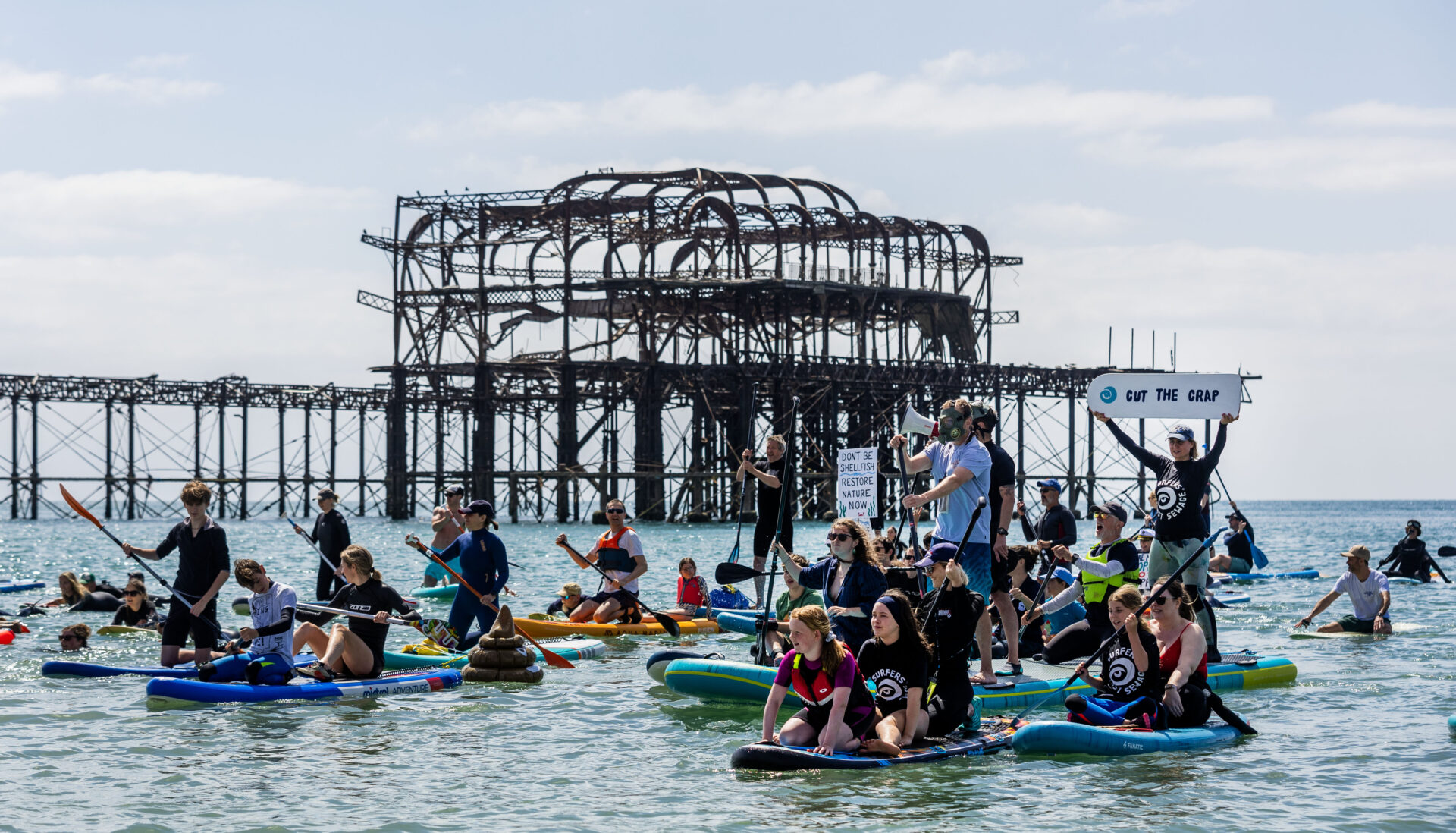
According to SAS, if the reforms had been applied in previous years, at least 16 bathing waters that later received a “poor” classification might never have been designated. These include Ogmore-by-Sea, Church Cliff Beach and the River Cam.
Following the presentation of the reforms to Parliament with amendments in October 2025, SAS issued a pre-action protocol outlining its concerns. The group has now formally filed a judicial review claim.
In the legal challenge, SAS argues that the reforms would undermine the purpose and duty of the Bathing Water Regulations and that the Secretary of State does not have the authority to fundamentally change the regime in this way. The group also contends that the government has failed to demonstrate how the introduction of feasibility assessments would improve protection for public health and the environment.
Kirsty Davies, Community Water Quality Manager at Surfers Against Sewage, said: “Too polluted to protect – that is the message the government is sending to communities left swimming in dirty water. Writing polluted sites out of the system rather than cleaning them up isn’t reform, it’s abandonment.
“The government appears to think that if you stop measuring pollution, it stops being a problem. Bathing water designation is the only place where monitoring harmful bacteria is mandatory, and it’s what holds polluters to account. Without it, communities lose the crucial information they need to stay safe, even at sites already classified as poor. The government asked communities what they thought, ignored the answers, and is pushing ahead anyway. That’s not good enough. No community should be told its water is too polluted to protect.”
Julia Eriksen, a solicitor at Leigh Day representing SAS, added: “The government has put forward reforms which would see the feasibility of improving water quality considered as part of the criteria for designating bathing areas.
“Our client will argue that the result of introducing an extra barrier to designation will be that some bodies of water, which may already be popular with the public, will not be designated and so will not be properly monitored or maintained.”
Local campaigners have also voiced concern. Vicki Elcoate, a member of the River Lim Action group in Dorset, pointed to the experience of Church Cliff Beach in Lyme Regis.
“Our beautiful small bathing beach, Church Cliff, here in Lyme Regis was de-designated as a bathing water site in 2015 because of poor water quality. Our local group was delighted in 2024 when we secured its re-designation.
“Bathing water status helps provide the resources and focus needed to improve water quality where people swim. It’s not good enough for the water company and regulators to wash their hands of improved water quality. Rather than being poor value for money, it helps direct attention and money to where it’s most needed for public benefit.”
Founded in 1990 by surfers in Cornwall, Surfers Against Sewage campaigns to protect oceans, beaches and wildlife. The charity is calling for an end to sewage discharges into UK bathing waters and priority nature sites by 2030, alongside wider efforts to tackle plastic pollution, climate change and marine habitat loss.


"*" indicates required fields
Printed editions
Current issue
Back issues




Enjoy so much more from Oceanographic Magazine by becoming a subscriber.
A range of subscription options are available.
