Winners Gallery
1st place Female Fifty Fathoms Award
Jenny Stock Indonesia
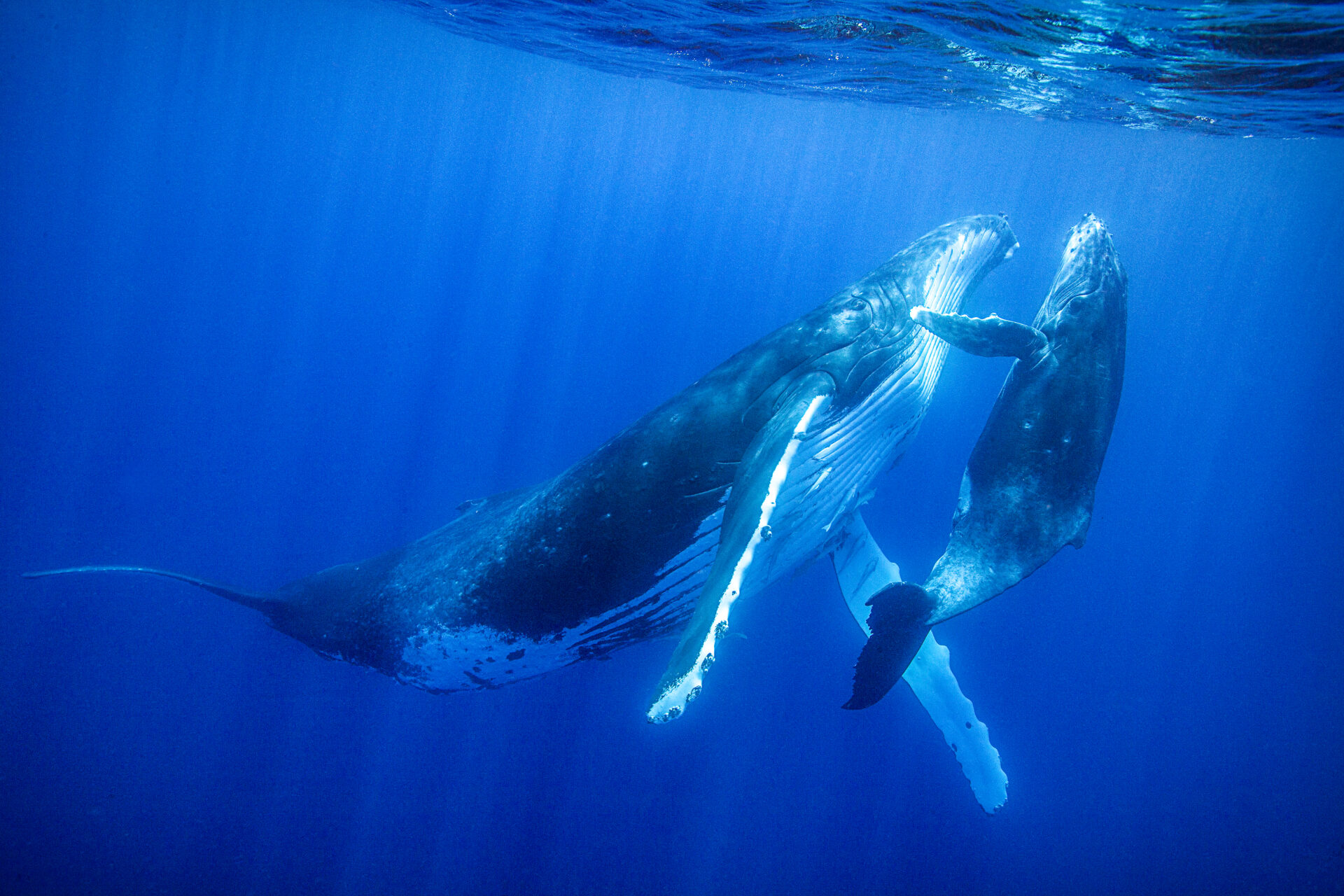
A mother humpback whale and her calf glide through Tonga’s warm, sheltered waters. The calf stays close to its mother at first, then becomes curious, swimming in playful circles and approaching the camera. The mother remains calm and watchful, guiding her young when it comes too close. Tonga’s protected waters are an important nursery, where pregnant humpbacks give birth and calves grow stronger before beginning their long journey south towards Antarctica. This encounter captures the quiet bond between mother and calf.
All of Jenny's Collective Female Fifty Fathoms Award entry
Click on image to view details
BEHIND THE LENS
ABOUT THE IMAGE
- Canon 5D Mark IV
- 1/600, F/11, ISO 400
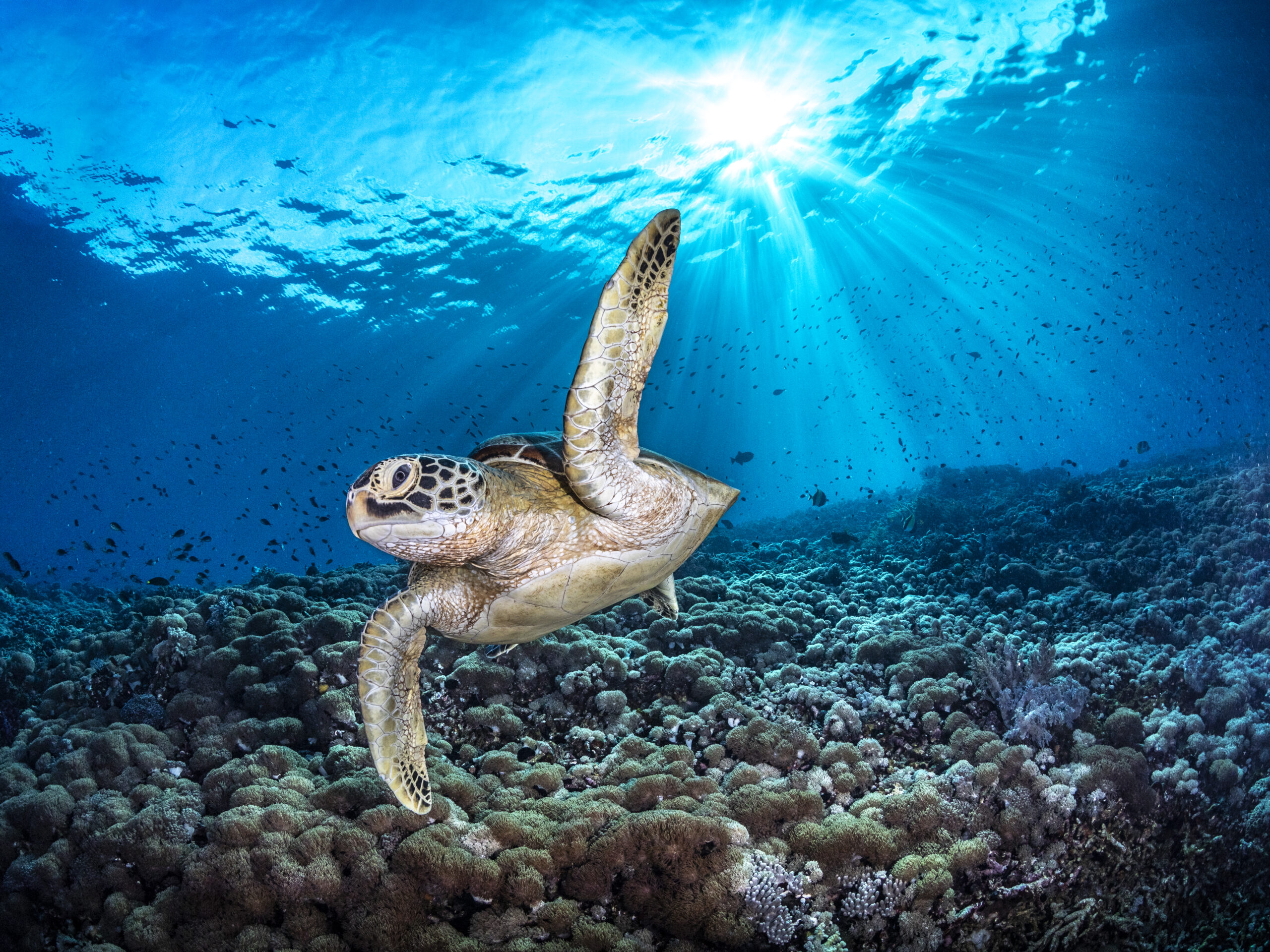
A green turtle approaches the camera, appearing curious about her reflection in its dome port. The photographer positioned the camera just below her eye level to create a more intimate portrait; staying within 3-10 metres of the surface kept the sunlight sharp, creating distinct rays through the water. A fast shutter speed and small aperture controlled the intense brightness, while a small amount of strobe light revealed the turtle’s details.
BEHIND THE LENS
ABOUT THE IMAGE
- Sony A1
- 1/300, F/14 ISO 500
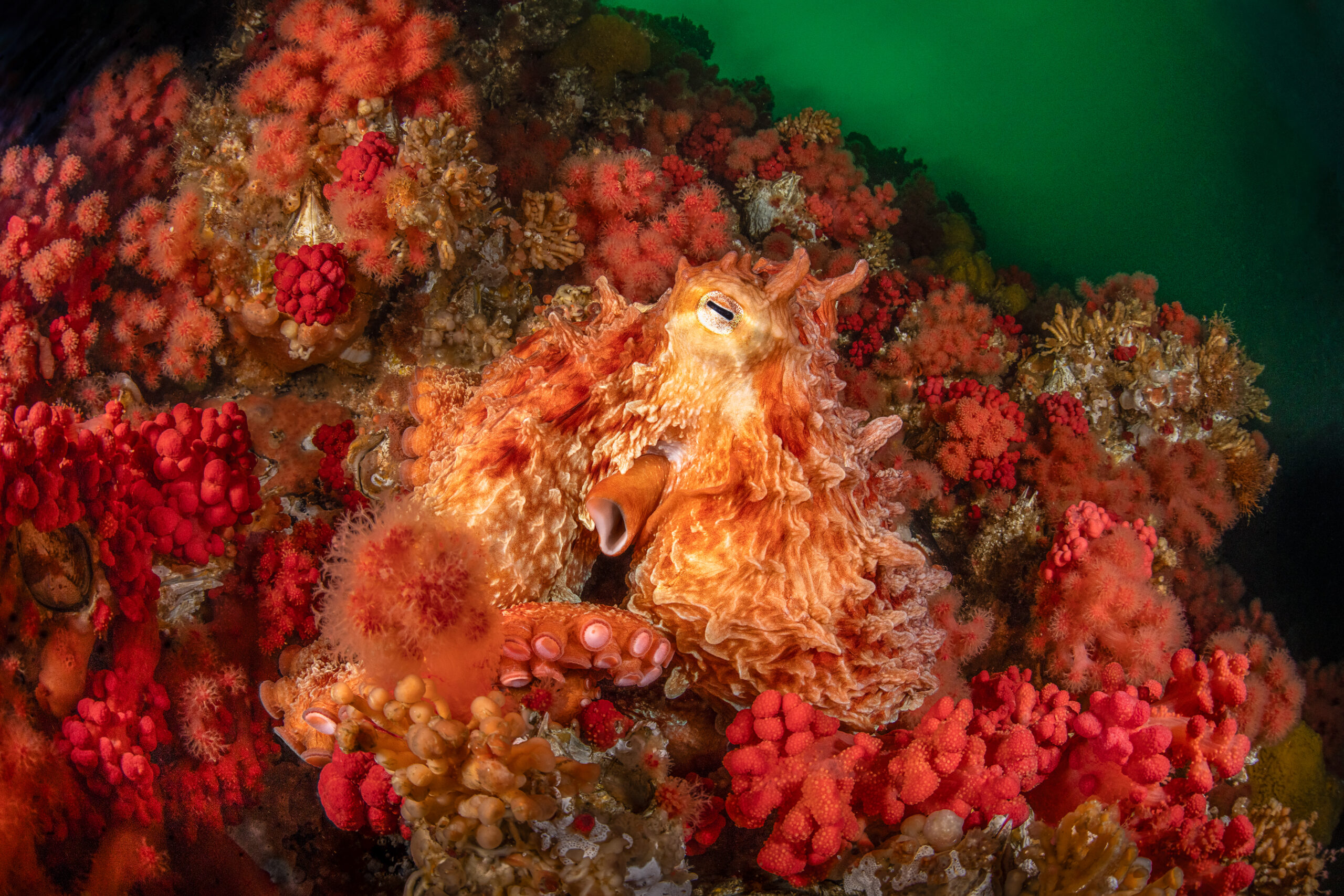
In the cold waters of Browning Pass, Canada, a giant Pacific octopus emerges from a reef covered in soft corals, sponges and clams. Its skin changes colour and pattern using specialised cells called chromatophores, which contain pigments. Tiny muscles also raise and flatten bumps called papillae, changing the skin’s texture to match its surroundings. These rapid changes help the octopus camouflage itself and can also confuse predators. The result is a remarkable display of colour, pattern and texture.
BEHIND THE LENS
ABOUT THE IMAGE
- Sony A1
- 1/125, F/10, ISO 100
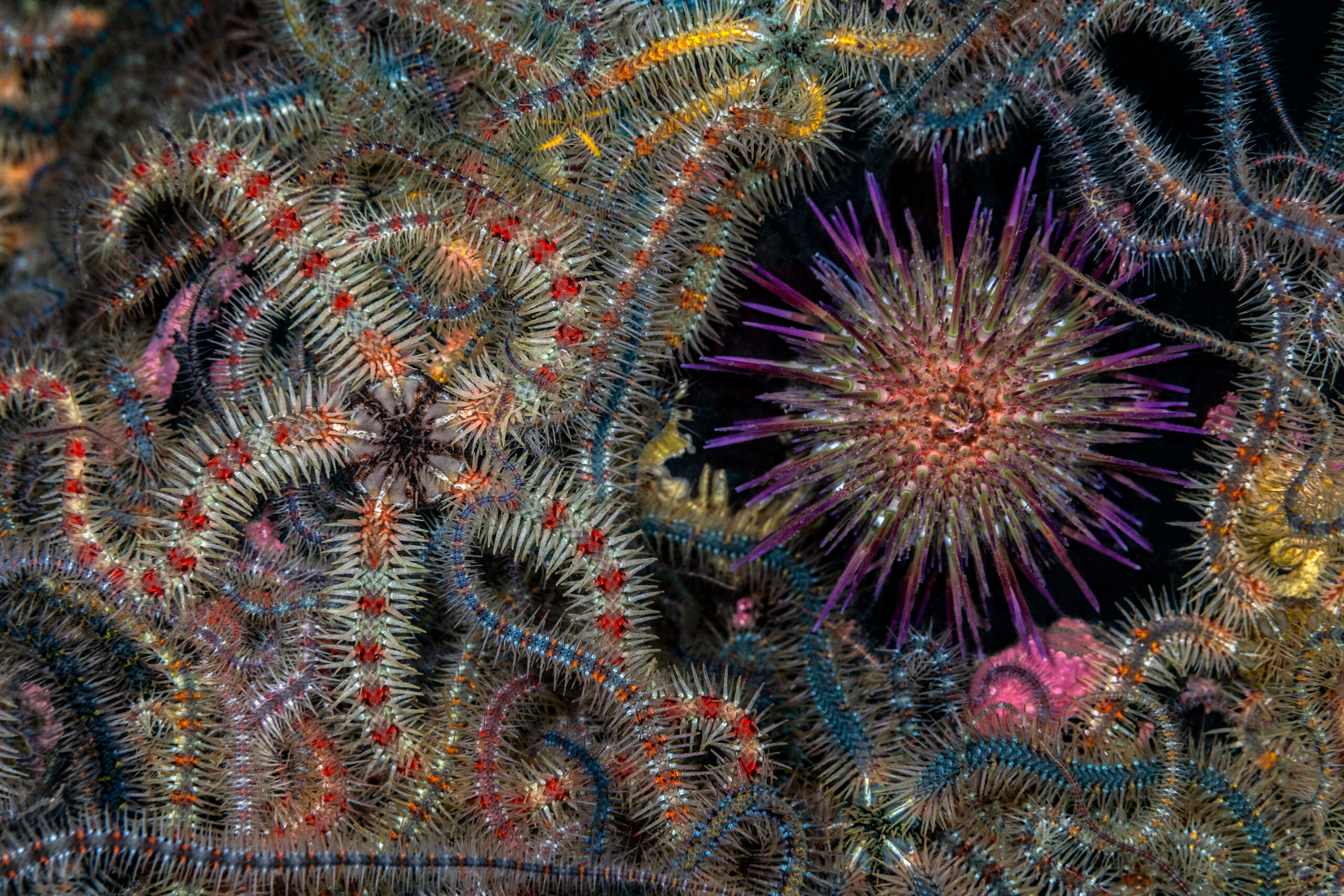
During a dusk dive in a Scottish sea loch, a torch reveals thousands of brittle stars covering the seabed. Their delicate arms form a striking pattern around a purple sea urchin. UK seas are cold, with strong tides and changing visibility, but their nutrient-rich waters support abundant marine life. Rocky reefs can be covered with kelp, anemones, sponges and soft corals, while fish, seals and sharks also visit.
BEHIND THE LENS
ABOUT THE IMAGE
- Canon 5D Mark IV
- 1/100, F/20, ISO 320
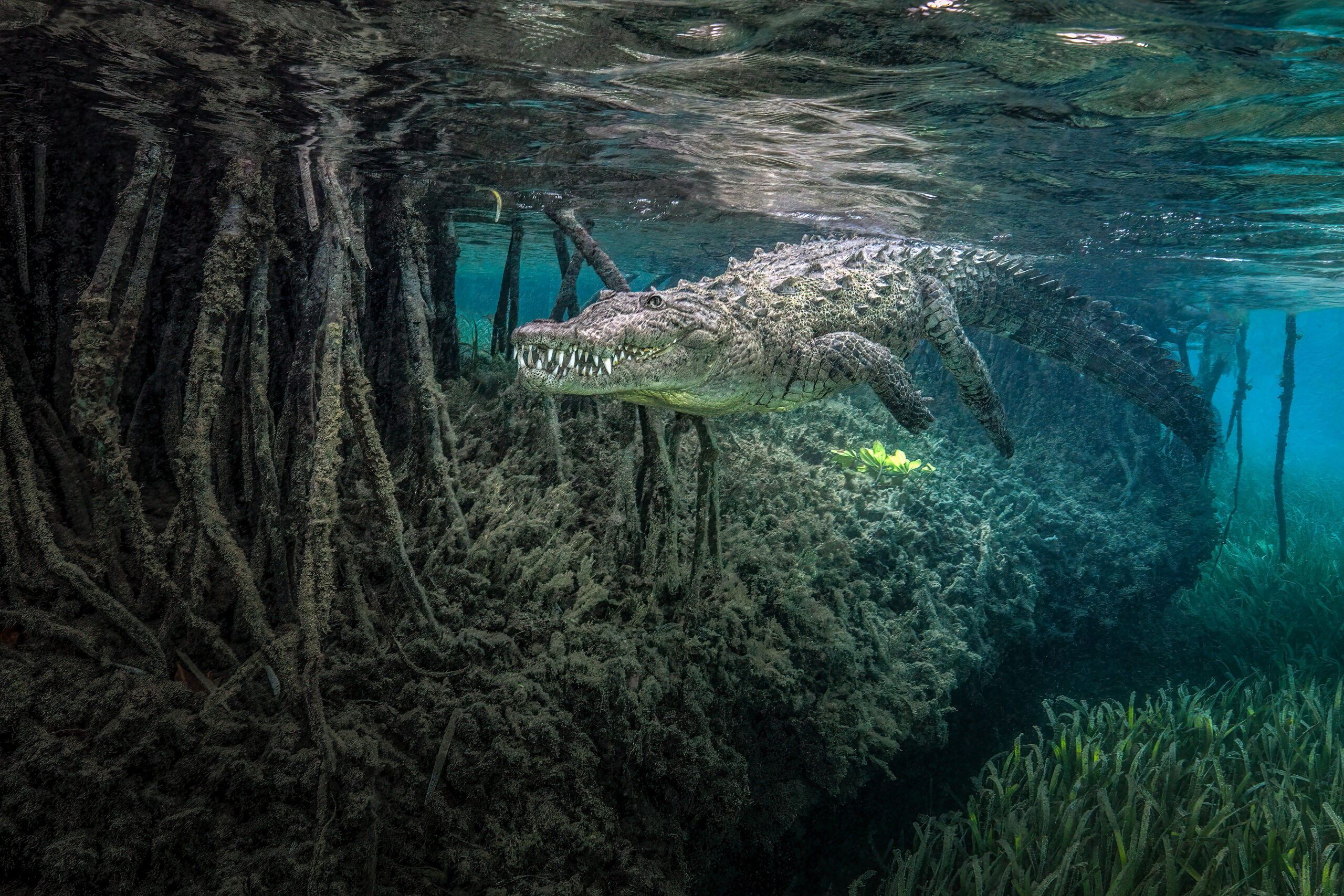
An American crocodile moves through the mangroves of Cuba, a habitat that provides shelter for feeding, breeding, nesting and raising young. Beneath the trees, fallen leaves break down into nutrient-rich sediment. For the crocodile moving carefully is essential to avoid disturbing the soft mud and consequently reducing visibility. As the crocodile approached, the photographer remained still and captured it in its natural environment. The animal passed within touching distance before disappearing among the mangrove roots.
BEHIND THE LENS
ABOUT THE IMAGE
- Canon 5D Mark IV
- 1/125, F/22, ISO 100
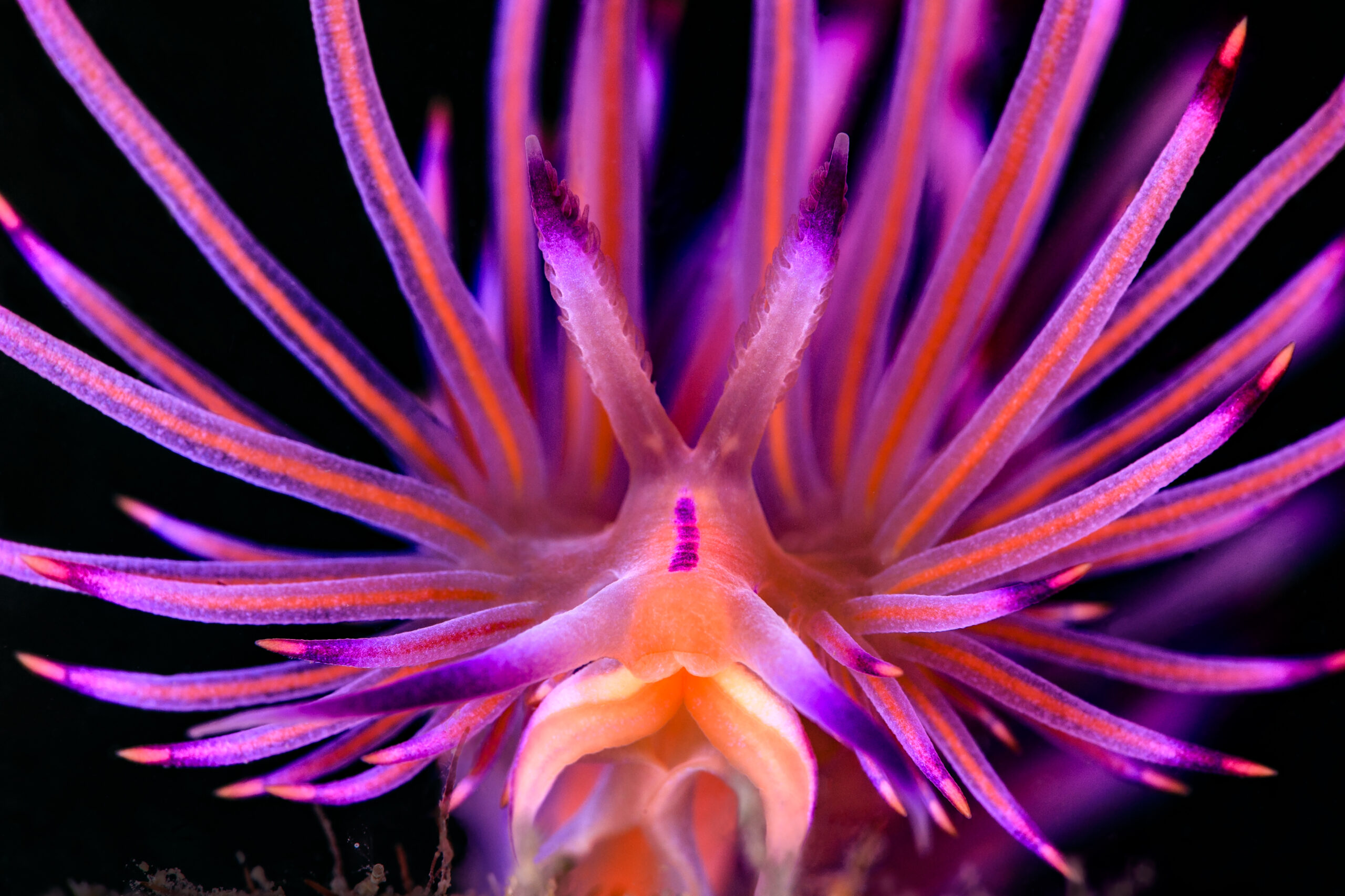
This tiny nudibranch – commonly known as sea-slug – was photographed in Queensland, Australia. Only about 1centimetre long, it is covered in delicate cerata, branching structures that help it absorb oxygen. Its vivid pink colour is an example of aposematism: bright colours and patterns that warn predators that an animal may be toxic or unpleasant to eat. Thousands of nudibranch species live in oceans worldwide, displaying an extraordinary variety of colours, shapes and adaptations.
BEHIND THE LENS
ABOUT THE IMAGE
- Canon 5D Mark IV
- 1/200, F/18, ISO 400
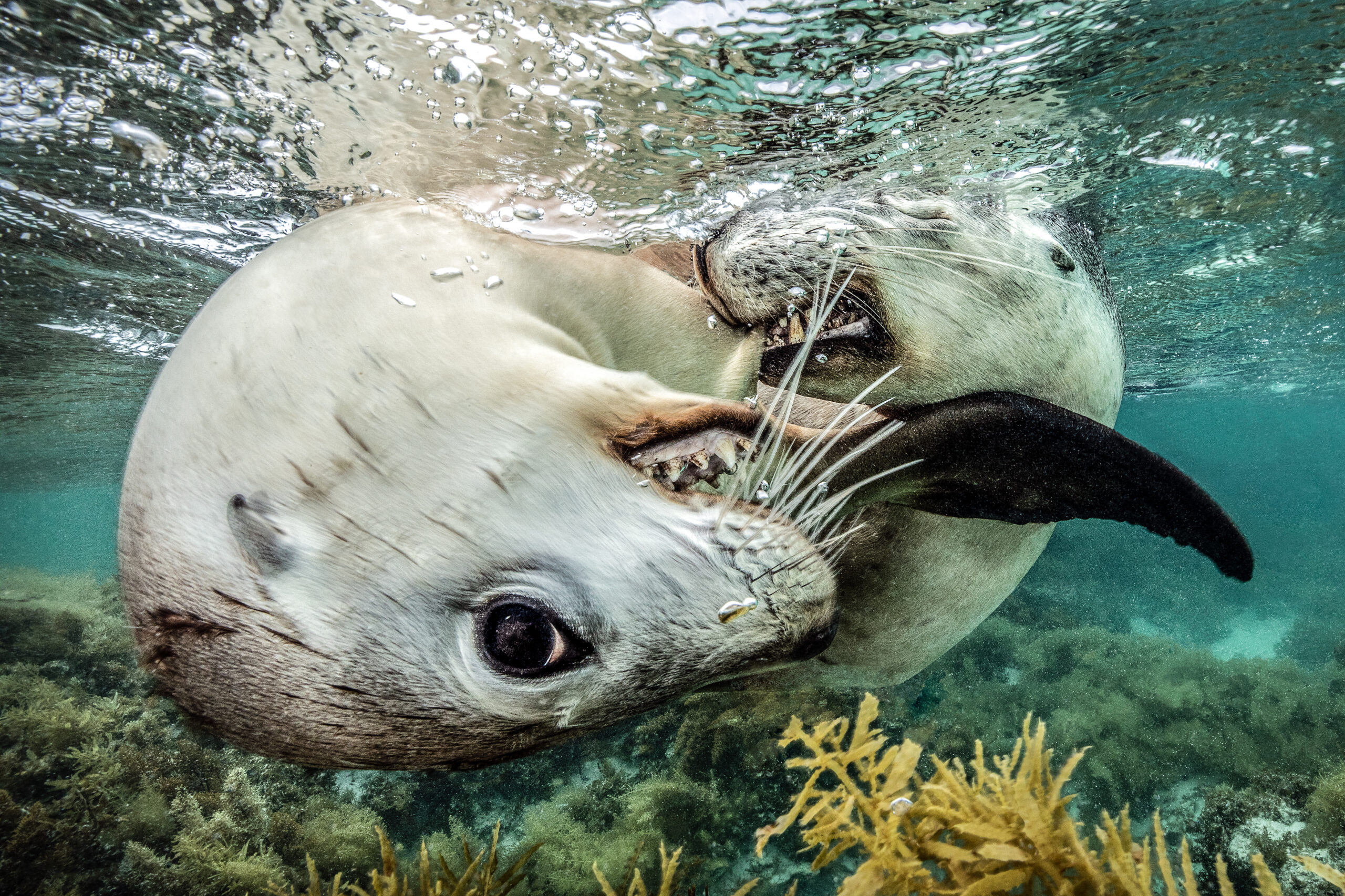
In Western Australia’s Jurien Bay Marine Park, curious sea lion pups approached the photographer in the water. The playful animals chased, gently nipped and twisted around the camera, fascinated by their reflections in its curved dome port. They also appeared to copy the photographer’s movements, turning as she spun in the water. One pup even brought a starfish. This encounter reveals the intelligence, curiosity and playful behaviour of these young marine mammals.
BEHIND THE LENS
ABOUT THE IMAGE
- Canon 5D Mark IV
- 1/125, F/14, ISO 800
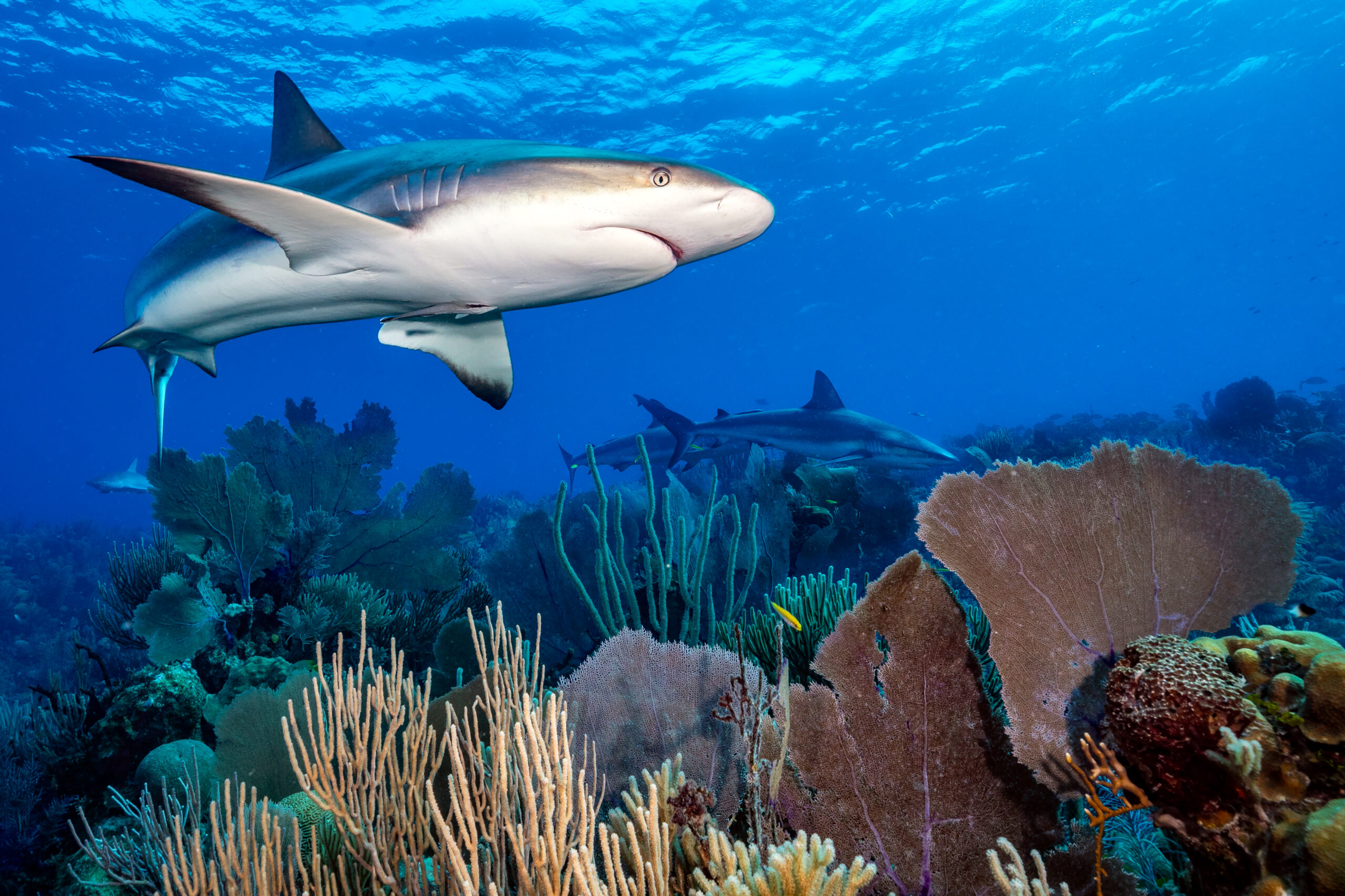
A Caribbean reef shark swims through purple sea fans and porous sea rod in Jardines de la Reina, Cuba. The marine park has been protected since 1996, with limits on fishing and visitor numbers helping its reefs and wildlife thrive. Stretching for around 90 miles, the protected archipelago is known for healthy corals and abundant marine life. Caribbean reef sharks can reach three metres in length and are important apex predators, helping maintain balance within the reef ecosystem.
BEHIND THE LENS
ABOUT THE IMAGE
- Canon 5D Mark IV
- 1/125, F/14, 500
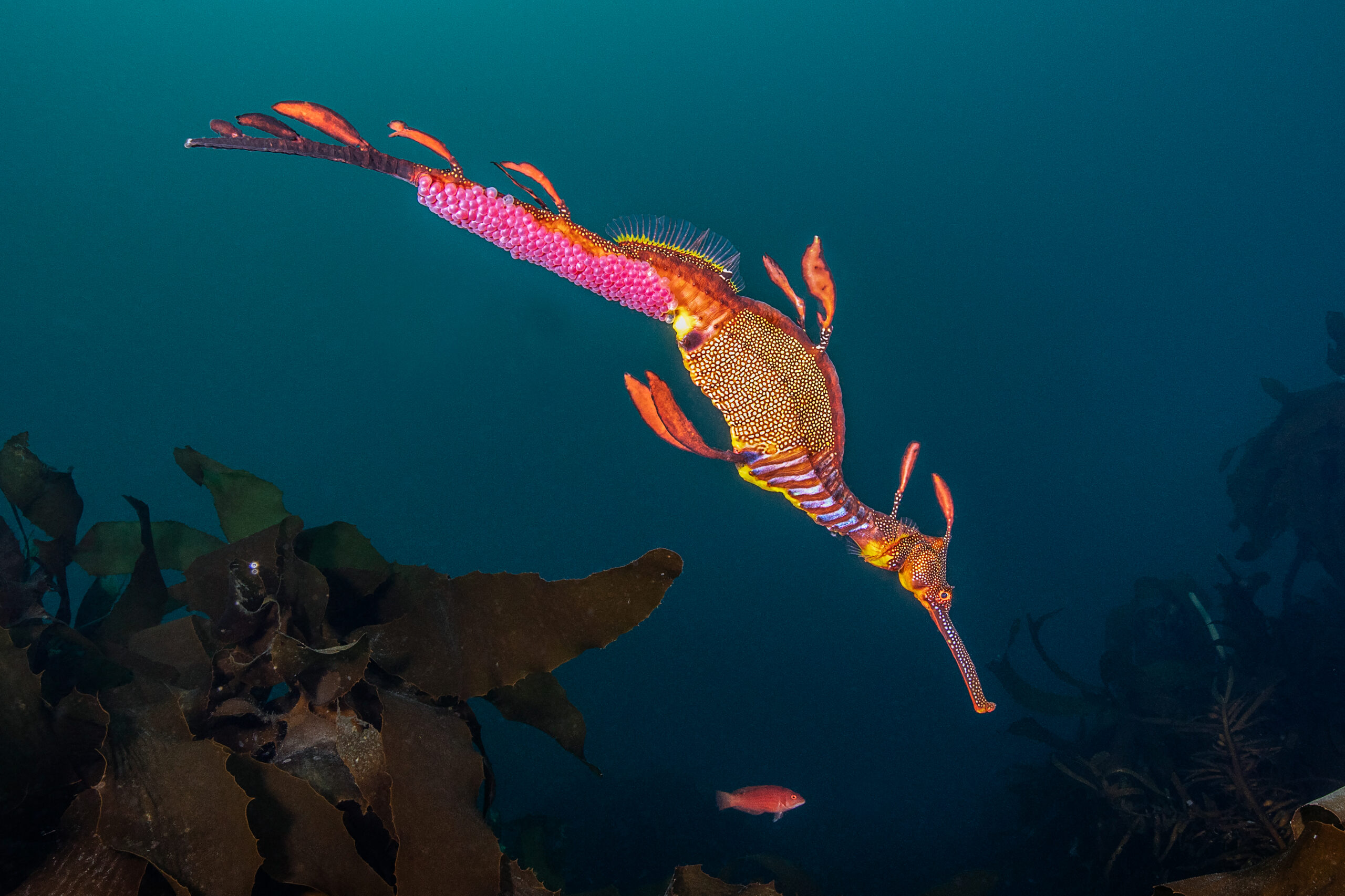
A male weedy seadragon carries hundreds of fertilised eggs on his tail in Tasmania’s coastal waters. Unlike seahorses, which carry eggs in a pouch, male weedy seadragons attach them directly to their tails, where they develop for around eight weeks. This species grows to about 45 centimetres long and is found only in Australia. Leaf-like appendages and detailed markings provide camouflage among seaweed and seagrass. A single brood can produce up to 250 hatchlings.
BEHIND THE LENS
ABOUT THE IMAGE
- Sony A1
- 1/160, F/22, ISO 100
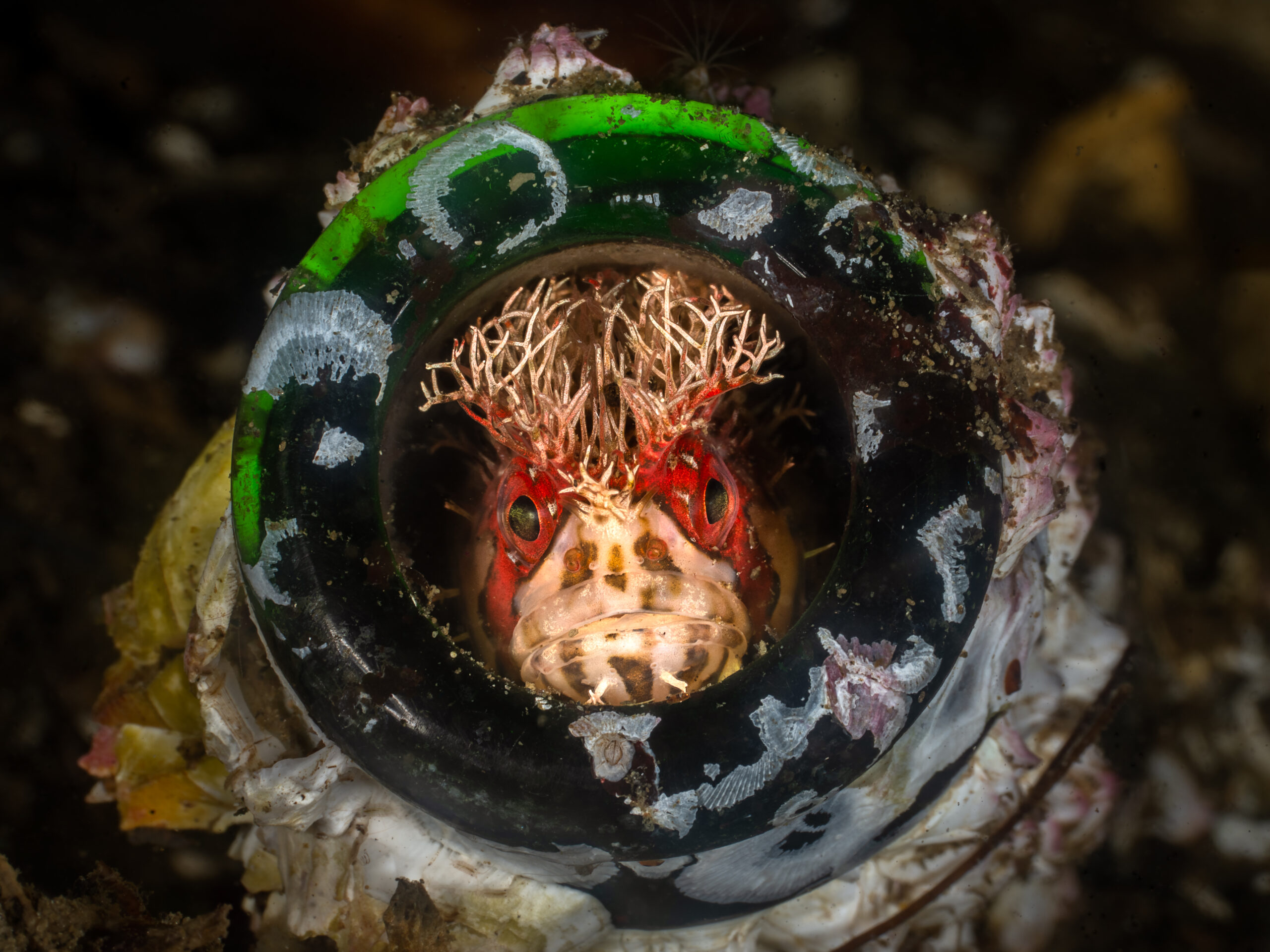
A mosshead warbonnet shelters inside a discarded glass bottle during a night dive in God’s Pocket Bay, Canada. These fish normally hide in rocky crevices, but the bottle’s narrow opening provides protection from predators. Some have been recorded living in bottles for up to a year. The bottles were once used by sailors and fishermen, who discarded them in the harbour during the 1800s. Today, they have become unexpected shelters for marine life.
BEHIND THE LENS

Jenny Stock United Kingdom (UK)
ABOUT THE IMAGE
- Canon 5D Mark II
- 1/125, F/12, ISO 320
Jenny Stock is an award-winning wildlife documentary filmmaker and underwater photographer whose work spans the globe. Her imagery has appeared in National Geographic, Wildlife Photographer of the Year and the BBC. In 2023, she became the first and only woman to win British Underwater Photographer of the Year. Jenny has also worked as an underwater stunt diver in Hollywood films and as a safety diver on UK television dramas. Originally from northern England, she spent a decade in Australia directing shows like Crikey It’s the Irwins and Bondi Vet, and now writes for DIVE Magazine in the UK.
IMAGES BY Jenny Stock

Conservation (Hope)Photographer of the Year
2025 Indonesia
Reconnect. Immerse yourself. Be inspired.
Enjoy the vibrancy, beauty and impact of each year's finalist photography, celebrated in our Ocean Photographer of the Year coffee table book collection.