Alexandra Cousteau
Alexandra Cousteau is a filmmaker and environmental advocate. She is also the co-founder of the impact programme, Oceans 2050.
More from The Innerview
I was seven years old when my grandfather taught me to scuba dive off the coast of Nice.
The equipment didn’t fit: mask too big, regulator too large for my mouth, a weight belt that dug into my hips. I shuffled to the side of the boat, looked down at water that seemed very deep and very dark, and spent a long moment feeling conflicted about what I was about to do. But my grandfather didn’t seem to notice. He gave me a smile, a wink, a small shove and in I went.
A few minutes later, 15 feet down, a school of silver fish came towards me out of the blue. The sun was breaking through the surface and catching their bodies as they moved, and I was mesmerised – not just by the beauty of it, but by what happened when I reached my hand out. They moved away. I pulled my hand back. They came closer. Back and forth, again and again, a seven-year-old negotiating with the sea. That moment is with me every day.
I’ve spent 25 years as an advocate for the ocean, and I’ve come to believe that this kind of encounter is not incidental to the work. It is the work. Or at least, it’s what makes the work possible.
Conservation, as we’ve practised it, is built on the logic of protection: hold the line and keep humans away. That instinct comes from love, and it has saved things worth saving. But it has a ceiling. You cannot protect your way to abundance. The ocean doesn’t need us to leave it alone – it needs us to actively restore what we’ve taken. And that shift, from protection to restoration, requires something the policy frameworks don’t account for: the understanding that we belong to this system, not above it.
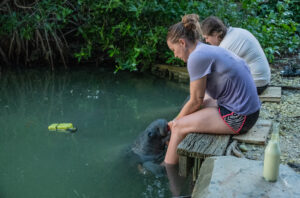
Those fish that swam around me that first time I took a breath underwater weren’t performing for me. They were going about their lives, and for a moment they let me into the edges of theirs. That’s what the Innerview does. It dissolves, briefly, the fiction of the observer. You are not watching the ocean. You are in it: subject to its physics, breathing on its terms. And if you’re lucky – if the reef is intact enough – it starts to interact with you. A cleaner shrimp moves towards your hand. A small fish defends its patch of seaweed. A curious grouper starts to follow you. Ancient, ordinary life, carrying on.
We will not restore what we only manage from a distance. The Innerview is how distance collapses. It is, I think, the emotional infrastructure that restoration requires.
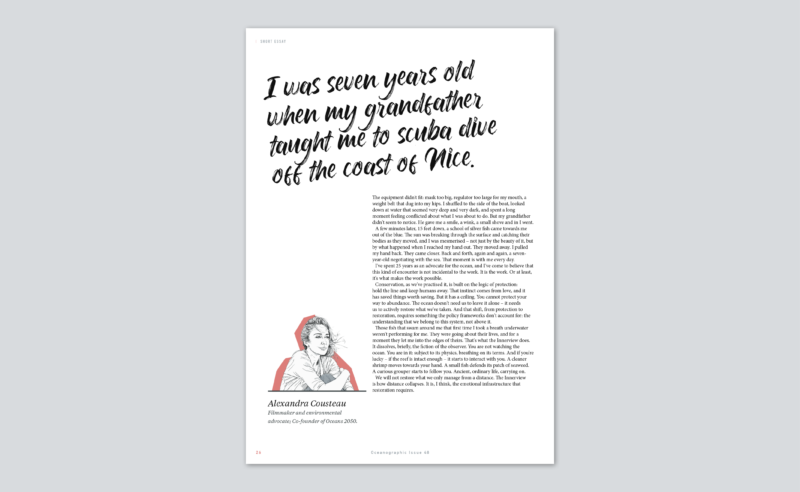
This is how this short essay appears in the special Oceanographic publication, The Innerview
Printed editions
Current issue
Back issues
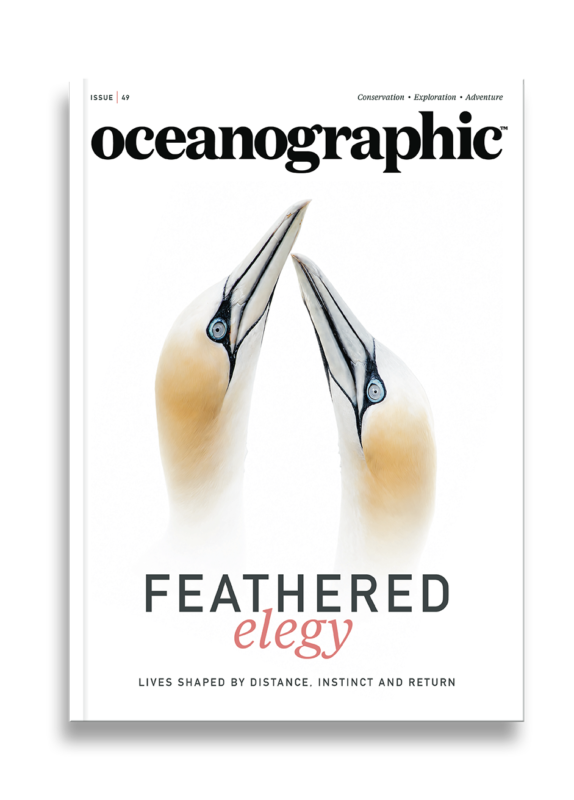


Enjoy so much more from Oceanographic Magazine by becoming a subscriber.
A range of subscription options are available.
