In this column, Callum Roberts, marine biologist and Professor of Marine Conservation at the University of Exeter, discusses what the UK needs to build a world-class Marine Protected Area network.

The United Kingdom has a world-class network of Marine Protected Areas… or so government nature conservation agencies would say. We achieved the goal of protecting more than 30% of our seas before this ambitious target was set by the UN in 2022. Much of our network was planned carefully by experts and citizens following leading edge scientific principles. It looks good on paper. That, unfortunately, is the only place where it does.
Underwater, the vast majority of these so-called protected areas have no real management, monitoring or surveillance. There are no marine park managers, rangers or patrols. Most people in the country, including those on the coast, have no idea where the protected areas are, or even that they exist. Contrast our approach with cherished icons like the Great Barrier Reef Marine Park in Australia, which employs 267 staff and has an operating budget of AU$120 million – we don’t compare well.
So what went wrong? Or put another way, what hasn’t yet gone right, because we can still make the UK MPA network first class?
Our first mistake was to try to get something for nothing, by declaring areas to be protected and then leaving it to existing statutory bodies to undertake protection. 15 years after the first tranche of Marine Conservation Zones was established, we are only just seeing bodies like Inshore Fisheries and Conservation Authorities beginning to exercise their conservation responsibilities. But what they are doing is piecemeal and doesn’t go nearly far enough, which brings me to problem number two.
Instead of applying blanket protection to the whole of protected areas, the government took a minimalist approach. It didn’t make sense, by their logic, to protect things that didn’t need protection. So, delaying protection for years, they embarked upon a huge exercise to identify the habitats that were vulnerable to human impact and protect only those places. It would be cheaper this way, and conservation would inconvenience fewer people. The approach led to some ludicrous outcomes.
Firstly, habitats in 90% of English and Welsh Marine Conservation Zones were declared to be robust and doing fine, while only 10% were classed as needing protection to ‘recover’. The second was that large Marine Conservation Zones, like one off the Norfolk coast, ended up having pocket handkerchief sized patches of protection amid a sea of business-as-usual. And the purpose of this protection was not to recover some of the many species lost over the centuries, like skates, giant halibut or wolffish, but worms. I like worms (a lot) but they wouldn’t be my first, or only, priority. The net result is that a conservation network intended to recover UK seas, instead mandates that they mostly stay as they are – in a state of loss and degradation!
How on earth did we get here? Given the extraordinary and increasingly well documented wildlife losses from UK seas, why is it that earnest and well-meaning scientists and conservation professionals decided very little needed protection? Those same people decided it would be just fine to carry on industrial fishing with destructive bottom trawls and dredges.
More from Callum Roberts
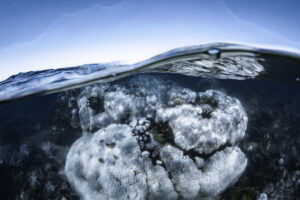

I like worms (a lot) but they wouldn’t be my first, or only, priority.
Continue reading
This story is exclusively for Oceanographic subscribers.
