Hong Kong's intangible heritage
In the murky waters off Hong Kong, the Edges of Earth expedition goes on the hunt for a long-lost pirate ship.
The first time we attempted to get to this dive site, Hong Kong was in the grips of one of the worst rainstorms in its recorded history. The sky turned an ominous black, rain pelted down with a relentless fury, and we found ourselves stuck in our apartment in Mid-Levels, unable to leave yet with so much still on our expedition agenda.
Devastated but undeterred, we waited out the storm. Despite locals warning us about the murky waters of Hong Kong – where visibility is close to zero even on the best of days – we decided we would dive once the rain subsided. However, instead of reaching our intended, far-flung dive site, we spent the day exploring the islands and checking in on the shellfish research projects of The Nature Conservancy and The Explorers Club Hong Kong chapter.
Our first attempt at Hong Kong had been in September 2023, where we experienced two weeks of horrible luck when it came to diving conditions. Most might have crossed Hong Kong off the map entirely after this, chalking it up to an underwater expedition gone awry. But for us, there was something about the city that pulled us back – something felt unfinished.
The rumour of a potential pirate shipwreck lurking at the bottom of the sea had us captivated. However, its exact location remained disclosed. So, finding it would require resourcefulness and the expertise of our friends of The Explorers Club. This unmarked and unidentified wreck was not a typical dive site. It was a test of patience, skill, and fortitude. Only a select few had ever descended into its depths, leaving us obsessing over the possibility of this hidden relic. We spent months imagining what could be in these waters and how much is still left totally undiscovered here. And so, Hong Kong had pulled us back in for round two in November of 2024.
Not to mention, we are utterly obsessed with Hong Kong’s restaurant scene and were dreaming just as much about dumplings as we were about this shipwreck. The maritime history is rich here. The city’s waters have been a stage for centuries of drama – pirates, opium smuggling, and clandestine trade routes. In the 19th century, the region was a stronghold for sea bandits like the infamous Cheung Po Tsai, who commanded fleets of junks and eluded capture for years.
Beyond the pirate lore, there are tales of the Lo Ting, a mythical creature described as half human and half fish, said to have once inhabited Hong Kong’s land and sea. This folklore, coupled with the city’s history as a mega trade hub, gives it almost a mystical quality. It’s no wonder that somewhere beneath these storied waters, the remains of a possible pirate ship might still be hiding.
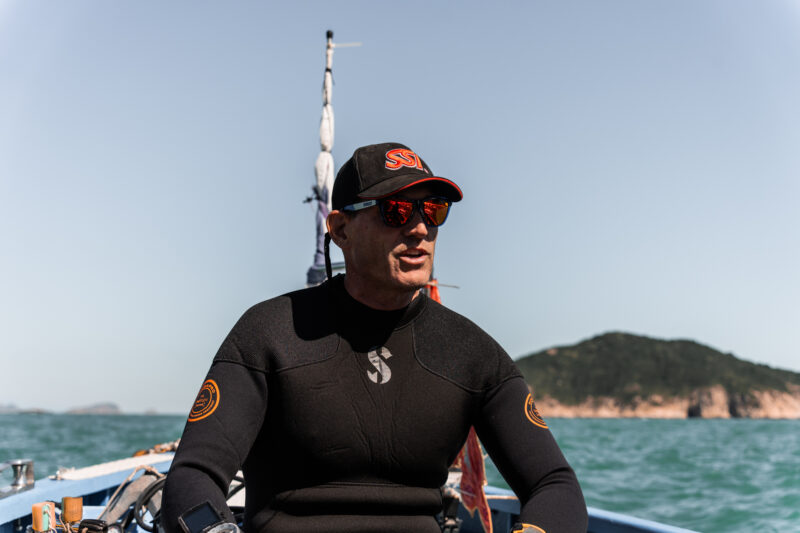
Meeting up with Adam Janikowski, a leader of The Explorers Club and a contributor to TNC’s oyster restoration work, we mapped out our dive plans for an entire year before landing in the city. Our challenges proved to be quite numerous. First, no one knew the exact location of the dive site – we were piecing together secondhand accounts from the few who had visited it before, reducing our ‘research’ to a patchy game of ‘whisper down the lane’. Next, we needed to find a boat willing to brave the rough waters where the site was supposedly located. And finally, we had to time our expedition perfectly with the weather, relying on luck – hardly an ideal strategy when facing Hong Kong’s notoriously unpredictable conditions.





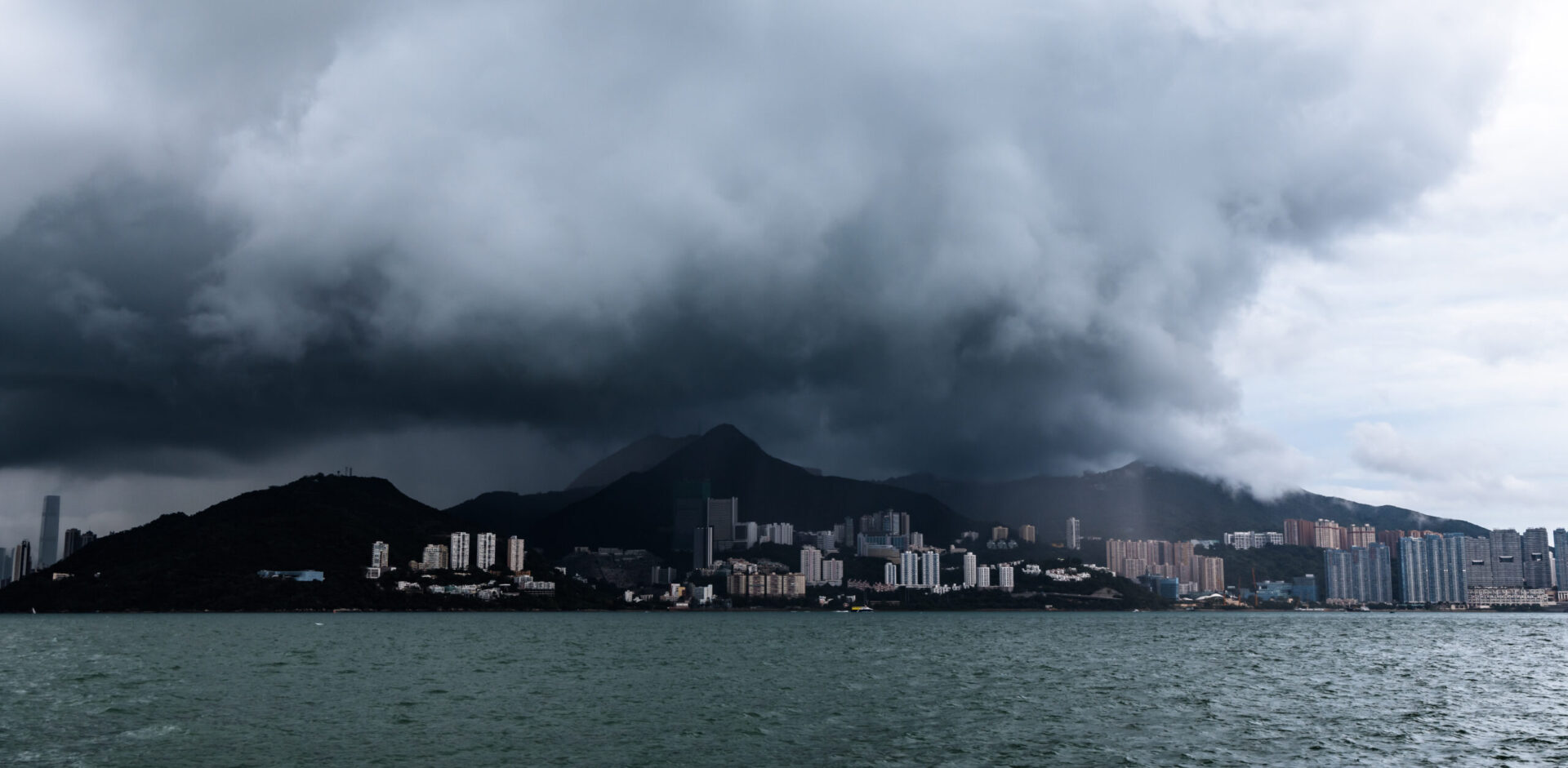
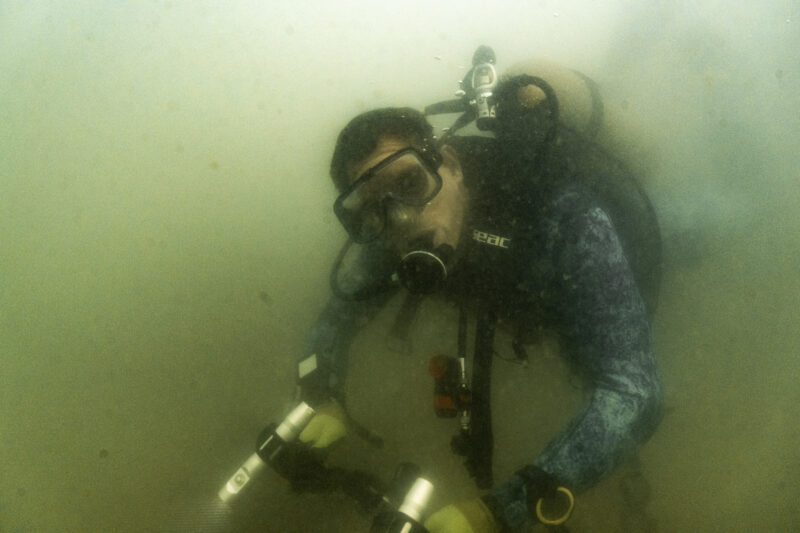
But when we touched down this time, the skies were open, the sun was shining, and the weather report promised the best conditions we could hope for. Finally, the day had come for us to dive. This was our shot – one chance to find the elusive wreck. As we prepped on the docks, the air buzzed with anticipation, equal parts thrill and trepidation. What were we diving into? Would we even find it? And if we did, what would we uncover? The calm water in the bay gave us little indication of what awaited us further out, but there was no room for hesitation. We were going.
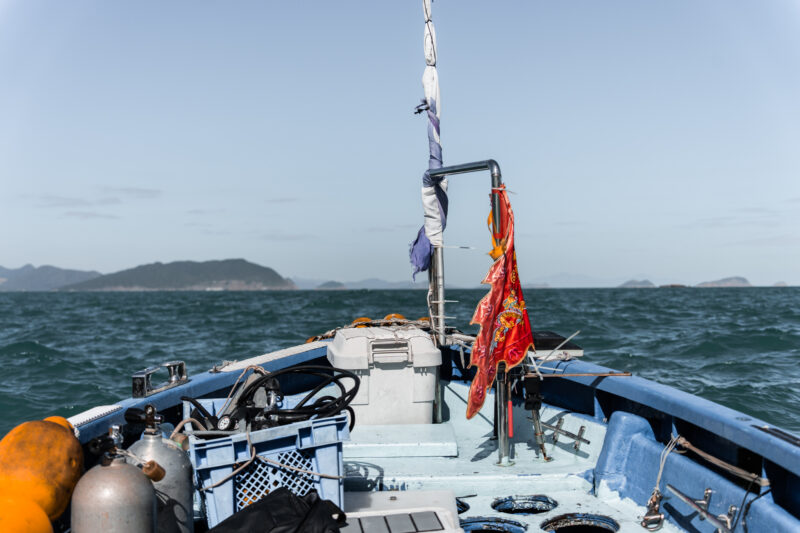
Steaming away from Hong Kong’s iconic skyline, we passed the bustle of modernity – gleaming skyscrapers, ferries packed with commuters, and the city’s constant hum. But as we pushed further, the scene began to shift. The energy of the city faded behind us, and Hong Kong revealed a rawer, wilder side. Rugged cliffs replaced high-rises, and dense greenery stretched out along what felt like untouched coastlines. It seemed like we were traveling back in time, into a version of Hong Kong that had long been forgotten – a place shaped by the sea and its secrets.
Our sense of mystique and wonder however quickly faded along with our calm conditions, as the open water proved to be more formidable than expected. The gentle calm of the bay gave way to unpredictable swells, making it clear that we were no longer in the city’s sheltered embrace. But no matter the challenge, there was no turning back now.
The shipwreck was first discovered several years ago by a group of recreational divers from the South China Diving Club, who are extremely familiar with these waters. The divers managed to uncover key features of the wreck, including massive anchors, rusted chains, and weathered cannons. During a recent dive, a large metal piece believed to be part of the ship’s capstan was identified, adding a new layer of intrigue, but also giving the team some more clues. Based on the wreck’s wooden structure, the founding team estimates the ship dates back to the late 1800s. This was a time when wooden ships were giving way to metal-hulled vessels and Hong Kong was a heavy hub of trade… and smuggling.
For underwater secrets like the shipwreck we were diving, Adam and other members of The Explorers Club have been utilising advanced tools like side-scan sonar, which uses sound waves to generate detailed seafloor images. This technology allows researchers to locate wrecks and visualise submerged artifacts with precision, even in poor visibility, unlocking underwater data without disturbing their resting places.
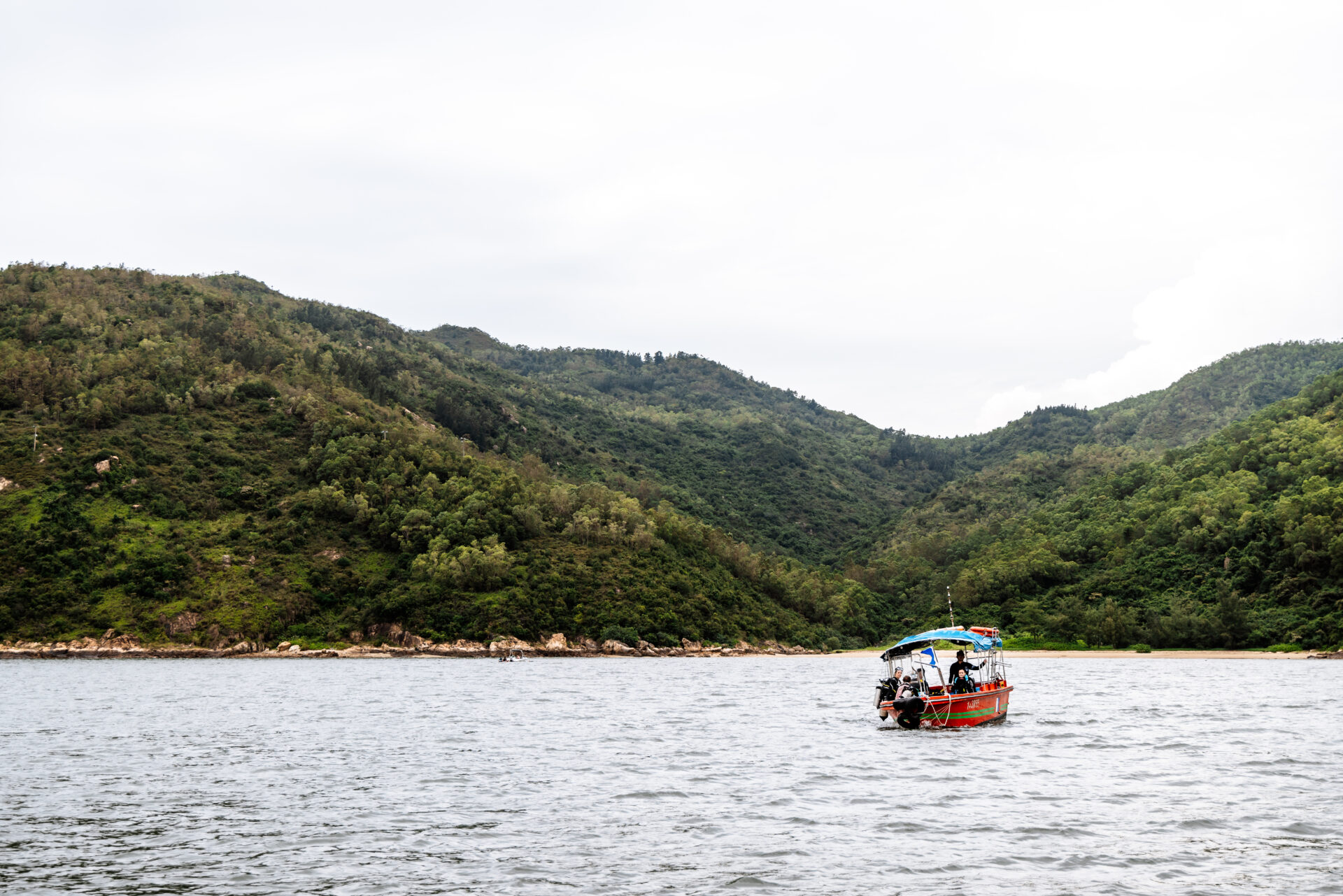
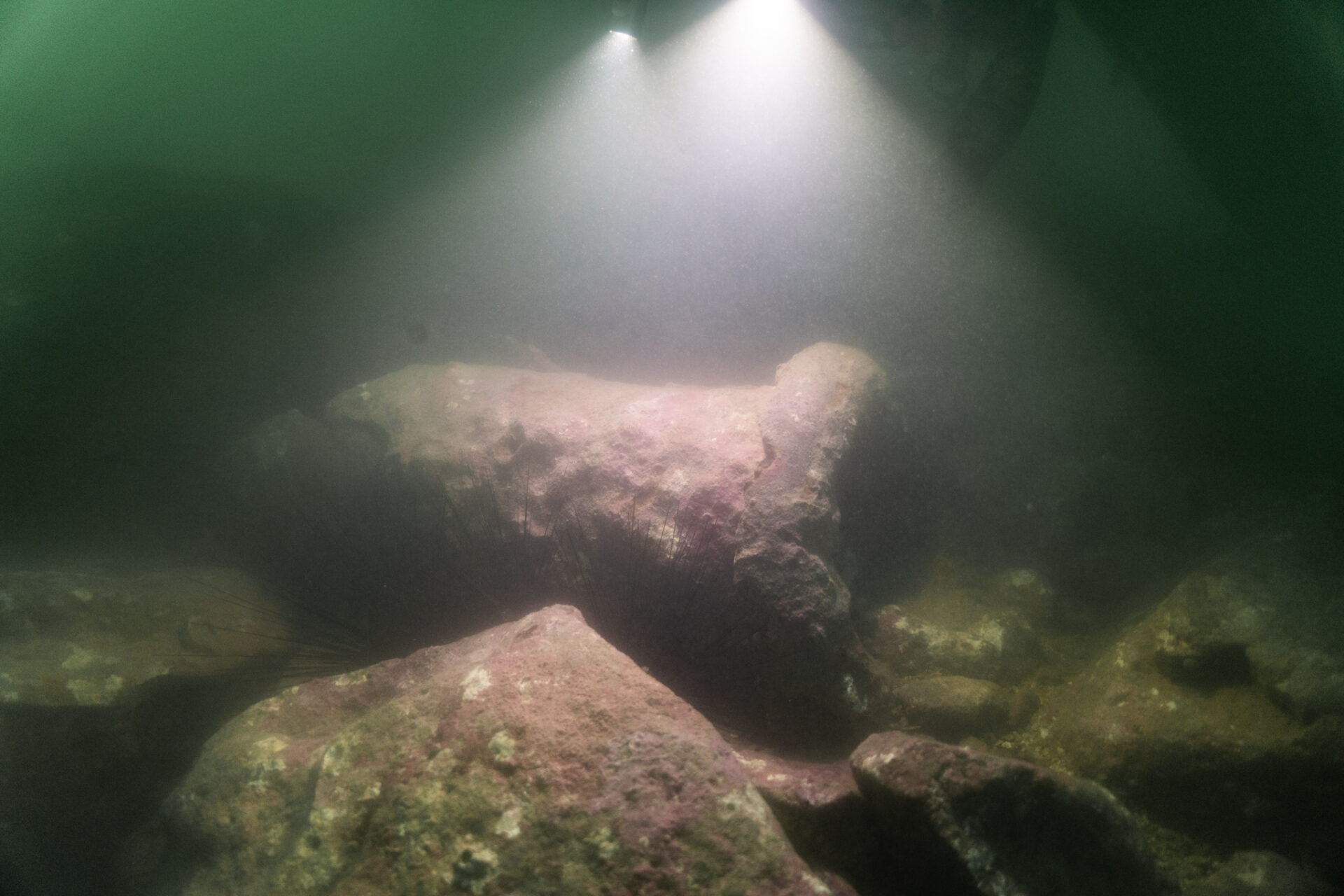
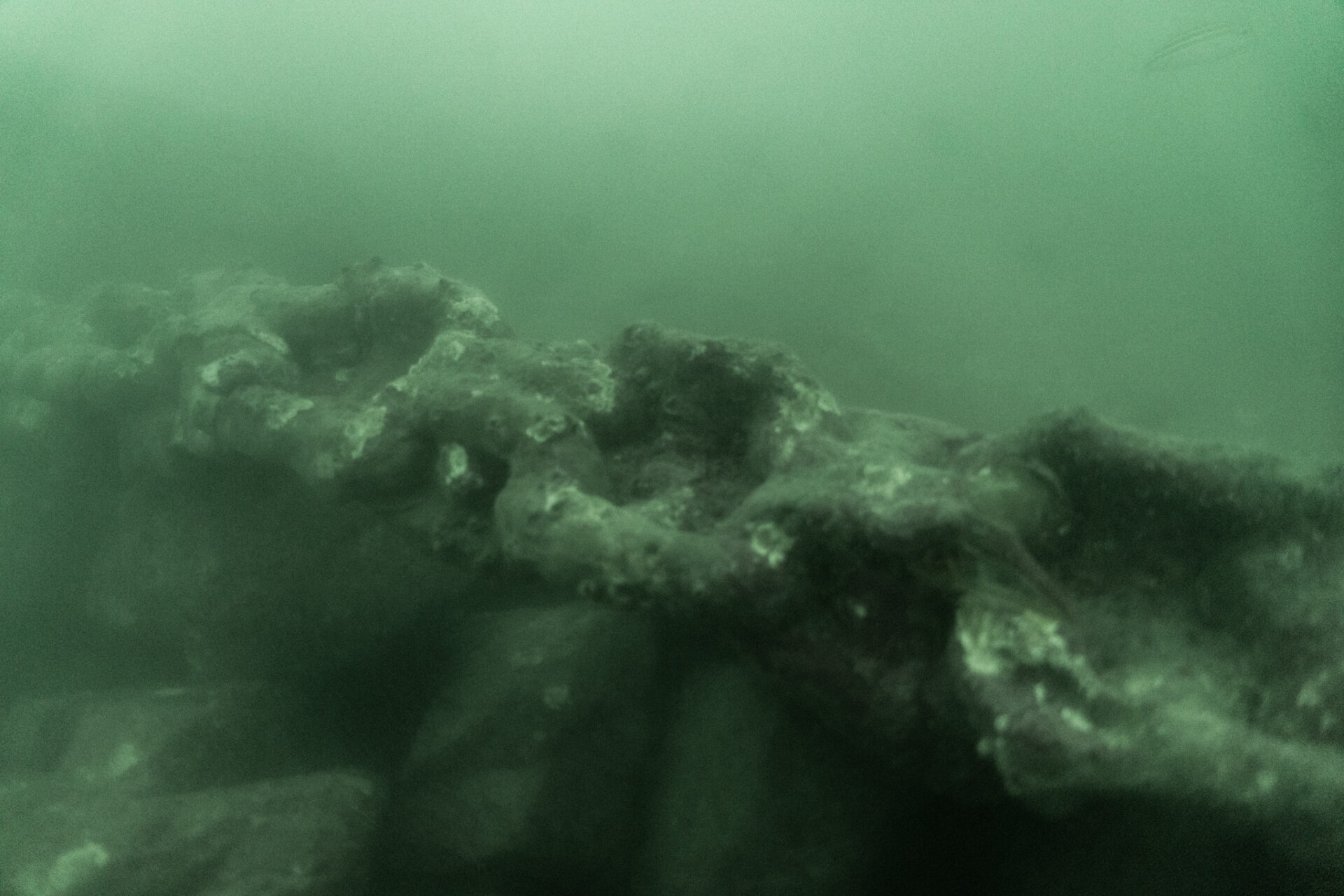
So far, no one on the team has been able to find a record of this ship appearing on any admiralty maps or historical documents, based on those sonar scans. This absence suggests the vessel may have been involved in illicit activities, likely touting opium during a period when Hong Kong was thriving on this lucrative trade. The wreck’s location, near hidden coves and a caves, filled with debris in present day, lends weight to the theory that it sought refuge during a storm. The storm’s power likely drove the ship onto a lee shore, its crew perhaps scrambling to unload valuable cargo before the vessel succumbed to the sea.
The idea of undiscovered treasures or artifacts hidden ashore or an unmapped pirate ship only adds to this site being that of legendary status.
Hong Kong’s maritime history makes discoveries such as these even more compelling. For centuries, its coastlines were a haven for pirates, or as they are called in Hong Kong, sea bandits. The network of islands and coves offer perfect hideouts, and there are many stories of the sea bandits using the geography here to their advantage. Back then, Hong Kong was a city built on the sea. Maritime communities thrived here, with many families living entirely on boats, sustained by the abundant resources of the ocean. The city’s economy was, in part, built on the oyster trade, whether for food or for lime production. This is why this rich coastal culture made Hong Kong a ‘sea bandit paradise’, infamous for its daring exploits, secret trade routes, and unmarked ships.
When we arrived at the presumed wreck coordinates, we hastily reviewed our dive plan before plunging into the chaotic waters. The conditions were turbulent and unforgiving. We were drifting – a lot. Pinpointing the wreckage from the surface with GPS quickly proved futile. The only option was to descend and search directly. But as soon as we hit the water, visibility – or lack thereof – became our first real challenge.
Within moments, we lost sight of one another in the thick, dark murk. After executing our one-minute buddy search, we resurfaced, only to discover we’d all been within arm’s reach the entire time. Disoriented and drifting extremely far from our vessel, we saw our captain waving us back, signalling just how heavily the surge had carried us.
Regrouping on the boat, we adjusted our plan and decided to reposition closer to the suspected coordinates. Back-rolling into the water again, we descended, this time sticking tightly together, nearly arm-in-arm for guidance. Adam led the way, hugging the seafloor as we scanned the terrain with our torches. The surge remained relentless, and our artificial lighting felt almost futile against this water. My usual dose of sea-sickness medication unfortunately wasn’t holding up against the relentless motion – I could feel it coming. As the queasiness hit me, I braced myself, knowing my regulator would soon bear the brunt. Even so, nothing – not the seasickness, the disorientation, or the punishing conditions – was going to stop us.
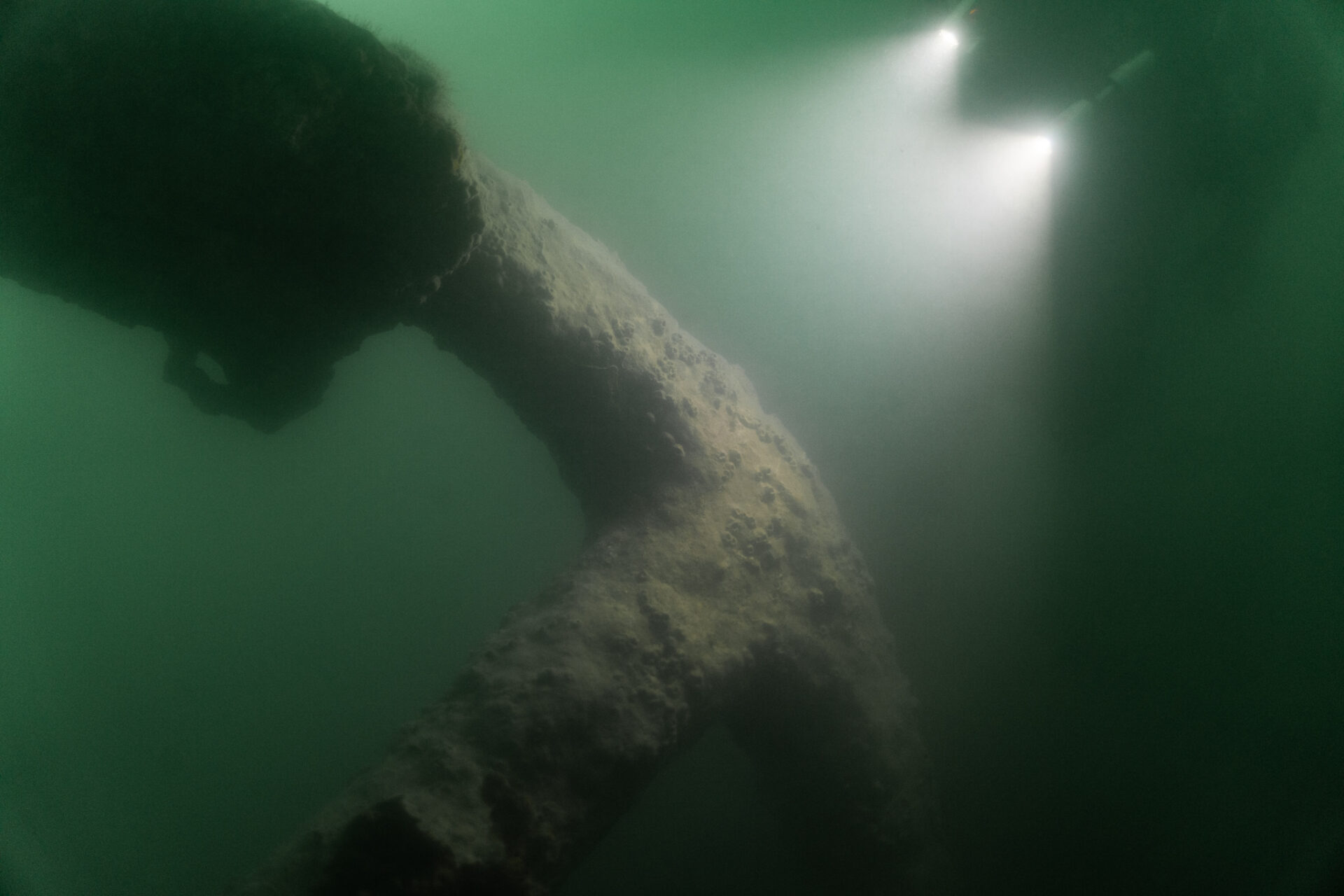
And then, just as hope was starting to wear off, it emerged from the gloom: a massive chain, its size and clarity startling us in the otherwise impenetrable green darkness. Following the metal path, we stumbled upon the engine, and then the colossal upright anchor. Its size hinted at the immense scale of the ship it once secured. Each artifact we uncovered felt like stepping into a time capsule, a tangible connection to a bygone era.
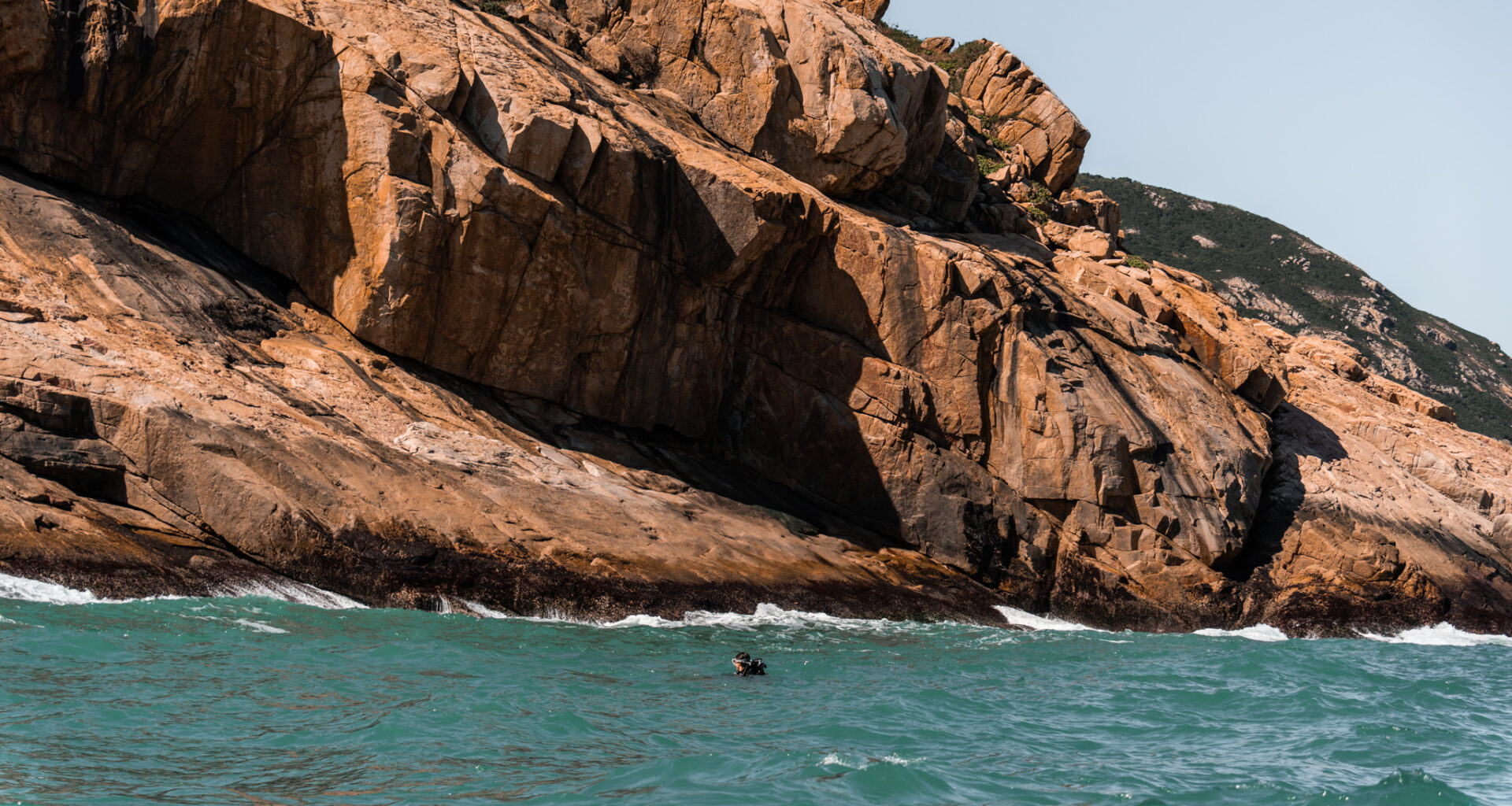
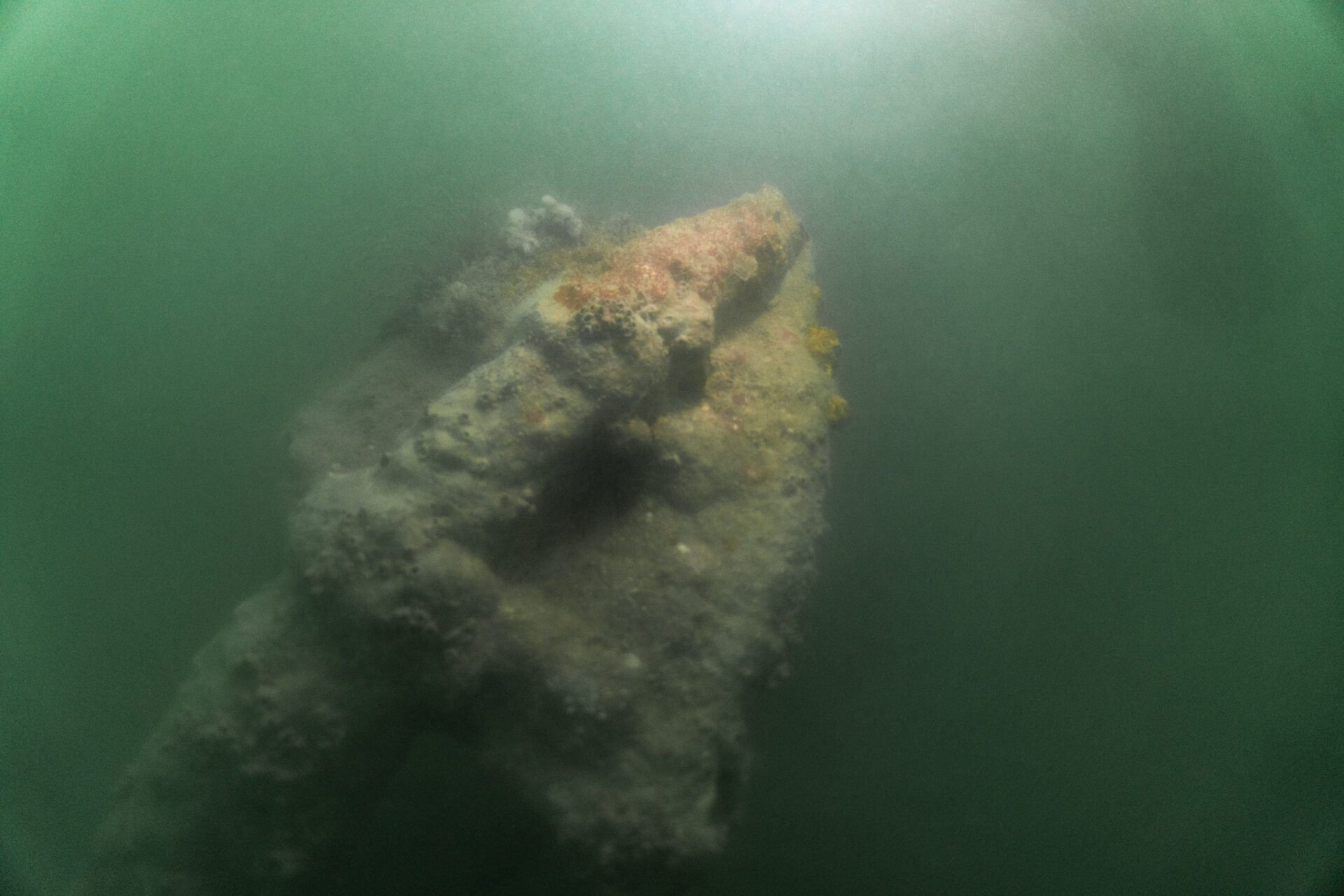
The dives that followed were nothing short of gruelling. The water pushed us relentlessly, reducing our attempts at capturing underwater content to a frustrating exercise in futility. Our torches barely supported us, and my sea sickness happened four more times. Despite the setbacks, those vivid images will be etched into our minds forever. No camera could fully capture the feeling of uncovering such rich history firsthand. And as we surfaced, freezing and exhausted, the exhilaration was pulsing through each of us, as we marvelled in the fact that we had managed to find it after all.
Hong Kong had been summoning us for this very moment. From the rainy days that kept us stuck in Mid-Levels to nature’s conditions that tested our resolve, every twist and turn of this expedition was worth it. We came here to play a small part in uncovering and preserving the rich maritime history that defines this region. The puff of this shipwreck was in the stories we had dreamt up from limited information, connecting us to a city’s untamed past. And it pushed our limits as divers in conditions we tried to be as prepared for as possible.
While this is not a place for casual exploration, it’s all a part of its charm. It remains a place shrouded in fantasy, its secrets accessible only to those ready to push themselves to the edge, all in the name of exploration. But this mystery is something we’re proud to preserve.
This shipwreck is a piece of ‘intangible heritage’. It’s a legacy worth safeguarding. The dive community, including members of the Explorers Club and South China Diving Club, shares a commitment to leaving this site undisturbed, with the goal being simply its documentation for the sake of preservation. It was yet again confirmed that the metropolis’ history, its waters, and its wild tales of the high seas all have a magnetic and irresistible draw.
For now, we leave this shipwreck with its secrets intact, but with every intention of returning to continue unravelling what sits beneath the surface here.

Printed editions
Current issue
Back issues




Enjoy so much more from Oceanographic Magazine by becoming a subscriber.
A range of subscription options are available.
