Singing in tuna: Can a UK return repair cultural division?
As Atlantic bluefin tuna return to English waters, sustainable fisheries expert and Angling Trust Head of Marine Hannah Rudd explores how a pioneering catch-and-release fishery built on collaboration and science is rewriting the rules of marine conservation.

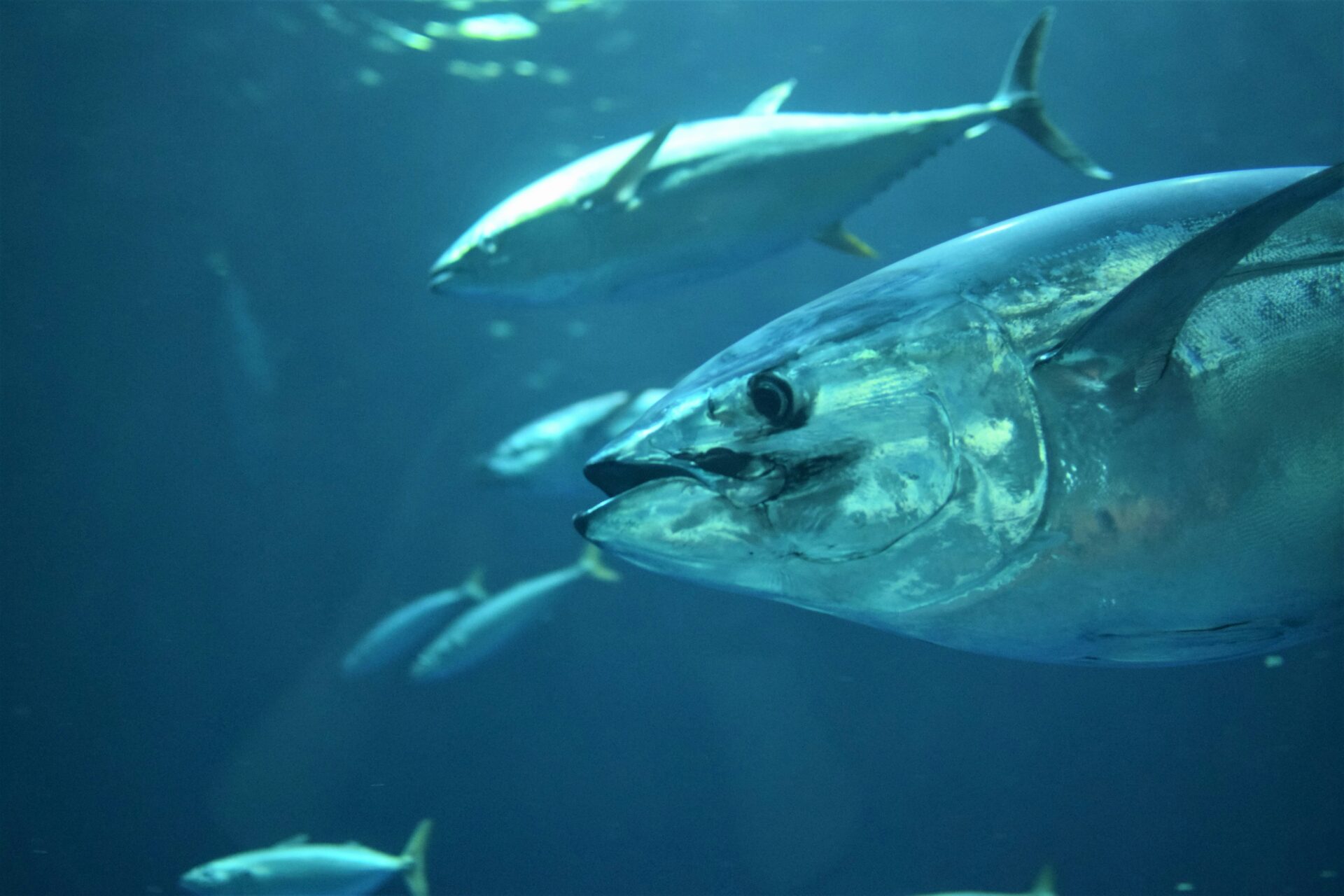
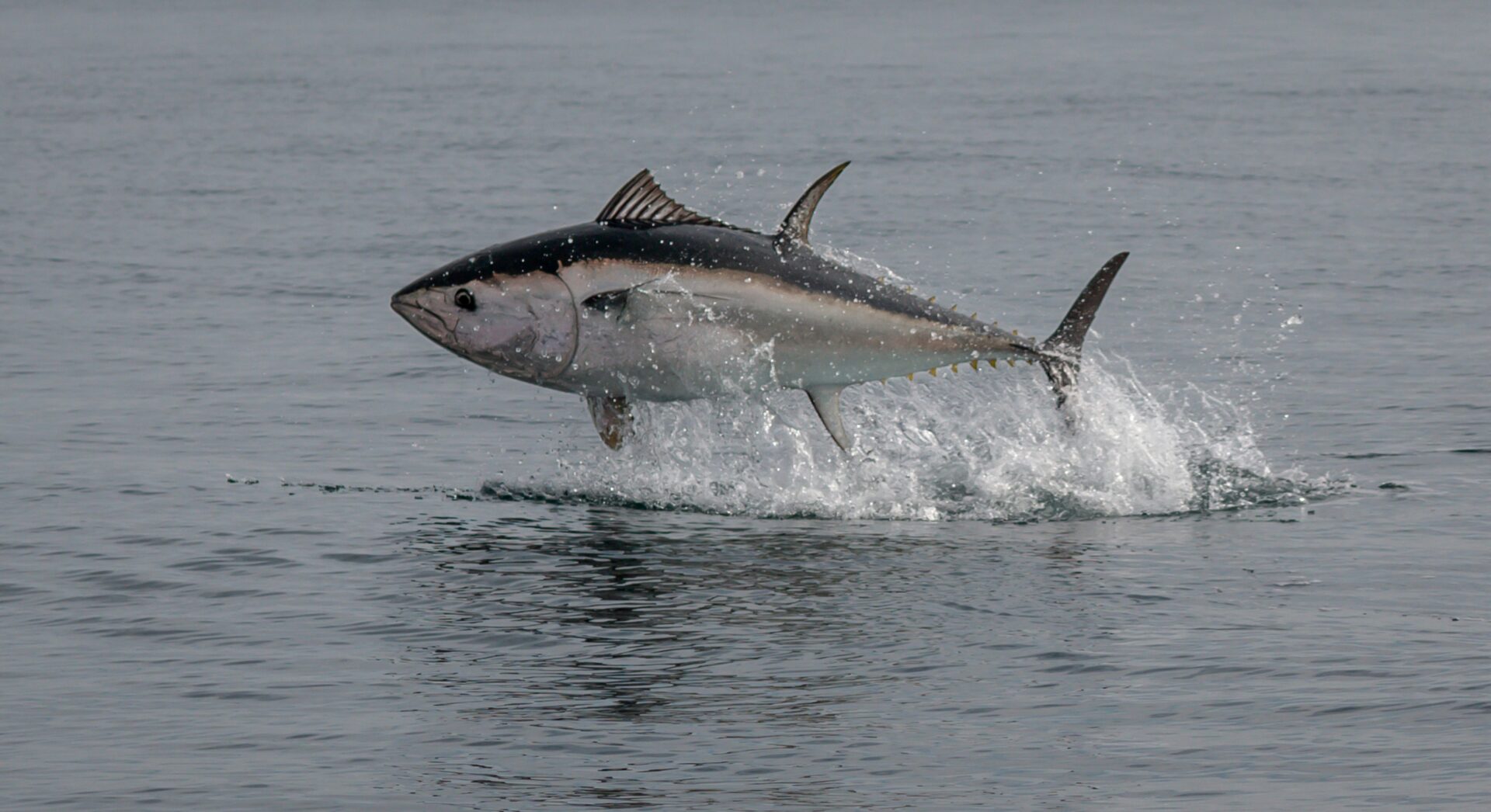
There are few oceanic sights more electrifying than an Atlantic bluefin tuna breaking the surface in hot pursuit of prey. These are fish built like torpedoes, capable of reaching speeds over 45 miles per hour, their bodies shimmering like burnished metal in the sun. And until recently, their presence in English waters was something of a maritime myth.
But now, not only are they back, but we have the privilege of witnessing them up close in a way that benefits both science and society.
This July marks the opening of England’s second season of its licensed recreational catch-and-release bluefin tuna fishery. Atlantic bluefin tuna, once abundant in British waters, vanished for decades due to commercial overfishing and changing ocean conditions. Yet historically, our waters were alive with them.
The British Tunny Club, founded in Scarborough in 1933, drew anglers from around the world – including Hollywood stars – eager to encounter these powerful fish. The last official catches off Yorkshire had faded by the 1950s. In 2024, a bluefin tuna was once again caught off the coast, rekindling a legacy. Their resurgence, particularly along the Cornish and Devon coasts, has been nothing short of extraordinary.
While the UK’s share of the Atlantic bluefin tuna quota remains modest compared to other ICCAT (International Commission for the Conservation of Atlantic Tunas) member nations, its approach has been precautionary and evidence-based. ICCAT, the regional fisheries management organisation responsible for bluefin tuna in the Atlantic, has overseen a remarkable recovery of the species through science-led management and tighter monitoring. So successful have these efforts been that Atlantic bluefin tuna were removed from the IUCN endangered species list in 2021.
In the UK, a small commercial rod-and-line fishery emerged in 2023, with the recreational catch-and-release fishery opening the following year. Still in their infancy, both fisheries are tightly regulated and reflect a growing interest in low-impact, high-value approaches to tuna fishing.
These fishing opportunities did not appear overnight. The recreational fishery is the result of meticulous groundwork laid through CHaRT (the Catch and Release Tagging Programme), a three-year initiative led by Cefas in partnership with recreational angling groups. It was recreational fishing representatives from the UK Bluefin Tuna Association and the Angling Trust that drove and partnered on the initial science-based tagging programme, with anglers and skippers volunteering time, vessels, and expertise to help answer critical questions about tuna presence, behaviour, and migration in UK waters and beyond.
This followed a previous collaborative research project known as Thunnus UK, led by the University of Exeter. Without these contributions, the recreational fishery we have today simply would not exist.



This is a crucial but often overlooked truth: recreational fishing is not just a pastime – it can be a force for conservation, for data, and local economies.
An economic study conducted by Cefas found that the three-year CHaRT program generated £2.6 million in economic impact – a valuable lifeline for local economies within the south west.
What makes the recreational fishery unique is the co-design model that underpins it. From charter skippers and angling representatives to scientists and policymakers, this was not a top-down management approach. It is a genuine collaboration. Recreational anglers and charter skippers, represented by the UK Bluefin Tuna Association and the Angling Trust, have played a crucial role in developing best-practice protocols and advocating for a well-managed fishery. This shared responsibility and commitment to the welfare of the fish is what makes this fishery truly unique.
Of course, I lead on marine policy and research at the Angling Trust, so you might think I’d take that view. High-welfare angling may sound paradoxical, but it is rooted in data.
When bluefin tuna are caught using circle hooks, brought alongside the boat using heavy tackle to reduce fight time, and released and revived without removing them from the water, survival rates soar. And the figures back this up. Official UK Government statistics show that 3,359 bluefin tuna were caught during the 2024 season, with a reported mortality rate of just 0.21% before release. By comparison, the mortality rate during the 2021–2023 CHaRT programme was 0.70%.
International studies consistently report post-release survival of over 95% when these standards are followed. More mature fisheries, like those in Australia, demonstrate that effective collaboration between anglers and scientists is possible in other parts of the world through initiatives like Tuna Champions.
And what an experience it is. Talk to any skipper or angler involved, and you’ll hear stories laced with awe: of 150lb+ tuna leaping beside the boat, of adrenaline surges that mimic the fish’s own bursts of power. But this isn’t just about the thrill. Every encounter is logged. Every fish, measured. Each season generates a new wealth of data, feeding into our understanding of tuna movements, health, and abundance in UK waters and beyond.
Still, angling can be a polarising subject. Some view it as an outdated pastime with little conservation merit. But that misses the nuance.
When done responsibly, catch-and-release angling can be a powerful tool for marine science and stewardship. It connects people to the ocean, creates economic value in coastal communities, and can fuel a conservation ethic grounded in experience, not ideology. Without fishers, data collection is often not possible, and conservation suffers.
We stand at the start of a new chapter. Not just for tuna but for how we think about recreational fishing, collaboration, and the future of our seas. It is in its infancy and will require careful monitoring and adaptive management; however, the foundations are strong. And they are built not just on policy or research but on true collaboration.
To see a bluefin tuna erupt from the sea is to remember that we live in a world still capable of surprise. And if we are willing to listen, to work together, and to respect lives both on and below the surface, who knows what else might return?
Printed editions
Current issue
Back issues


Enjoy so much more from Oceanographic Magazine by becoming a subscriber.
A range of subscription options are available.