The forgotten fish: what the UK is killing by accident
A new report has lifted the lid on what UK commercial fishing kills by accident - but the species that drowned out of the headlines are the fish themselves. Sustainable fisheries expert and Angling Trust Head of Marine Hannah Rudd argues that the way we treat the bass, the dogfish and the salmon we never meant to catch is a test of whether "ecosystem-based management" means anything at all.

Every sea angler who has fished a British shore mark knows the small-spotted catshark. It is the fish you never asked for: a slender, sandy shark about the length of your forearm, skin like wet sandpaper, that curls itself into a stubborn ring around your wrist as you try to slip the hook. Anglers call it the dogfish, and when a fishmonger dresses it for the fryer, we call it “rock salmon.” What we rarely call it is important.
It is too common to be precious, too small to be a trophy, too cheap to trouble a market. It is, in every sense, a forgotten fish – and forgotten fish, I have come to think, are the truest measure of how we fish.
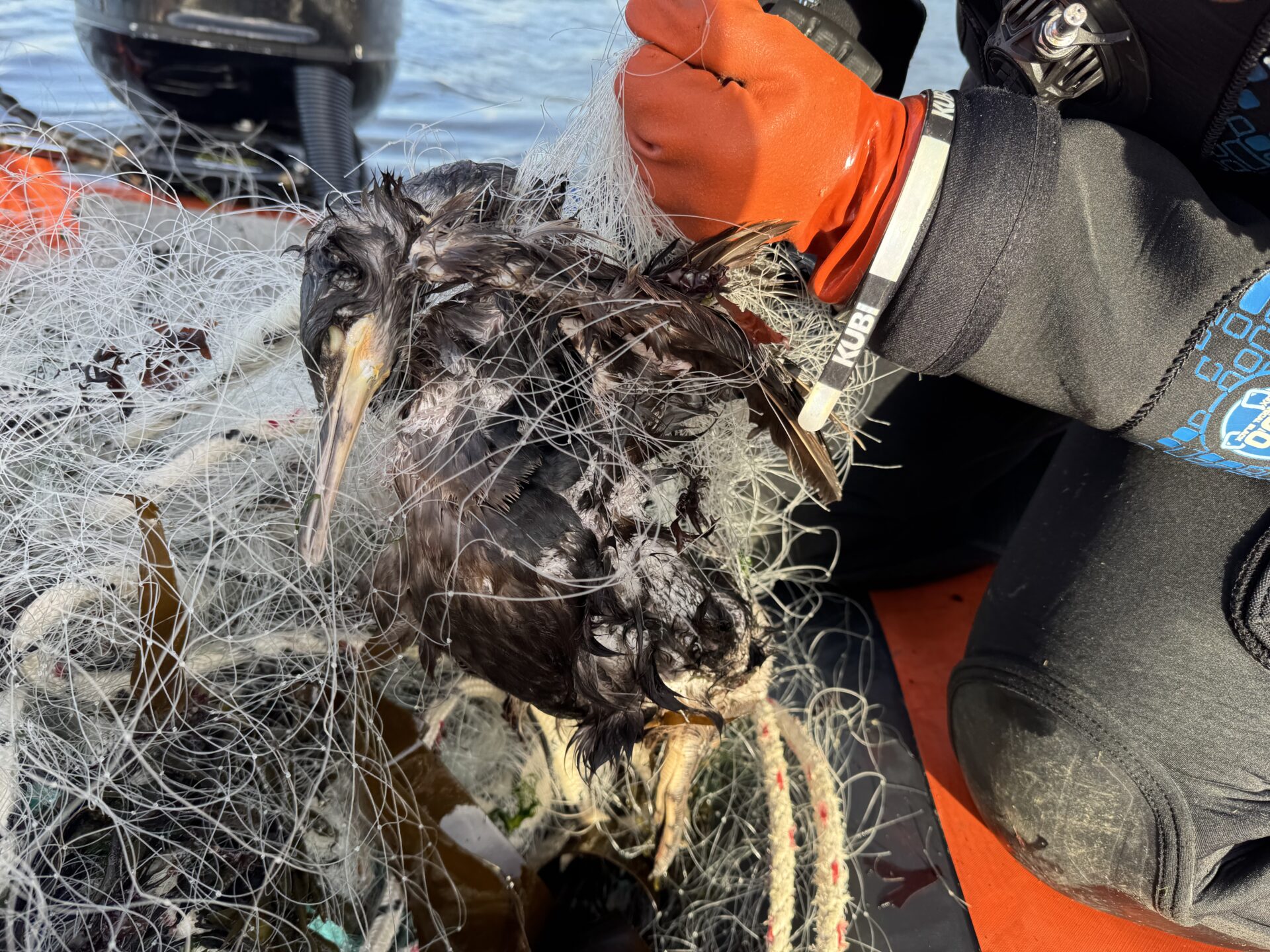
I have been turning that thought over since reading Hidden in the Haul, the report published this June by Wildlife and Countryside Link, the coalition of nearly a hundred conservation organisations, and backed by many of them, the Angling Trust included. For the first time, it gathers, in one place, the scale of what UK commercial fishing kills by accident – bycatch, the wildlife that dies in gear set for something else. The headline numbers are bleak and deserve every column inch they will get: more than ten thousand seabirds a year, over a thousand dolphins and porpoises, around five hundred seals. These are the animals that move us as society, and rightly so.
But read past the warm-blooded mammals and birds and you find the fish, and the fish are where forgetting becomes a habit. The same report counts more than a thousand endangered Atlantic salmon killed each year by UK boats in a single fishery alone – the north-east mackerel fishery – so the true toll across all gear types is certainly higher; and over 120 tonnes of blue skate, porbeagle and white skate – three species so depleted they are classed as Critically Endangered and illegal to land – hauled up and thrown back dead. Bycatch within bycatch: the creatures we overlook inside the problem we already ignore.
Fish are easy to forget because we have built systems that do the forgetting for us. The Atlantic salmon – reclassified in 2023 from Least Concern to Endangered in Great Britain after a decline of up to a half since 2006 – was not even on the radar of the international scientific body that tracks protected-species bycatch until 2025. In law, it is not consistently treated as a “sea fish” at all, which means it can fall straight through the gaps in marine monitoring. For sharks, skates and rays, the picture is worse still: the report describes a culture of systemic under-reporting and concedes that its own 120-tonne figure, drawn from fishers’ own discard records, is almost certainly an undercount.
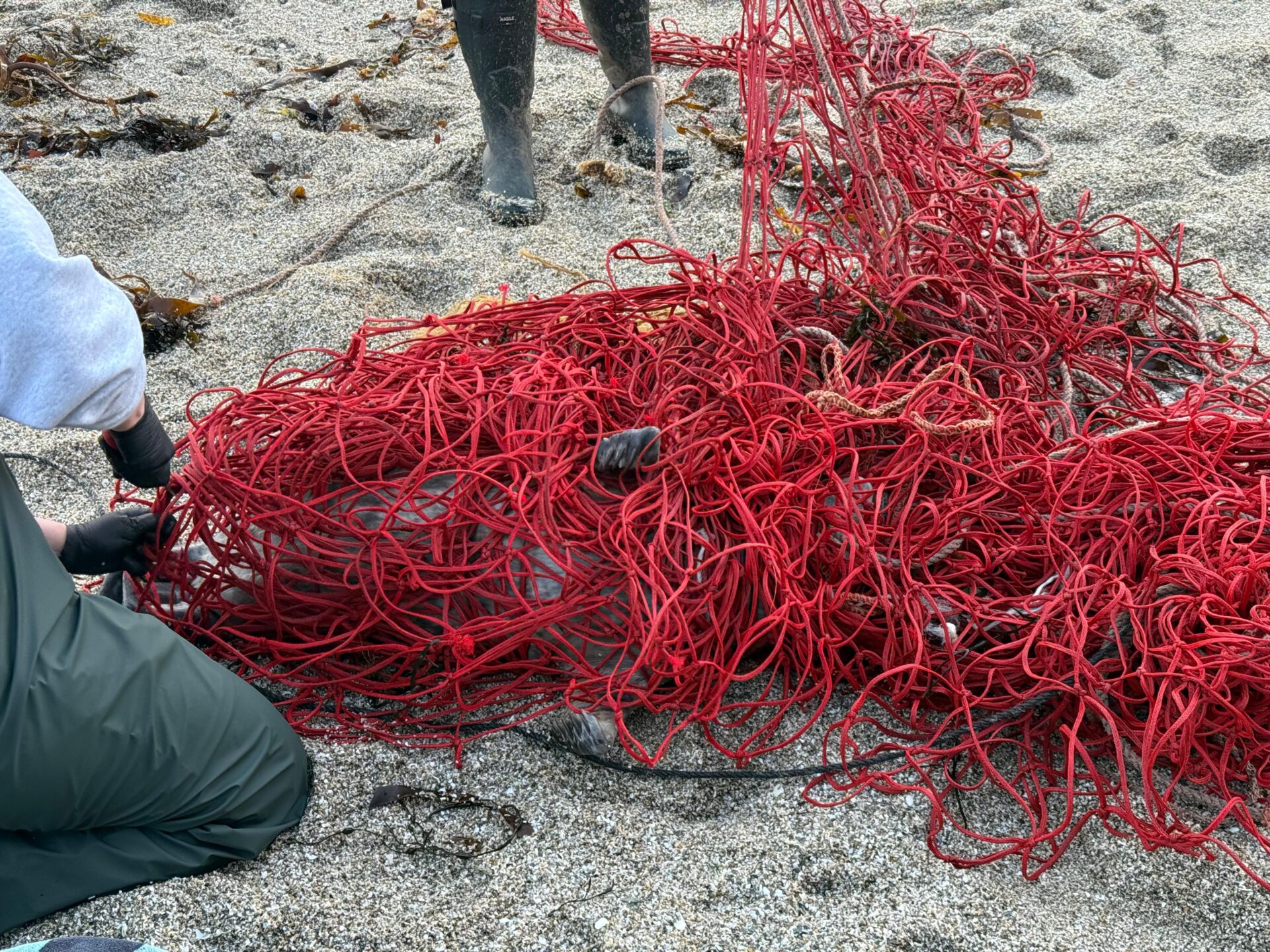
When researchers do look closely, the numbers are frightening. A single small fleet targeting crayfish in one Irish bay was estimated to have killed 81 Critically Endangered angel sharks and more than thirteen hundred flapper skate in three years, from one gear type, in one place.
Multiply that by every fishery no one is watching.
More from the Columnists


“A single small fleet targeting crayfish in one Irish bay was estimated to have killed 81 Critically Endangered angel sharks.”
And here is where forgetting curdles into something harder to forgive. Consider the bass. European sea bass is, on paper, among our most carefully guarded fish: commercial boats may not target it beyond rod-and-line, and trawlers and seiners may land it only as a capped share of their catch – a ceiling recently raised from five to ten per cent by weight per trip. A cap sounds like restraint. But watch how a proportional limit behaves. To land a hundred kilos of bass – a fish that can fetch around £8,500 per tonne, many times the worth of what comes up beside it – under a ten per cent ceiling, the rest of the haul must weigh at least 900kg.
The rule does not limit how much you fish, only the share that may be bass. So it quietly rewards bulking out the hold with whatever cheap, retainable fish are to hand, simply to make the proportions work.
Which fish? The unmanaged ones – the species with no quota to breach and no champion to complain. The smooth-hound, of which some five hundred tonnes are landed each year under no catch limit at all, and the dogfish nobody values. A measure designed to restrain the killing of one prized fish becomes a reason to land more of the forgotten ones: not because anyone wants them, but because they are the ballast that legitimises a valuable catch.
I should be fair to the rule’s intent. Bass genuinely is caught by accident in mixed fisheries – by trawlers after cuttlefish, for instance – and a blunt ban would only see dead bass shovelled back over the side, which helps nothing. Allowing unavoidable bycatch to be landed rather than wasted is a reasonable aim. But a limit set as a percentage, weakly monitored and barely enforced, does not protect an ecosystem. It simply puts a price on the wrong thing.
This is the precise opposite of what “ecosystem-based management” is supposed to mean. That phrase, which now appears in every fisheries strategy, asks us to weigh the whole web of life a fishery touches, not merely the species on the invoice. Treating smooth-hounds and dogfish as makeweight – slow-growing predators with their own role and their own vulnerability, reduced to tonnage that launders someone else’s bass – is a category error dressed up as policy. And it is not only ecologically wrong; it is unjust.
So, I keep returning to the dogfish curled up on the seabed floor. It will likely never headline a report or a fundraising appeal; it has no market and no fan club beyond a select few who find it cute. That is exactly why it matters. The test of whether we mean what we say about ecosystem-based, just fisheries management is not how we treat the gannet and the dolphin, who have our sympathy already – and who, even with it, are still dying in numbers we have failed to bring down. It is whether we extend the same seriousness to the fish with no glamour at all.
The remedies are not mysterious – the report sets them out: deliver the long-promised Bycatch Action Plans for each species group, with firm, time-bound targets to drive the numbers down; put cameras on every boat, including the small ones; report honestly, and enforce what is reported; and make the bycatch of every species, fish included, a binding consideration in our Fisheries Management Plans, beginning with bass.
The forgotten fish are not the unavoidable price of fishing. They are the measure of whether we are doing it honestly.
Printed editions
Current issue
Back issues
Enjoy so much more from Oceanographic Magazine by becoming a subscriber.
A range of subscription options are available.
