On Socotra, Henley Spiers finds rich reefs but few sharks or turtles. Fishermen face rising competition and encroaching technology, leaving the island's fragile balance between tradition and conservation uncertain.
The chant begins before sunrise. Low and rhythmic, it carries across the water as Bashar and Saleh haul their net from the sea. The rope slides through their hands, coarse and wet, heavy with the weight of expectation. Their voices rise and fall in unison, a cadence shaped by generations of fishermen who have worked these waters long before them. They are cousins. Bashar thinks he is 27; Saleh says he is 21. Neither is certain.
On Socotra, age is often an approximation. Birthdays are not recorded unless there is reason to leave the island. Time here is measured less by calendars, and more by seasons, tides and the shifting moods of the sea.
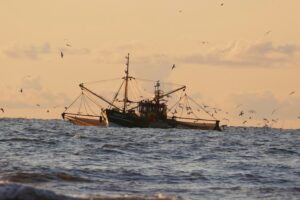
As the first light breaks, the horizon glows amber and the outlines of their wooden boat sharpen against the water. The vessel is narrow, weathered, and functional – built not for comfort but necessity. The net has soaked overnight. Now comes the moment of truth.
I have spent many days with these fishermen, watching how they live, how they work, how little separates a good day from a bad one. My instincts as a conservationist sit uneasily beside the reality of their lives. As the net rises, I find myself hoping they have caught something.
The chant continues. The net emerges. It is almost empty. A single trevally flickers weakly in the mesh – silver against the morning light. Two journeys to sea, one to set the net and one to retrieve it, have yielded almost nothing.
Bashar shrugs. “If you are a fisherman,” he says, “you must expect this sometimes.” The ocean does not owe them anything.
Socotra lies adrift in the Arabian Sea, closer to the Horn of Africa than to mainland Yemen, of which it is officially a part. For centuries, it has existed at the margins of empires and trade routes – visited, claimed, and abandoned in turn. More than 2,000 years ago, it was known to Greek merchants as a source of frankincense, myrrh, and tortoiseshell.
Today, it is better known for something else entirely: life found nowhere else on Earth.
Other features
Continue reading
This story is exclusively for Oceanographic subscribers.