'A load of pollocks': NGOs question pollock industry reports
Ocean and local community NGOs say the Alaskan Pollock Industry report is built on ‘faulty assumptions’ and ends with ‘incomplete conclusions’, citing new analysis that challenges its findings.

Campaigners have called recent reports into the Alaskan Pollock Industry into stark question, claiming that their 2025 report failed to account for the fishing industry’s negative environmental impact, while overstating the economic benefits for everyday Alaskans.
Among the criticisms levelled at the industry, NGOs have drawn attention to the impact of destructive trawling as well as those upon Native Alaskan fishing rights and cultures.
Since the late 1970s, Alaska’s pollock industry has caught on average 1.2 million metric tons of pollock each year, making it the largest food fishery on the planet and the second-largest fishery overall. Today, this commercially caught fish is used worldwide, from imitation crab meat to McDonald’s Filet-O-Fish.
But pollock also plays a central role in the Bering Sea ecosystem as both a predator and prey for fish, seabirds, and marine mammals.
Now, fresh analysis from Ocean Conservancy and Alaska Marine Community Coalition (AMCC) – two environmental NGOs working in partnership on the project – suggests that while Alaska’s pollock industry appears to be in robust health, some finer details of both the economic benefits and the environmental impacts of the fishery have perhaps been overlooked.
Last year, a self-commissioned report on the economic importance and environmental impact of Alaska’s pollock industry on local communities found that 71% of labour income, 62% of jobs, and roughly two-thirds of economic output actually leaves Alaska, meaning major economic benefits from the industry are, largely, bypassing local communities.
On top of that, the AMCC and Ocean Conservancy have highlighted key economic and environmental gaps in their findings.
Their analysis found that the industry-funded research treats industrial pollock vessels as the backbone of Alaska’s maritime economy, without considering the vital economic contributions of sovereign Tribal nations, other fisheries, mixed-species harvesting, and other players that may be impacted by large-scale pollock harvests.
The NGOs also said that the industry-sponsored report’s calculations omit the role of government support to the pollock fleet – including $50 million in recently announced seafood purchases and hundreds of millions in historic subsidies.

In other news

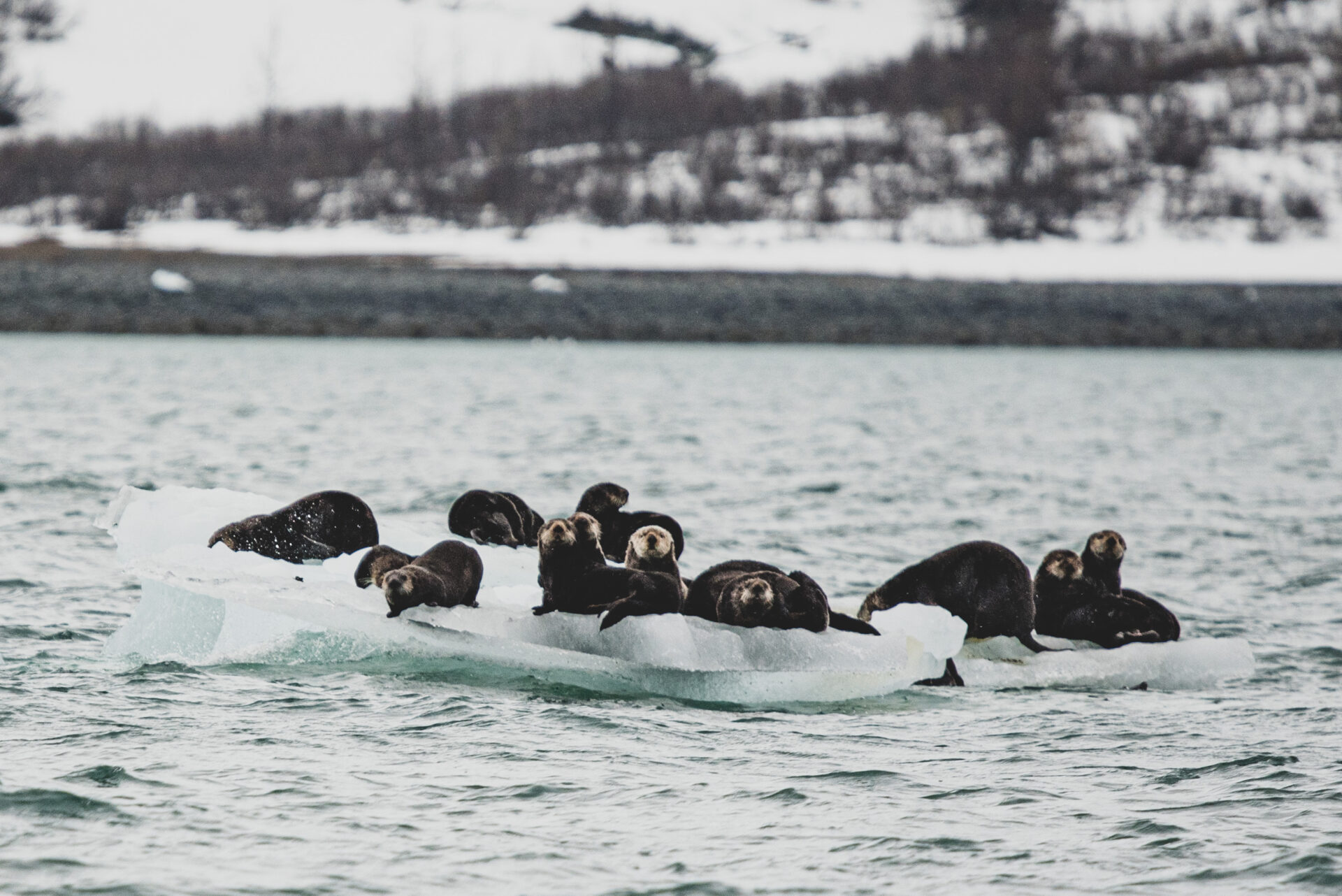
Environmentally, the AMCC and Ocean Conservancy emphasised the huge impact of bycatch on local ecosystems and communities.
Since 1991, the pollock industry has caught more than 6.3 million chum salmon and 1 million Chinook salmon. This has been linked to the long-term decline of crab, salmon and northern fur seals in the Pribilof Islands off the coast of Alaska.
“The industry’s research leads with faulty assumptions and ends with incomplete conclusions,” said Ocean Conservancy’s Fisheries Scientist Dr. Megan Williams, who helped write the analysis.
“They fail to account for the huge impacts that pollock trawlers have on the ecosystem, on Alaska Native fishing rights and cultures and other important fishing fleets. We need studies that fairly value the diversity of the Alaskan fishing economy as a whole, as well as the essential role of healthy ecosystems and communities.”
Ocean Conservancy’s Fisheries Economist, Anthony Rogers has argued that the industry’s most recent report provides “only a simple snapshot” of the big picture and are “incomplete without considering how relationships between sectors can change in a coastal economy.”
“Pollock trawling is a billion-dollar industry,” said Rogers. “But the industry’s own research shows that shockingly little of its profit actually stays in Alaska.”


"*" indicates required fields
Printed editions
Current issue
Back issues

Back Issues
Issue 43 Sir David Attenborough’s ‘Ocean’
Enjoy so much more from Oceanographic Magazine by becoming a subscriber.
A range of subscription options are available.
