Merging Indigenous and scientific knowledge to protect turtles
A collaborative project, with scientists and indigenous leaders and rangers, is observing endangered turtles in the northern region of Australia, to learn more about the species and inform future protection measures
Scientists, rangers and traditional owners – Indigenous people who have a primary spiritual responsibility to an area – are teaming up to monitor turtles in Australia’s Tiwi islands, to learn the creatures’ migratory patterns and inform conservation efforts.
The project is set to investigate the risks to four species of turtles, all of which are listed by the Australian government as threatened. This includes the olive ridley turtle, which nests in nationally significant numbers on Imalu beach on the island.
The collaborative team comes from the from AIMS, Integrated Marine Observing System (IMOS), Sydney Institute of Marine Science, Charles Darwin University and Northern Territory Government
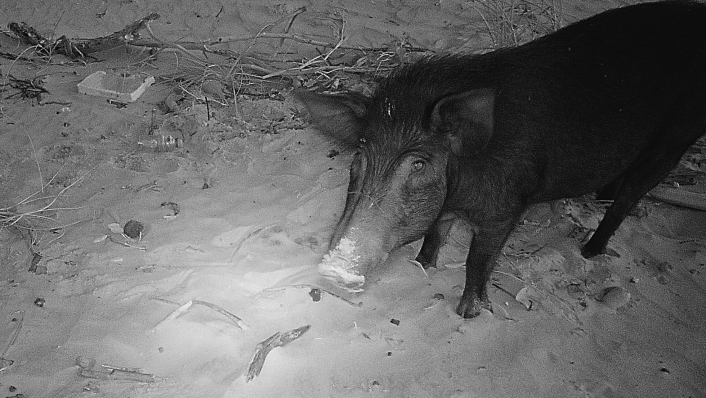
They are undertaking two main projects. The first involves deploying camera and nest loggers to monitor nest predation, erosion rates and nest temperatures at the beach.
“Rangers have reported that lots of turtles are being taken by predators like dogs, pigs, crocodiles and goannas, and that nests are getting washed away by high tides due to sea level rise and coastal erosion,” explained AIMS research scientist Dr Phillipa Wilson.
Warmer temperatures in nests produce more female hatchlings. Dr Michele Thums, AIMS senior scientist, said that with climate change, there is increasing concern that we will start to get largely female hatchlings. She also noted that when predators dig up nests, there is also a change in temperature – highlighting the interesting insights made through deploying nest loggers.
Tiwi Ranger Dominic Tipiloura said: “Turtles are important for us; they are one of our main sea foods. We are trying to protect the eggs and the hatchlings so we’ve got more hatchlings in the future.”

In other news

The second project is a continuation of a 2022 satellite data tagging project. The team will tag a further 20 turtles, which will then transmit data about turtle’s migratory behaviour – including where they feed, their habitats, and their diving behaviour when looking for food. They will also report back on the oceanography surrounding the Tiwi Islands and beyond, collecting data on sea temperatures, depth and water salinity.
IMOS Animal Tracking Lead Professor Rob Harcourt said: “The information provided by these tags is making an essential contribution to our understanding of oceanography in Northern Australia and is providing crucial observations needed to assess and forecast storms and cyclones.
The project is also providing training to rangers to enable ranger-led turtle monitoring on Sea Country – the marine and coastal areas that Aboriginal and Torres Strait Islander peoples have a deep, ancestral, and spiritual connection to.
Mr Tipiloura said he enjoyed putting the trackers on the turtles.
“It’s interesting to see where they go, how far they swim from the islands, how far they travel, where they are nesting,” Tipiluora said.
“We have recorded the turtles swimming some incredible distances. One of the turtles has migrated to foraging areas in Indonesia, another to the Gulf of Carpentaria – it is invaluable data when it comes to the management and protection of these species,” Harcourt added.
“Merging Indigenous knowledge with modern scientific research methods will strengthen outputs and provide important information to help us look after the turtles so they are around for the future,” said Dr Wilson.


"*" indicates required fields
Printed editions
Current issue
Back issues
Back Issues
Issue 43 Sir David Attenborough’s ‘Ocean’
Enjoy so much more from Oceanographic Magazine by becoming a subscriber.
A range of subscription options are available.