Rare blue whale sightings highlight need for Atlantic protections
As Trump moves to open Northeast Canyons to commercial fishing, researchers document first blue whales in the region in nearly 10 years
Rare back-to-back sightings of endangered and elusive blue whales have been documented by New England Aquarium researchers, confirming the mammals are using an area which the Trump administration has slated for re-opening to commercial fishing.
On February 27, scientists spotted a blue whale while flying over the Northeast Canyons and Seamounts Marine National Monument. Just 24 hours later, on 28 February, the team then saw another two blue whales about 170 miles apart from the original sighting in Martha’s Vineyard – in New England’s southern waters.
This marks the first time in nearly 10 years of aerial surveys that the rare species has been recorded in this specific region.
This unusual presence suggests feeding conditions are favourable for the endangered Western North Atlantic population, which tend to stay further north in Canadian waters. Recent estimates suggest there are only 400 to 600 of these Western North Atlantic Populations remaining.
“Encountering blue whales spread out across the waters off southern New England likely means that oceanographic conditions are ripe for them to find food,” said Research Scientist Orla O’Brien, who spotted the whales during the 28 February flight.
“Blue whales can range over huge swaths of the ocean unseen by scientists, so each sighting gives us an important glimpse into their winter and spring movements,” O’Brien added.
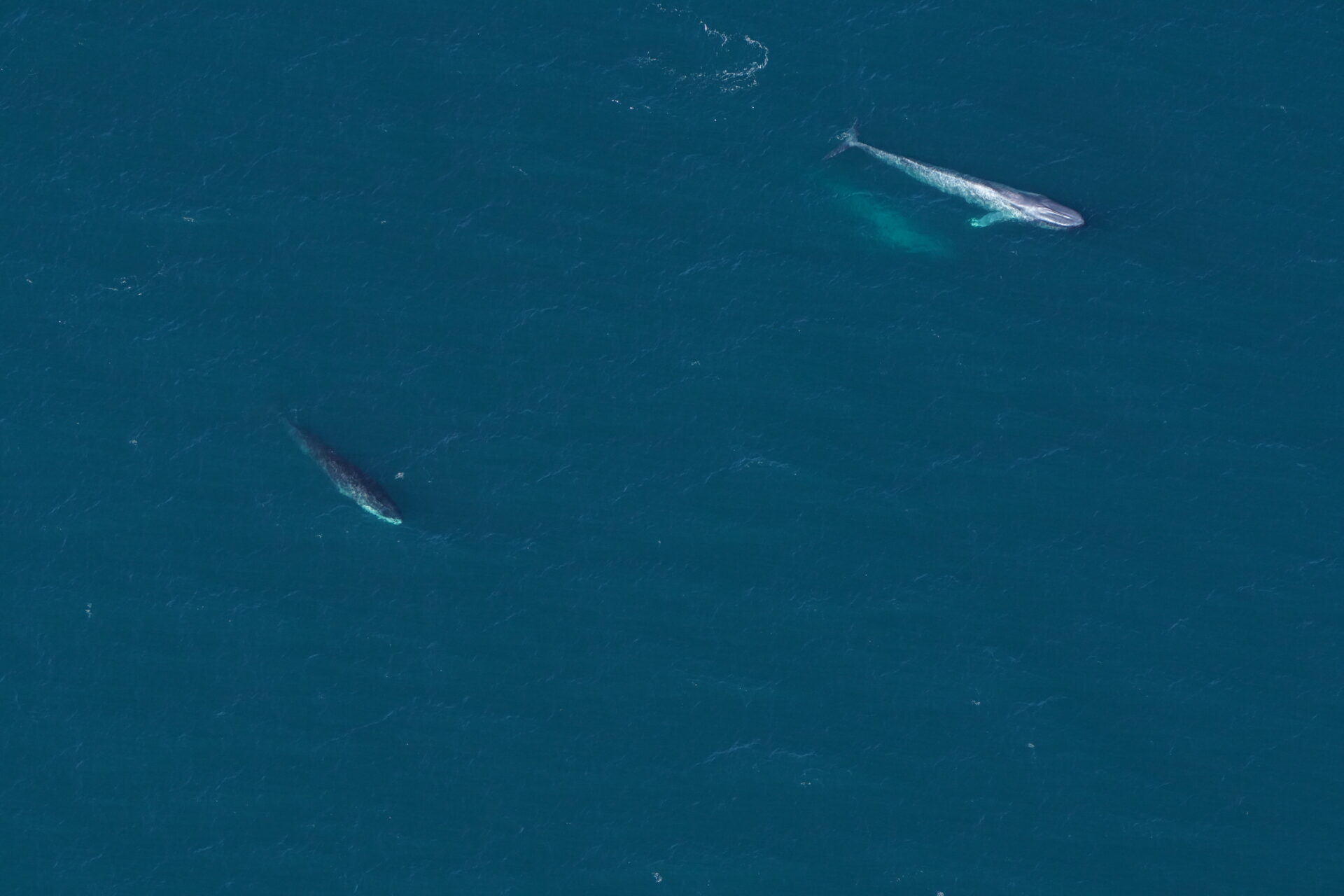
The aerial survey team also spotted more than more than 300 animals – including three endangered fin whales, three endangered sperm whales, about 50 pilot whales, and hundreds of dolphins – alongside the blue whales in the area.
These sightings come just a month after the Trump administration announced the rollback of protections for the Northeast Canyons and Seamounts Marine National Monument. The area – roughly the size of the Atlantic and located about 130 miles southwest of Cape Cod – is one of the most biologically significant and heavily protected marine areas in US waters.
Regular aerial surveys by the Aquarium’s Anderson Cabot Center have showcased the diverse range of marine mammals that use this habitat.
When President Trump issued a proclamation titled “Unleashing American Commercial Fishing in the Atlantic” on 6 February, scientists, conservationists, coastal businesses, and lawmakers warned about the impact this action could have on endangered species, like blue whales.
Dr Jessica Redfern, Associate Vice President of Ocean Conservation Science in the Aquarium’s Anderson Cabot Center for Ocean Life said the sightings emphasise “the incredible diversity supported by the Monument and why it is so important to protect this special place.”
Click here for more from the Oceanographic Newsroom


"*" indicates required fields
Printed editions
Current issue
Back issues

Enjoy so much more from Oceanographic Magazine by becoming a subscriber.
A range of subscription options are available.
