Rare porpoise mating behaviour captured by drones off Shetland
The research project, prompted by local sightings, provides an insight into the little known science behind how the mammals mate – and how we can better live alongside them
Rare harbour porpoise mating behaviour has been captured by drones off Shetland’s coast.
The footage, taken between 2019 and 2023, provides one of the most detailed records of harbour porpoise mating behaviour ever documented in UK waters.
Harbour porpoises are frequently spotted around Scottish waters, but their mating behaviour has largely evaded scientific scrutiny.
Their small size, measuring between 2 metres for 1.5 metres, quick speed and the vast amounts of time they spend under water has meant that they have largely avoided observation.
But, local sightings prompted this research to take place. In 2024, Shetland was identified as an Important Marine Mammal Area (IMMA), based on vital local and community knowledge.
Scientists from Scotland and Shetland residents worked on the project and reported their findings in the Journal of the Marine Biological Association yesterday.
The team analysed more than 79 minutes of usable footage from four coastal bays – Gulberwick Bay, South Nesting Bay, Mousa Sound and Quendale Bay – in the east and south of Shetland.
They recorded gatherings of up to 26 animals in a single bay, far larger than the small groups of two or three typically reported for the species.
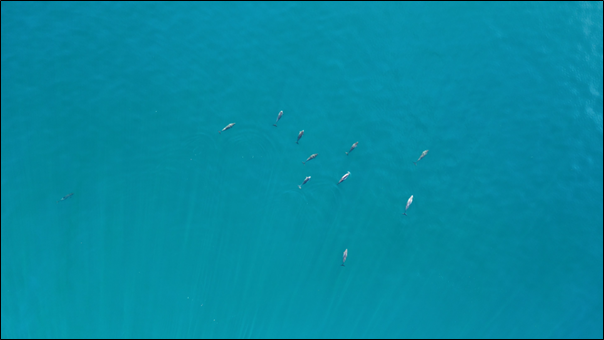
The researchers involved in the project have said that understanding group sizes and mating behaviour could help manage and conserve harbour porpoises in the Important Marine Mammal Area of Shetland’s waters, and elsewhere.
Sophie Ariadne Francine Smith from UHI Shetland undertook the research as part of her PhD, and became a licensed drone pilot in the process.
Smith said: “Harbour porpoises are fast and elusive. For much of this mating behaviour they only broke the surface for a few seconds – blink and you’d miss it, which is why using drones to capture footage has been such a boon.”
Dr Lauren McWhinnie from Heriot-Watt University, co-supervised the research, she said: “This work helps build a clearer picture of when and how porpoises use specific coastal areas.”
“Although harbour porpoise populations in the North Sea are considered relatively stable, more detailed regional data and local observations, such as those gathered in Shetland, help us to better understand their potential exposure to human activities,” she added.


"*" indicates required fields
Printed editions
Current issue
Back issues




Enjoy so much more from Oceanographic Magazine by becoming a subscriber.
A range of subscription options are available.
