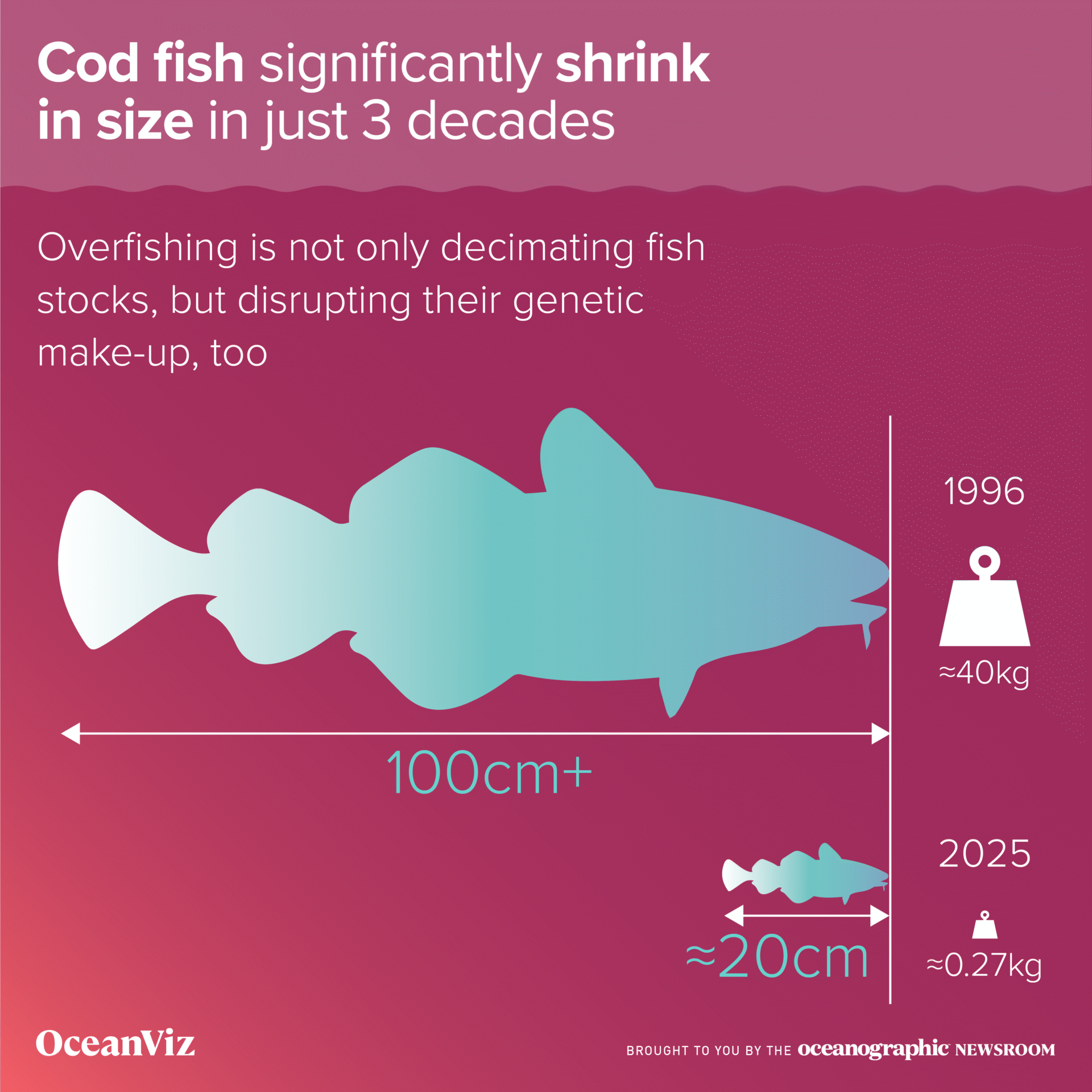


What were once among the giants of the ocean, the cod (Gadus morhua) has shrunk significantly in size, presenting a clear example of how overfishing is not only decimating fish stocks, but disrupting their genetic make-up, too. At the heart of the problem – researchers from the GEOMAR Helmholtz Centre for Ocean Research Kiel have suggested – is human influence; conclusions that have been drawn over the long-term consequences of intensive fishing. Measuring at over a metre long and weighing up to 40kg, cod was once a giant. Not only in size, but in abundance, too; factors which – along with the herring – made it one of the Baltic Sea’s staple fish. Today, however, a fully grown cod could just about fill a plate. Well, it would – that is – had fishing cod not been banned since 2019 due to the collapse of stocks. “Evolutionary changes occur over many generations: recovery will take much longer than decline, if it is even possible,” said Dr Thorsten Reusch. “We can also see this in our current length data form the 2025 ALKOR expedition, which shows no recovery in size distribution despite years of fishing bans.”

More than a magazine subscription
Not yet a subscriber?
Join todayBy signing in or creating an account, you agree with out Terms & conditions and Privacy statement
