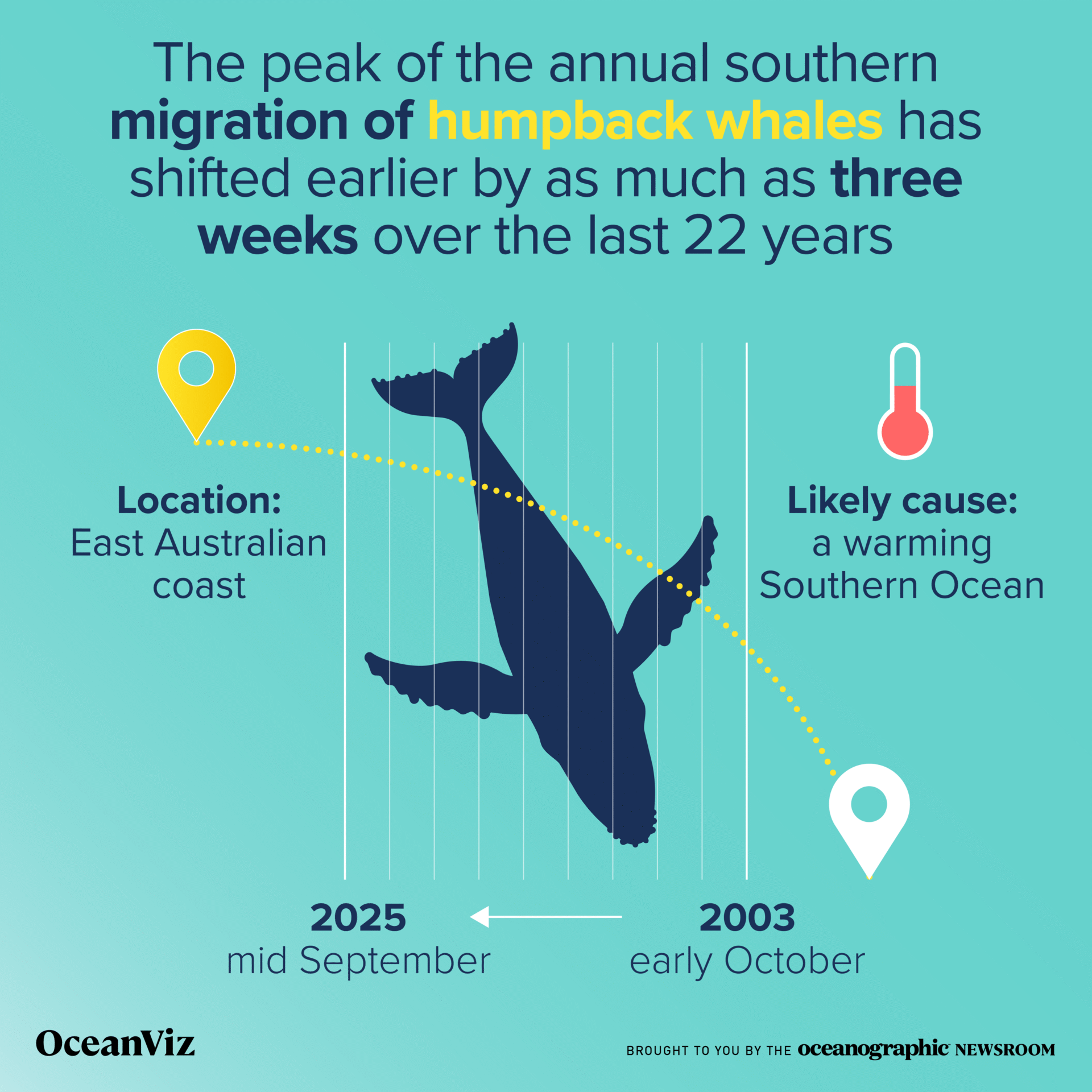


The annual migration of humpback whales down the east Australian coast is a sight to behold and one for which – each year – national parks across New South Wales welcome many eager visitors keen to catch a glimpse of as the populations embark on their long migration back to the fertile feeding grounds of the southern ocean. But, those visitors may have to start reorganising their calendars, because it would appear that the peak of this southern migration is now occurring weeks earlier than it did some two decades ago – the reason being, scientists believe, is a warming Southern Ocean. It’s according to the results of a new survey carried out by scientists at the University of Queensland, that the return migration of humpbacks from their northern breeding grounds has shifted earlier by as much as three weeks over the last 21 years. “While migratory timing naturally fluctuates from year to year by about two weeks, since 2021 there has been a clear and sustained change,” said Associate Professor, Rebecca Dunlop from the University of Queensland’s School of the Environment. “The cues for migration are not well understood but are likely to be influenced by ecological and environmental factors impacting summer feeding while in the Southern Ocean. A big factor is the connection between sea ice and krill populations.”

More than a magazine subscription
Not yet a subscriber?
Join todayBy signing in or creating an account, you agree with out Terms & conditions and Privacy statement
