This month marks two years of living at sea, and a year since I embarked on a purpose-driven voyage around the Atlantic.
 The decision to leave land behind was never a hard one. As a marine scientist, I had always dreamt of living and working on the ocean full-time. Following in the footsteps of early naturalists such as Darwin, and inspired by legendary oceanographers such as Sylvia Earle and Jacque Cousteau, I fantasised about exploring the far-distant corners of our ocean, uncovering its secrets and being eyes and ears on the challenges it faces. So when the opportunity presented itself in the form of a 40ft wrecked catamaran on the beach in Portugal, I thought to myself, “This is my chance!”.
On reflection, what we took on was a monstrous project. Having been left abandoned to the mercy of the elements for six years, Feral, then named If Dogs Run Free, needed more than just some TLC. A gaping hole in her starboard hull, smashed portholes, rotten beams and a missing deck were just a few of the many jobs that needed to be done. Oh, and then there was the task of evicting the local seagull population. But none of this phased us.
Fuelled by wild enthusiasm, a dollop of naivety and the overwhelming desire to make a dream a reality, my fiancé Alexis and I plunged headfirst into an eight-month-long refit. The good news is despite knowing very little about rebuilding a boat before we started, we succeeded in our endeavour. But the project didn’t come without its challenges. Forced to move in before she was finished, we weathered a harsh winter of storms living in leaky hulls and without electricity, gas or running water for some time. With limited funds, we also faced the challenge of restoring her to a sailable condition in an affordable way. Luckily for us, our vision from the start hadn’t been about bringing her up to date with costly modern fittings and furnishings. Instead, we were taking on an unconventional approach.
Using as many low-cost, recycled and repurposed materials as possible, we rebuilt Feral in a raw and rustic way. Incorporating old timely wisdom we laid a wooden deck and lashed it together like the ancient Polynesians. We crafted a bespoke rig using an old electricity post for the mast, and tree branches for the gaff and boom and fitted it with a secondhand sail, which we shaped and painstakingly hand-stitched to fit. Over time, our once wreck began to blossom into a beautiful ship again, albeit with the look of a modern-day pirate ship.
The day we hoisted sails and left the safety of the sheltered bay where we rebuilt her is a moment forever etched in my memory. Looking back I feel a tad emotional thinking about it. It was the moment a long-awaited dream became a reality, and our expedition, ‘Voyage to the Wild’ began.
The mission for this project is simple. Firstly, to dive below the surface of some of the greatest challenges facing the natural world and tell its story. And second, to take people on an immersive journey to explore the world’s oceans, to learn about people, places and wildlife they may never heard of.
Related features
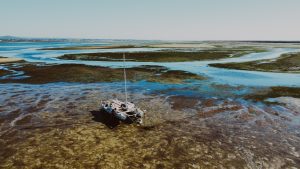
As a marine scientist, I had always dreamt of living and working on the ocean full-time.
Continue reading
This story is exclusively for Oceanographic subscribers.
