Dr Asha de Vos
Dr Asha de Vos is a Marine biologist and the Founder of Oceanswell, Sri Lanka's first marine conservation research & education organisation.
More from The Innerview


For the untrained observer, the ocean may seem empty, but I argue that it is simply vast. Vast both horizontally and vertically: the largest ecosystem
on our planet and home to a myriad species we have yet to discover. In these waters also roams the largest animal that has ever graced our planet, bigger by mass than any dinosaur to have walked the earth, the blue whale.
As someone with the distinct privilege of dedicating my life to these giants and their cousins, every glimpse is a reminder of how fortunate we are to live side by side with these magnificent creatures, particularly given that we made every attempt to drive them to extinction during the height of commercial whaling. My surprising discovery that the population around my island home of Sri Lanka chooses not to migrate out of our warm waters to the frigid reaches of the ocean remains a reminder that assumptions inhibit our capacity to understand and to therefore protect. And imagine: if we don’t yet understand the lives of the ocean’s largest creatures, what don’t we know about the smallest?
THE GLOBAL SOUTH COMPRISES 70 PER CENT OF THE WORLD’S COASTLINE, BUT WE ARE TREATED AS THE MINORITIES
These whales were not merely data points or a stepping stone in my career. They have taught me lessons about the importance of expecting the unexpected – and of understanding that the ocean does not bear the traces of its inhabitants as land does: there are no clues left behind – no broken twigs, no paw prints, no scat samples. If you see it, you see it; if you don’t, then you may never know it passed you by. Vigilance is your friend.
These whales showed me my purpose, part of which was to create opportunities for countless others who have been marginalised or told they could not, should not or would not. That’s where I began, and I was determined this would not be the origin story of anyone else.
I initially thought finding support in Sri Lanka would be my biggest hurdle due to the field’s limited capacity and the patriarchal mentality, but reaching out beyond the waters of my home taught me a crucial life lesson.
While scientists from the Global North were excited about my discovery, rather than offering to collaborate, they asked me to obtain the necessary permits so that they could travel to conduct the research themselves.
This story is not simply an insight into the discovery and protection of a species, but showcases the complexities and realities that exist in research. The Global South comprises 70 per cent of the world’s coastline, but we are treated as the minorities. Women are half of the global population, but are also sidelined in the field. The reasons for this are unfathomable, but in my view point to our world’s consistent desire to colonise.
I built Oceanswell, Sri Lanka’s first marine conservation research and education organisation, to piggyback on the momentum I had created through my blue whale discovery, and to establish myself on the global stage as both a scientist and an ocean storyteller.
I had a responsibility because I knew that, as a member of an underrepresented group, it was not enough for me to celebrate my own goals and dreams, if I was not creating spaces for others who relate to me. History has shown me that if I don’t do it, then no one else will.
I know that talent is equally distributed, but opportunity – unfortunately – is not, so I create spaces for others like me. After all, if we are to save our ocean, then every coastline needs its own local hero.
And so it is that nurturing the next generation of diverse ocean heroes has become absolutely central to everything I do.
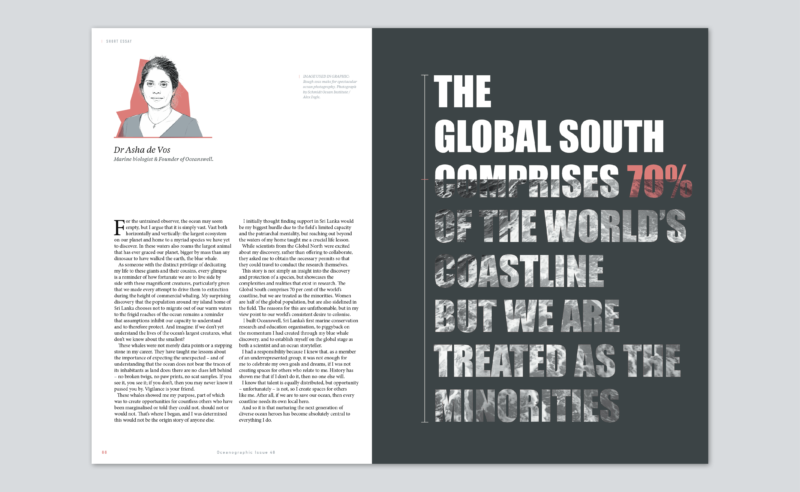
This is how this short essay appears in the special Oceanographic publication, The Innerview
Printed editions
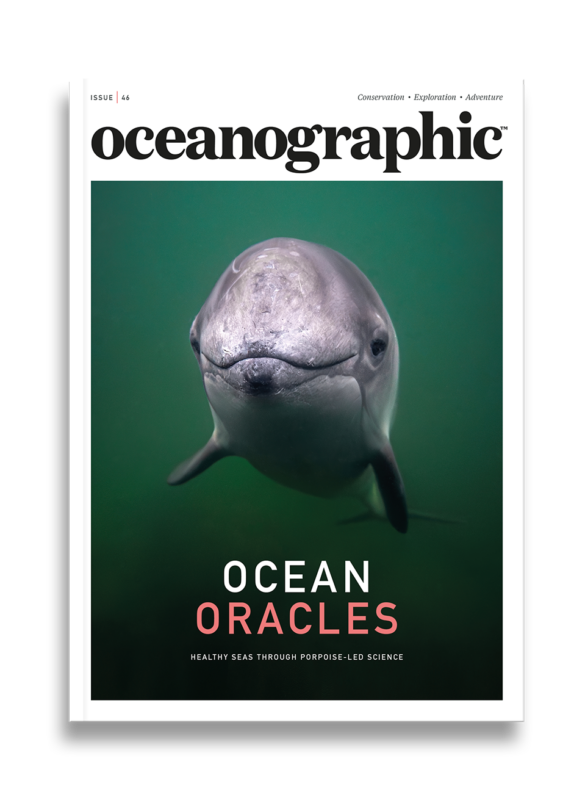
Current issue
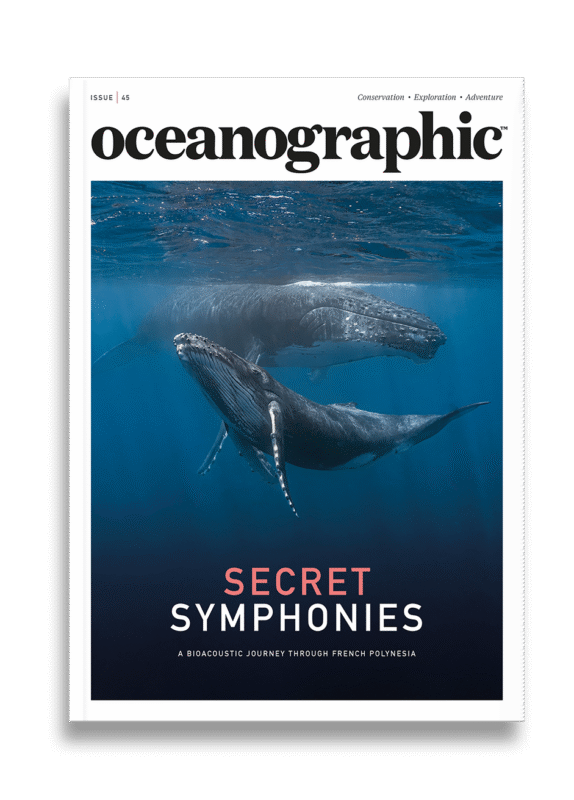
Back issues


Enjoy so much more from Oceanographic Magazine by becoming a subscriber.
A range of subscription options are available.
