Dr Dawn Wright
Dr Dawn Wright is a Geographer and Chief Scientist at ESRI, she was also the first Black person to visit the Challenger Deep.
More from The Innerview



Astronauts often talk about the Overview Effect: how their perspective on life and the Earth changes when they go into space.
The comparison to what astronauts talk about is popular and relatable, especially in terms of one being incredibly humbled – as well as feeling both insignificant in the hostile, alien vastness of outer space yet significant in how unique the Earth is: a water planet absolutely teeming with life.
But the Innerview Effect? That’s something a little different. Because now – rather than being up in space with that broad, synoptic view – I am just at one small point on the planet’s surface. Astronauts on the Moon witness the entire orb of the Earth; those in orbit see it for its vast expanse. It’s different being in a small submersible at one point in a very deep, dark place.
Yet it remains beautiful and jaw-dropping all the same. Being a geologist, I have been thrilled to witness evidence of major plate tectonic activity in the depths. I have gazed upon vast fields of boulders in a region of tremendous collision between the Pacific plate and the Philippine Sea Plate; witnessed the anemones, the sea cucumbers, the arthropods and the myriad tiny creatures that not only live but thrive under 16,000 pounds-per-square-inch of pressure, in complete darkness.
At those depths, alongside my colleague Victor Vescovo, I became a part of the little, deep, dark community.
And that’s where it strikes you the most: that we are a part of the totality of life on this planet. In the darkness, the miracle of life on this planet is made all the clearer. As is the fact that in order for this life to thrive, we must recognise that we are all – somehow – interconnected.
Welcoming the Innerview helps you recognise Earth’s duality. Even while freezing cold in the Challenger Deep, it’s impressed upon me that the ocean is heating up. That heat is circulated even through these deepest trenches, all the way up to the surface of the ocean. This is why all of the ocean’s waters matter – because when it comes to climate change, they are buying us time. The negative impacts of climate change would be hitting us so much faster and more terribly if it weren’t for the ocean absorbing some 90 per cent of the additional heat generated from greenhouse gas emissions. The ocean is keeping things at bay for as long as it can, but we are fast approaching its tipping point.
In Dr Seuss’s Horton Hears a Who!, the elephant Horton discovers an entire world in existence upon a tiny speck of dust; a world full of creatures and habitats and ecosystems. In acting to protect that world, he is quickly made a pariah in his own, branded by his disbelieving peers as ‘insane’. At the moment it counts the most, Horton convinces others of life beyond that which we see.
We are at that same pivotal moment in our own narrative. We all need to be Horton and we need all others to ‘hear a Who’. Because all of it matters. Everything we can do to reverse or mitigate the effects of climate change, as well as the hatred and the incessant destruction in our societies, needs to be done.
I truly believe that harnessing that Innerview really is the most important work we can be doing right now.
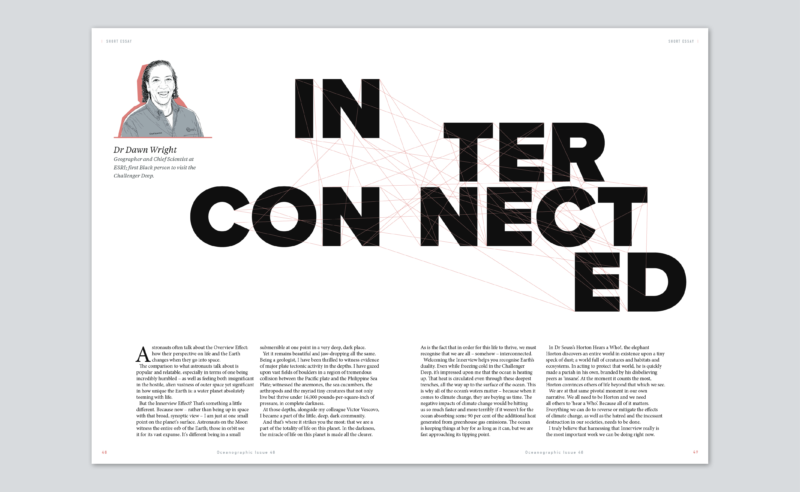
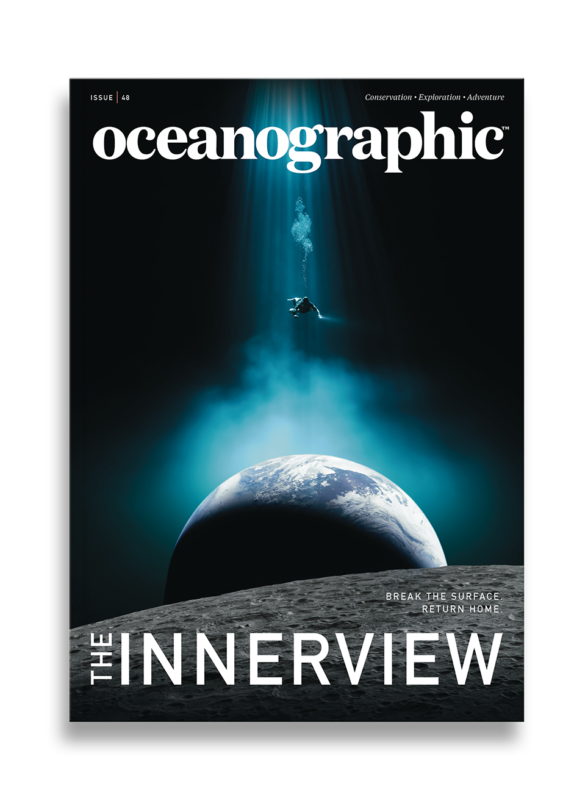
This is how this short essay appears in the special Oceanographic publication, The Innerview
Printed editions
Current issue
Back issues
Enjoy so much more from Oceanographic Magazine by becoming a subscriber.
A range of subscription options are available.
