Dr Helen Czerski
Dr Helen Czerski is a physicist, an oceanographer and a BBC broadcaster. She is also the author of The Blue Machine.
More from The Innerview





We humans live our lives in the shadow of the ocean. It’s a strange relationship, because although the physical reality of our daily lives is dependent on the inner workings of our dynamic ocean, we are not natives in the saltwater realm. We can only visit, on scuba, in submersibles, on ships or via remotely operated cameras, to marvel at another world from inside a bubble that we create. But in spite of our visitor status, I think the worst mistake we can make is to speak of the ocean as distant, other, mysterious, or a void.
We learned at school that the great pyramid-building civilisation of Ancient Egypt was successful because the annual inundation of the Nile deposited rich fertile soil. But where did that water come from? The answer is that it started in the Indian Ocean, before it evaporated and then rained down over the Ethiopian highlands, to drain out down the Nile. Many of the greatest cities in history claimed their status because of their access to the ocean – liquid can be much easier to traverse than solid land, and so access to the ocean means access to the world.
The relatively stable temperature of Earth is only possible because of the unusual behaviour of water, making it a critical vehicle for storing and moving vast quantities of energy. The list of causation goes on and on.
Of course, being in and on the ocean offers humans an incredible range of experiences, in addition to a constant and delightful reminder that our view of what’s ‘normal’ for life is actually very narrow. But my point is that we don’t need to be touching salt water to experience the ocean. The ocean’s influence on our lives is far larger than that, because we are literally part of its sphere: the sphere more commonly called the Earth. The ocean is there every time you step outside in winter and the temperature isn’t -30°C, every time you read a history book about geopolitics shaped by ships, and every time you touch concrete knowing that every calcium atom forming its strong matrix was previously collected by a tiny marine organism.
Respect for the ocean is critical, especially because it’s not there for us and can frequently be violent and hazardous towards the unprepared. But it’s not separate from our world. Good stewardship of the beating blue heart of planet Earth isn’t just a moral imperative or an aesthetic one (although both of those would be enough by themselves). It’s about preservation of our planetary life support system. Treating the ocean as mysterious or distant allows us to ignore that fundamental fact. It’s not somewhere over there. It’s right here, part of us, always present. The wonderful moments spent visiting and observing the ocean are important for us to see the reality of our world. I live my life immersed in the ocean, every day, and I am proud to be a citizen of this ocean planet.
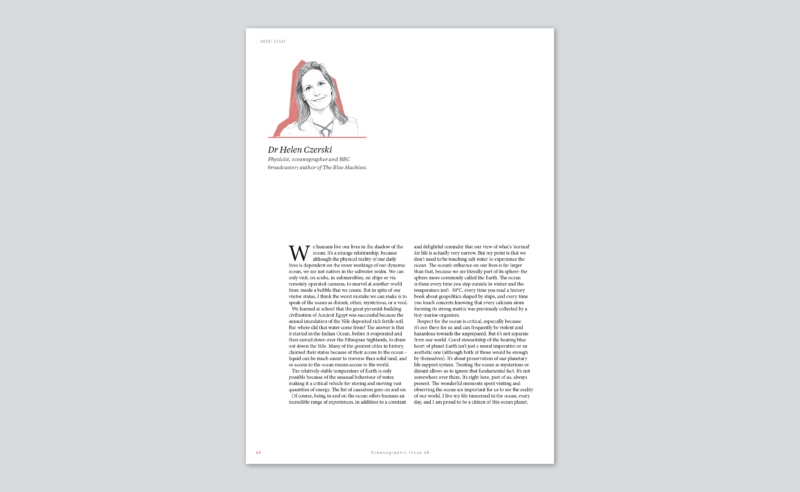
This is how this short essay appears in the special Oceanographic publication, The Innerview
Printed editions
Current issue
Back issues
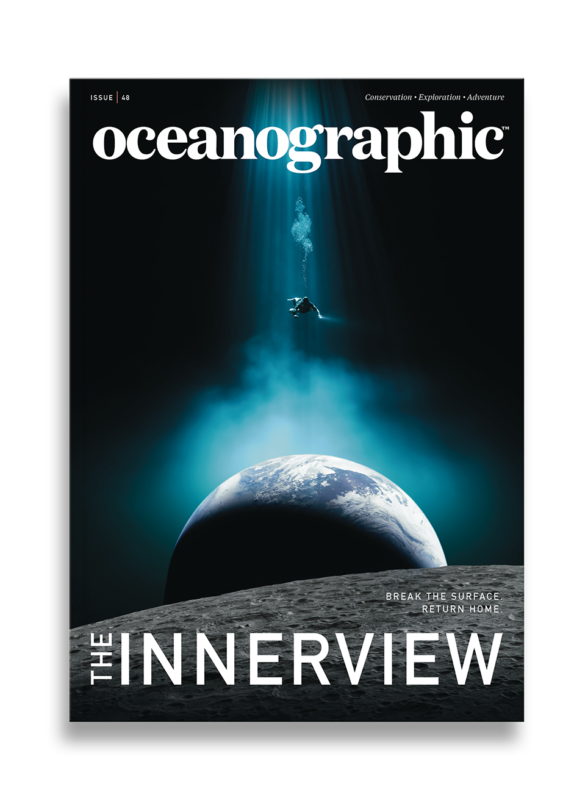
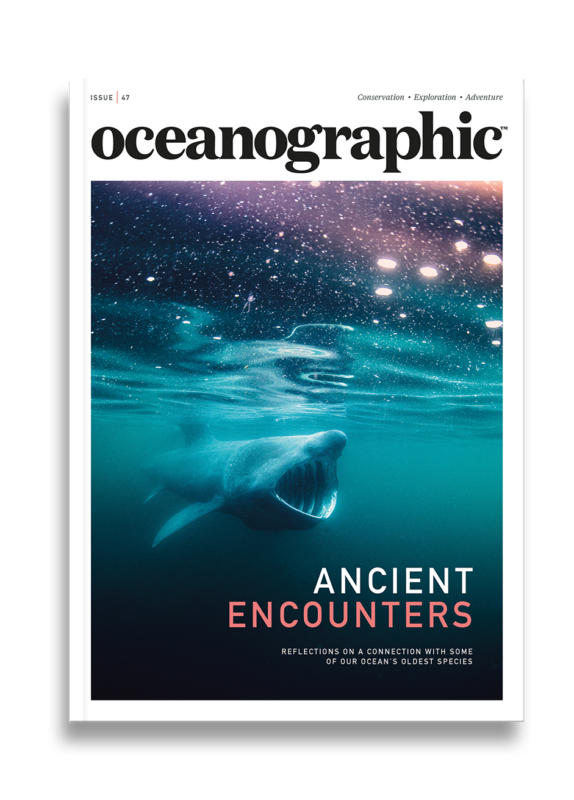
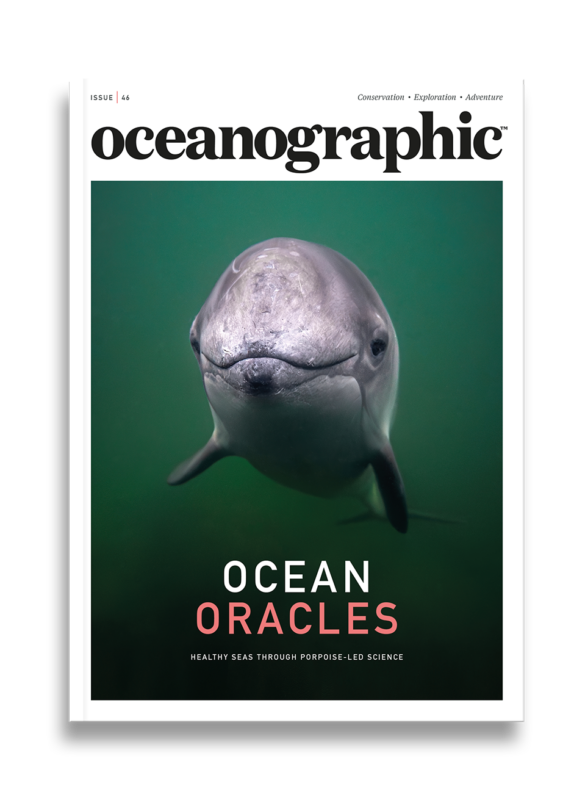
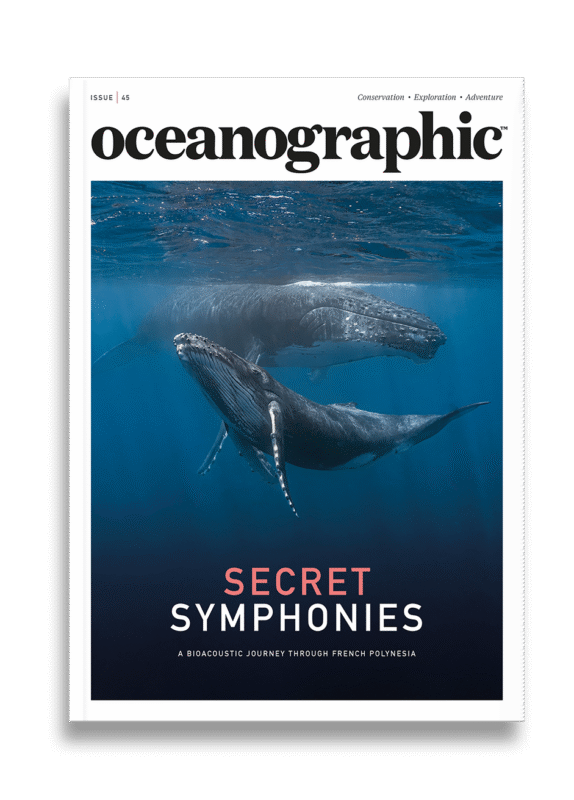
Enjoy so much more from Oceanographic Magazine by becoming a subscriber.
A range of subscription options are available.
