Edges of Earth: Among the Kings of the Falklands
In the latest update from the Edges of Earth team, Andi Cross and Adam Moore find themselves walking among kings.. the second largest species of penguin only to the Emperor penguin, on the Falkland Islands. Here, life is being shaped by the encroaching impacts of climate change.
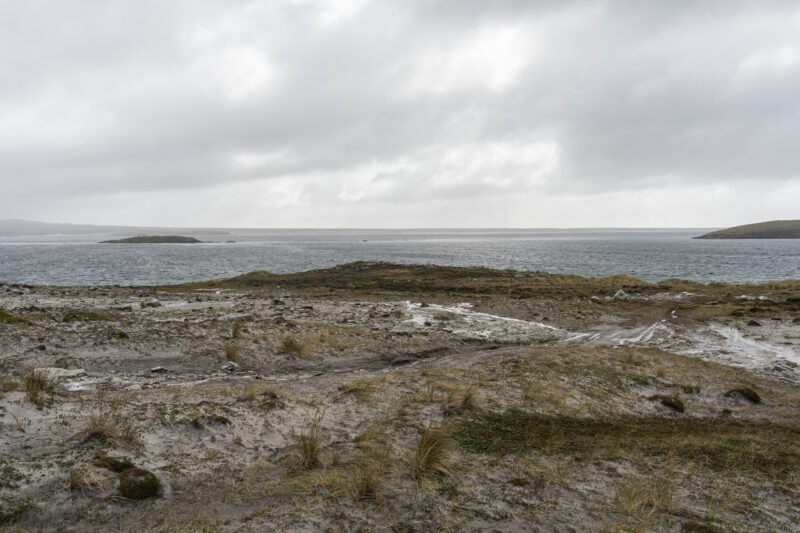
Our feet sank deeper into the Earth with every step, the mud clinging to our boots like it wanted to drag us under. Bird calls echoed across the horizon, thousands of avian voices carrying on the wind. Of these we only saw vultures -motionless sentinels perched high above the landscape. And below them, carcasses of sheep and seabirds lay scattered across the peat, turning the scene into something that looked more like a graveyard than a peaceful wilderness.
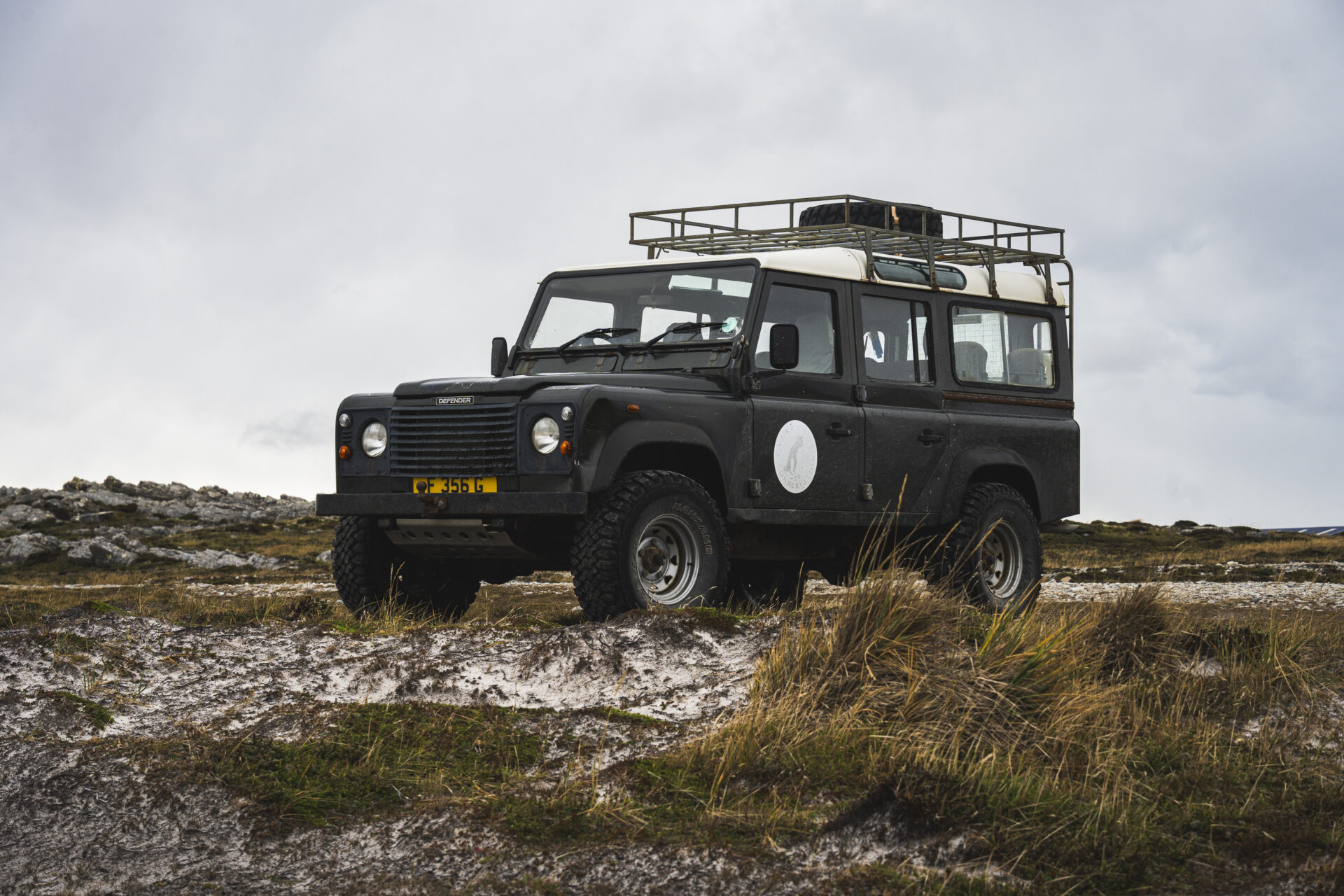
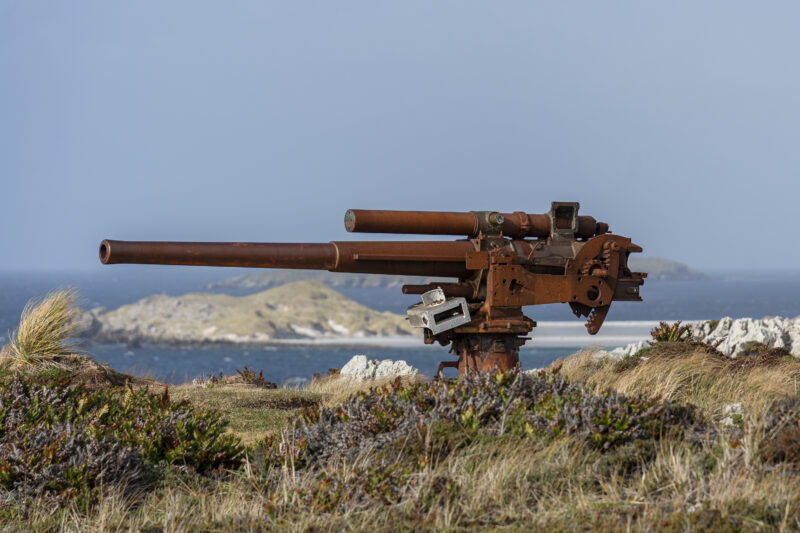
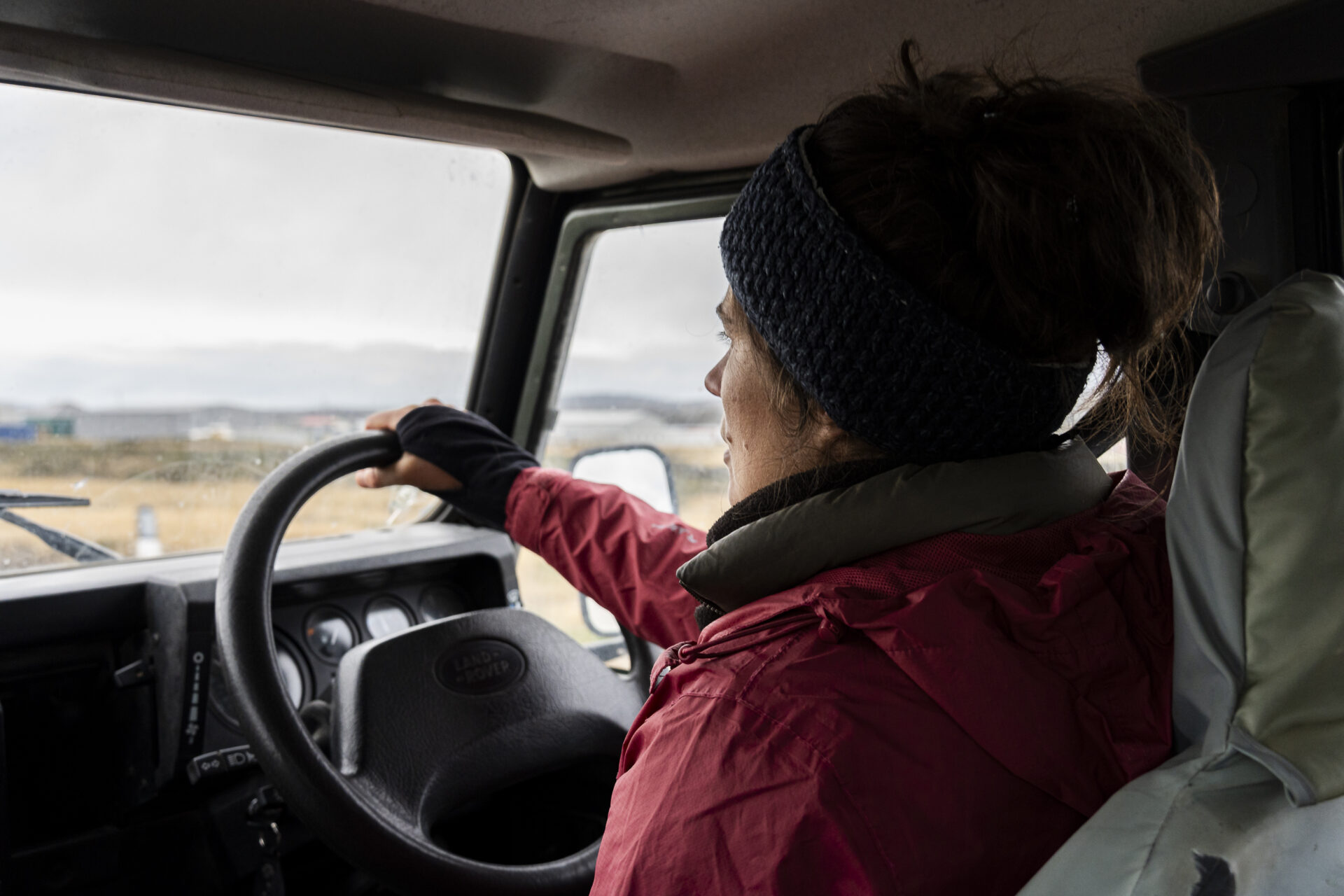
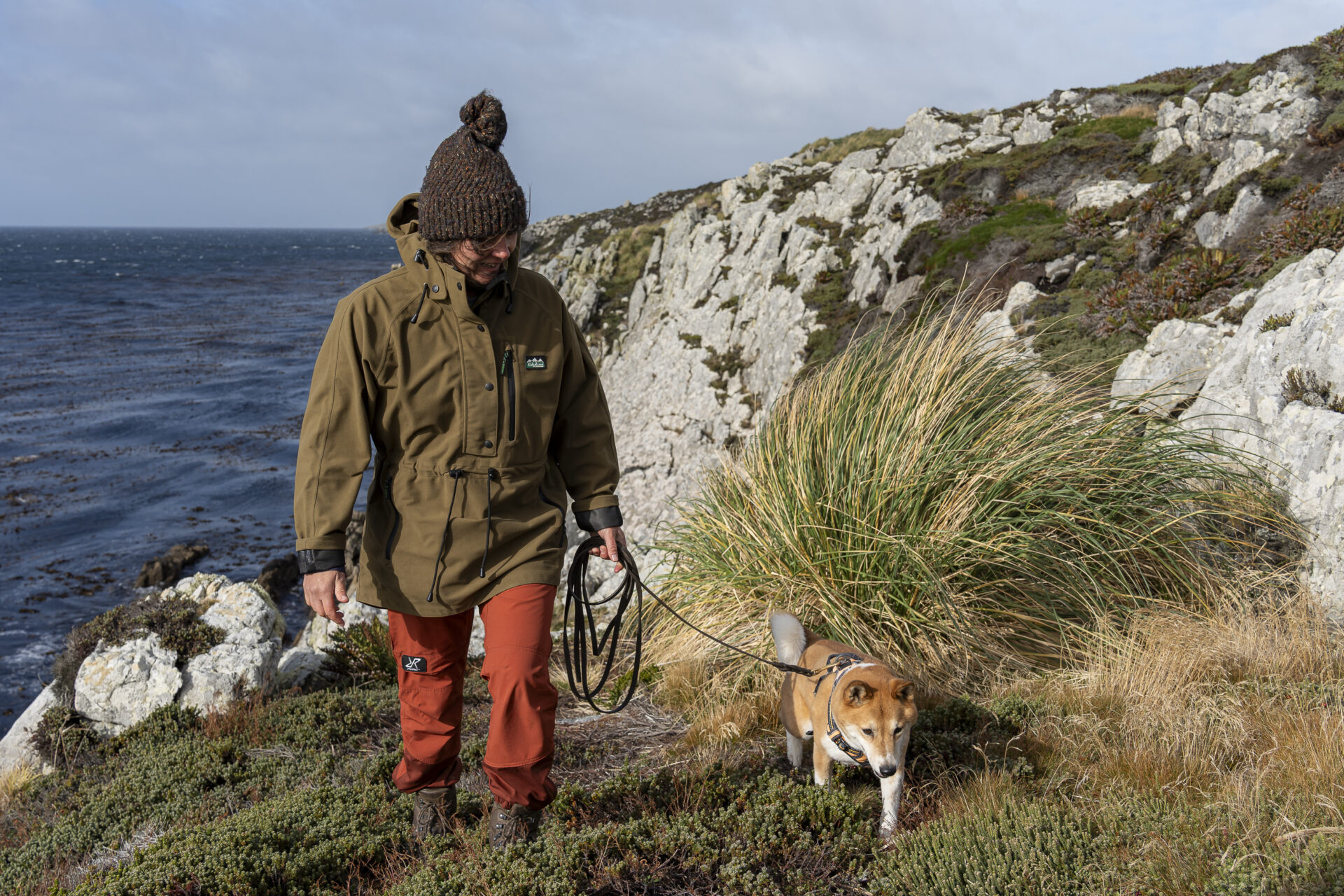
We were utterly alone, except for Carrot, a 73-year-old local with bright white hair and a blended accent that sounded equal parts English, Scottish, and Falkland. He was the only person with permission to drive us this far from Stanley, the islands’ lone outpost. Long before the 1982 war carved its scars here, Carrot explained, the only way to travel across the Falklands was by “overland tracks” or unmarked routes across the bogs and ridges that only seasoned locals dared to navigate. Even today, the pioneer past of these islands remains as raw and unfiltered as it was in its days of yore.
The howling wind so relentless and ominous made us almost want to turn back. But this was out of the question as we’d come too far. The Falkland Islands, some 740 miles east of Patagonia, are one of the most remote and ecologically rich archipelagos. Over three-quarters of the land is still wild, dominated by sweeping peatlands, rugged coasts, cliffs that rise straight from the sea, and abundant with wildlife that’s adapted to this isolation. Millions of seabirds thrive here, from albatross to petrels, and five species of penguins use its shores, each colony numbering in the tens of thousands.
When autumn begins to give way to winter, and the tourist season with its Antarctic cruises begins to dwindle, that’s when the Falklands come alive. We had arrived at the perfect moment, completely alone, in search of one species in particular: the King penguin.
Unlike the other penguin species here, including the Magellanic, Rockhopper and Macaroni, all of which disperse once breeding ends, Kings remain, tending to their chicks still covered in their shaggy brown down. Incredibly by the time we arrived, some were said to still be incubating the last of the late eggs. In the coming weeks, the weather would become nothing short of brutal. If storms came early, many of these chicks would not survive. That tension, the thin line between survival and collapse, is what brought us here in the first place and was forcing us to not turn back.



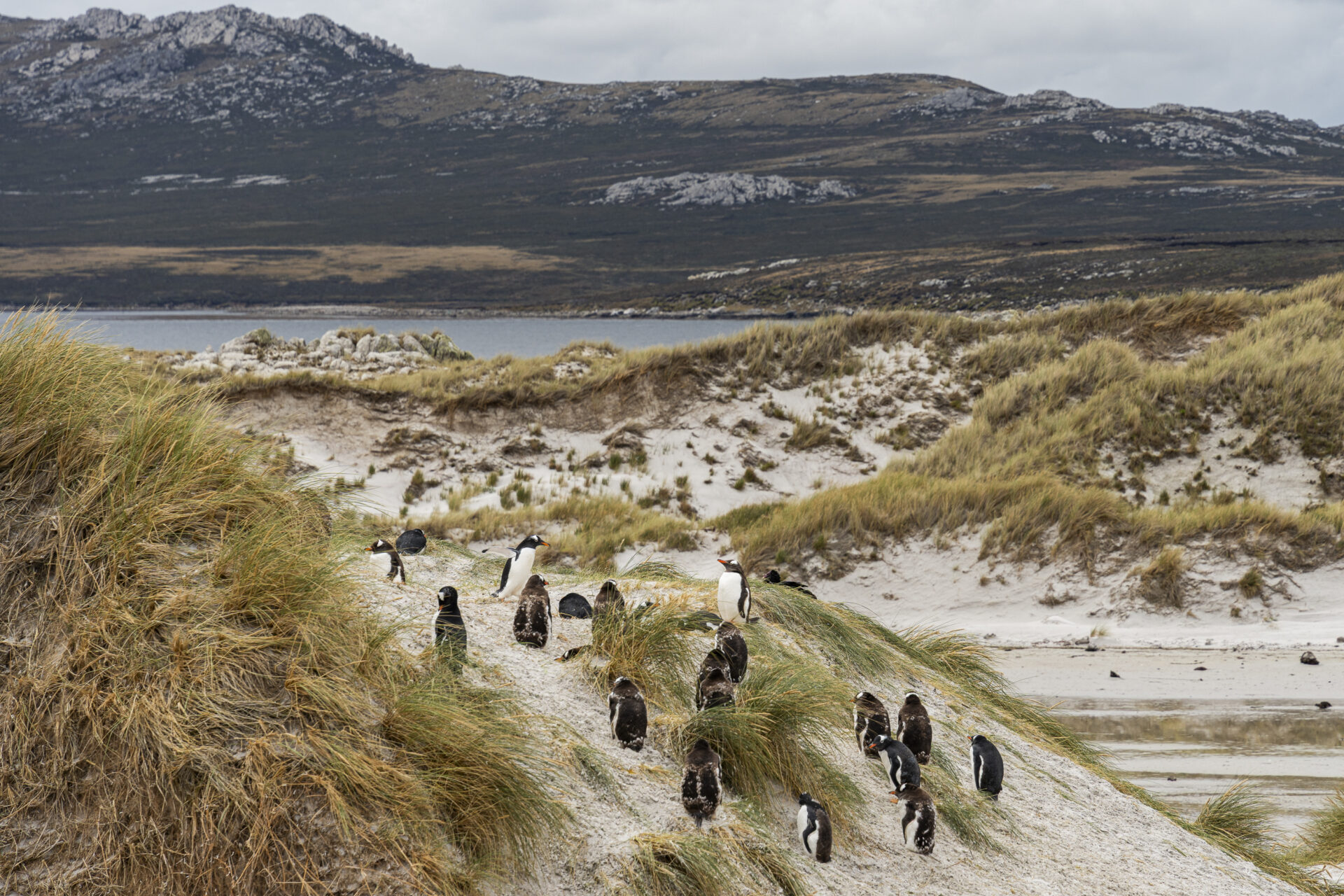
Getting closer, the sounds shifted into a deafening chorus of squawks and trumpeting calls, as well as the occasional sharp cry of a chick demanding food. The smell was what hit next. A pungent mix of guano and half-digested fish carried along the ripping wind. Finally, our frozen bodies made sight of the colony that was spread wide across the peat. Between 750 and 1,000 breeding pairs of King penguins filled the scene. Some were incubating eggs balanced delicately on their feet. Others guarding chicks in various stages of downy chaos, some so newly hatched they were barely visible. Their shaggy brown coats made them look more like misplaced bear cubs than flightless birds.
Kings are impossible to mistake. Standing up to a meter tall, they are the second-largest penguin species in the world, outsized only by their Antarctic relatives, the Emperors. Their sleek silver backs, white bellies, and striking golden-orange throats give them a kind of formal elegance, as if they are donning tuxedos with collars turned to sunlight. They breed here in the Falklands as well as across sub-Antarctic islands like South Georgia, the Crozet and Kerguelen archipelagos, and as far south as Tierra del Fuego, in Argentina.
However, what sets them apart, even more than their size, is their rhythm of life. Unlike Gentoo or Magellanic penguins that reproduce and then vanish to sea, Kings operate on a 14-16 month breeding cycle. That means in any given colony you’ll see every breeding stage at once, from eggs tucked on parents’ feet and tiny grey chicks just starting to peek out, to the enormous “oakum boys”—the nickname for those fluffy brown yearlings still dependent on their parents. Adults shuttle constantly between what’s called the breeding circle and the ocean, sometimes swimming more than 300 kilometres round-trip to find lanternfish or squid.
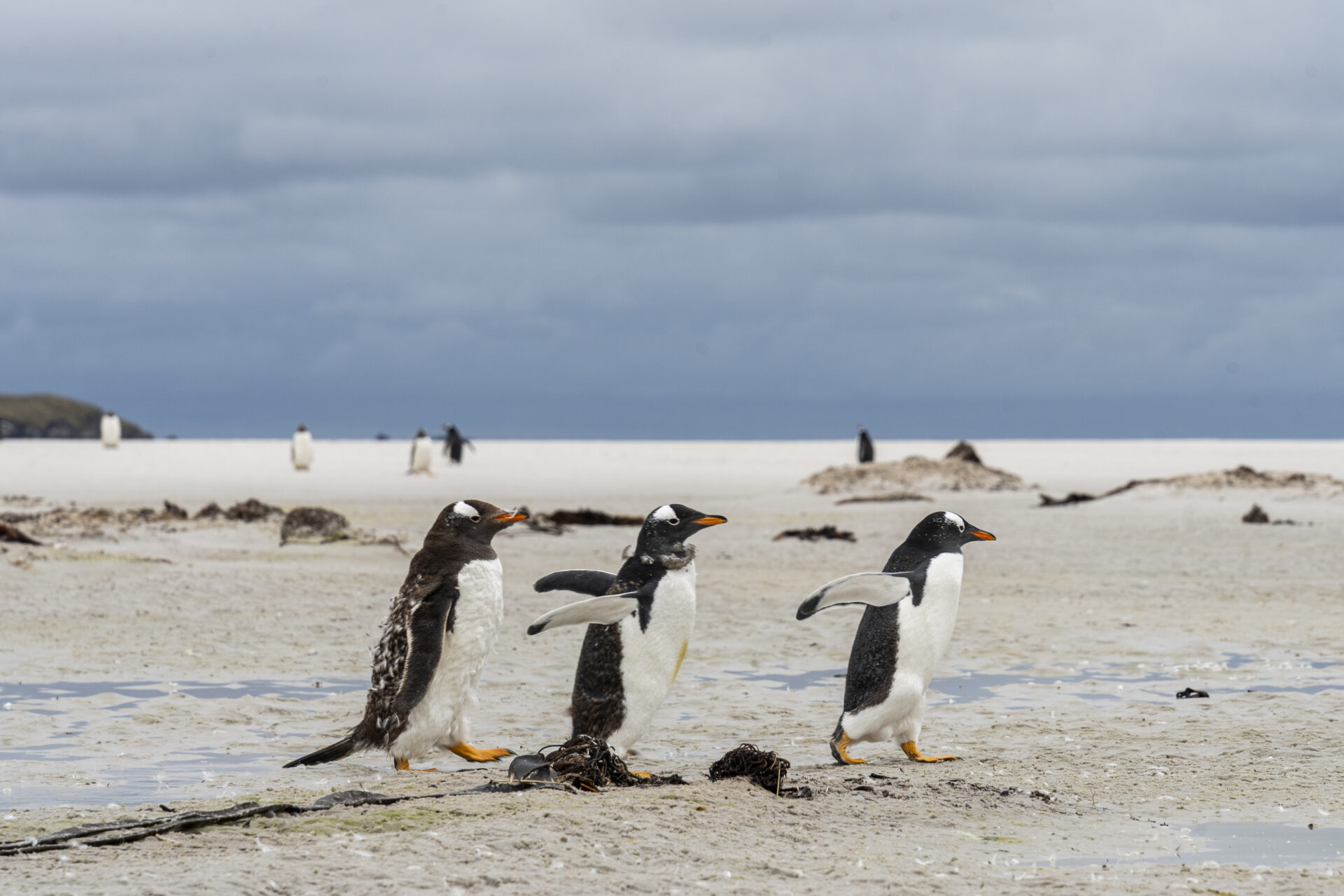
While we were hugging the outskirts of the breeding circle, lines of adults peeled off from the main group, waddling up to us. They tilted their heads back and forth as if they were trying to determine what kind of peculiar penguin we might be. Within minutes, they’d fall back into line, sliding seamlessly into the beats of the colony.
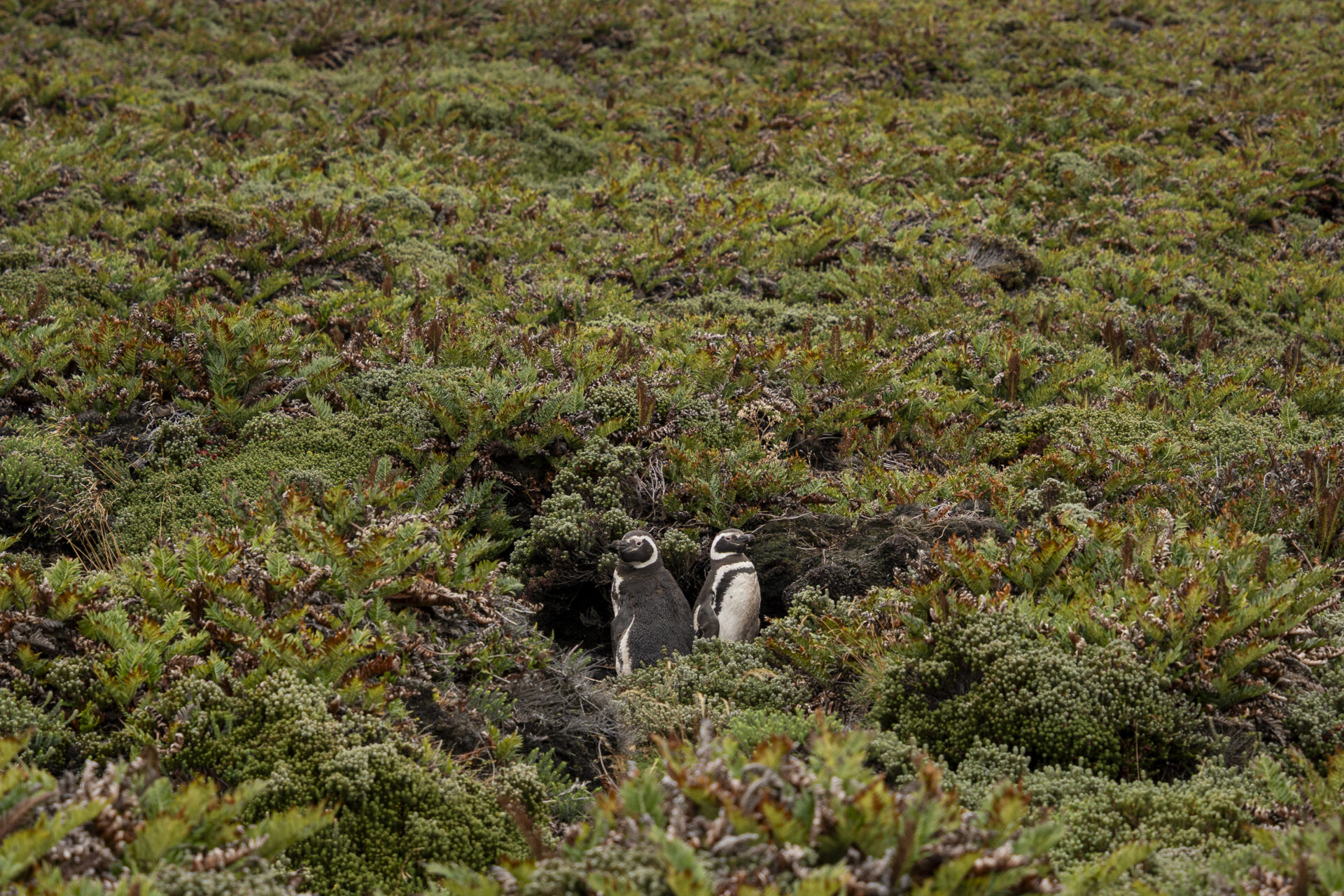
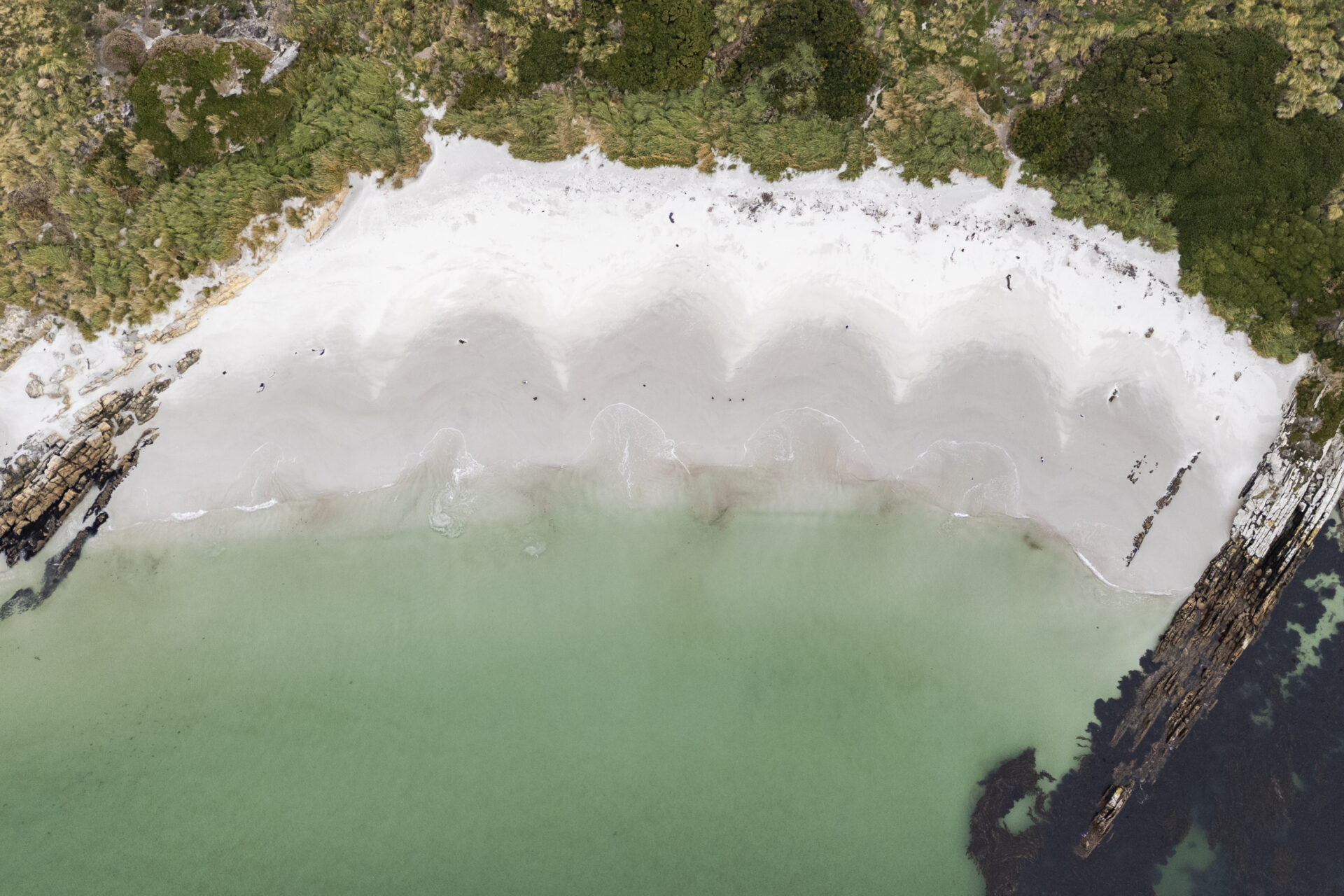
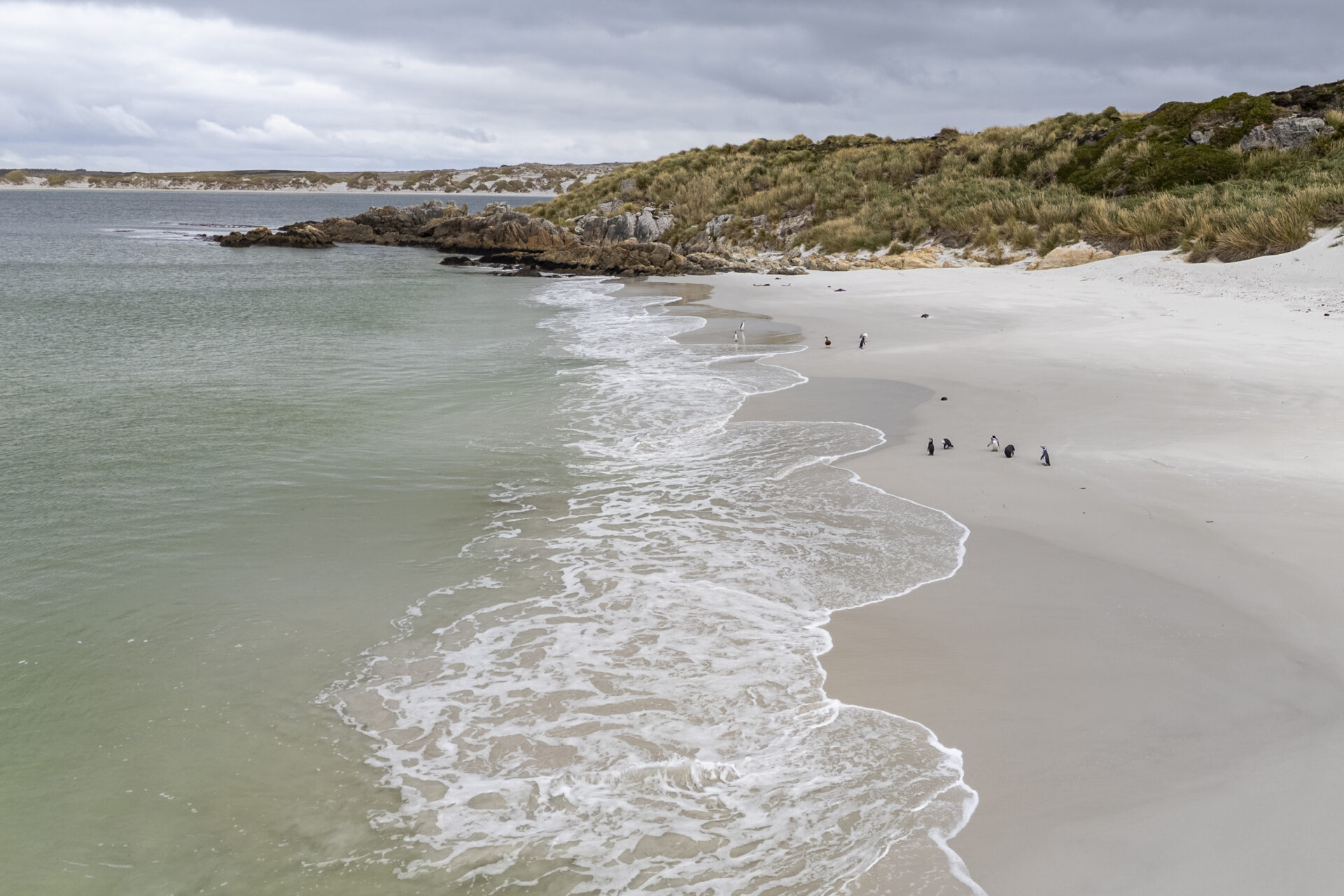
Following a group down to the beach, we sat in the sand and waited for them to shuffle past, their neat lines breaking only to cast us a glance. On land they seemed hesitant, almost bumbling, pausing at the shoreline as if the waves were something to fear. And then in a flash, they transformed.
As soon as their bodies hit the water, hesitation gave way to mastery. These awkward waddlers became liquid, torpedoing through surf, leaping clean over waves, and vanishing in sharp, synchronised dives. Within minutes they were fierce hunters, disappearing into the depths.
When they returned, bellies heavy with food, they emerged one by one from the surf, regrouping on the sand like a small army. They would file back to the breeding circle one behind the other. Here, in a ritual as old as the species, they would regurgitate meals for waiting chicks. It was patterned and predictable, but every now and again, mid-commute, a curious bird broke ranks to investigate us before falling back into line. This rouge unit would come so unbelievably close it made us nervous. We dared not to be the reason their flow was broken.
But not every return ended safely. From the dunes, sea lions lurked, looking lazy in appearance. Their unsuspecting bursts of speed were lethal. They’d lunge at stragglers – injured birds, young ones, or those slow to react – and the beach would erupt into chaos. Out here, on the open white sand with no cover, these penguins had nowhere to run. The circle of life in the Falklands was ferocious and unapologetic, unfolding in plain sight as if we simply didn’t exist.
And yet, the deadliest of all the threats were the ones impossible to see. Carrot, with a lifetime of perspective, was blunt in saying, “the seasons don’t behave anymore.” He spoke of winters arriving early, snow and sleet falling weeks ahead of memory, summers no longer predictable to the day as they once were. Climate extremes, shifting storms, the pressure of grazing sheep, cattle, and horses (all introduced species) are some of what has reshaped these islands. This causes peatlands to erode and in turn, impacts the native vegetation. The balance that once sustained penguins and other seabirds is wearing thin.
Looming on the horizon is something larger still, with the soon-to-be introduced industry of oil and gas. While exploration in Falklands’ waters has long been a point of contention, full-scale drilling is now expected to begin as early as 2026.
Environmental groups like Falklands Conservation have raised alarm, warning that any spill, let alone a major slick, would be catastrophic. Penguins have already been documented with oil on their feathers from passing ships, and would face far greater risks with the introduction of this industry. For an ecosystem that thrives on clean seas and abundant fish, rigs, shipping, and industrial runoff could undo decades of conservation work overnight.
Here in the Falklands, the threats may not roar like sea lions on the beach going after a straggling King. But they loom larger, and potentially far more devastating in the distance.
And with these shifting seasons, and industries pressing in, all penguin species feel the strain, not just the Kings. For now, the Magellanics are holding steady, and the Kings are thriving in their colonies. But the Gentoo and Rockhopper have not been so lucky. Rougher, less predictable weather has swept away entire clutches of eggs before they can hatch, as well as avian flu taking hold of the islands in the past two years. The Gentoo, in particular, have taken the brunt of it, with thousands of birds lost in sudden waves of infection, causing their population to dip and rise in an unstable fashion.
Falklands Conservation is monitoring colonies across the islands, keeping detailed records of breeding success, chick survival, and the spread of disease. They’ve been quick to close off sensitive nesting areas when outbreaks hit on their own land or islands that they manage, minimising the risk of cross-colony transmission.
At the same time, they work with the local community to manage human activity around penguin rookeries, aimed at reducing stress on vulnerable colonies and giving birds the space to recover. In an ecosystem as small and exposed as the Falklands, every chick that makes it through its first winter counts.
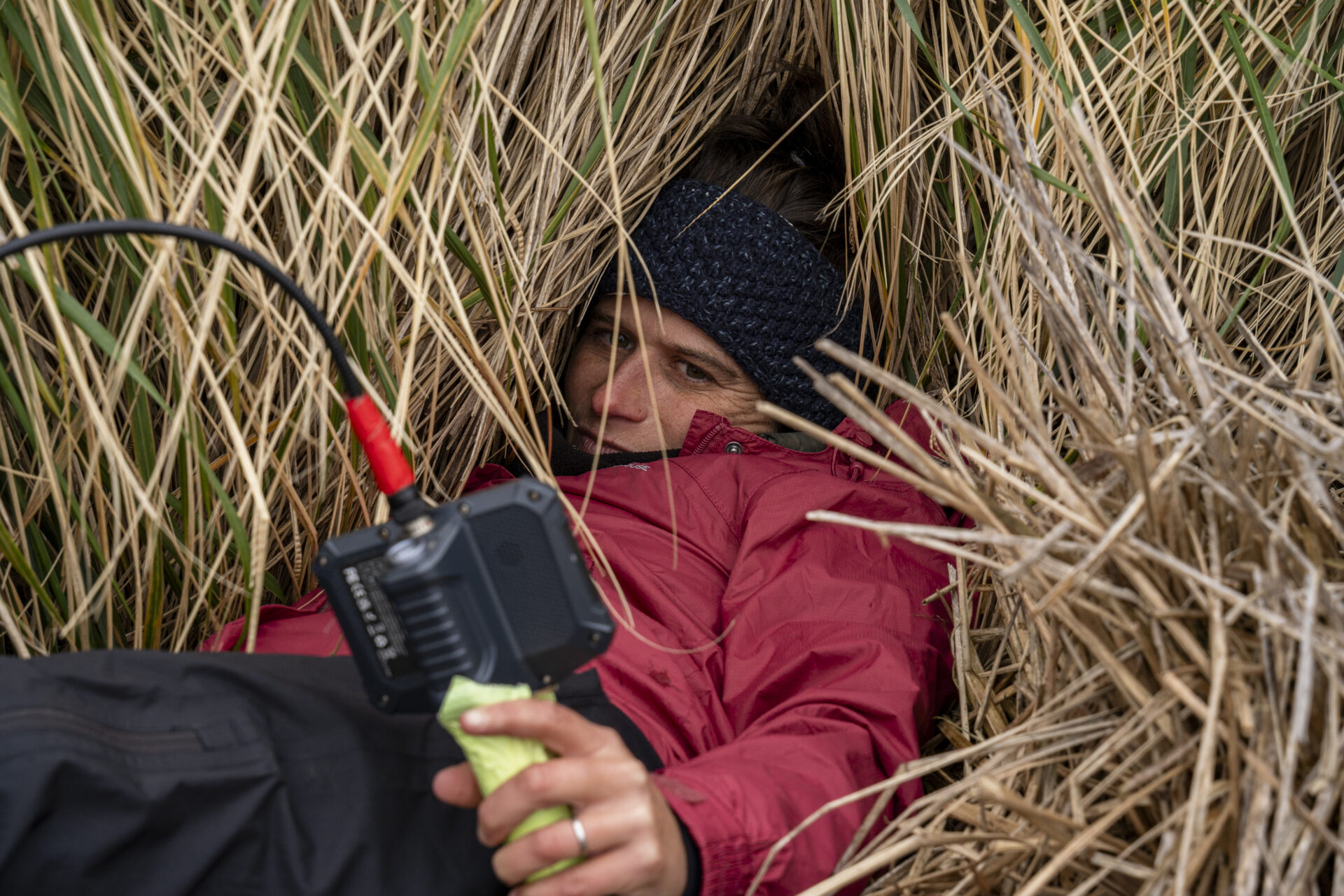
At Volunteer Point, where we based ourselves for the King penguin spectacle, land manager Derek Pettersson doubled down on just how fragile that balance is. Change in these environmental cycles is natural, Derek admitted, but what’s unfolding now is different.
From sheep farmers to conservationists, there’s consensus that the pace and severity of shifts in weather and landscape are not normal. Our baseline of understanding was far different than what once was here. Historically, the shorelines were wrapped in dense stands of tussac grass, a native plant that sheltered seabirds, protected precious soil, and was a coastline stabiliser.
Today, much of it has been grazed away, replaced by cracked black peatland, starved of rain and battered by constant wind. As the soil dries, it turns to clay and blows into the sea, making restoration nearly impossible. What’s lost here is vegetation—the very foundation of the islands themselves.
Penguins may be the sentinels, but the warning is written everywhere on these islands. And when you start looking closer at the finer details, the full picture really does come into line of sight. It’s impossible to ignore. Nature is a system of interlocking parts, and when one falters, the ripple spreads. Over the week we spent on East Falkland, that truth grew more undeniable. What at first seemed like nothing more than mud sucking at our boots, or the long trek required to reach a penguin colony, revealed itself as something more heavy hitting. The soil was turning brittle, full ecosystems were unraveling. The penguins may be the charismatic draw, but it’s the ground beneath them that tells a darker story.
Sitting on the sidelines, watching the Kings shuffle peacefully for hours, we held the island’s white sand laced with its red minerals in our hands. Sands so uniquely and distinctly part of the Falklands. We felt the weight of it. These islands were like a mirror.
Everywhere we’ve gone on the Edges of Earth expedition – 45 countries and counting – the same message resonates. The world is shifting beneath us in ways we can no longer ignore. The question now has nothing to do with the reality of the change, but rather, how many of us will witness it, and act, before the ground gives way right under our feet.

Printed editions
Current issue
Back issues
Enjoy so much more from Oceanographic Magazine by becoming a subscriber.
A range of subscription options are available.
