Hugo Tagholm has previously led the ocean campaigning charity Surfers Against Sewage and is the executive director and vice president of Oceana in the UK. In this column, he writes about the current global political situation and the opportunity for marine protections that come with it.
We are at a critical crossroads for ocean governance, facing global decisions to protect and restore our seas at this midway point of the Ocean Decade. Let’s remind ourselves of the mission and objectives of this period: to “achieve the ocean we want by 2030.”
This includes understanding and combating marine pollution, protecting and restoring ecosystems and biodiversity, sustainably feeding the global population, delivering an equitable ocean economy, driving ocean-climate solutions, ensuring the resilience of coastal communities, using data and mapping to safeguard our seas, and democratising ocean governance through new technology, knowledge, and with the participation of and for all.
But perhaps most importantly, it aims to restore humanity’s fractured relationship with the ocean. These goals are brave, inspirational, and vital for delivering healthier, more abundant, and thriving seas by 2030.
Envisioning a brighter future for all, ensuring that coastal communities worldwide are sustainable, resilient, and thriving. Seeking a future where marine life – biodiversity and biomass – quickly returns to all corners of the global ocean.
Whether we are aware of it or not, whether we are passionate about it or not, whether we live in coastal towns or capital cities, whether we are in the Global North or South, the East or West, we all rely on a healthy ocean. Every single one of us. So, how are we doing? Are world leaders making the necessary decisions to protect marine life and society as we know it?
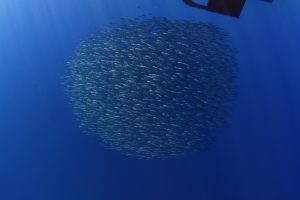
Unfortunately, the answer to this is no. At best, governments seem to be maintaining the status quo, which allows a few small multinational companies to strip our seas of resources. They are removing fish, minerals, oil, and other resources at an alarming rate, exploiting marine protected areas, and establishing unsustainable fish farms in regions of our ocean where they should not exist. This exploitation often involves taking fish from distant communities to supply salmon for the wealthy elite.
In the Antarctic, the base of the food chain is being threatened as krill—a small, shrimp-like crustacean prevalent in the Southern Ocean – is harvested extensively. Krill is used in various high-street products, including fishmeal to fatten expensive restaurant fish and unnecessary health supplements for humans.
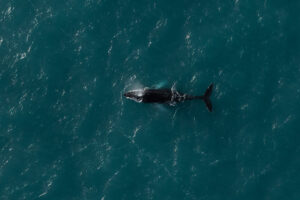
This level of extraction endangers whales, which while in recent decades have become largely protected from whaling are not quite so protected from starvation, a new threat that has replaced harpoon ships.
The leading edge of the blue economy is dominated by large industries – factory ships, deep-sea mining vessels, battery fish farms, oil rigs, and pipelines – focused on profit at any cost.
Some new administrations are going even further by actively dismissing any notion of protecting ocean ecosystems or any part of nature. They are proposing to open marine protected areas to industrial fishing fleets and accelerate deep-sea mining, despite the unknown and potentially catastrophic impacts. They are doubling down on an economy and mindset that has driven the destruction of the natural world to this point – “Drill Baby Drill”.
More of Hugo's columns


Continue reading
This story is exclusively for Oceanographic subscribers.
