Hugo Tagholm has previously led the ocean campaigning charity Surfers Against Sewage and is the executive director and vice president of Oceana in the UK. In this column, he emphasises the importance of rejuvenating and protecting Scottish seas.
The seas of Scotland are many things to many people. For some, they are daily livelihoods. For others, heritage, identity and belonging. They bring solace and wellbeing to many. And for all of us, they help create a safe and liveable climate. Regardless of which of these connections resonate most, none are trivial.
That is why the Scottish Government’s public consultation on ocean protection last month was not only welcome, but essential. The government is exploring banning or restricting bottom trawling in 20 of Scotland’s offshore Marine Protected Areas (MPAs). This particular fishing practice is a good place to start, since it is a pressing, but poorly understood issue. In fact, when we asked people about bottom trawling in a YouGov survey, 64% of UK adults thought the practice was already banned in protected areas, including 71% of those in Scotland.
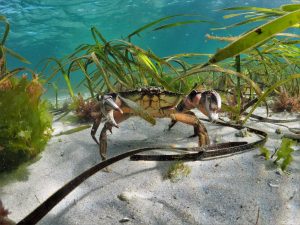
I suspect there is a reason most people are unaware that bottom trawling is allowed in our Marine Protected Areas, and that is because it seems unbelievable. Bottom trawlers drag heavy metal gear and nets over the seabed, often decimating habitats such as reefs, kelp forests and seagrass meadows that are vital for marine health. It also has an extremely high rate of bycatch – indiscriminately hoovering up wildlife. How can such destruction be permitted in a supposedly ‘protected’ area? Of those we surveyed, an overwhelming 83% felt it should be banned and felt it should be banned in marine havens.
To pick just a few examples of the riches that the sites in the consultation harbour, let’s start around a hundred nautical miles off Cape Wrath. Here lies an underwater world formed of ‘sand volcanoes’ that are capped with thickets of ancient cold-water corals. These are the Darwin Mounds and it was here, just four years ago, that scientists first discovered cold-water coral reefs growing on sand, rather than rock. Many of these volcanoes also have what is thought to be a globally unique feature: teardrop shaped ‘tails’ on the seabed, which are home to the world’s largest single-celled organisms – xenophyophores – a single cell that can grow up to 20cm in diameter.
In other sites under consultation, you will find gulper sharks, only found in 17 places globally; or ocean quahogs, clams that can live for over 500 years. Right now, for many of the protected areas that were part of the consultation, the government is deliberating between protecting only certain zones, like reefs, or protecting the whole site. There is a wealth of evidence to show that protecting these havens in their entirety is the best way to protect the ocean. Research from Lyme Bay in Dorset showed that when reefs alone were protected, the abundance of marine life did increase: by 15%. But in areas where the entire sea bed was protected, that figure was an overwhelming 95%.
It is also worrying that if you look closely at the data on trawling in these Scottish MPAs, it becomes clear that under this partial protection option, restrictions would be almost entirely limited to places where bottom trawling doesn’t happen in any case, so industrial vessels can continue business as usual. In a time of nature and climate crises, business as usual is far from good enough. Protecting only remnants of habitat, entirely encircled by an endless patrol of destructive fishing, prevents true regeneration. We must be clear and bold: bottom trawling should be banned in all marine havens.
More of Hugo's columns

Continue reading
This story is exclusively for Oceanographic subscribers.
