Hugo Tagholm has previously led the ocean campaigning charity Surfers Against Sewage and is the executive director and vice president of Oceana in the UK. In this column, he writes about the current global political situation and the opportunity for marine protections that come with it.
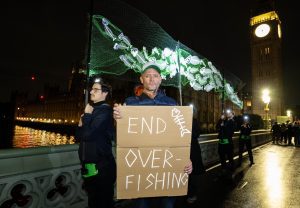
UK seas are under siege. Every day, they face a fresh onslaught: raw sewage flowing out over beaches; oil spills both large and small; marine heatwaves; and plastic, chemical and fertiliser pollution. On top of all this, there is a form of industrial extraction carried out on a scale that puts populations, species and entire food webs at risk: overfishing.
Today, only 41% of the UK’s fish stocks are confirmed to be in a healthy state, and over a quarter have declined to a ‘critical’ condition. Our iconic North Sea cod is critically low yet still being overexploited, as our new report has shown. Just last month, the international body providing scientific evidence for fish catch regulation – the International Council for the Exploration of the Sea (ICES) – advised that the state of crisis is such that zero catch is needed to safeguard the future of this population.
And it’s not just cod. In the last 15 years, the combined quotas for mackerel stocks in the Northeast Atlantic have exceeded scientific advice by a staggering 39% on average. Now, ICES say catch limits must be slashed by 70% to safeguard these fish. The inevitable consequences are apparent.
This dire situation for our seas is not driven by illegal fishing or quota fiddling, it is the result of governments – wooed by industry lobbying – disregarding scientific advice and setting catch limits too high to sustain healthy fisheries. In short, this is driven by a dangerous focus on short-term profits compounded by poor leadership.

Continue reading
This story is exclusively for Oceanographic subscribers.