Ian Urbina is the director of The Outlaw Ocean Project, a non-profit journalism organisation based in Washington D.C. In this column, he covers conservation concerns around the Saya de Malha Bank, the world’s largest invisible island.
The Saya de Malha Bank, a vast seagrass meadow in the Indian Ocean, has been the focus of my team’s research at The Outlaw Ocean Project for the past year. This underwater meadow is incredibly important due to its ability to absorb significantly more carbon dioxide than the same area of Amazon rainforest.
In our investigation we found the area is being crossed by mining companies, abandoned crews, and visionaries seeking to create a new micro-nation. But one thing stood out not because it was there, but because it wasn’t.
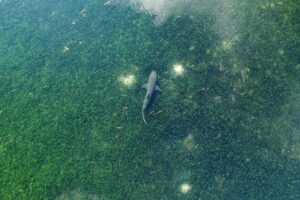
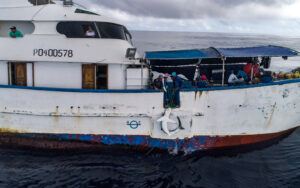
The area was once bustling with marine life, home to species of sharks, sea turtles, and whales. However, a recent research expedition by the environmental non-profit Monaco Explorations found not a single shark during their three-week search. What they did see were several gillnetters at the Bank.
Gillnetters are vessels that hang wide panels of netting in the water, keeping them attached to the surface via floating lines. Sharks are especially vulnerable to gillnets, which account for 64 percent of shark catches recorded by an intergovernmental organization called Indian Ocean Tuna Commission.
Sharks play a critical role in the ecosystem as guardians of the seagrass, hunting populations of turtles and other animals that would mow down all the seagrass if left unchecked. Catching sharks is not easy, nor is it an unintentional occurrence. In tuna longlining, the ship uses a line made of thick microfilament, with baited hooks attached at intervals. Many tuna longliners use special steel leads designed not to break when the sharks, bigger and stronger than the tuna, attempt to yank themselves free.
Deckhands usually cut off the fins, which can sell for a hundred times the cost of the rest of the meat, and throw the rest of the shark back into the water to avoid wasting space in the ship hold. It’s a wasteful process and a slow death, as the sharks, still alive but unable to swim, sink to the seafloor. Ship captains typically allow their crew to supplement their income by keeping the fins to sell at port, off books, to offset poverty wages.
In 2015, more than 50 Thai fishing vessels, primarily bottom trawlers, descended on the Saya de Malha Bank to drag their nets over the ocean floor and scoop up brushtooth lizardfish and round scad, much of which was transported back to shore to be ground into fishmeal.
Two survivors of trafficking who worked in the Saya de Malha Bank on two of the vessels – the Kor Navamongkolchai 1 and Kor Navamongkolchai 8 – told Greenpeace that up to 50 percent of their catch had been sharks. In 2016, a Thai government report found that 24 vessels returning from Saya de Malha Bank had committed fishing violations, mostly from a lack of valid fishing gear licenses. Since then, the Thai presence in the Saya de Malha Bank has diminished, and in 2024 only two Thai vessels targeted the area.



Continue reading
This story is exclusively for Oceanographic subscribers.
