In the kelp’s embrace: Diving South Africa’s living cathedral
In South Africa’s False Bay, a landlocked dreamer finds belonging in the kelp forests of the Cape Peninsula. Among sharks, rays and nudibranchs, she discovers connection, community and a deeper calling to protect one of the ocean’s most vital ecosystems.
At a young age, I cried over wildlife crimes, and took measurements of my parents’ bedroom to figure out whether it could fit a Manta Ray. While I grew up landlocked, I harboured a love for the ocean – inexplicable yet present – that has been with me and has become a major influence on my life choices.
It was in Simonstown, in South Africa that I would eventually lose my heart to the magnificent beauty of the kelp forests that line the Cape Peninsula in the South Atlantic to one side, and in the Indian Ocean to the other and where I would eventually find myself revelling in the shared connection the coastal communities here get to experience.
The kelp forests and their adjacent reefs are – in many ways – a lifeline for the local people and one that transcends a mere physical resource. Instead, the provide the type of sustenance that lets hearts and souls expand.
If you allow me the slight spiritual notion; finding myself placed, by chance, in a dive centre run by the most beautiful pair – their backgrounds in photography and marine conservation – felt as though I was being rewarded by the universe. I felt welcomed and at home in a matter of days. It would be the beginning of deep friendships.
As much as the Great African sea forest slowly returned me back to myself, so did the people it provides for and that care for it in return. The belts of kelp in South Africa are enchanted and mystical forests of the sea.
The view when popping up from a dive is unmatched for me. The cloths of mist and clouds tenderly falling over the caps of the mountainous coast have stolen my heart, and the kelp fronds glistening on the surface and the distant grunts of Cape fur seals beckon us to explore.
I secretly love seeing the boat further into the distance, busy picking up other divers. I can float on my back and take it all in for a few minutes, sure to be invigorated by the rather colder waters that a crystal-clear dive tends to be accompanied by. I can gaze at the beauty on land for hours. In fact, it is probably the only time I ever favoured sipping my morning coffee with a view of the mountains dancing with the mist, rather than looking out across the ocean.
And still, the scenes above the surface are a mere precursor to the magic that lies below. A local diver once mused with me that where tropical reefs are like crazy raves, with the most eccentric inhabitants trying to outshine one another, the belts of kelp in South Africa are enchanted and mystical forests of the sea.
I am yet to come across a more apt description.
It’s with good reason that the area is one of the Hope Spots appointed by Mission Blue. You may never have heard of False Bay before, but you have likely seen footages of the great sardine runs up the South African coast, turning the waters there into spectacular displays of natural beauty. Well, those sardine runs find their origins in False Bay.
It is a magical wonderland full of colour, an artist’s expressionist painting that reveals itself little by little – the artist being mother nature, of course.
In my heart, I have grown into a steward of the experience that the kelp extends to you. When on the boat with those who have not visited before, I wish for them to see its true beauty. And it is difficult when you are merely here to tick off a bucket list item.
A kelp forest isn’t something you cross off as an achievement. It is rather a place you learn over time, and that connects you back to your own innate wilderness and joy – if you let it. A day with good visibility not only means that you can see your dive buddy – not a luxury always granted – it also invites you to descend and take a moment. A couple of minutes of your dive to stop and simply look up and around the life-giving and living entity you got the privilege to be immersed in. And then, the play begins.
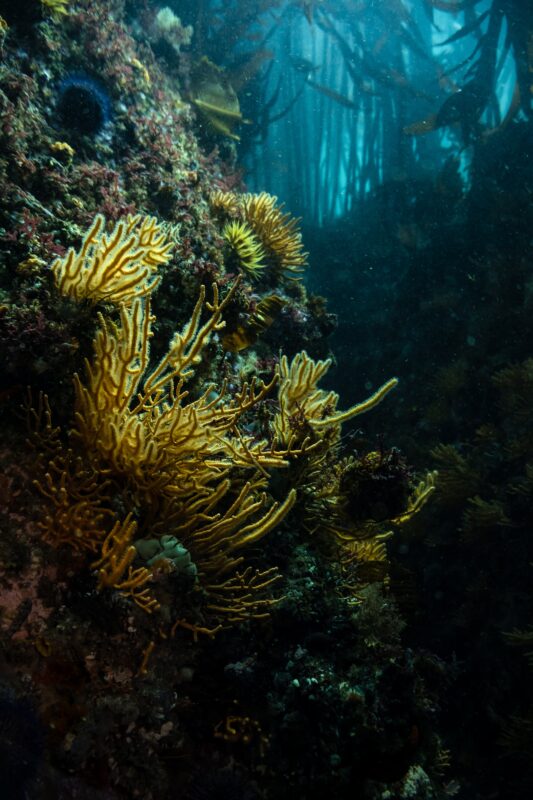
Crevices, caves, fronds, holdfasts, and reef walls all reveal their own little secrets, one individual by another, forming the forest community swaying in the surges with you.
With 75 (mostly endemic) species in False Bay and the Peninsula alone, this is nudibranchs lovers’ heaven – an invite to have a couple of beers whilst leafing through one of the master nudibranch books is right up my street.
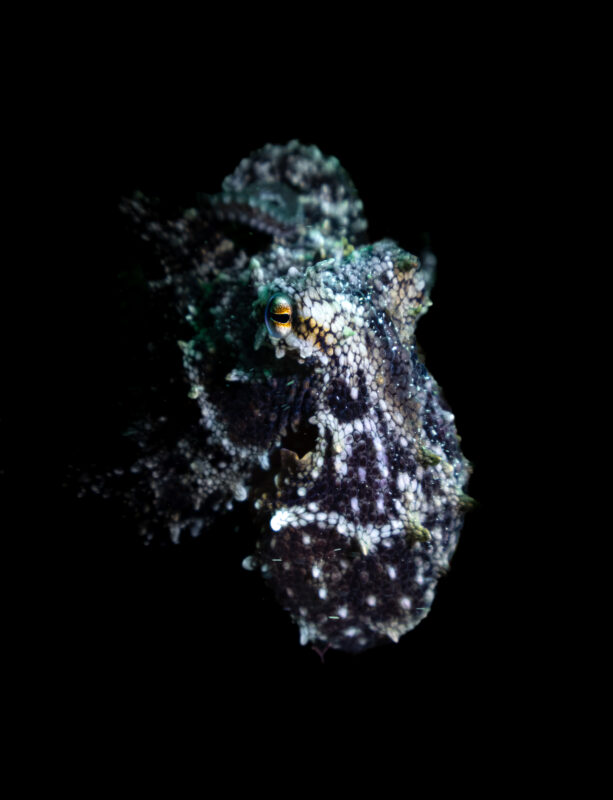
Those who know, know. It is a delightful candy store for us who carry slugs in our hearts, and those little creatures are not afraid to put on a spectacular show.
Pyjama sharks are one of the iconic species everyone wants to see. Fair, their markings make for a stunning pattern gliding through the canopy. But never has my heart melted more seeing the more unassuming shy shark dreamily dozing away, rolled up and tucked in a burrito of a kelp leaf as the surges gently rock it side to side.
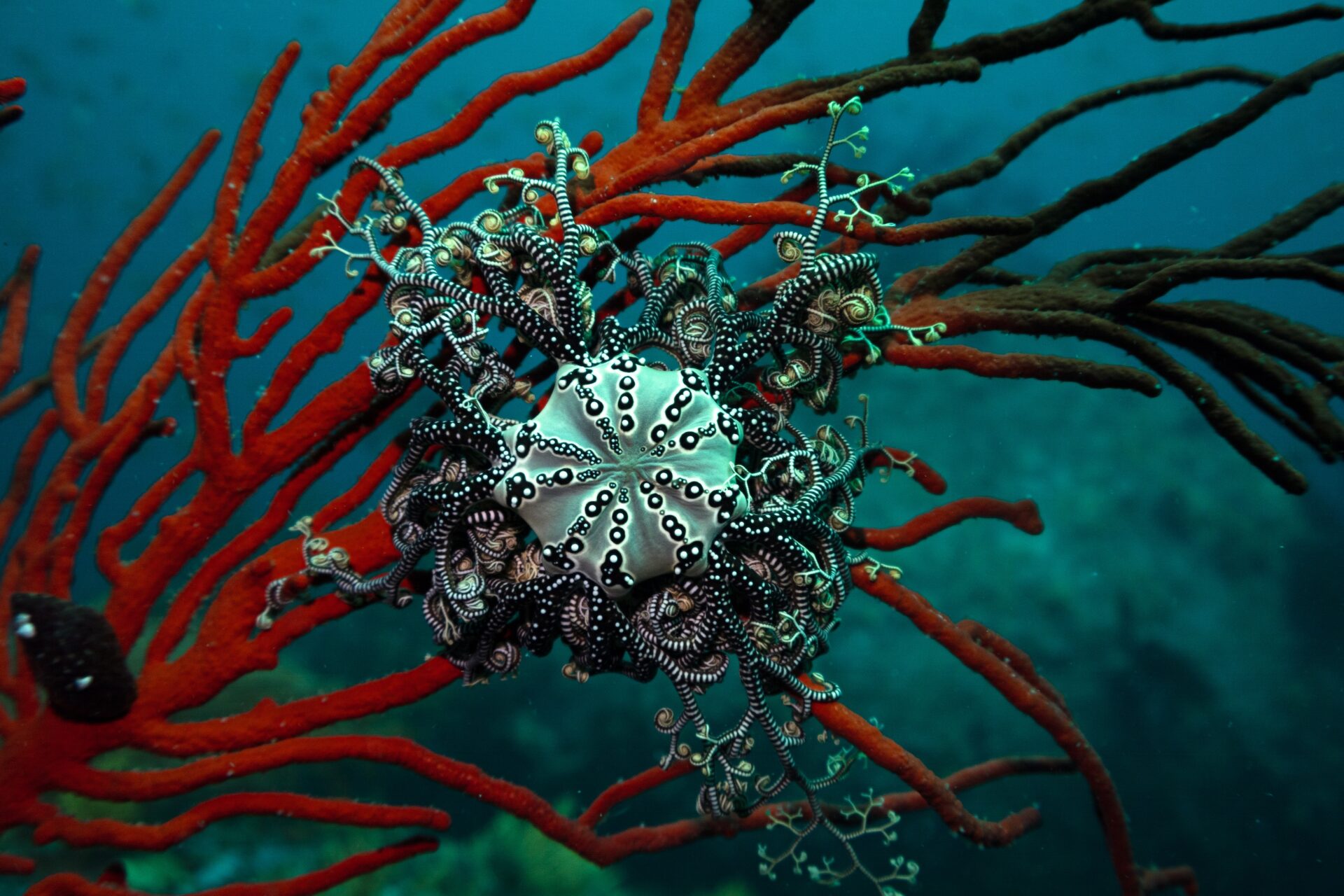
Soft corals and sea fans show off with a never-ending variety of patterns, structures, and textures, beautifully illuminated by light beams breaking across the forest in shimmering rays. Basket stars are the showstoppers of the adjacent reefs, mesmerizing whoever gets a glimpse, a seemingly fragile beauty deceiving their ultimate strength.
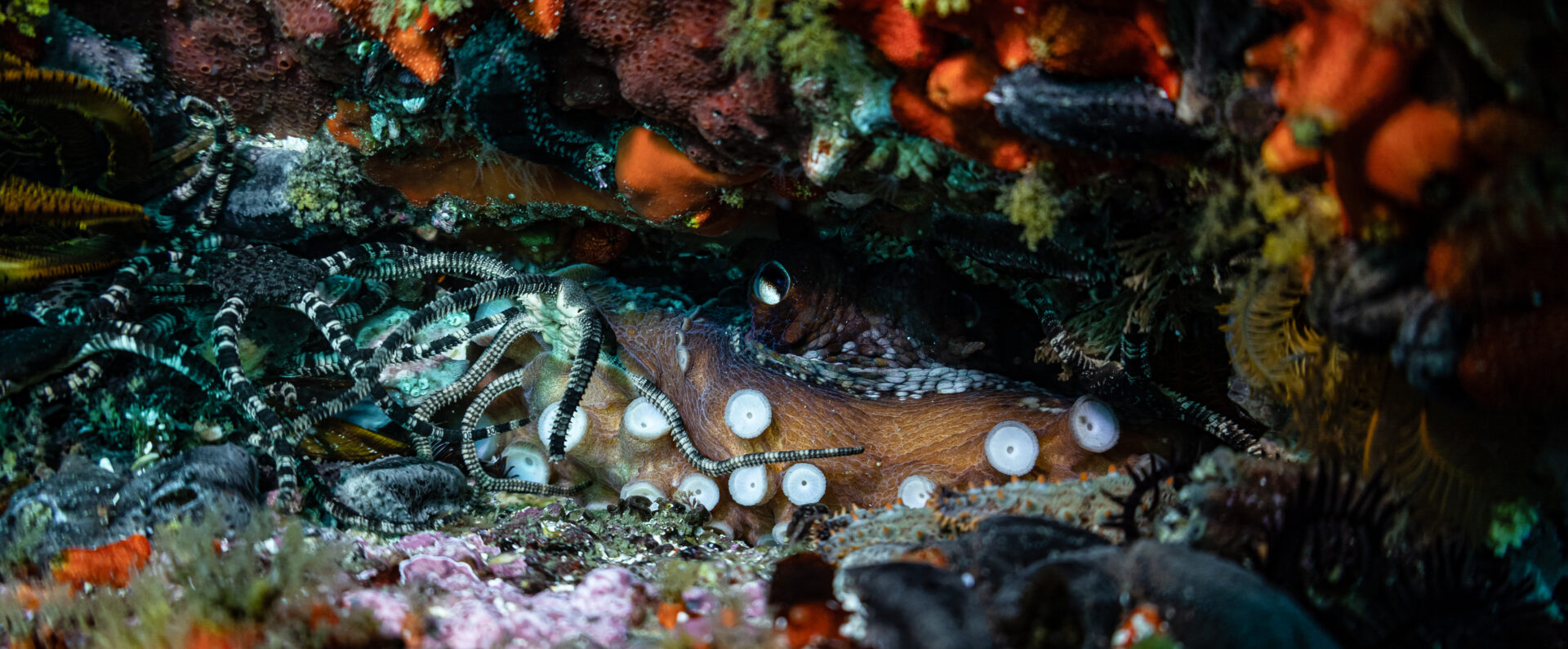
Their patterns, sharp and clear to the point of feeling like a surreal painting, are perfect juxtapositions to the soft and fuzzy fans they grip on to. Brittle starfish are fighting silent battles with fish, and are found lurking at the octopus’ den, often getting caught by the very suckers they seek to feed next to.
Speaking of octopus, gingerly walking over the reef or disappearing in clouds of ink, the magicians of the sea that have captured millions of hearts by simply going about their lives. When I spot one on the sand, I love nothing more than to lie still at a respectful distance and wait for its colours to turn from cautious to curios. Never will I not wonder who is more perplexed by the other’s complexities.
And let us not forget the profound sensation of hovering aside a majestic short-tailed sting ray that gives you the chills as they prehistorically and with a firm, yet elegant presence glide through the forest.
Their lesser known, and more elusive cousins – the eagle rays – delight an entire coastal community of (free)divers – as do the gully sharks whose mere natural character disables all the fears you might harbour of our finned underwater companions.
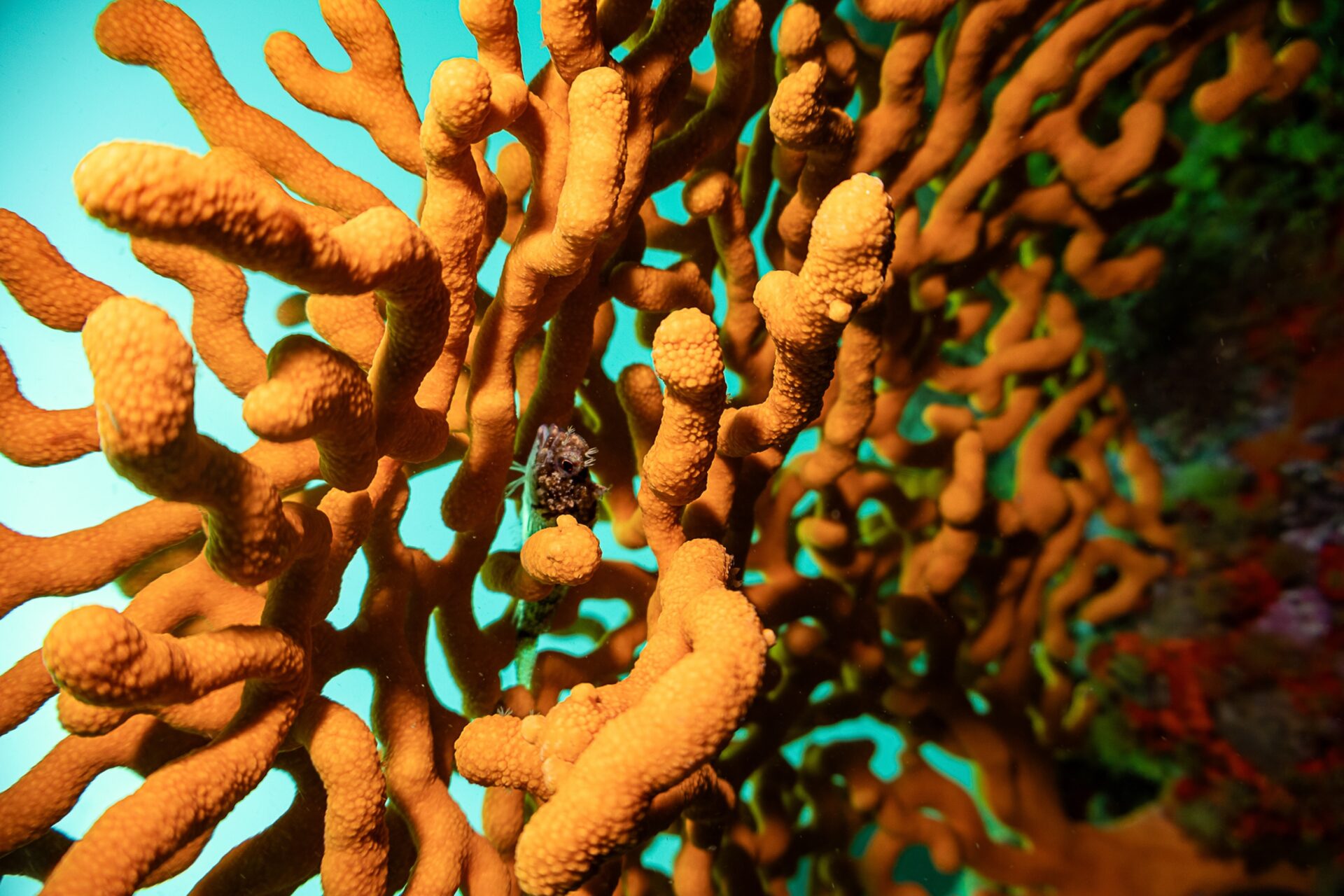
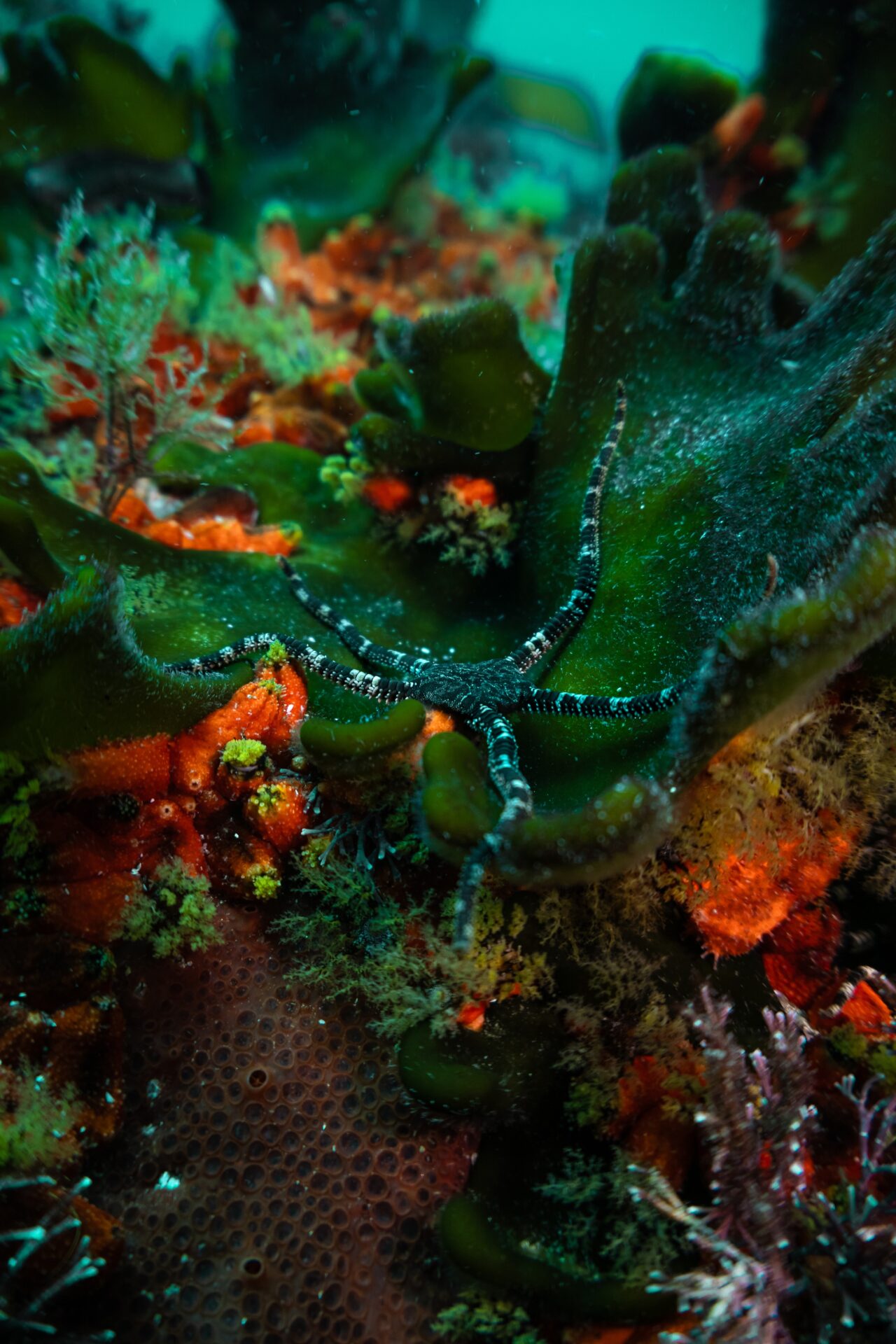
These are only some of the wonders – and the more obvious ones at that. The longer you stay, the more you will see.
It is where the noise disappears and I can begin finding my way back to center, making way for whatever messages lie inside. I find capacity, I find restoration, I find my very own wild thread. This is what is real is to me.
And I have only just began. I am visitor, over and over again. I return to dive. I dive to breathe. I cannot speak for all of the locals, neither would I want to. Their souls are as diverse as the sea forest by their feet.
But from a visitor’s point of view, I feel – I hope – that my experiences tap into the connection that you can sense between the underwater world and us land lobbers around the peninsula.
Looking in from the outside, it feels like an invisible thread that portions of the coastal communities follow almost instinctively. There is a bond here, a peace, a gratitude. There is heart here, and you can feel it. I view the people here as guardians of an entire living ecosystem that serves their world beyond the national borders.
Along with seagrass meadows, kelp forests around the world are our oceans’ lungs – and with those our global ones. They are just as crucial as rainforests on land, yet so little known. The discrepancy of our collective awareness, our societal conscious of what needs our protection on land is apparent in the lack of wider, colloquial understanding of the importance of these systems beneath the blue.
This is my plea, or better yet, an invitation to help us not only safeguard them, but help them thrive.

Printed editions
Current issue
Back issues
Back Issues
Issue 43 Sir David Attenborough’s ‘Ocean’
Enjoy so much more from Oceanographic Magazine by becoming a subscriber.
A range of subscription options are available.