Little birds, big fight: New Zealand's little blue penguins
In the latest update from the Edges of Earth team, Andi Cross and Adam Moore find themselves hanging from the edge of a cliff, observing the beloved Kororā - the smallest of the world’s 18 penguin species, and one found only in Australia and New Zealand.
We were clinging to the edge of a cliff, battered by the wind as storms gathered on the horizon. Dressed in camo to blend into the landscape, we remained still and silent – joined by a team of experts who track and monitor little blue penguins, or kororā, as they’re called in this part of New Zealand (Aotearoa). Only red torchlight was allowed on this cliffside, as bright white beams can disorient the kororā as they climb up from the ocean and into their nests scattered across the cliffs.
Each night, under the cover of darkness, the penguins make this gruelling journey from the sea to the land. As treacherous as this nightly trek was, somehow the penguins always made it, showing persistence even when knocked down. Each time, they got back up and kept going as if totally unfazed. This species of penguin is often viewed as a symbol of the broader environmental challenges faced here. But before getting into that, it’s worth understanding more about these charismatic seabirds, and why they matter so much in this rugged pocket of Aotearoa.
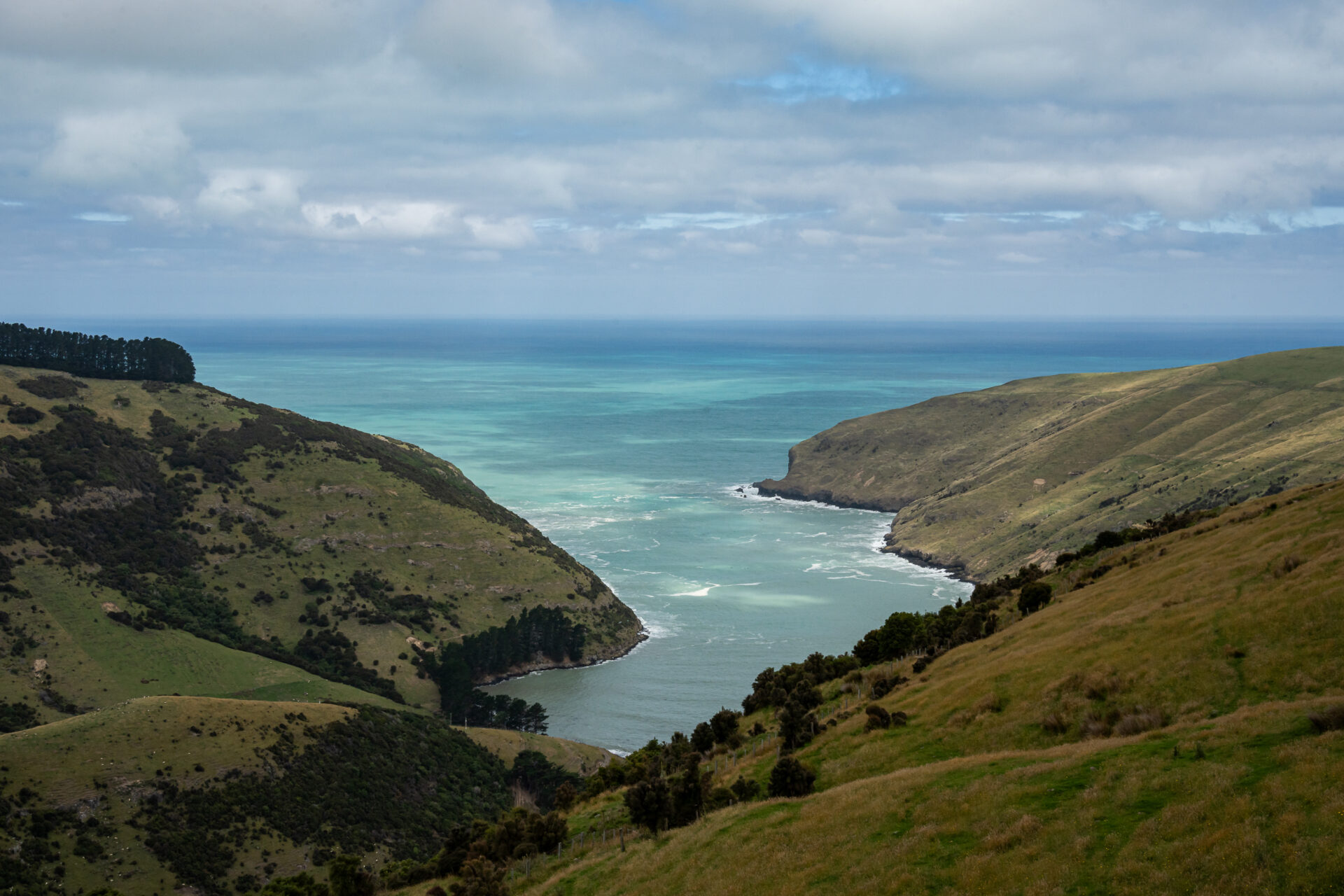
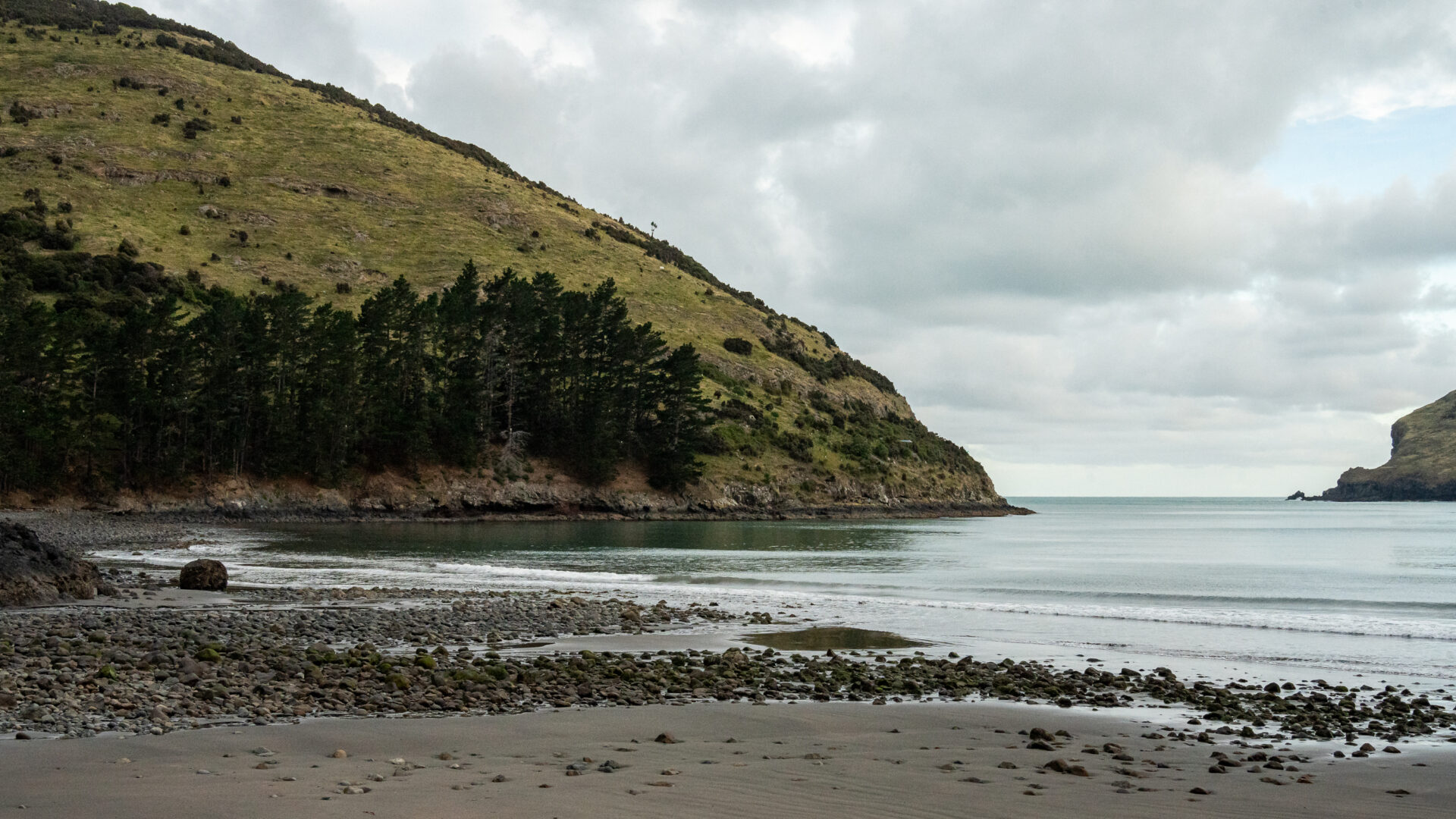
Our home for the week was called Pōhatu Marine Reserve on the Banks Peninsula. In te reo Māori, Pōhatu means “the land of many stones,” a name that fits both the terrain and the layered history of this site. Also known as Flea Bay, the land carries echoes of earlier use by Māori communities who farmed kūmara (sweet potatoes) here, placing volcanic rocks over the soil to retain heat from the sun – an ancient method for coaxing crops from cooler ground. That same heat-retaining geology is part of what makes this bay such a unique and resilient habitat.
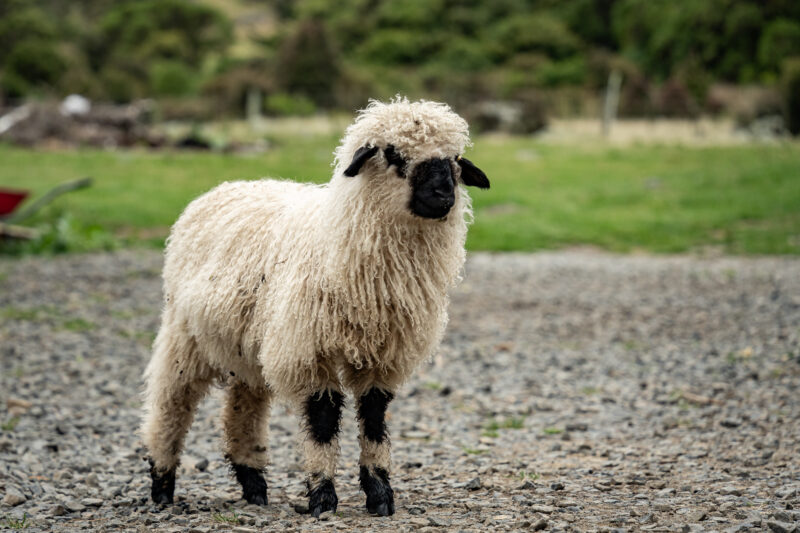
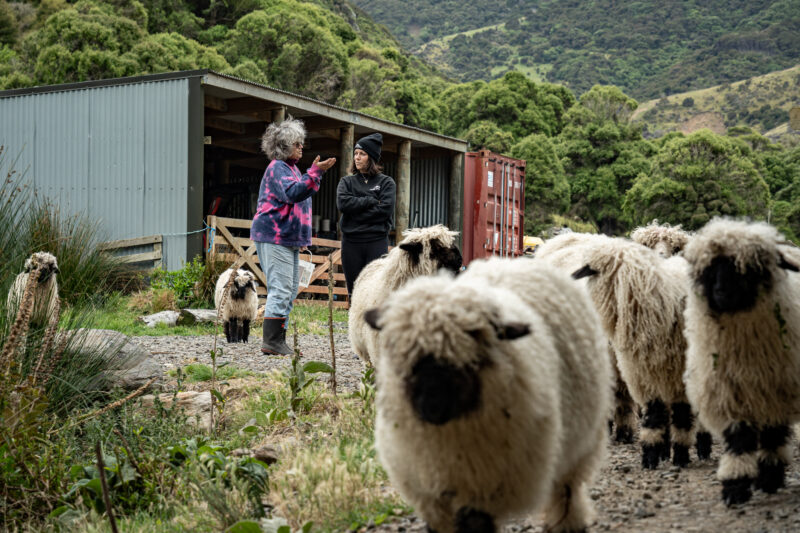
Today, Pōhatu’s coastline is both a conservation site and a regenerative sheep farm, run by the Helps family. When Francis Helps and his brother first bought the land in 1969, they had no idea penguins would come with it. But after their first night in the house, they woke to the sound of seabirds scuttling beneath the floorboards and the loud screeches they made at night.
Decades later, the site now supports one of the largest remaining mainland colonies of Eudyptula minor – little blue penguins – as well as a rare regional variant known as the white-flippered penguin, found only in this region called Canterbury and nowhere else on Earth. What makes this place work for the birds is a blend of careful human stewardship and natural fortification. This balance – between protection and wilderness, farming and conservation – is what makes Pōhatu extraordinary.
While it’s a penguin habitat, it’s also a living example of how human and ecological systems can coexist when built on observation, patience, and care.



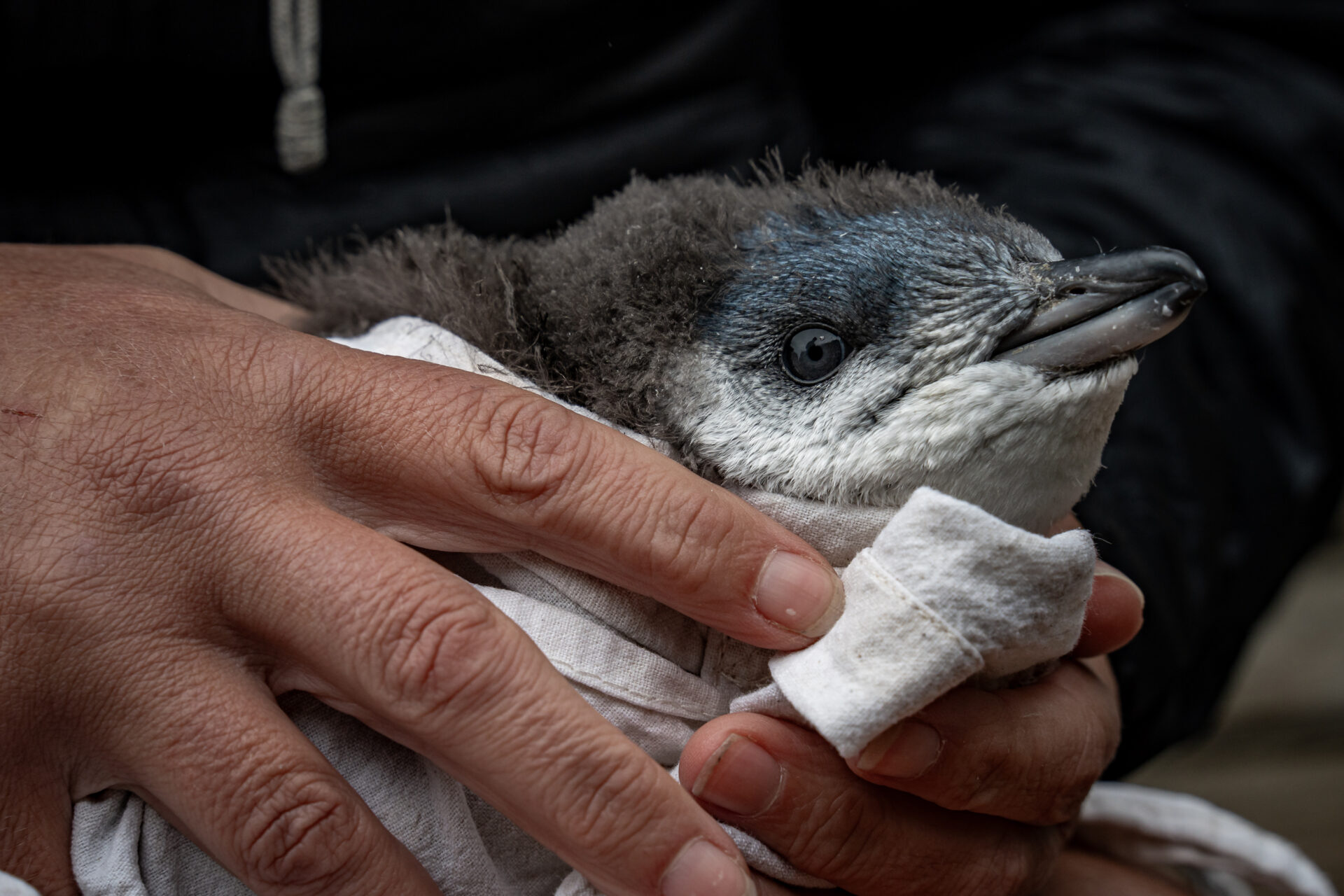
Kororā, are the smallest of the world’s 18 penguin species, and found only in Australia and New Zealand. Standing just over 30-35 centimetres tall and weighing around a kilogram, they’re compact, yet surprisingly tough. Despite their size, these birds endure a wide range of challenges both on land and at sea. Their ability to nest in hard-to-reach places, travel long distances offshore, and adapt to shifting conditions makes them fascinating subjects for researchers.
For a week, we returned to the same cliffside every night. Thanks to guidance from Dr. Rachel Hickcox, lead scientist at the Helps Pōhatu Conservation Trust, we learned how to assess without disrupting. At night, we were there to tacitly observe, but by day, we got our hands dirty alongside the scientists who help support this ongoing shuffle.
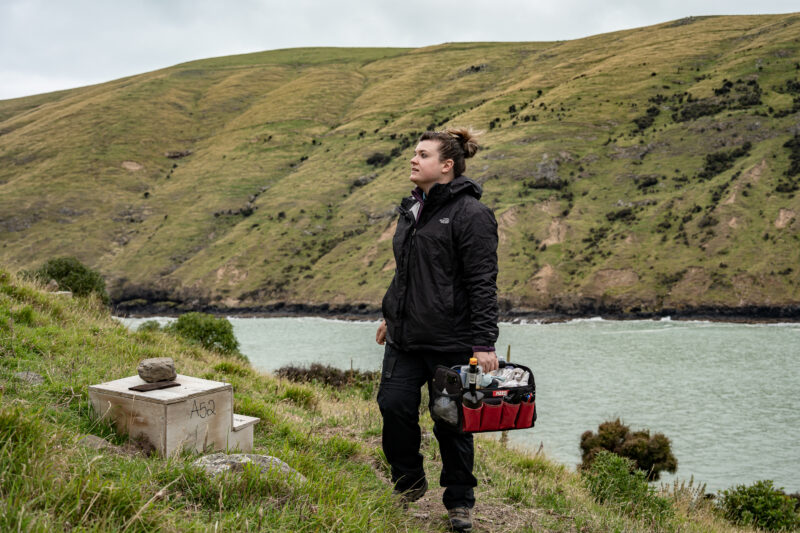
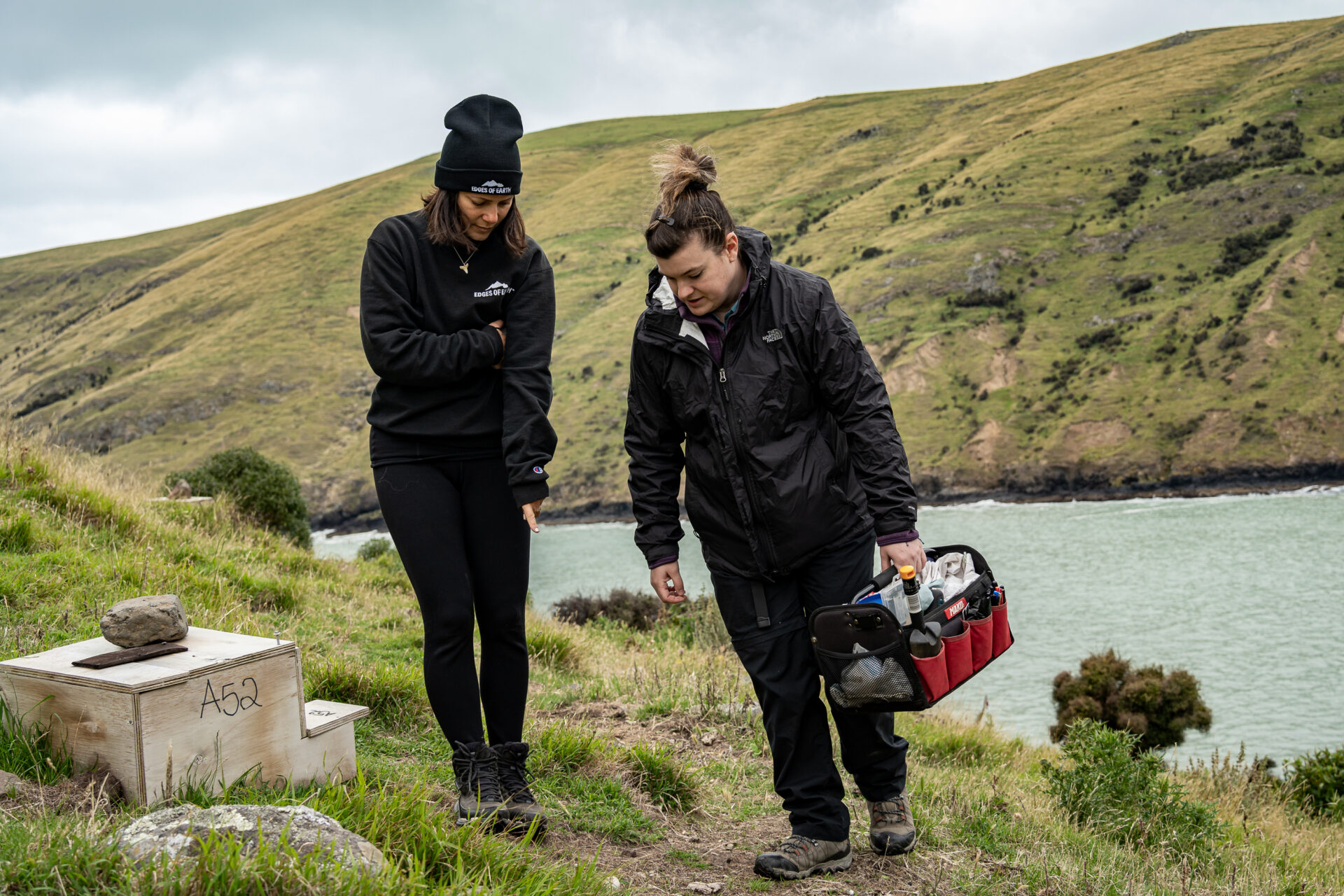
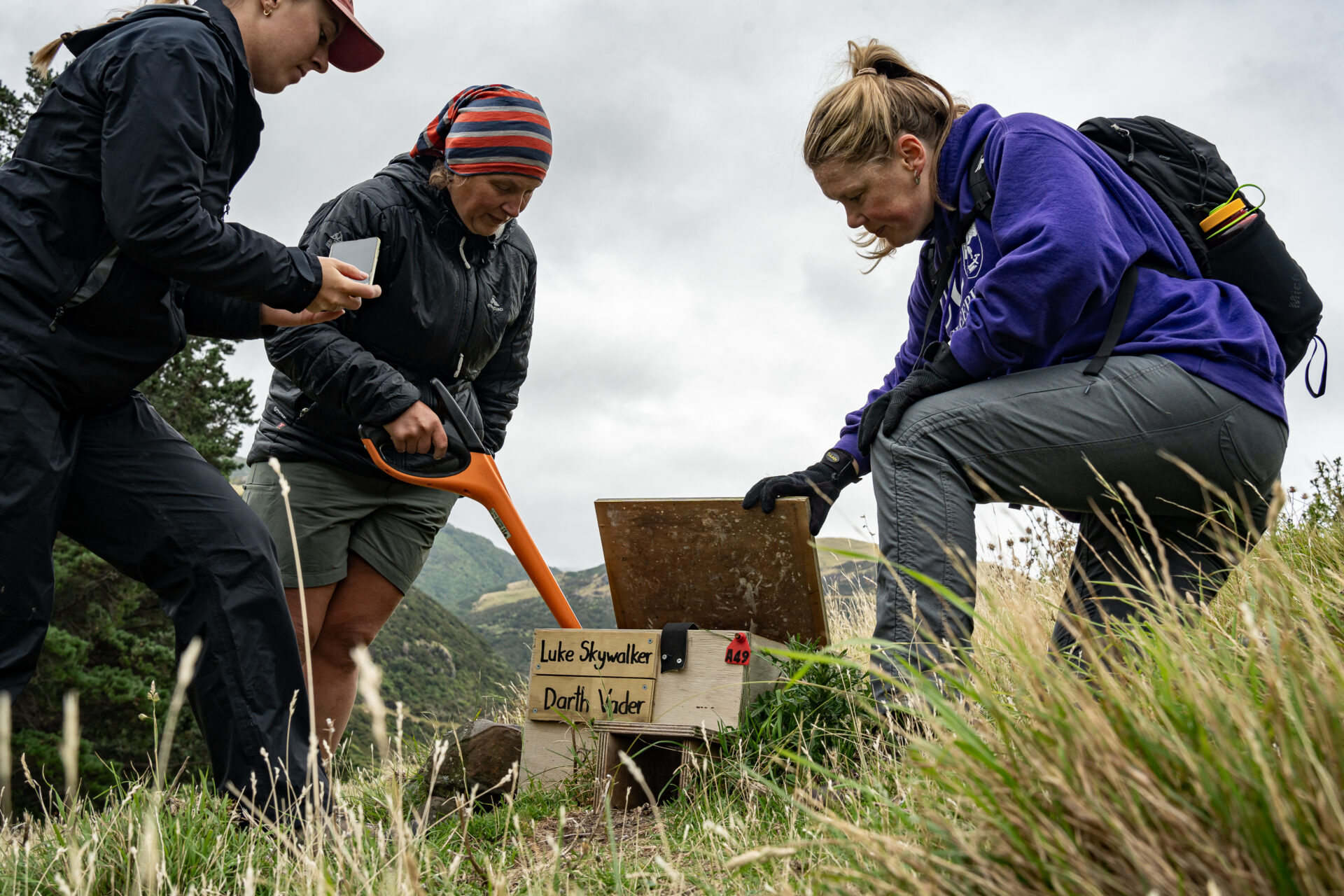
Dr. Hickcox took us into the field to witness the penguin monitoring effort firsthand. Each week, her team checks roughly 230 active nest boxes across the property. Using a specialised app, they collect detailed data on individual birds – microchip scans, breeding behaviour, parent pairings, chick development, and more. In their last major survey in 2020, they estimated around 929 breeding pairs in the bay.
Tracking each nest is intense work, and involves everything from trekking the coastline, lifting lids or peering into holes, to wading through bush and getting liberally dusted in feathers, mud, and yes – plenty of penguin poop.
Originally, Pōhatu was solely a working farm. But it didn’t take long for Francis and his wife, Shireen Helps, to realise their land came with an unexpected responsibility. Dead birds began appearing around the property, falling victim to introduced predators such as stoats, feral cats and possums – mainly going for adults and chicks – and even hedgehogs going after eggs. That’s when Shireen took matters into her own hands and started setting traps. It was her first conservation effort, and it marked the beginning of a much larger mission.
In 1999, the bay was designated as a marine reserve, offering some protection to the penguins at sea. A year later, a peninsula-wide penguin nesting survey was conducted – and Pōhatu stood out. Word got out that the colony was thriving, and soon, visitors began showing up unannounced, hoping to catch a glimpse of the penguins. But unmanaged human activity quickly became a problem. Dogs roamed off-leash; people got too close and; the penguins were facing the consequences.
To solve the issue, the Helps family made a bold call: they closed the property to public access. Then, they launched a small eco-tourism operation, Pōhatu Penguins, that would allow visitors to see the birds in a managed, respectful way. Every dollar earned from these tours funnels directly back into the conservation effort. It pays for staff like Dr. Hickcox, supports science and monitoring, buys timber for new nest boxes, and funds critical supplies.
Though research at Pōhatu has been ongoing since the early 2000s, sustained scientific attention dwindled after 2012. That changed when Dr. Hickcox – then working on her PhD tracking yellow-eyed penguins across the South Island – crossed paths with the Helps family. What started as just simple conversation, had become formal research possibilities by 2019.
However, when international travel halted during COVID, the team was forced to turn inward, launching a massive citizen science project to replicate the year 2000 penguin survey across Banks Peninsula. Nearly 100 volunteers were involved in what became one of the largest regional data-gathering efforts of its kind. What began with one woman and a trapline has now grown into a multi-pronged conservation model that blends community, tourism, and science – anchored by one of the most significant penguin colonies on mainland New Zealand.
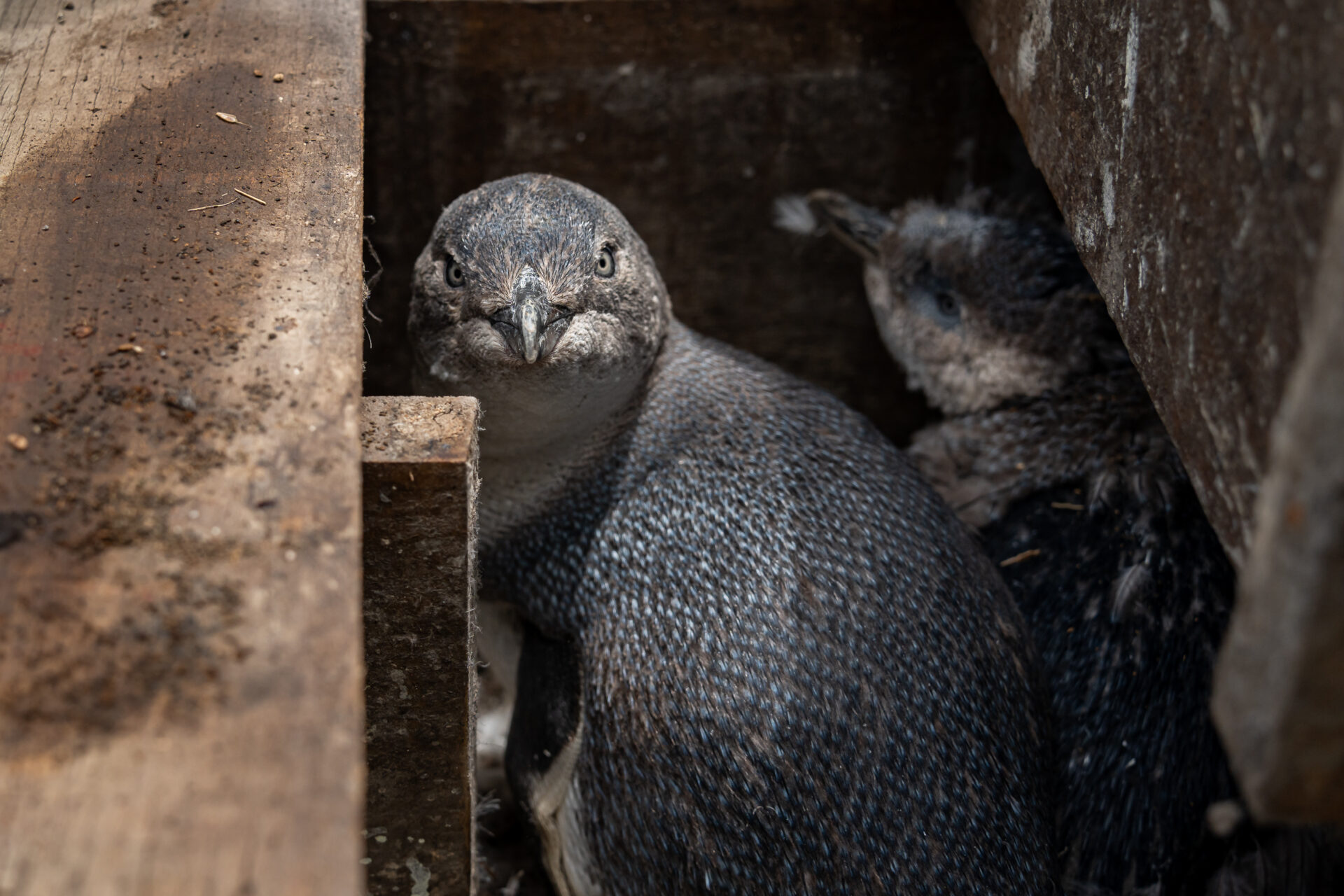
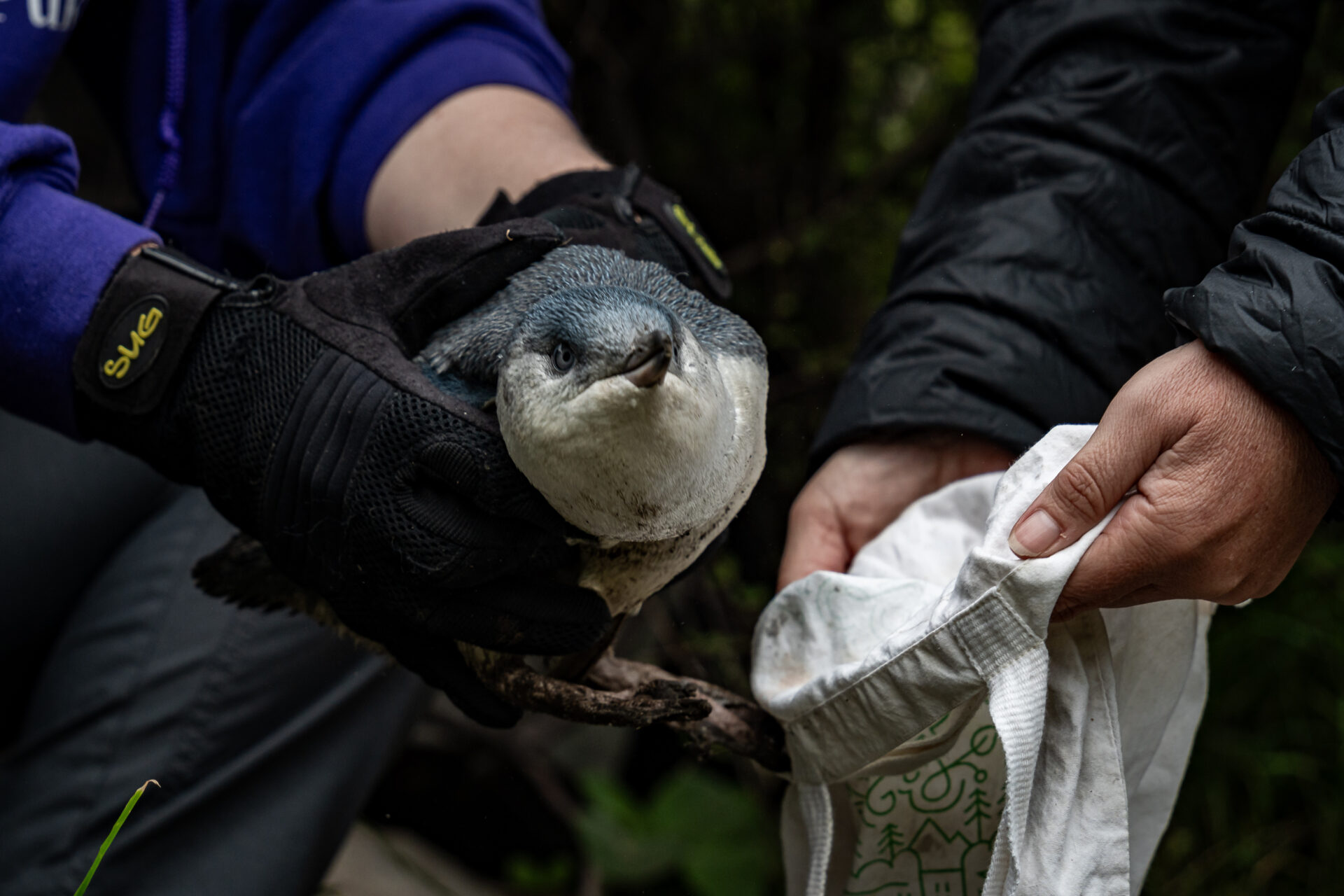
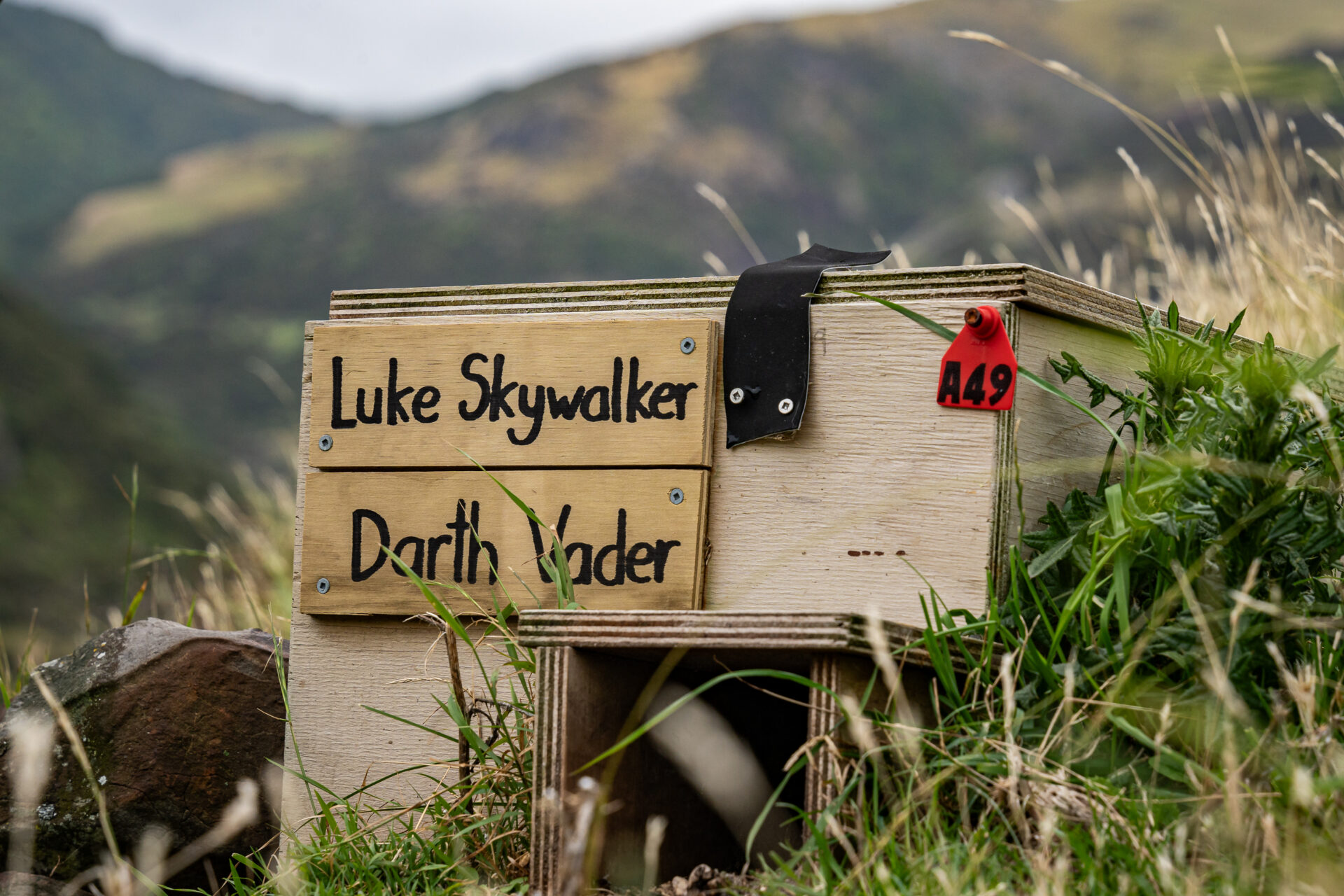
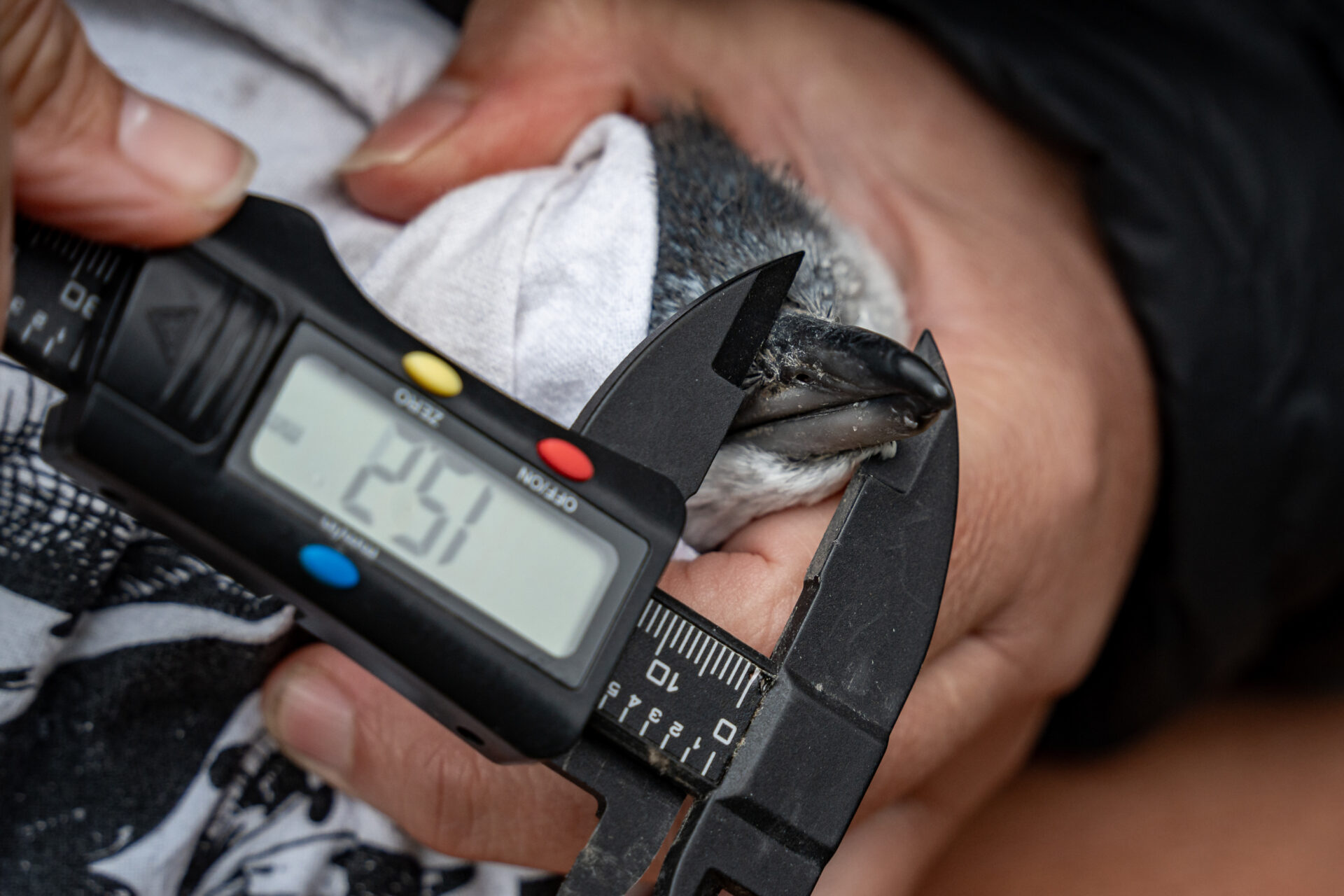
When Dr. Hickcox and her team approach a nest box, the first step is to understand which birds were there last week and what changes (if any) have occurred. If the box is occupied, they take a quick photo of its contents, then scan for microchips embedded just beneath the skin at the back of the neck, identifying each adult or chick. If it’s a new bird or an unchipped juvenile, the microchipping process begins. It’s a multi-person job, ideally done with a team of three or four: one to lift the lid, one to handle the bird, another to record data, and a fourth to prepare the tools. The penguin is gently placed in a reusable cloth bag – dark and soft to reduce stress. Then comes the biometric work: weight, beak length and depth (used to estimate sex), followed by a flipper photo.
The white-flippered penguins here have distinctive patterns – some with a double stripe, some with markings that form a connected patch or “thumbprint.” These patterns are photographed and assigned a rating for future reference, helping researchers identify individuals visually as a backup to their microchip. Next comes the chip itself.
The team sanitises the site, inserts the needle, and ensures the chip reads correctly with a quick scan. Then, before releasing the bird, they collect a small feather sample – another piece of data that might aid in future studies.
All this, Dr. Hickcox explained, is part of both a monitoring effort and a long-term research program. The monitoring provides crucial population data: who’s breeding with whom, how many chicks are fledging, and whether those chicks return in future years to reproduce. This known-age population, which is rare for wild seabirds, helps uncover survival rates, breeding age, and colony growth over time.
Rachel’s background in spatial ecology adds another dimension. For the past three seasons, she’s outfitted penguins with GPS trackers to study their foraging behaviour at sea – tracking 64 birds during key phases like pre-breeding and chick-rearing. This gives insights into how far penguins must travel for food and whether that distance is changing year to year.
Combined with dietary studies and land movement tracking by her students, the data is beginning to paint a much fuller picture of little penguin’s lives across land and sea.
The long-term monitoring effort at Pōhatu is still in its early phases, but the data already shows how quickly conditions can change. The first season of intensive tracking coincided with the end of a three-year La Niña event and a marine heatwave – and this unusual timing made it hard to gauge what “normal” even looked like. But now, with two more stable years for comparison, patterns are beginning to emerge.
The research team has observed stark contrasts in chick survival and fledging rates between years. During difficult seasons, adult penguins prioritize their own survival over feeding chicks – a harsh but necessary biological choice. A healthy adult can breed again. A starving one can’t. That trade-off has major implications for long-term population stability, especially in a warming, increasingly unpredictable climate.
Foraging data has also revealed just how far these birds will travel to find food. During incubation, when both adults take turns at sea, some penguins have been recorded traveling over 150 kilometres south on extended trips. But during “guard” periods – when one parent remains with the chick – most trips are shorter, ranging between five and 25 kilometres. That distance, however, can still be exhausting if food sources are sparse.
While little penguins appear more adaptable than other species – like the severely threatened yellow-eyed penguins – they’re still vulnerable to the same pressures: warming seas, shifting prey distribution, and increasing disease. Yellow-eyed penguins in particular have been devastated by avian malaria, diphtheria, and a mysterious respiratory distress syndrome. Little blues also contract malaria, but the impact has so far been less severe.
The good news is that little penguins reproduce faster than most seabirds. While some species raise just one chick every two years, little penguins – especially in Australia – can manage two clutches in a single season. In Canterbury, they typically breed once per year, but that still puts them ahead. This adaptability offers hope, that is if the growing pressures don’t overwhelm them first.
Across New Zealand and Australia, some colonies are thriving, but only with active management. Despite the efforts, even around Banks Peninsula, researchers have seen former nesting sites go empty. Recovery is happening, but it’s fragile. Without ongoing investment in monitoring, research, and habitat protection, gains can quickly be lost. That’s what makes Pōhatu so important. Amidst steep cliffs and crashing surf, a small team is holding the line. Because to protect a species, you have to understand it. And that starts with long nights, cold winds, and the patience to pay such close attention.
The one word that comes to mind when I reflect on our time spent on the Banks peninsula is “resilience.” We certainly felt that admirable trait in our own small way while stationed there. Clinging to those cliffs ourselves, all to catch a glimpse of the hearty birds that call this place home. The penguin’s nightly journey was one of harsher conditions with far greater stakes.
Watching them climb, fall, and climb again, was living proof of wild instinct, endurance, and grace under pressure. Their survival, against all odds, is all the more reason we should fight for them, just as they fight for themselves.

Printed editions
Current issue
Back issues
Enjoy so much more from Oceanographic Magazine by becoming a subscriber.
A range of subscription options are available.
