Maara Moana: The First Ocean Garden
Off the beaten track at the top of Aotearoa, the community of Whangaruru is shifting to a life of cultivation and regeneration by giving back to the ocean through the creation of its Maara Moana - its first Ocean Garden.
We’d been driving for days, gradually migrating northward across the rustic island. Passing through farmland, small towns, and mountain landscapes, this place felt familiar yet entirely new at the same time. At every stop, we tried to pinpoint what exactly it reminded us of—maybe our home in Perth, or maybe something akin to its closer island neighbor, Tasmania.
We took the coastal roads whenever possible, choosing night stops that would offer incredible ocean encounters in the following mornings. And over the course of thirty days, we were slowly making our way to our final destination, wondering what it would feel like to stand at the very top of Aotearoa.
As the scenery shifted, so did our experiences. By the time we crossed from the south island to the north, we inched closer to civilisation. From Wellington to Auckland, we caught glimpses of modern life for New Zealanders – lively waterfronts, bustling markets, and a sense of urban familiarity. But as we pushed further into the very tip, also called Northland, the landscape changed dramatically. Multi-lane highways dwindled to narrow, winding roads, zigzagging through cleared farmlands, patches of forest, and rolling hills. Fog wrapped around us, creating an eerie stillness. The further we went, the fewer people we saw. We had entered a whole new world.
Our first stop in Northland was the Bay of Islands, a rugged archipelago renowned for its remoteness and rich underwater ecosystems. A cluster of 144 islands scattered across turquoise waters, this region has historically been a biodiversity hotspot. It’s one of New Zealand’s most traditionally significant areas, too – where Māori first made contact with European explorers, and where the Treaty of Waitangi was signed.
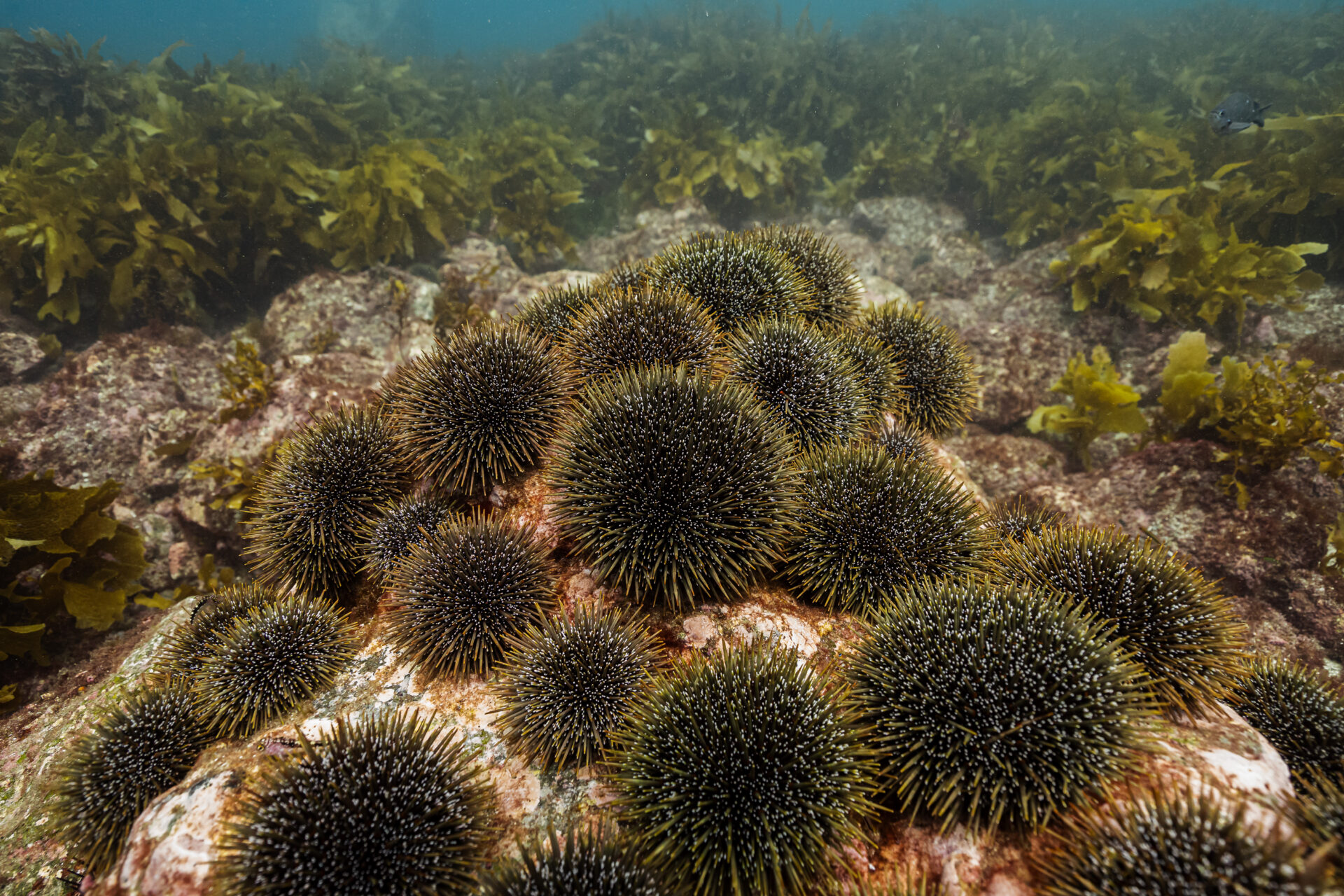
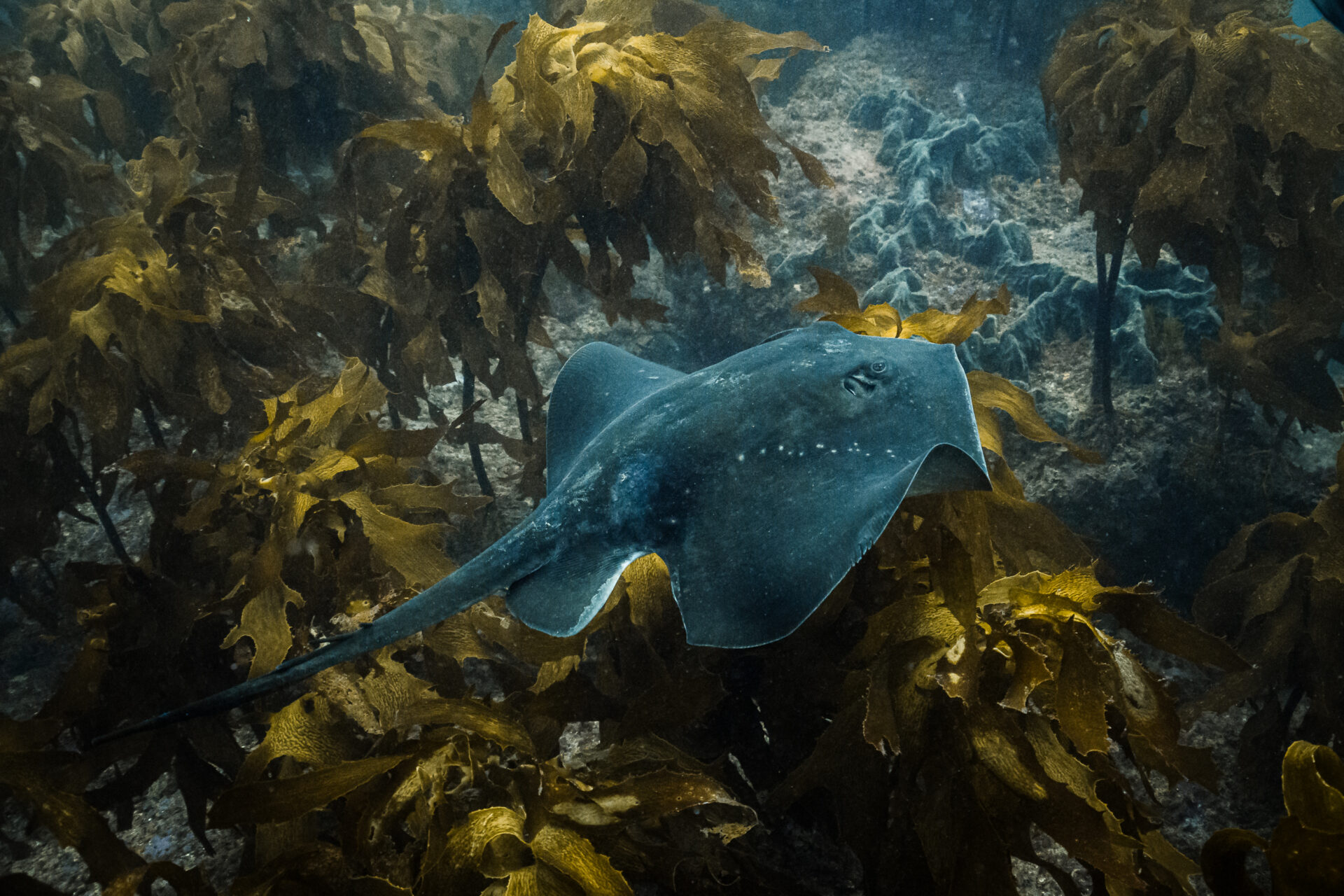
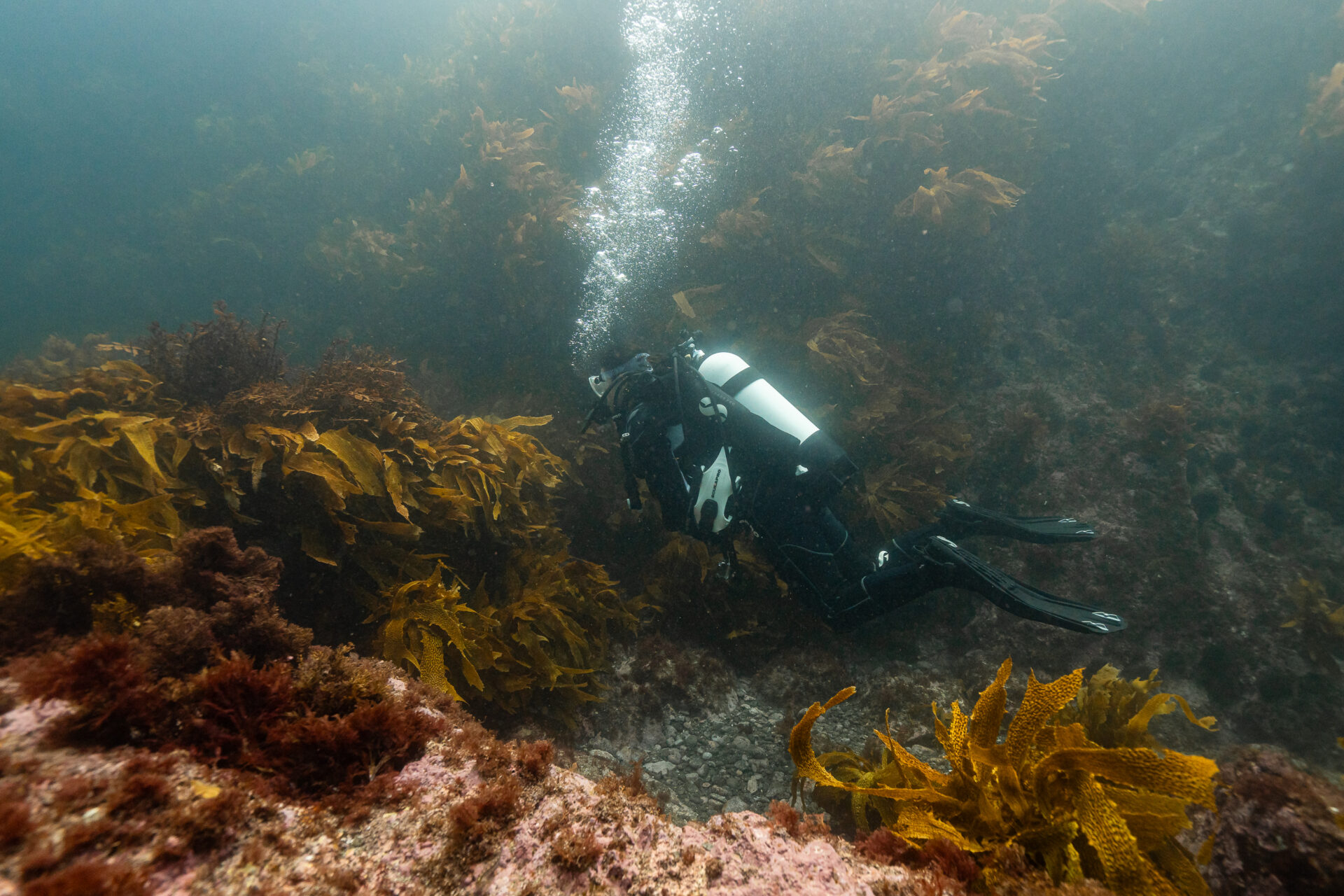
Diving through the swaying kelp forests, we entered a temperate underwater wonderland. Massive schools of trevally twisted through the water like silver ribbons, octopuses tucked themselves into rocky crevices, and sand tiger sharks lurked in the shadows, perfectly camouflaged in the dim light. Brightly coloured nudibranchs inched their way across reef walls, while stingrays hovered motionless on the seafloor. Where the kelp was healthy, the marine ecosystem flourished. But where it wasn’t – where kina (sea urchins) had taken over – vast barrens stretched before us, stark and lifeless.
The balance had tipped. We were witnessing firsthand what happens when key predators like snapper, giant sunstars, and crayfish disappear, allowing urchins to wipe out entire underwater forests.
Even though the Bay of Islands still held so much life, we couldn’t shake the feeling that it wasn’t what it once was. Like so many places around the world, this ecosystem’s delicate equilibrium has been disrupted. Conservation efforts here were in effect, but was it enough? After a few days of diving, we made one final stop on our month-long trek – Whangaruru.
We had been put in touch with Howard Reti, a man who knew this land and sea intimately. An Indigenous elder, entrepreneur, conservationist, citizen scientist, author, mentor, and advisor, he was at the heart of a movement happening here; one that, after witnessing the state of the Bay of Islands for ourselves, was more critical than we had anticipated.




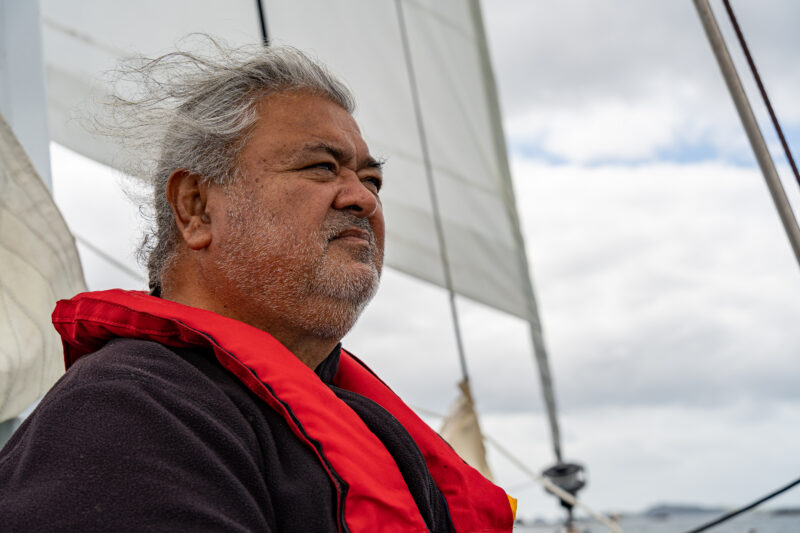
We arrived at Howard’s home – and the heart of his life’s work – late in the evening, still shaking salt water from our ears. He embraced us with a warm smile and a traditional welcome, pressing our heads together in greeting. Even at that hour, he was ready to lay out the plans for the next few days.
Naturally, as is done in Aotearoa, we did so over multiple cups of tea and biscuits. Howard, alongside other Māori leaders, was calling for “a new era of ocean stewardship.” For him, this wasn’t about radical change. If anything, it was about returning to what had always been – rebuilding a relationship with the ocean that had existed for centuries before colonisation severed it. At first light, we set out to see what he and his community had been working toward – and why this movement was so urgent.
For more than 800 years, Māori lived in sync with the land and sea, shaping their lives around natural rhythms. As hunters, gatherers, and navigators, they followed fish migrations, taking only what was needed, and ensured the abundance would persist for generations up next. Kaitiakitanga, or guardianship, was a responsibility passed down through time, keeping resources protected, not exploited.
But colonisation brought rupture. Land was taken. Rights were stripped. The ability to manage their own natural resources was systematically erased. Over time, industrial fishing, commercial exploitation, and government mismanagement led to dramatic declines in marine life.
Today, with fish and seafood stocks under pressure from overfishing, pollution, and climate change, the need for sustainable solutions has never been more urgent.
For Māori, the answer lies in restoring balance. Their worldview has always been rooted in reciprocity – caring for the environment so that it, in turn, will provide for us. That’s why Howard and other leaders have been working to reinstate traditional management practices, using modern legal frameworks to reclaim their role as ocean guardians. Under the Northland Regional Council plan, local Marae or Maori Reservation can apply for minor coastal activity consents, giving them the power to create their own maara moana (ocean gardens)—restoring seafood stocks while ensuring sustainable food sources for their whānau (families).
Shifting from a way of life centred on hunting and gathering to one of cultivation and regeneration would be no small feat. The mindset of taking from the ocean versus giving back to it was foreign to many. But if their Hapu in Northland – and others across the country – wanted to reclaim what was rightfully theirs, they needed to approach ocean stewardship differently.
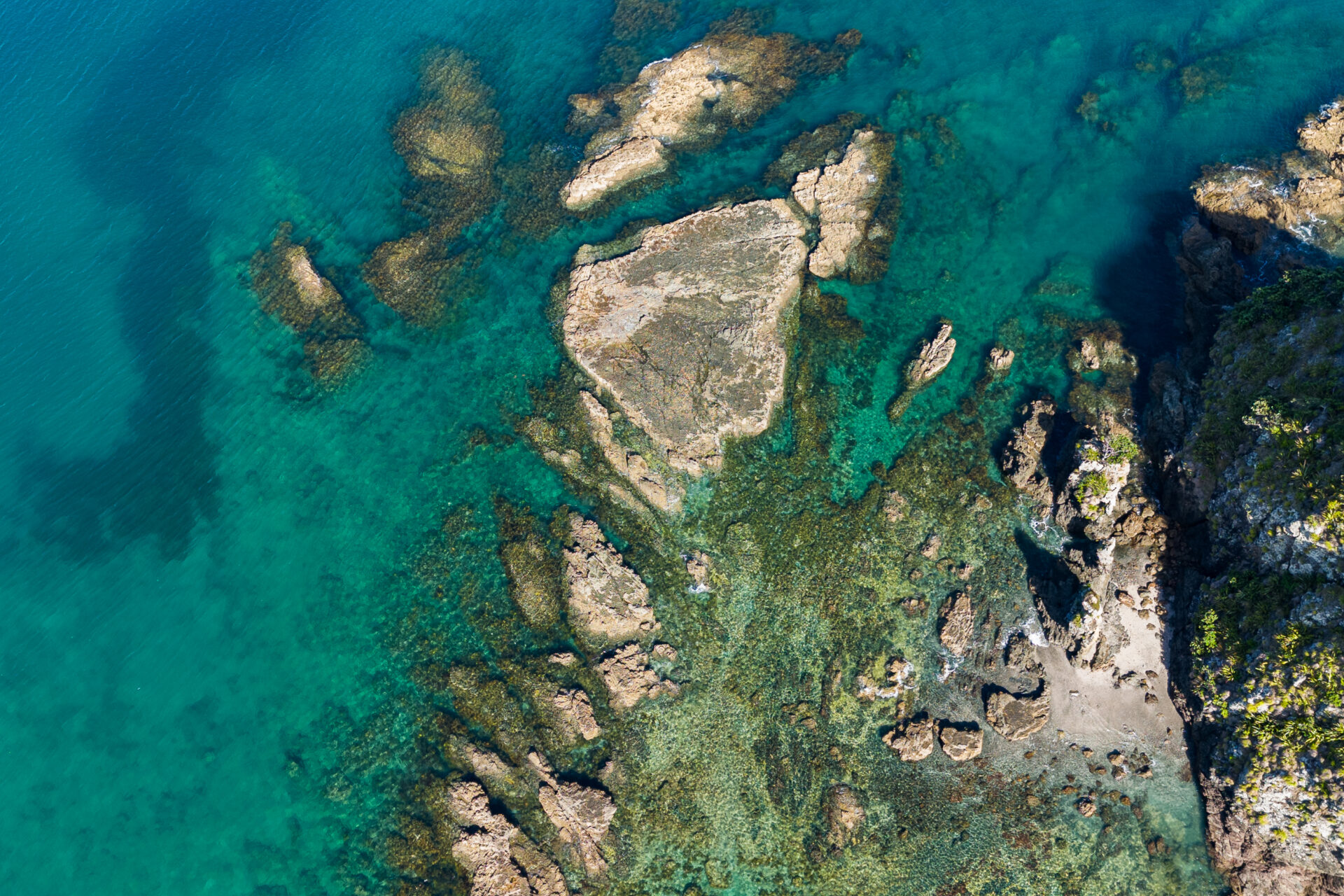
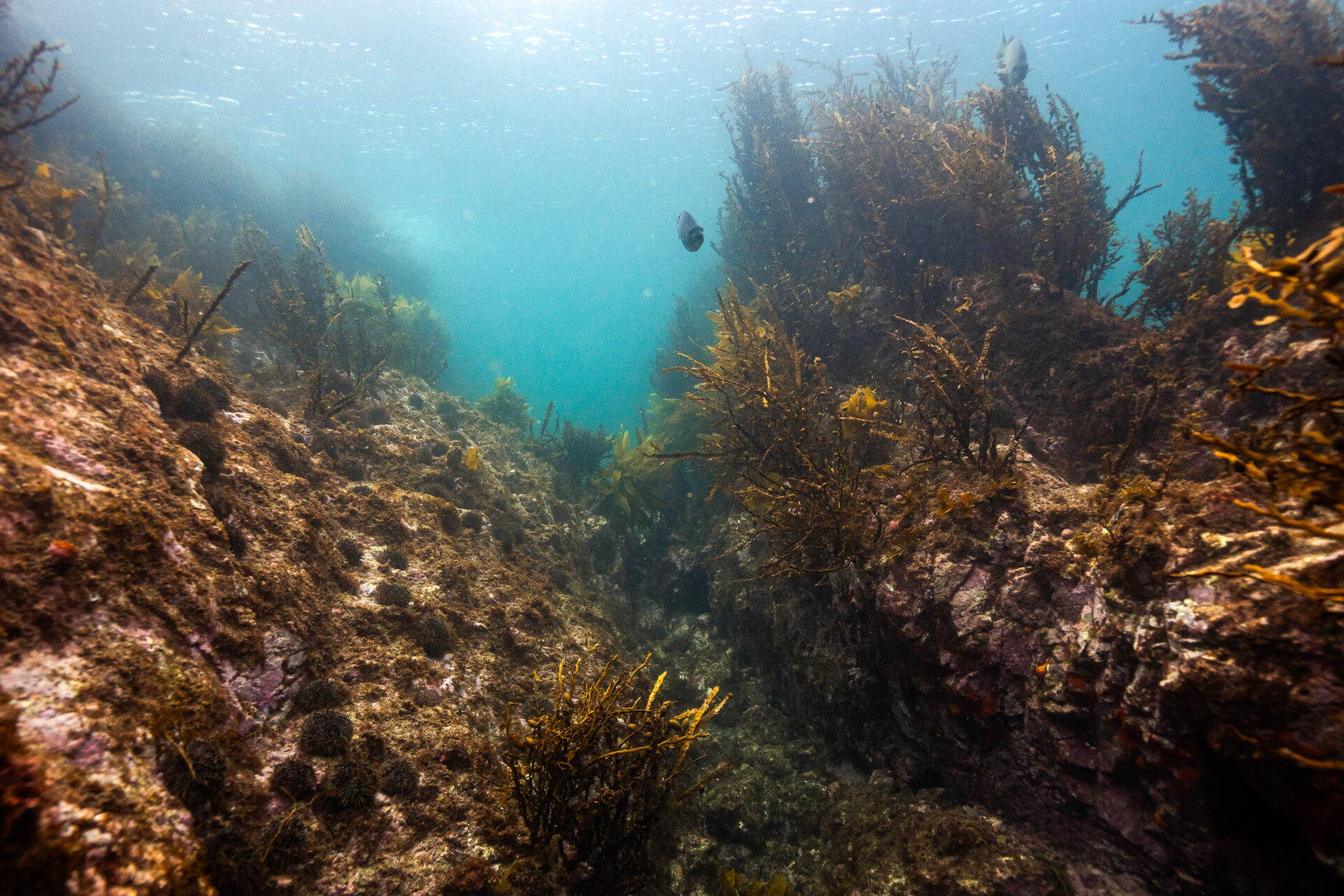
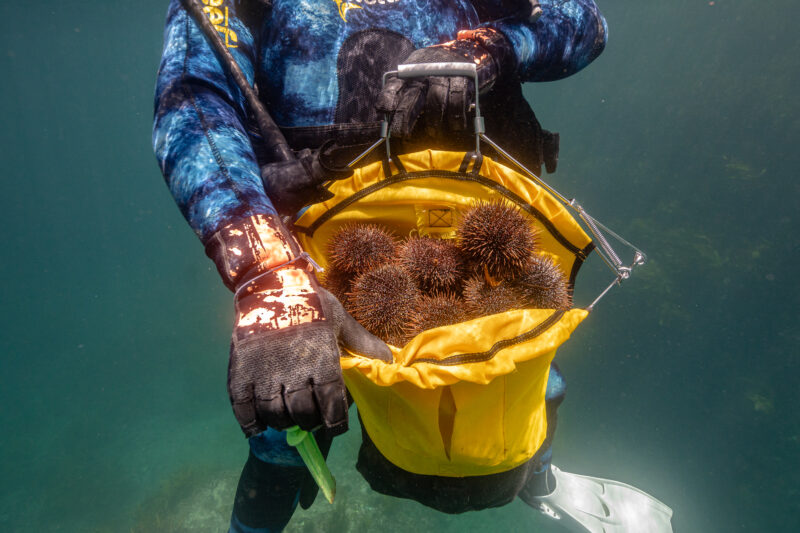
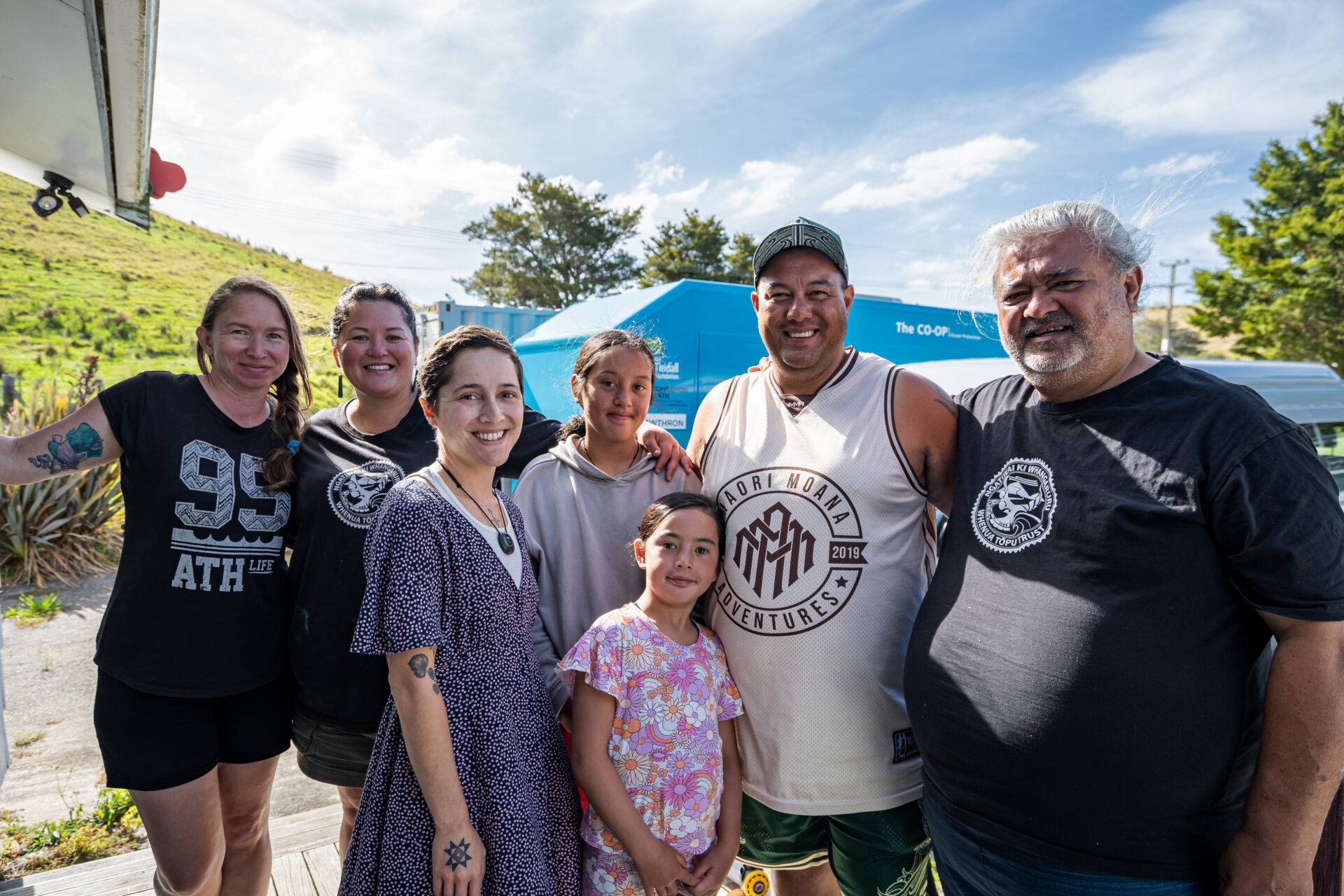
Howard was proud of his vision: to establish the first-of-its-kind ocean gardens, using sustainable practices to restore what once was in his home waters. More than just replenishing marine life, these gardens would regenerate entire ecosystems and create a model for sustainable ocean management. As Howard put it, this was a “transformative approach to ocean and land management” – one that went beyond traditional rāhui (temporary fishing bans) and instead focused on long-term, active restoration.
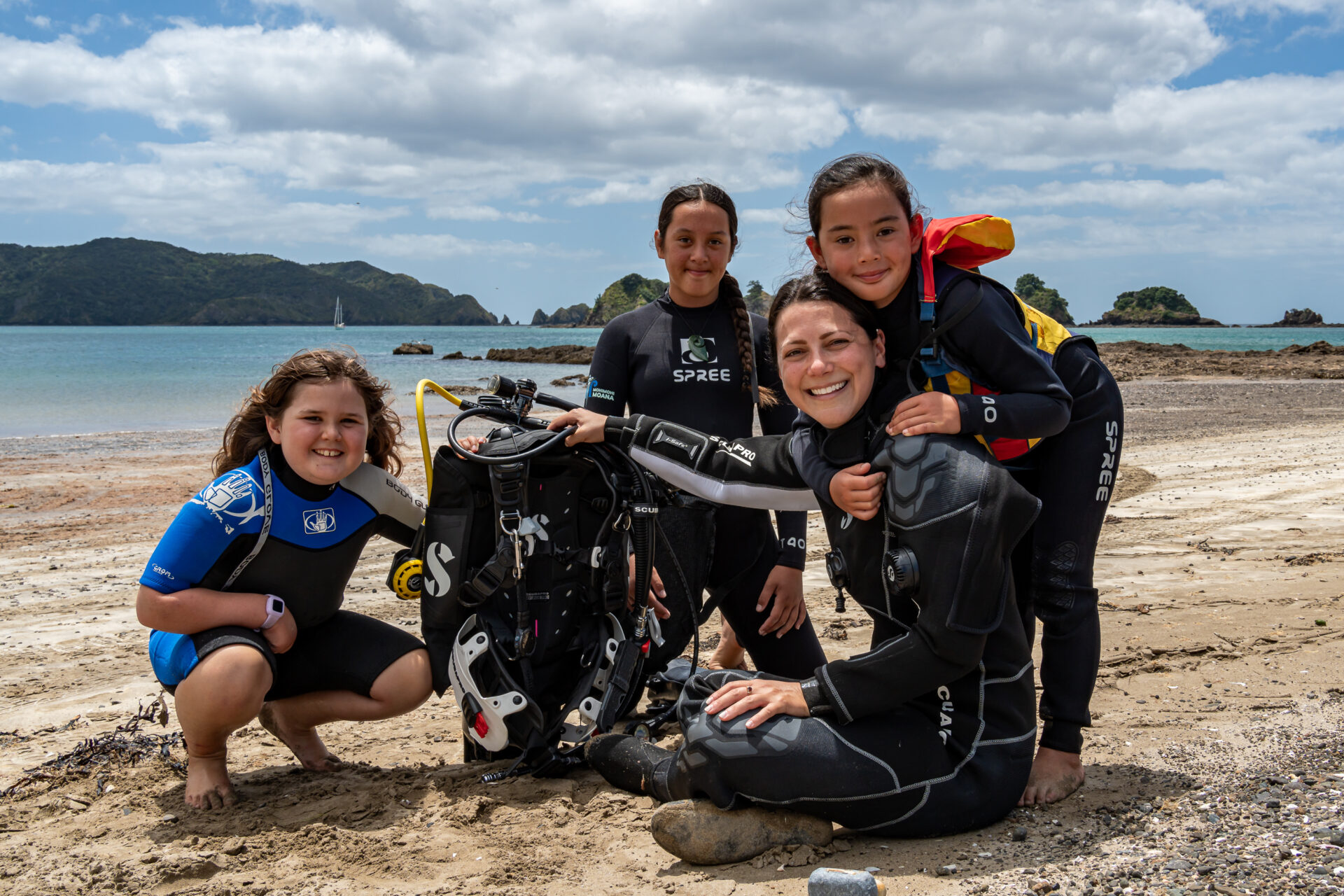
What exactly is an ocean garden? Well, frankly we weren’t entirely sure. So, donning our drysuits to brave the cold northern waters, Howard took us out on his boat to show us firsthand. Howard wasn’t alone in this though – his support system ranged from scientists to school students to community elders, all determined to be part of something bigger. Among them was his eight-year-old niece, Brody – a ball of energy with endless curiosity. She eagerly helped me prepare for the dive, mesmerized by my “sea spacesuit” and firing off rapid-fire questions about every piece of gear, testing my knowledge as a divemaster.
What should have been a five-minute kit-up stretched into an hour-long Q&A with my interviewer, Brody, fully enthralled. She dreamed of scuba diving one day, but she insisted she already knew what it was like down there. And she wasn’t wrong. As we would soon see, she was a natural – duck-diving with ease, wide-eyed behind her tiny mask, navigating the water as if she belonged to it.
As we motored toward the ocean garden site, Howard dropped Brody and her sister Hazel in the shallows near a cluster of rocky islands, just meters from our deeper dive spot. From the boat, I watched as the roles reversed – I was now the wide-eyed student. Their ease in the water at such a young age was something to admire. When we back-rolled into the sea, they weren’t far behind – diving effortlessly, flashing wide grins, and making sure we caught them on camera before disappearing beneath the surface. If this was the future of ocean guardianship, then Howard’s vision was already coming to life.
Below, the site resembled parts of the Bay of Islands but was in noticeably worse shape than the protected areas we had explored. Urchins covered the rocky ridges, kelp was shredded and sparse, and marine life struggled to take hold. Yet, amidst the damage, signs of regrowth were emerging – evidence of the restoration efforts led by Howard and his hapu.
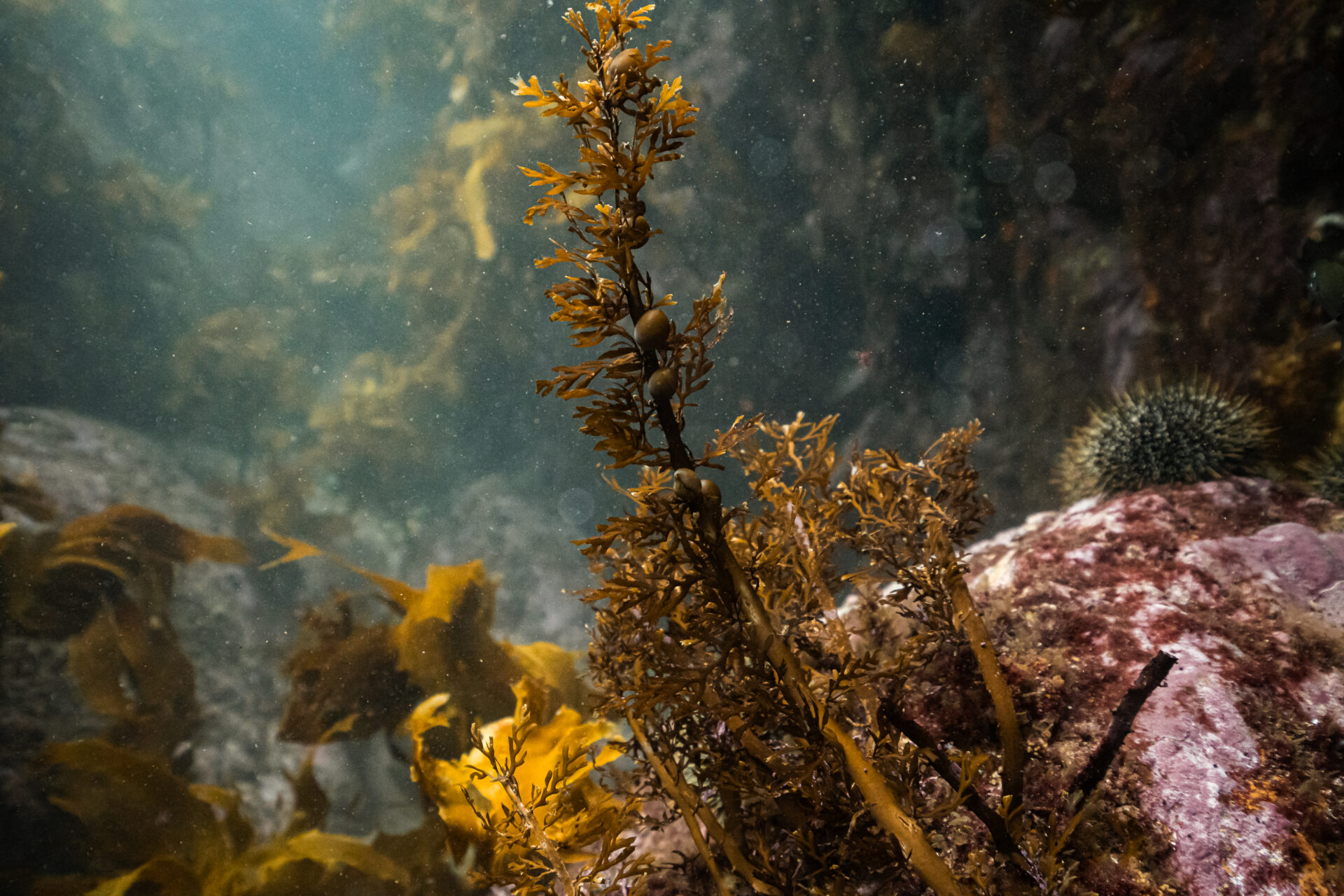
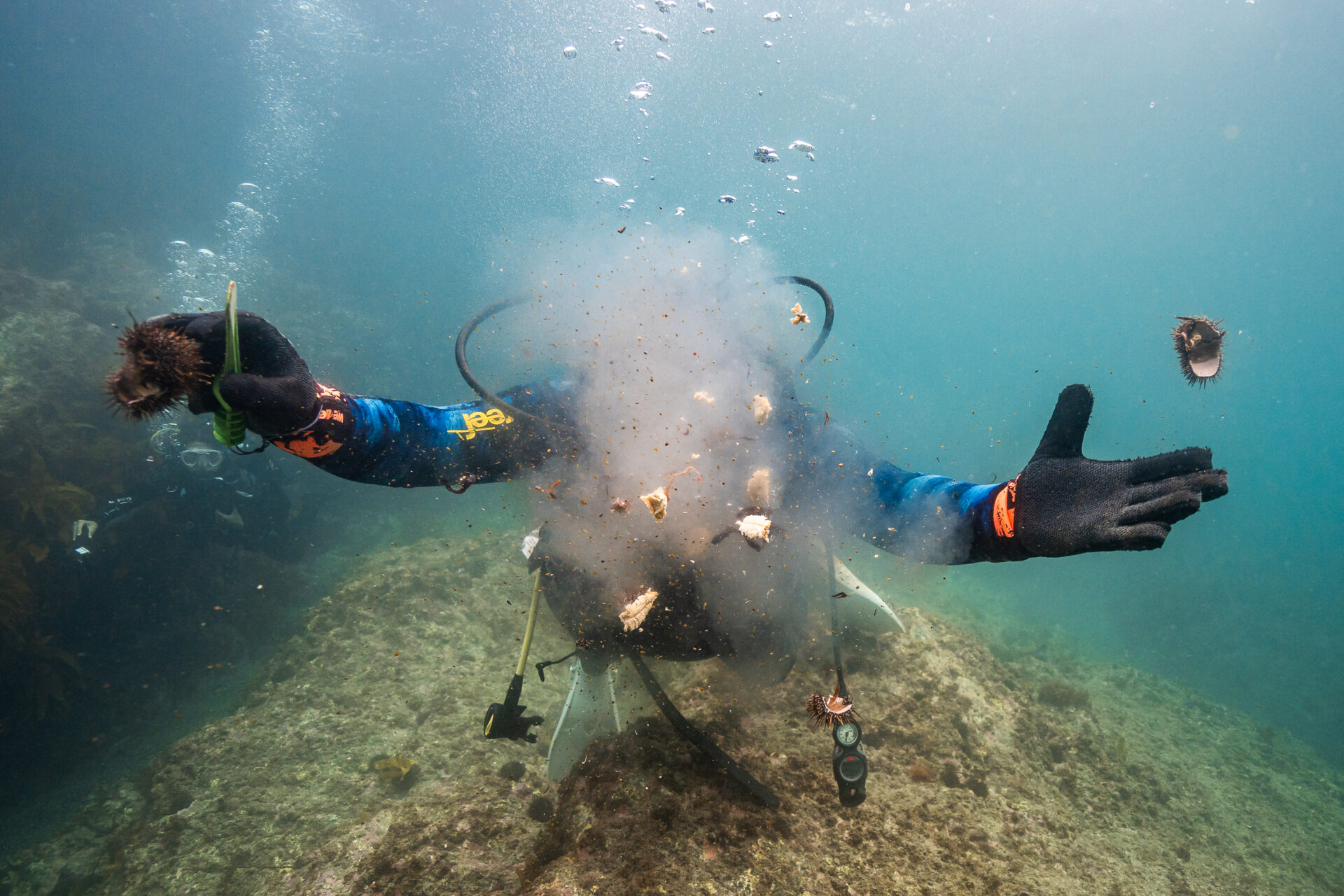
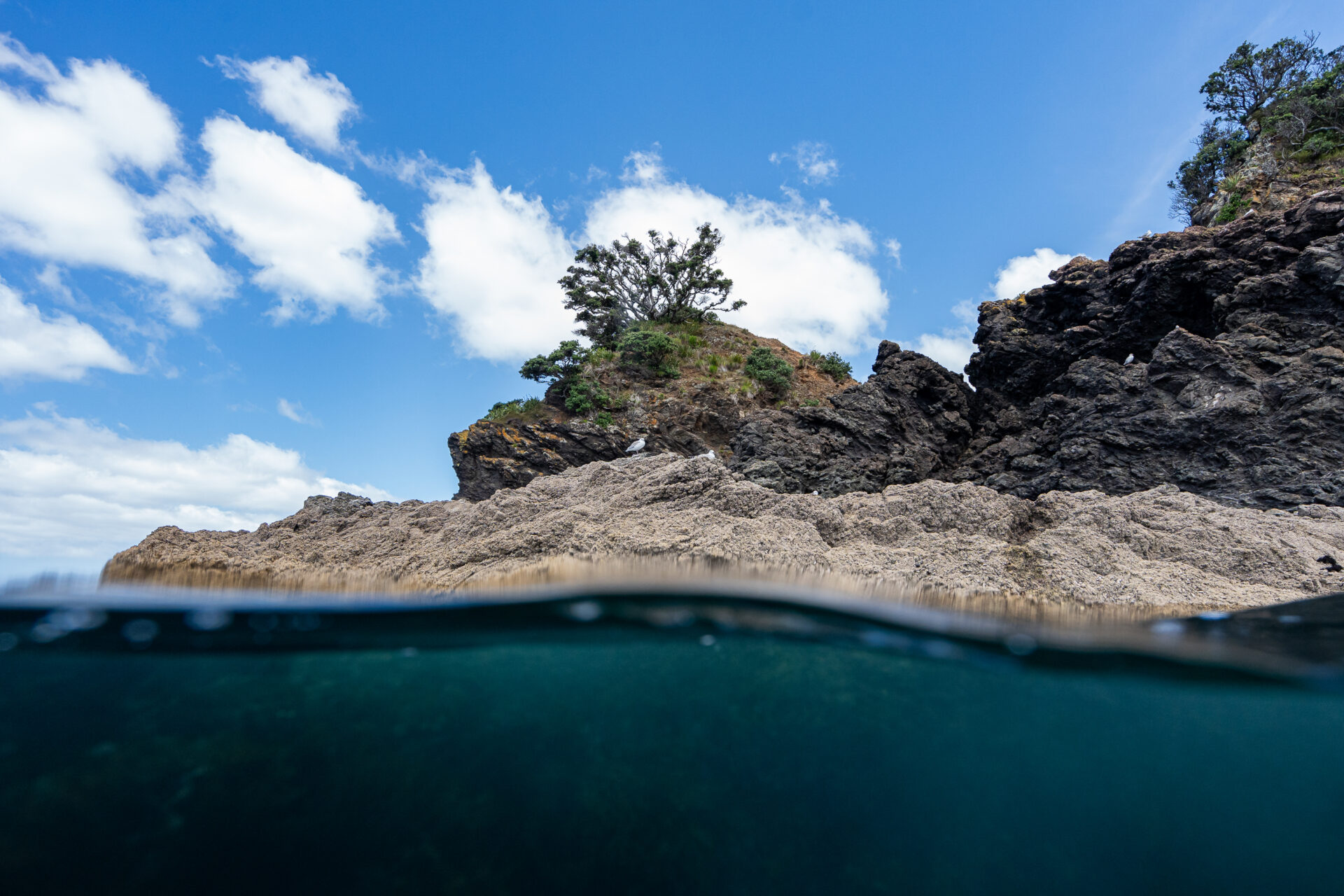
Howard is the spokesperson for the Mohimohi Moana Foundation, which, in partnership with the registered charity Ngātiwai Ki Whangaruru Whenua Topu Trust, is working to support local marae (meeting grounds) in safeguarding it for the long run. This pilot ocean garden program was their first major initiative—blending mātauranga Māori (traditional knowledge) with modern science to restore marine life.
At this site, the focus was on restoring key species like pipi (clams), prized tipa (scallops), pāua (abalone), kuku (mussels), and kina (urchins). For the kina, the goal was rebalancing their role in the ecosystem, ensuring they contributed to its health rather than overwhelming it. Instead of kina barrens, the aim was to have them co-existing and acting as an ecosystem contributor rather than destroyer, living alongside their predators like the sunflower seastar.
Howard was working closely with scientists along the coast, including kelp and seaweed specialist Nicole Miller, to study what once thrived here and how to bring it back. Their approach was akin to marine horticulture – carefully rebuilding the ecosystem, species by species, until it could sustain itself once again.
As we surfaced, it was no surprise to find Brody and Hazel still in the water, despite having been there longer than we had! Once back on the boat, Brody grinned as she held up a handful of kina, eager to crack them open and eat them raw. She passed them around, insisting we try. The briny ocean taste hit immediately – undeniably fresh, straight from the sea, and something that would take us non-ocean dwellers a moment to learn to savour.
Meanwhile, Howard explained that this concept of an ocean garden – called maara moana – was deeply rooted in Māori tradition. Just as Māori have cultivated the land for generations, following sustainable practices, they were now applying the same principles to the ocean. By enhancing marine habitats, they hoped to increase biodiversity within these designated gardens, creating a spillover effect beyond the site. First, the kelp forests needed to recover – rebuilding the foundation of the ecosystem and providing a home for countless species. Then, the shellfish reefs could return, once a dominant feature of these waters, helping to filter the ocean and stabilise the food chain.
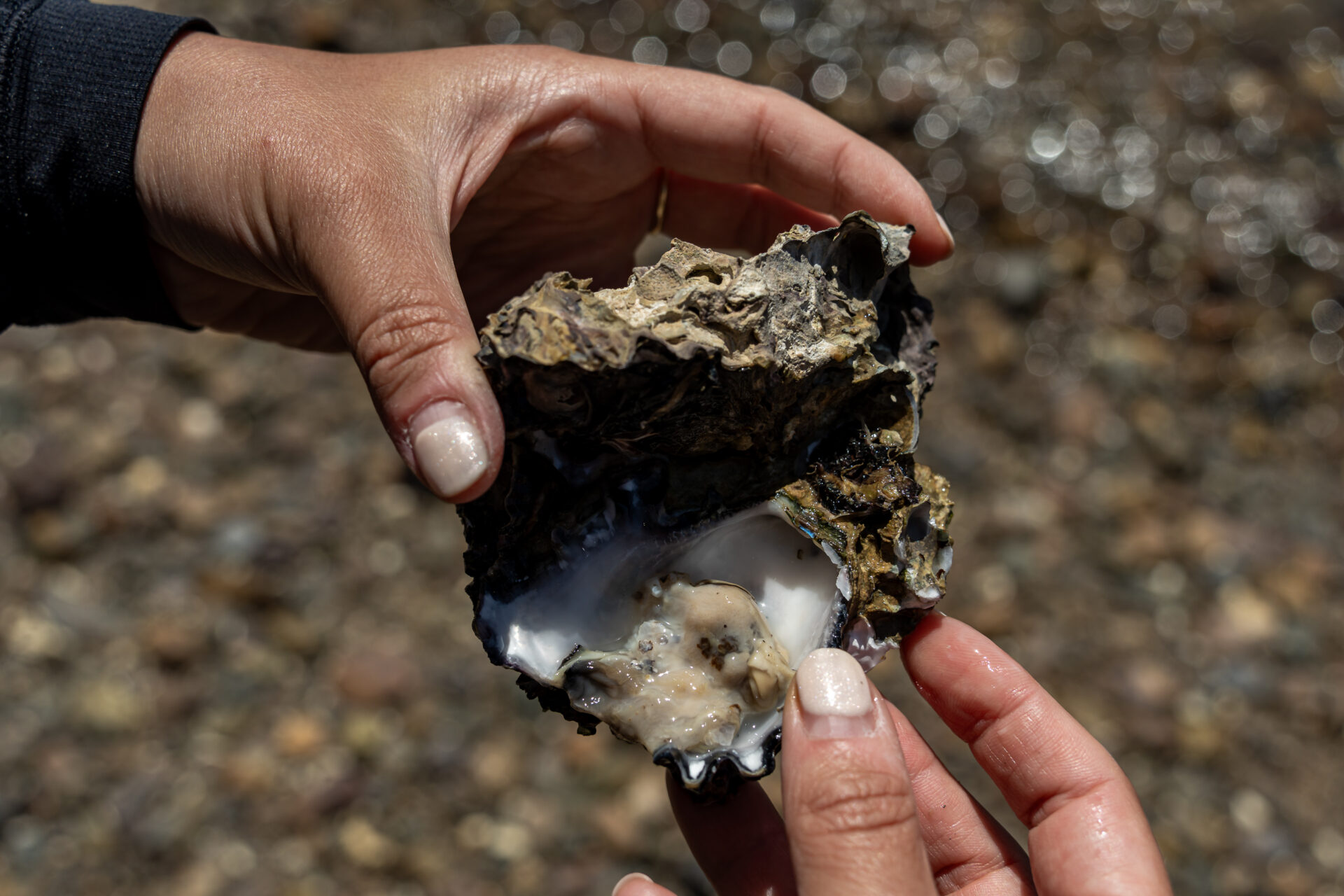
To show us firsthand what he meant, Howard took us to our next site – a small island called Motukauri, where he and his family once lived – sitting in the middle of Whangaruru Harbor. The harbour was silent, with not a single boat out as we made our way to shore. Howard had us scan the water’s edge for oysters, unsure of what we’d find. To our surprise, they were everywhere – tiny treasures stacked on top of each other and clinging to the rocks. We gathered a handful and brought them over to Howard, who cracked each open with a rock, rinsed them in the sea. One by one, we slurped them down – and they were undoubtedly some of the best oysters we’d ever tried.
“We believe that as kaitiaki (guardians), our role involves more than just rāhui to protect fish and seafood stocks. We must shift from simply taking from the ocean to actively restoring it,” Howard said as we walked the shores, listening to stories of life here from a different time while we slurped on the fresh shucked oysters. He had seen decades of change – watching the abundance fade, the balance shift. “To be true guardians of the ocean, we must do more than protect it – we must care for it, nurture it, and help it heal. This shift to ocean gardening represents a new chapter in Māori leadership for sustainability and environmental stewardship.”
At its core, this movement is about reclaiming the ocean in a time when industrial pressures are mounting across New Zealand. Commercial fishing and large-scale ocean harvesting are tightening their grip – not just nationally, but internationally. If Māori communities want to secure their rights and restore what has been lost, their time to act is now. That’s why Howard and the Mohimohi Moana Foundation launched THE COOP (Communities Organising Ocean Protection) – an initiative designed to bring people together, starting here in Northland, to take tangible action toward ocean restoration.
For Howard, community buy-in is everything. Government agencies won’t be the ones ensuring these waters thrive – this has to be done by the people who live here. “Who better to safeguard the marine environment than the local community themselves?” Howard asked. “I want to educate the next generation, like Brody and Hazel, showing them that this is their ocean, their responsibility. If we let them play freely in nature, they’ll see just how much is out there worth protecting.”
The long drive south from Whangaruru to Auckland gave us time to reflect. Those same winding roads now felt different – like a path leading away from something highly emotional and deeply altering. Howard and his community’s work, at its centre, was about education. Instead of dwelling on loss, this group was focused entirely on the future – merging indigenous knowledge with modern conservation to create a new model for ocean stewardship.
It’s easy to get lost in the doom-and-gloom headlines, to feel paralyzed by the weight of environmental decline. But after diving the Bay of Islands, seeing the pilot ocean garden in action, and experiencing Brody’s infectious curiosity, we were left with a single lingering thought: despair is a choice. And so is action. Fear, anger, and complacency may be easy, but they don’t move us forward. Seeking solutions, pushing for change, and standing up for what’s right – this is what shapes a future that is not only sustainable but just and equitable as well.
Thank you to Howard Reti, the Mohimohi Moana Foundation, and Ngatiwai Ki Whangaruru Whenua Topu Trust for welcoming us onto your land and out to sea. Your generosity in sharing your story, knowledge, and traditions with us is something we will carry forward always. We are deeply grateful for the time spent with you and the lessons learned along the way.

Printed editions
Current issue
Back issues



Enjoy so much more from Oceanographic Magazine by becoming a subscriber.
A range of subscription options are available.
