Rob McCallum
Rob McCallum is an Ocean advocate, Founder of EYOS; 1,500 global missions including all 10,000m ocean trenches; first New Zealander to the Challenger Deep.
More from The Innerview

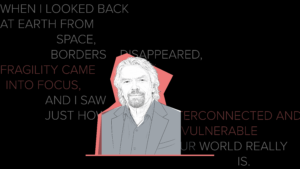



WHEN THEY GO DOWN THEY WILL BECOME BACK CHANGED. AND THAT UNDERSTANDING, IN EVERY PERSON WHO FINALLY ENTERS THE WATERS IS WHAT THE EXPEDITION EXISTS TO MAKE POSSIBLE. IT IS EXACTLY WHAT THE INNERVIEW IS FOR.

There is a kind of work that is difficult to explain at dinner parties. You are not the scientist who makes the discovery. You are not the pilot who descends to the deepest point. You are not the filmmaker who captures the image that changes a million minds. You are the person who makes it possible for those people to be in the right place, with the right vessel, the right technology, the right team and the right conditions, so that something extraordinary can happen.
Enabling extraordinary feats has been the entire focus of my career.
The Innerview, for me, begins before the dive. It begins with the idea, the concept, the visualisation and the planning. In the months and sometimes years of work that precede a descent. In the decision about which vessel, which submersible, which scientist, which trench. In the conversations with philanthropists about why the deep ocean matters and what it will give back. In the engineering meetings where problems that have never been solved are placed in front of people who have no choice but to solve them. In the moment when the Limiting Factor – the first and only submersible officially certified by international experts to dive to full ocean depth – was ready to dive, the team understood that they had built something that had not existed before, and that it would now make possible things that had not been possible before.
That is its own kind of Innerview. The one that comes to the people who made it possible.
But then there is the water itself.
In April 2021 I descended to 10,925 metres in the Challenger Deep. A rare and special privilege, because leading an expedition means understanding the environment your team operates in. Sitting in my own life-support cocoon at nearly 11,000 metres gave me my first real insight into the Innerview Effect.
Despite the crushing pressures outside the vehicle, we sat in perfect comfort within the titanium sphere. And outside, in the darkest place on our planet, there was life. Microbial mats on the seafloor near mounds of sulphur. Amphipods dancing in our lights. Graceful, jelly-like creatures drifting past, unhurried and entirely indifferent to our presence. Life that had been adapting to this impossible hadal realm since the dawn of evolution. We were visitors, yet we were home.
I was deeply conscious, as I looked through that viewport, of everything above me: every creature in the ocean that has been discovered and the millions that have not. Every whale, every coral reef, every shoal of fish – all stacked in the dark water between where I sat and the surface four hours above. This vast body of water that covers over 70 per cent of our planet is the exact opposite of the dead void of space. It is home to most of the life on Earth. It is the source of much of our oxygen. It provides sustenance to billions and a transportation link to us all. It is the life support system for our entire planet – and there I was, with a front row seat into its very heart. The Innerview of our ocean.
As a terrestrial species we have long looked to the heavens in awe, and aspired to go to the distant stars no matter how unreachable that ambition. Yet, with the exception of fishermen and scuba divers, few of us ever consider what lies within the body of water that comprises most of Earth’s living space. Ninety per cent of the ocean lies below 200 metres. It was 2019 before humankind developed a reusable vehicle that could easily explore to any depth in any ocean. An incredible world has been waiting.
But what moves me most is not my own descent. It is what I have watched happen to others.
Over 25 years of leading expeditions, I have had the privilege of watching many of the contributors to this very collection – scientists, explorers, heads of state, advocates and artists – descend to full ocean depth and to the extraordinary places in between. I have watched the moment, in each of them, when preconceptions about the deep ocean – cold, dark, lifeless, hostile – dissolved in the reality of what they were actually seeing. And I have watched what replaced those preconceptions: awe, curiosity, wonder and the particular, irreversible sense of belonging that comes from understanding that the ocean is not something we observe from a distance. It is something we are a part of.
Getting those people into the water is the work. It is also, for me, the Innerview.
The Overview of Earth may deepen as we venture out beyond the Moon. But here on Earth, our Innerview of the ocean will only increase in both breadth and clarity as more human beings finally enter it. The pace is quickening. The technology now exists to explore any depth, in any ocean, repeatedly and safely. This generation will see great advances that bring the deep within reach of more people, more scientists, more communities – whose waters have never been visited by the people who depend on them.
When they go down, they will come back changed. And that understanding, in every person who finally enters the water, is what the expedition exists to make possible. It is exactly what the Innerview is for.
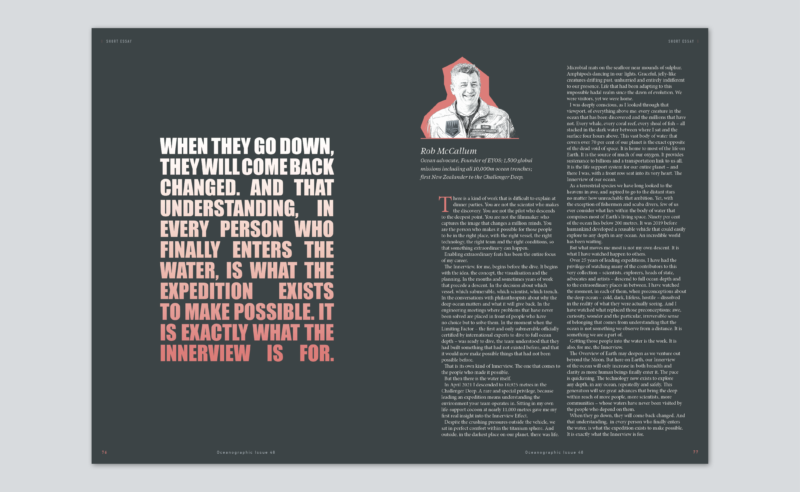
This is how this short essay appears in the special Oceanographic publication, The Innerview
Printed editions
Current issue
Back issues

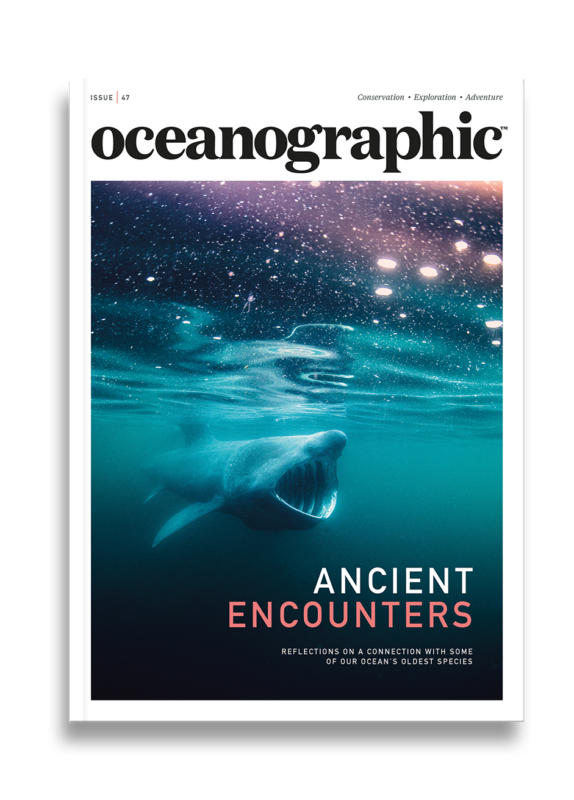
Enjoy so much more from Oceanographic Magazine by becoming a subscriber.
A range of subscription options are available.
