In her exploration of the Philippines' ancient maritime soul, Jordan Winters follows one veteran adventurer's quest to resurrect the balangay sailing boat and sail a contested sea back into the hands of those who first called it home.
As Arturo Valdez guided his ship through the narrow cove of Pag-asa Island, the coast guard officers on the radio greeted his request to dock with polite suspicion. They couldn’t see Valdez’s boat from the shore yet, and they couldn’t be sure whether it was friend or foe.
On the horizon, Chinese vessels circled like sharks – a constant reminder of the stakes of life on the edge of the West Philippine and the South China Seas. The coast guards weren’t in the habit of having mysterious guests and were evidently not ones for entertaining surprise announcements. It was then that they saw the radiant sails flash stripes of scarlet, cobalt and sunshine yellow.
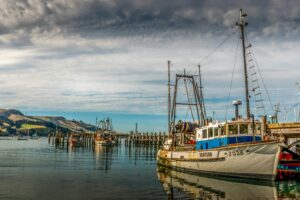
The veteran seafarers had made the journey in a wooden ship hand-carved in the image of a balangay – the oldest boat ever recorded in the Philippines. The 300-mile crossing from Palawan was this balangay’s maiden voyage and landing in the thin window between Amihan and Habagat was anything but certain. The dramatic swoop of its prow and the soft browns of its lawaan hardwood appeared right out of a history book. Named Florentino Das, this was a ship that hadn’t touched down on the island in many generations – and may never again.
It was Valdez’s unwavering resolve that allowed him to resurrect this one-of-a-kind ship and set sail on this high-risk mission – made all the more dangerous by an aging crew and a simmering conflict in the waters just off the coastline. Yet expeditions like these are important, if only for answering one simple question: what does it mean to have voyaging in the blood? Valdez and his crew have travelled from the ridges of Mount Everest to the reefs of the South China Sea to decipher that riddle.
For most people, summiting Everest would be enough excitement for a lifetime. In 2006, as altitude sickness clawed oxygen from his brain, Valdez raced other Filipino teams, all looking to be the first to plant the Filipino flag on the roof of the world.
“As a mountaineer, I wanted to reach the highest peak,” says Valdez. “I wanted this to be symbolic of what our people can accomplish, of how the impossible is possible, to lift our nation’s spirits.”
Other features



Continue reading
This story is exclusively for Oceanographic subscribers.
