Blue carbon
On her Greenland expedition on assignment for Oceanographic, our 2024 Storyteller in Residence, coral reef biologist, conservation photographer-filmmaker and expedition leader Mads St Clair, interviews marine ecologist Dr Narissa Bax, a researcher at the Greenland Institute of Natural Resources. Here, Mads chats with Dr Bax aboutmacroalgae, blue carbon strategies and protecting Greenland’s ecosystems in the face of a changing climate.

Mads St Clair: Can you tell us a little about yourself and what inspired you to pursue a career in marine science?
Dr Narissa Bax: “I didn’t have a linear pathway to marine science. Growing up, I wasn’t sure if I even had the capacity for higher education. But I was a curious child who was always fascinated by the ocean. It took traveling and gaining confidence to realise that I could pursue these dreams. Eventually, I went to university in New Zealand/Aotearoa, my home country, and things began to open up for me, especially during an exchange at the University of Hawai’i. That was where my love for marine science solidified and led me to work in environments as diverse as tropical corals and now, the Arctic and Greenland.”
Mads St Clair: How did you first get involved in studying blue carbon, and what drew you to Greenland in particular?
Dr Narissa Bax: “My initial work on tropical corals eventually led me to deep-sea corals in Antarctica. When I transitioned to focusing on polar blue carbon, Greenland was a natural choice because of its unique and relatively unexplored ecosystems. The opportunity to study kelp forests and macroalgae in a place with Indigenous ecological knowledge and a long-standing reliance on natural resources was also compelling. Greenland’s marine environment provides a fascinating contrast to other blue carbon habitats worldwide, and it’s at the forefront of climate change, making it fundamental to understand how these ecosystems are transitioning and what this means for people’s livelihoods.”
Mads St Clair: So, what exactly is blue carbon? How does it relate to the work you’re doing in Greenland?
Dr Narissa Bax: “Blue carbon refers to the carbon captured by the world’s oceans and coastal ecosystems. In Greenland, we’re talking about mainly macroalgae, seafloor biodiversity, saltmarsh communities, and seagrass. Our work on the BlueCea project focuses on macroalgae, such as the kelp forests and seaweed beds that are prevalent along Greenland’s coasts and fjords. These ecosystems are important for carbon capture and storage, and their current low levels of human impact make them excellent naturally functioning carbon reservoirs.”
Mads St Clair: How does climate change impact the blue carbon habitats in Greenland?
Dr Narissa Bax: “As sea ice retreats and fjords open up due to warming temperatures, we’re seeing new opportunities for macroalgae to expand and increase in biomass. This change could enhance blue carbon capture and storage, and if this biomass makes it to deep sea sinks, sequestration. However, it also brings challenges – there’s more variability in where and how these species grow, and nutrient availability is changing with glacial melt and sedimentation. It’s a dynamic shift that could alter how these habitats capture and store carbon over time.”
Mads St Clair: What kind of species diversity do you see in Greenland’s macroalgae and kelp forests?
Dr Narissa Bax: “In Greenland, we have around five dominant species of kelp and two or three dominant seaweed species. This is quite different from sub-Arctic regions like the Faroe Islands, where species diversity is higher because they’ve been ice-free for longer periods. Greenland’s ecosystems are shaped by their glacial history, so only the hardiest species have survived the harsh yet stable Arctic conditions over time.”


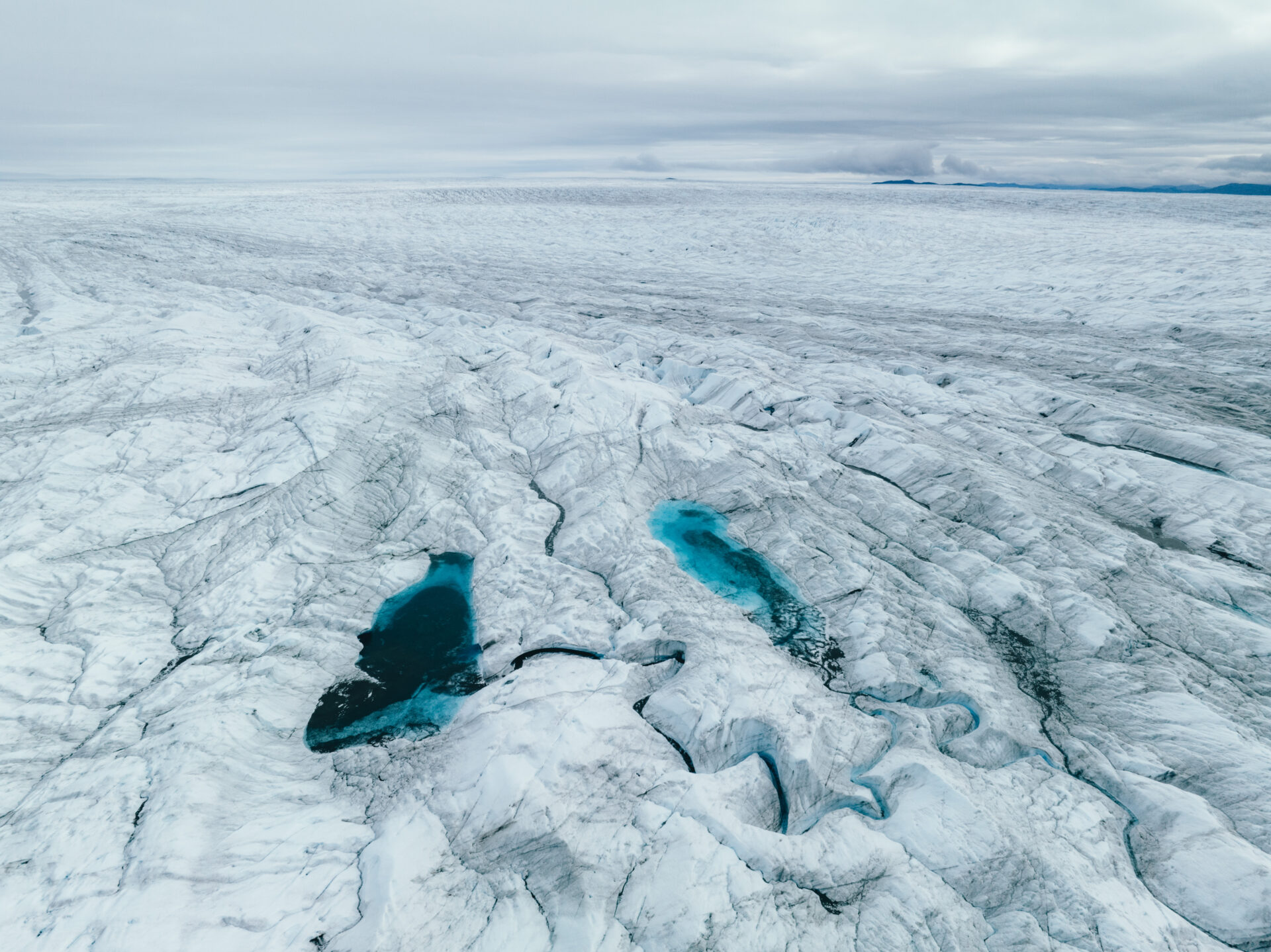
Mads St Clair: Are there any unique opportunities for carbon capture as sea ice continues to retreat in Greenland?
Dr Narissa Bax: “Absolutely. As sea ice retreats, we’re seeing a potential for greater biomass in rocky intertidal zones and deeper into the fjords. Floating species of seaweed, which can drift and go down to deep-sea sinks, could contribute significantly to blue carbon sequestration. The changing marine landscape allows for new areas to be colonised, potentially increasing the capacity for these habitats to store more carbon.”
Mads St Clair: How are you practically measuring blue carbon capture in Greenland? What does a typical day look like in your research?
Dr Narissa Bax: “My work involves quantifying carbon in macroalgae across different areas and time frames. For example, in East Greenland, we collected samples from beach accumulations from ice-fjords and ice-free fjords to compare their carbon content. We also use stable isotope analysis to track carbon contributions from various sources, like land, ocean, and offshore. This data is then combined with tracking information, decomposition rates, environmental DNA and oceanographic time series information to map the movement impact of macroalgae and trace their fate.”
Mads St Clair: Are there any risks or challenges associated with new species moving into Greenland as a result of climate change?
Dr Narissa Bax: “Yes, there’s a real risk associated with poleward shifts and the introduction of non-native species. New arrivals could disrupt existing ecosystems and potentially outcompete native species inducing ecological tipping points. This is why it’s urgent to monitor these changes closely and ongoing research is needed to fully understand and mitigate potential negative impacts.”
Mads St Clair: How does your research in Greenland tie into the larger global conversation on blue carbon strategies and climate change mitigation?
Dr Narissa Bax: “Globally, there’s interest in what Greenland’s natural carbon sinks can contribute to climate change mitigation efforts. Protecting these ecosystems is essential because they’re not just blue carbon; they’re supporting fisheries, nutrient cycling, and maintaining the ecological balance. As climate change continues to reshape the Arctic, preserving these natural services becomes increasingly important.”
Mads St Clair: What are the biggest challenges and hopes you see for blue carbon research moving forward, especially in the context of Greenland?
Dr Narissa Bax: “One major challenge is valuing and protecting these ecosystems before irreversible changes occur. While blue carbon has become a buzzword and is often reduced to carbon credits, it is important to recognise the broader ecological services these habitats provide. I’m hopeful that work like ours in Greenland will help bridge gaps in knowledge and inspire action to conserve what we already have and to protect the natural function of polar blue carbon ecosystems in a sustainable way.”
For more Despatches, images and more, follow our 2024 Storyteller in Residence’s journey here or over on Instagram.
Printed editions
Current issue
Back issues
Enjoy so much more from Oceanographic Magazine by becoming a subscriber.
A range of subscription options are available.
