Almost 500 deep-sea species found in Costa Rica's methane seeps
Following a ten-year project exploring Costa Rica's methane seeps, researchers have compiled a collection of specimens, photographs, and DNA sequences enabling them to identify 488 distinct species - the highest biodiversity count ever recorded in a single seep or vent region.

An international team of marine biologists has documented the highest known count of deep-sea species living in methane seeps off Costa Rica’s Pacific coast, ringing in a species count of almost 500, including at least 58 that are entirely new to science.
A new study published in ZooKeys offers a comprehensive catalogue of deep-sea biodiversity – most of which are invertebrates – discovered over the course of five research expeditions and 63 submersible dives to Costa Rica’s Pacific margin, spanning a decade.
Between 2009 and 2019, these researchers compiled a collection of specimens, photographs, and DNA sequences enabling them to identify 488 distinct species. This marks the highest biodiversity count ever recorded in a single seep or vent region.
Of this number of documented species, the researchers note that only 131 had been previously described. At the very least, they say, 58 of them are entirely new to science. This leaves the remaining 299 with some degree of “taxonomic uncertainty”, representing – the scientists believe – additional undescribed species.
The project was led by UC San Diego’s Scripps Institution of Oceanography in collaboration with the University of Costa Rica and its Museum of Zoology. Over the span of its decade, it managed to bring together 28 authors from 22 different research organisations from around the world all under the aim to advance our understanding of deep-sea ecosystems and biodiversity.
The ocean’s deep-sea methane seeps appear to be harbouring a bounty of biodiversity while scientific discoveries made from within them are seemingly being churned out at a rate of knots. Late last year, news broke that a series of exploratory expeditions into new regions and submarine systems – many of which were “never before seen by humans” – had unearthed a treasure trove of species, including 60 that were potentially new to science.
This particular expedition was led by the Schmidt Ocean Institute and took researchers to the depths of some 20 methane seeps and four submarine canyon systems off the coast of Chile. It was here that an abundance of sea life – including a possible 60 new species – made up what was at the time hailed as ‘perhaps the biggest discovery made by scientists piloting the R/V Falkor (too).
In other news
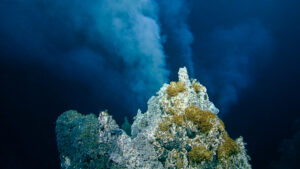
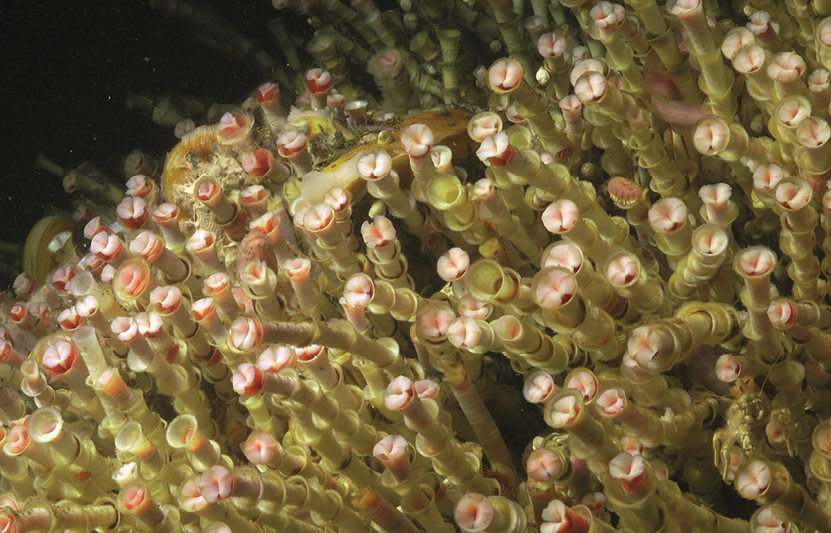
Methane seeps are chemosynthetic environments where methane bubbles up from the seafloor, feeding microbes that – in turn – support an array of life. While clues from water chemistry measurements and images captured from previous expeditions to the Chilean region suggested a presence of some seeps in the area, many of the sites there had not been fully surveyed and sampled before.
Now, laid bare in the published paper, A faunal inventory of methane seeps on the Pacific margin of Costa Rica, researchers from Scripps have been able to relay what is now recognised as the highest biodiversity count ever recorded in a single seep or vent region altogether.
“We hope this information-rich, freely available resource will strengthen deep-sea biodiversity research, education, and conservation, as well as set a high scientific standard to inspire similarly comprehensive studies from other parts of the world,” said lead author, Charlotte Seid, a senior museum scientist and manager of the Benthic Invertebrate Collection at Scripps Institution of Oceanography.
The study was first published on January 3, 2025 in a special issue of the journal ZooKeys.
The seeps explored over the duration of this project range from 400 metres to 3,800 metres below the surface at diverse geological features including mounds, faults, seamount subduction scars, and landslides.
Among the life found at these seeps was a variety of animals not directly dependent on chemosynthetic symbionts for nutrition, with records including limpets, snails, crabs, corals, echinoids, sponges, and macrurid fish.
Field collection and laboratory analyses for the study was enabled with funding by grants from the National Science Foundation, while 2019 afield collection and article processing charges were supported by the Schmidt Ocean Institute.


"*" indicates required fields
Printed editions
Current issue
Back issues

Enjoy so much more from Oceanographic Magazine by becoming a subscriber.
A range of subscription options are available.
