Flagship deep-sea mining project is economically unviable, says report
A new report warns the project’s survival relies on "best-case" speculative resources while ignoring the hard costs of waste management and the reality of non-existent financial markets
The Metals Company would not make a meaningful profit after factoring capital and operating costs into their project in the Clarion Clipperton Zone (CCZ), an independent report from Deep Sea Mining Canada, Greenpeace International, Mining Watch Canada has found.
The report analyses The Metals Company’s pre-feasibility study (PFS), used to assess whether deep-sea mining of polymetallic nodules in the CCZ is technically, economically, and legally viable.
The Metal’s Company is largely considered the primary global proponent of deep-sea mining. By the company’s own admission in the PFS, its identified mineral reserves would sustain just eight years of operation and generate zero profit.
The report finds that The Metals Company has incorporated an additional 113.1 million wet metric tonnes of speculative mineral resources into their economic estimations.
Dr Emmerman is a consultant specialising in evaluating the environmental impacts of mining. He was commissioned by the Deep Sea Mining Campaign, Greenpeace International, and Mining Watch Canada to conduct an independent review of the PFS.
On his findings, Dr Emmerman said: “According to [the mining regulatory body] SEC, the economic analysis should be based upon mineral reserves alone – the only economically mineable part of mineral resources.
“By contrast, the economic analysis in the The Metals Company Pre-feasibility Study is based upon 51 million wet metric tons of reserves plus an additional 113.1 million wet metric tons of resources,” he added.
Even with resources, rather than reserves taken into account the report finds that the project fails to meet technical, financial and the regulatory expectations required for a credible mining development.
The report also found that The Metals Company relies on financial markets which do not currently exist at scale, overly-optimist best-case assumptions, and the company has not factored in any operating costs for byproducts or waste materials to come out of deep sea mining.
In other news





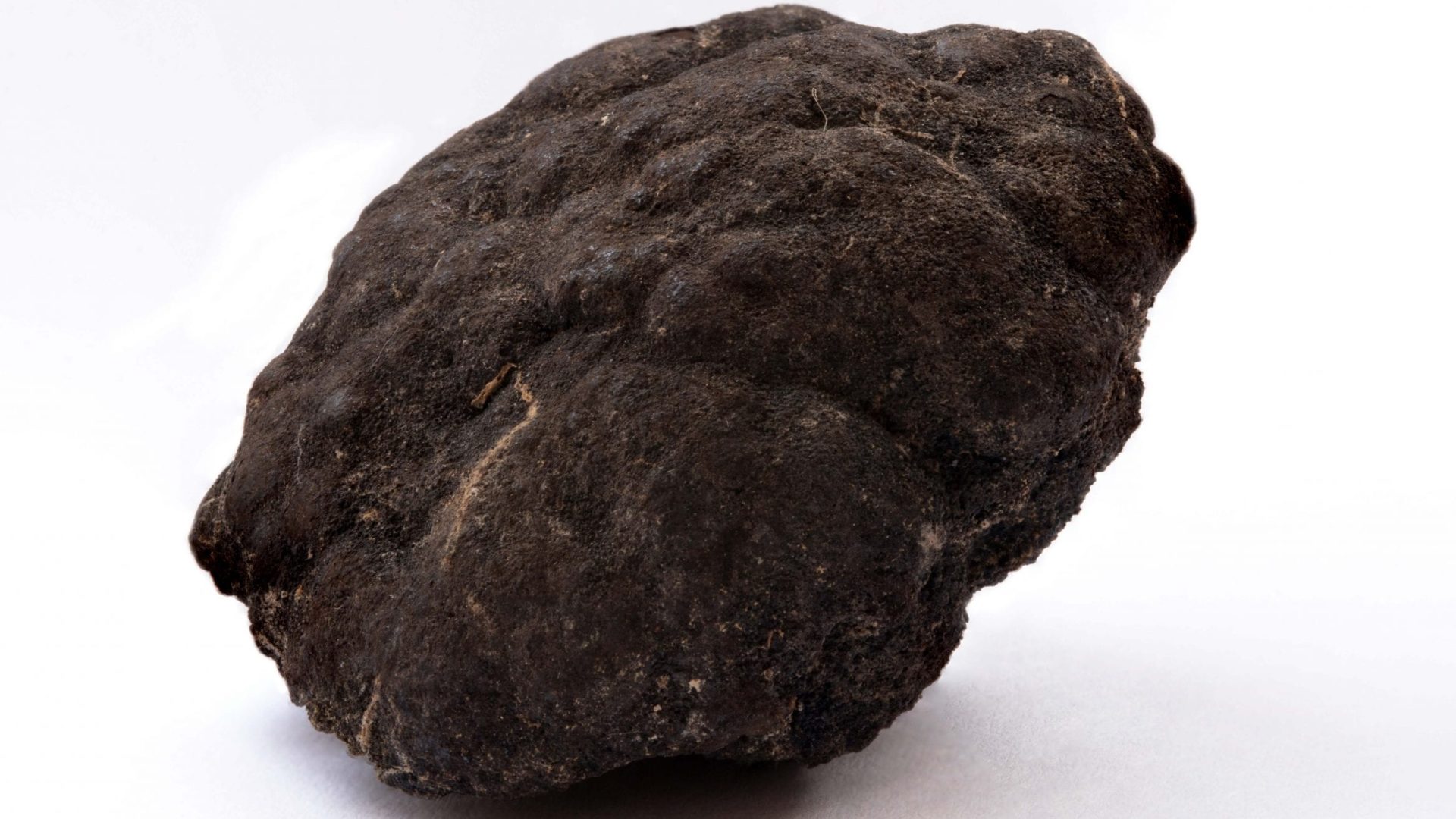
According to the report, the project’s financial model relies on a collection of best-case assumptions: optimistic metal prices, exceptionally high recovery rates, no royalty provisions, and minimal allowances for cost escalation or closure liabilities.
The findings also suggest that nearly a third of projected revenue depends on manganese silicate markets and processing infrastructure that do not currently exist at commercial scale.
The report also highlights that waste management is conspicuously absent.
The Metals Company claims the operation would produce zero waste – therefore making no provision for the sediment-laden water discharged back into the ocean as mining disturbs the seafloor.
There is also no recognition of the radioactivity of polymetallic nodules, which becomes most acute when nodules are broken or crushed during processing.
The report also finds that the PFS was largely prepared by TMC’s own employees rather than independent experts, which is not standard practice – generally to prevent self-serving assumptions.
The report’s conclusion is unequivocal: the project fails to meet fundamental technical, financial, and regulatory expectations for a credible mining development. Abandoning it, the analysis states, would be the only responsible course of action.
Andy Whitmore, the Finance Advocacy Officer of the Deep Sea Mining Campaign, said: “Even with all these best-case assumptions, they’re still not going to be profitable. Dr Emmerman’s report is saying that loud and clear.”
There have been previous reports about the financial viability of deep-sea mining. But it hasn’t stopped The Metals Company from applying for a unilateral mining license from the United States.
The latest session of the International Seabed Authority (ISA) Council drew to a close last week, without approving mining, or establishing a mining code –
Whitmore said: “The Metals Company tends to be dismissive of the people who write critical reports and their motives.”
“Don’t do an ad hominem defence” he added, “Go into the substance and defend it. As far as I’m aware, we haven’t really seen defence of it.”
We reached out to The Metals Company for a response. They have not yet provided a comment.


"*" indicates required fields
Printed editions
Current issue
Back issues
Enjoy so much more from Oceanographic Magazine by becoming a subscriber.
A range of subscription options are available.
