Chile's seamounts are still damaged, decades after trawling ended
A new study finds that Chile's Juan Fernández seamounts still show significant ecological damage more than 25 years after bottom trawling ended, with deep-sea corals showing little sign of recovery.
Off the coast of Chile’s Juan Fernández Archipelago, the seafloor is still telling the story of damage done over a quarter of a century ago. A new study published in Deep-Sea Research offers the first evidence from the region of just how long the ecological impact of bottom trawling can linger on deep-sea ecosystems – more than 25 years after the fishing stopped.
Led by scientists from Oceana, the Center for the Ecology and Sustainable Management of Oceanic Islands, and the Center for Advanced Studies in Arid Zones, the study used the remotely operated vehicle SuBastian aboard the Schmidt Ocean Institute’s research vessel R/V Falkor, to survey four seamounts around the Juan Fernández Archipelago.
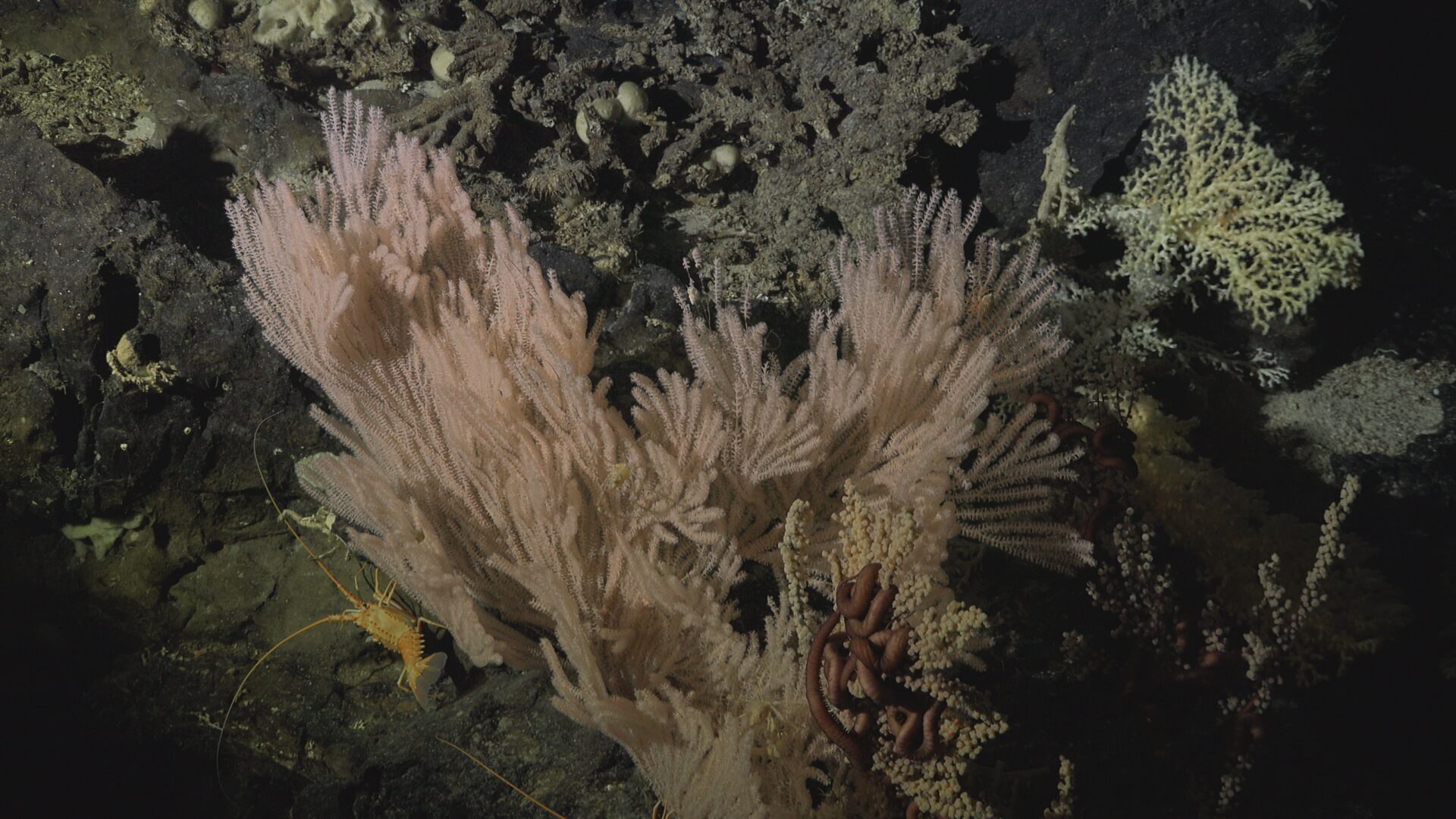
Three of the seamounts had a history of bottom trawling. A fourth, ecologically similar seamount called Solito, had never been trawled, providing a baseline for comparison. Solito supported thriving deep-sea coral gardens, abundant sponges, and rich invertebrate diversity. The previously trawled seamounts showed lower live coral cover, reduced biodiversity, simplified habitat structure, and clear signs of seafloor disturbance.
“This study demonstrates that the impacts of bottom trawling on deep-sea ecosystems can persist for decades,” said Dr. Ignacio Petit, Oceana scientist and lead author of the study. “Although fishing ended more than 25 years ago, recovery remains extremely limited because many affected species, particularly deep-sea corals, grow very slowly and can live for hundreds, or even thousands, of years.”
Deep-sea corals act as ecosystem engineers, their structures providing shelter, feeding grounds, and nursery habitat for fish and invertebrates. Corals that take centuries to build can be destroyed by trawling in hours.
“The presence of living corals supports higher invertebrate biomass, including commercially valuable crustaceans such as the Chilean golden crab (Chaceon chilensis) and the Juan Fernández spiny lobster (Projasus bahamondei). Conserving seamount ecosystems therefore also helps sustain local artisanal fisheries,” said Dr. Javier Sellanes, co-author of the study.

In other news

Chile was one of the first countries in the world to ban bottom trawling on seamounts, protecting 117 of them under legislation passed in 2012.
“The evidence confirms that protecting these ecosystems before they are damaged is by far the most effective conservation strategy. In environments where natural recovery may take centuries, preventing degradation is not only an environmental imperative but also an investment in the future of marine biodiversity,” Dr. Petit added.
Under Food and Agriculture Organization guidelines for deep-sea fisheries, impacts lasting longer than five to 20 years are classified as ‘significant adverse impacts’.
“Our findings show that the Juan Fernández seamounts have far exceeded that threshold, with ecological degradation persisting for more than 25 years,” Dr. Sellanes said.
Bottom trawling continues elsewhere in Chilean waters, targeting hake and other commercially valuable crustaceans. The findings add further scientific weight to calls for precautionary management and protection of vulnerable deep-sea ecosystems before damage becomes irreversible.


"*" indicates required fields
Printed editions
Current issue
Back issues

Enjoy so much more from Oceanographic Magazine by becoming a subscriber.
A range of subscription options are available.
