Climate feedback loop: Rising seas unlock millennia of carbon?
Rising seas could trigger the release of ancient carbon stores in coastal ecosystems, potentially accelerating climate change - a self-reinforcing feedback loop revealed by 9,500 years of Guatemalan lake sediment data.
Sediment cores extracted from a Guatemalan lake have revealed what scientists have dubbed ‘a troubling feedback loop’ between sea-level rise and carbon release, indicating that the one could accelerate the other and – ironically – the very changes driving it in the first place.
New research, published in Science of the Total Environment, suggests that rising seas may pose a threat far beyond the inundation of coastlines and that they could unlock vast reserves of carbon locked away in coastal ecosystems.
The release of this carbon could then – potentially – “turbocharge” the atmospheric changes already driving sea-level rise in the first place.
The findings have emerged from a chemical analysis of sediment cores spanning roughly 9,500 years of environmental history, recently extracted from Lake Izabal in Guatemala by researchers at Missouri University of Science and Technology (Missouri S&T).
The lake has proved to be an exceptionally valuable archive for the study. Situated near coastal waterways, it has experienced repeated intrusions of seawater over millennia, making it a natural laboratory for understanding how saline inundation affects carbon-rich sediments. The researchers have noted that each compressed layer of organic material functions “as a time capsule” – preserving the chemical fingerprint of the conditions under which it was deposited.
By tracing how the carbon content of those layers shifted in response to historical flooding events, the team was able to reconstruct a stark pattern. When seawater penetrated the lake system, its elevated sulfate concentrations accelerated the microbial breakdown of organic matter – in some instances releasing up to 90% of the carbon stored in affected sediments into the atmosphere.

In other news



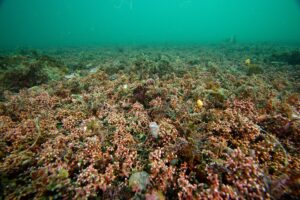


The implications for the present day are considerable. Coastal wetlands and lake systems worldwide store enormous quantities of organic carbon accumulated over thousands of years. Should rising sea levels drive saltwater into these ecosystems at scale, the resulting carbon pulse could form a significant and largely unaccounted-for feedback in climate projections.
“What’s fascinating is that this process can become a self-reinforcing loop,” said Suvrajit Ghosh, a geology and geophysics Ph.D. student at Missouri S&T. “Rising sea levels can trigger carbon release, and that release can further accelerate changes that lead to even more sea-level rise.”
Ghosh and his supervisor, Dr. Jonathan Obrist-Farner, an associate professor of Earth sciences and engineering at Missouri S&T, led the analysis. The broader study drew on collaboration across eight institutions in six countries, reflecting the scale of interdisciplinary effort required to interpret such a long and complex sedimentary record.
The study’s researchers have emphasised that the deep past offers something of a guide to what coastal systems may face in the coming decades under the growing impacts of climate change. Those behind this study have issued a call to factor long-dormant carbon stores into planning for infrastructure, conservation, and community resilience along vulnerable coastlines.


"*" indicates required fields
Printed editions
Current issue
Back issues




Enjoy so much more from Oceanographic Magazine by becoming a subscriber.
A range of subscription options are available.
