Coral reefs kept Earth's carbon cycle stable for 250 million years
New research shows that coral reefs have influenced Earth’s carbon and climate cycles for over 250 million years. By controlling shallow- and deep-water carbonate burial, reefs shaped the pace of climate recovery and the evolution of marine life.

Most often celebrated for their dazzling biodiversity, coral reefs have more recently been found to have played a profound role in orchestrating the rhythm of Earth’s carbon and climate cycles for more than 250 million years.
These are the groundbreaking new findings published this week in the scientific journal, Proceedings of the National Academy of Sciences (PNAS) in which researchers have showed that the rise and fall of shallow-water reef habitats have dictated how quickly the planet rebounded from major carbon dioxide disturbances.
Researchers from the University of Sydney and Université Grenoble Alpes combined plate-tectonic reconstructions, global surface-process models, climate simulations, and ecological modelling to trace shallow-water carbonate production all the way back to the Triassic Period.
Their analysis reveals that the Earth system oscillates between two distinct modes – each setting the pace of climate recovery.
“Reefs didn’t just respond to climate change – they helped set the tempo of recovery,” said lead author Associate Professor Tristan Salles of the University of Sydney’s School of Geosciences.
When tropical shelves are expansive and reefs flourish, carbonate accumulates in shallow seas, limiting chemical exchange with the deep ocean. This weakens the “biological pump” – the process by which marine organisms draw down carbon – and slows the planet’s rebound from CO₂ ‘shocks’.
By contrast, when reef space collapses due to tectonic shifts or sea-level change, calcium and alkalinity build up in the oceans. Carbonate burial migrates to the deep sea, boosting nannoplankton productivity and accelerating climate recovery.
In other news




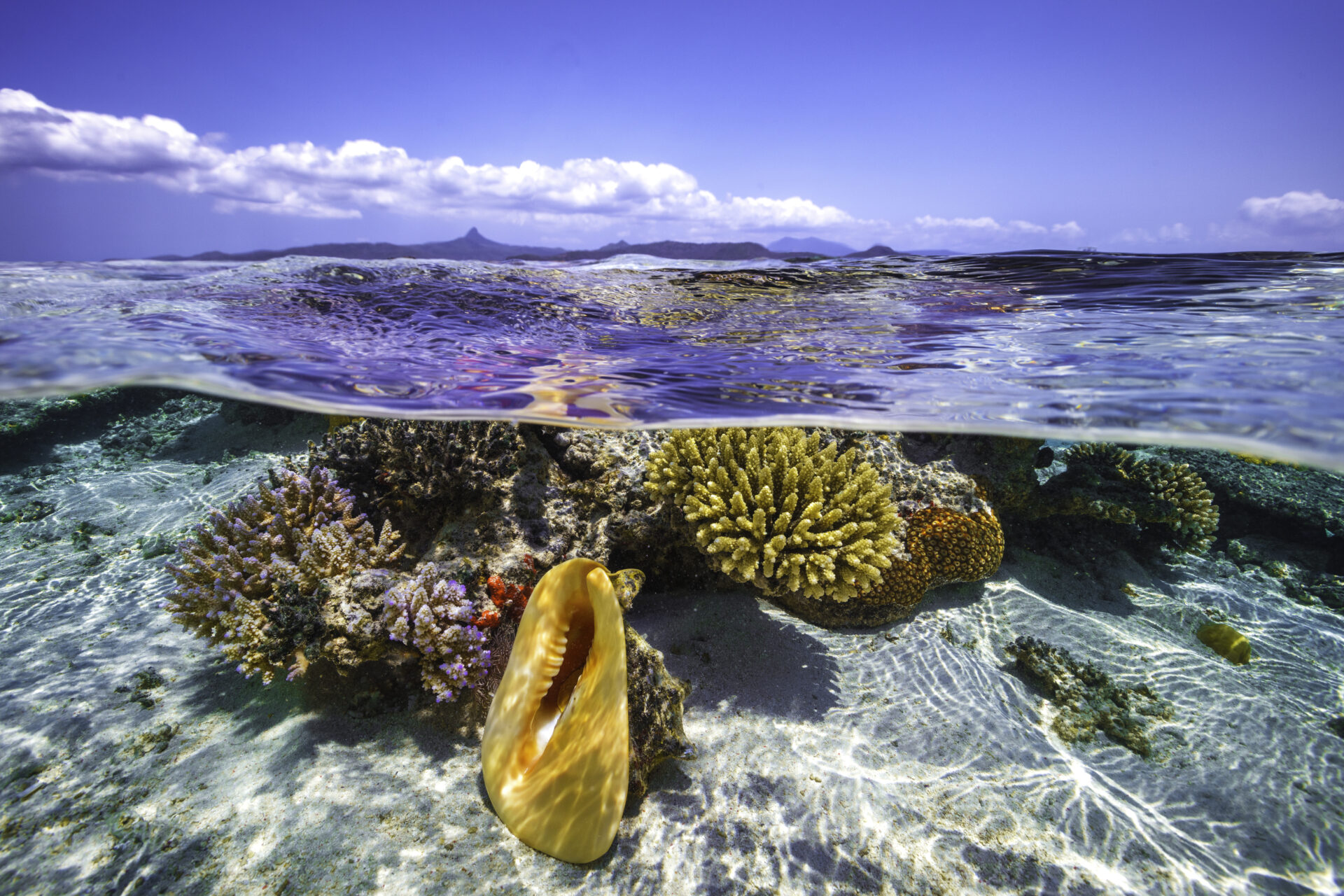
The findings reposition reefs and shallow-water carbonate systems as active modulators of Earth’s climate-buffering capacity, rather than simply passive recorders of environmental change. The study notes that the shifting balance between shallow- and deep-water carbonate burial also influenced marine plankton evolution and long-term ocean chemistry.
“These switches profoundly alter the biogeochemical equilibrium,” said co-lead author Dr. Laurent Husson of CNRS-UGA. “The big expansion of planktonic life happened exactly when shallow reefs were ‘turned down’ by the Earth system.” These dynamics reshaped the biological pump, influencing both ocean chemistry and climate recovery.
Though focused on deep time, the study offers stark lessons for the modern era. Today’s reefs are rapidly declining due to warming and ocean acidification. If history repeats itself, carbonate burial could shift from shallow reefs to the deep ocean – a process that could, in theory, help draw down atmospheric carbon.
However, the key organisms driving deep-sea carbonate burial – such as plankton and other calcifiers – are also increasingly threatened. Any stabilising effect would only come after severe and irreversible ecological losses.
“From our perspective on the past 250 million years, we know the Earth system will eventually recover from the massive carbon disruption we are now entering,” said Salles. “But this recovery will not happen on human timescales. Geological recovery takes thousands to hundreds of thousands of years.”


"*" indicates required fields
Printed editions
Current issue
Back issues


Enjoy so much more from Oceanographic Magazine by becoming a subscriber.
A range of subscription options are available.
