Drones take the pulse of dolphins in breakthrough health monitoring study
Researchers from Flinders University have shown that thermal drones can accurately measure dolphin surface temperature and breathing rates, offering a reliable, non-invasive tool to monitor dolphin health and support conservation in managed and wild settings.
Australia’s iconic dolphin populations are under increasing pressure as environmental change and human activity reshape coastal ecosystems. Against this backdrop, scientists are turning to new technologies that can assess animal health without disturbance – an essential step for effective conservation and management.
In a study published in the Journal of Thermal Biology, marine mammal researchers from Flinders University have demonstrated that drones equipped with thermal cameras can accurately measure dolphin surface temperature and respiration rates.
By analysing more than 40,000 drone-based thermal images, the team tested whether these airborne systems could provide reliable physiological data without the need for capture or invasive instruments.
“Monitoring the health of dolphins is important for assessing environmental impacts and supporting conservation, but because they spend most of their lives underwater traditional health checks often require capture, restraint or invasive probes, which can be logistically challenging and potentially stressful for the animals,” said PhD candidate Charlie White, from the Cetacean Ecology, Behaviour and Evolution Lab (CEBEL) at Flinders University.
The researchers focused on identifying optimal flight conditions for collecting meaningful data. “At the optimal flight conditions – 10m to 15m directly overhead of a dolphin – we confirmed that the drone measurements were precise enough to detect biologically meaningful changes in surface temperature and respiration rate – two important indicators of physiological state and health.”

In other news


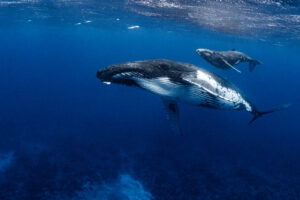

To validate the approach, the team worked with 14 bottlenose dolphins (Tursiops truncatus) under human care at Sea World on Queensland’s Gold Coast. Drones were flown at varying altitudes while thermal readings were compared with close-range temperature measurements taken at the surface.
“We found that the drone could reliably measure the heat coming from the dolphins’ blowholes, body surfaces and dorsal fins, as well as accurately count their respiration rate,” says Ms White, from the College of Science and Engineering at Flinders University.
Senior author Associate Professor Guido Parra says the results highlight the growing potential of drone-based infrared thermography as a non-invasive tool for wildlife health assessment.
“Our findings show that drone-based infrared thermography can accurately and reliably estimate dolphin vital signs under controlled conditions,” said Associate Professor Parra. “With continued refinement and testing under a wider range of wild conditions, the approach has the potential to support safer and less intrusive health monitoring of marine mammals in both managed care and the wild.”
The study, Using drone-based infrared thermography for monitoring vital signs in dolphins (2026), by Charlie White, Andrew P Colefax (Sci-Eye and Queensland Department of Environment, Tourism, Science and Innovation) and Guido J Parra, is published in the Journal of Thermal Biology.


"*" indicates required fields
Printed editions
Current issue
Back issues




Enjoy so much more from Oceanographic Magazine by becoming a subscriber.
A range of subscription options are available.
