Five-fold biodiversity increase recorded at Japan's Nankai Trough
A landmark deep-sea survey at Japan’s Nankai Trough reveals a five-fold increase in biodiversity, while a 2025 Ocean Census expedition also uncovered dozens of new species across previously unexplored seamount ecosystems.
A landmark deep-sea survey of Japan’s Nankai Trough has revealed a five-fold increase in known biodiversity, highlighting the ecological richness of one of the country’s most geologically active marine regions.
The discovery forms part of a wider international mission led by the Nippon Foundation and the Nekton Ocean Census in partnership with the Japan Agency for Marine-Earth Science and Technology (JAMSTEC).
The June 2025 expedition ultimately confirmed 38 new species and identified a further 28 potential new species across two of Japan’s most understudied deep-sea environments: the Nankai Trough and the Shichiyo Seamount Chain.
“The discoveries made in the Nankai Trough and the Shichiyo Seamount Chain remind us how little of our ocean has truly been explored. By supporting missions like this, The Nippon Foundation is helping to open a new frontier of knowledge for Japan and for humanity. Each new species discovery is a step toward understanding, valuing, and ultimately safeguarding our shared ocean,” said Mitsuyuki Unno, Executive Director of The Nippon Foundation
Located around 500–600 kilometres southwest of Tokyo, the Nankai Trough hosts cold seep ecosystems where methane-rich fluids emerge from the seabed, supporting specialised deep-sea communities. A new study led by JAMSTEC researcher Chong Chen and published in the journal Ecosphere documents the most comprehensive biological survey of the region ever undertaken.
Prior to the expedition, just 14 animal species had been recorded from these cold seep habitats. The new research documents 80 seep-associated species, representing a five-fold increase in known biodiversity.
The survey recorded 33 molluscs, including snails, clams, and a glisten-worm; 23 annelids, including lugworms; 11 arthropods, such as crabs, shrimp, and amphipods; five nemerteans (or ribbon worms); four echinoderms, including sea stars, brittle stars, and sea cucumbers; three cnidarians, including zoanthids, anemones, and hydroids; and one bryozoan.
The findings also include multiple range extensions, new national records, and previously unknown species associations, demonstrating that the Nankai Trough hosts far richer biodiversity than previously understood.

In other news

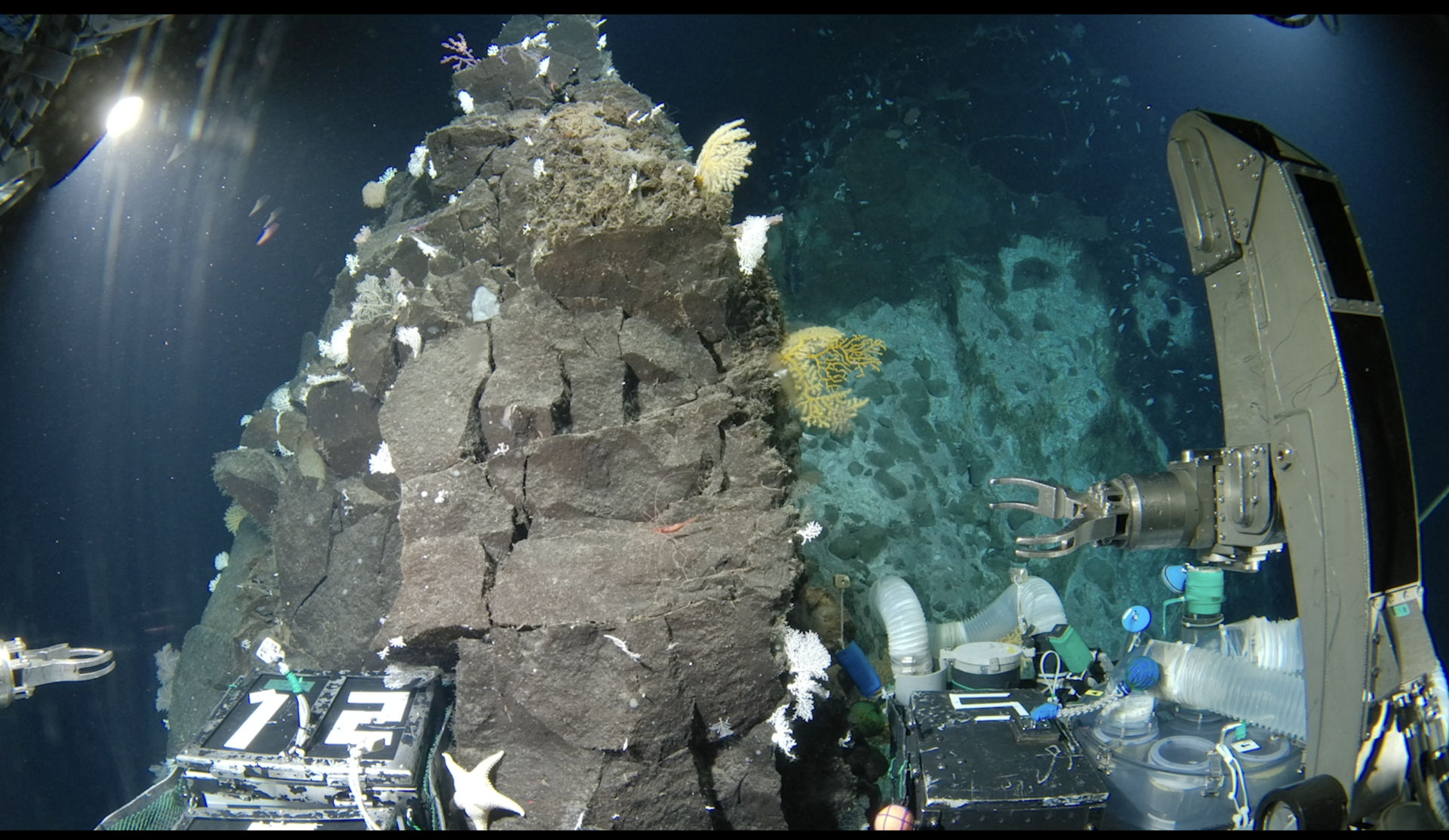
The discoveries stem from the June 2025 Ocean Census expedition, conducted aboard JAMSTEC’s research vessel Yokosuka. Scientists used the renowned Shinkai 6500 manned submersible to conduct deep-sea dives across the study regions.
In total, researchers collected more than 528 specimens, which were catalogued, imaged, and preserved for morphological and molecular analysis.
In October 2025, taxonomists from Japan and around the world gathered at JAMSTEC headquarters in Yokosuka for a dedicated Species Discovery Workshop. There they confirmed the newly discovered and potentially new species and coordinated the next stages of scientific publication.
“This is about Japan leading global ocean science,” said Dr Akinori Yabuki, Principal Investigator. “Deep-sea discovery requires long-term commitment and world-class technology, and Japan is one of the few nations that are uniquely positioned to drive this work.”
Beyond the Nankai Trough, the expedition also explored the remote Shichiyo Seamount Chain, a series of submerged volcanic peaks located 500–700 kilometres southeast of Tokyo. Many of these offshore mountains had remained largely unexplored biologically prior to the 2025 mission.
Dives conducted using the Shinkai 6500 revealed diverse ecosystems, including coral gardens and seafloor habitats densely populated with sponges.
One study, led by Naoto Jimi and published in the Zoological Journal of the Linnean Society, describes two newly identified species of polychaete worms living symbiotically within a single glass sponge: Dalhousiella yabukii and Leocratides watanabeae.
Glass sponges build intricate skeletons from silica – the same material used to make glass – forming rigid lattice-like structures that create protected internal cavities for other organisms. For the worms living inside them, the structure functions like a “glass castle”.
Despite sharing the same host sponge, researchers found that the worms’ symbiotic lifestyles appear to have evolved independently.
The Shichiyo dives also revealed five new species of squat lobsters, including members of the deep-sea genus Munidopsis, along with newly observed octocorals, nemerteans, amphipods, gastropods and kinorhynchs. Several species were also recorded in Japanese waters for the first time.
Together, the findings highlight both the Nankai Trough and the Shichiyo Seamount Chain as regions of significant scientific interest – offering new insight into deep-sea ecosystems that have remained largely hidden until now.


"*" indicates required fields
Printed editions
Current issue
Back issues
Enjoy so much more from Oceanographic Magazine by becoming a subscriber.
A range of subscription options are available.
