Global declines in migratory species frame urgent talks at CoP15
At CMS CoP15, nations confront accelerating migratory species declines, with new protections proposed for species including the giant otter to drive coordinated global conservation action.
As evidence mounts that migratory species are declining at an accelerating rate worldwide, governments gathered in Campo Grande, Brazil for CoP15 discussions this week are faced with growing pressure to deliver coordinated international action.
A recent report from the Convention on the Conservation of Migratory Species of Wild Animals has underscored the scale of the crisis, finding that 49 per cent of migratory species populations are now in decline – up from 44 per cent just two years ago.
Meanwhile, nearly a quarter of species face a global risk of extinction.
Scientists have attributed these trends to intensifying habitat loss and fragmentation, overexploitation, and pollution – pressures that are increasingly transcending national borders.
Against this backdrop, 42 species proposals are under review at the summit, spanning a wide range of ecologically significant wildlife – from marine predators such as hammerhead sharks, to migratory birds including the snowy owl, and large terrestrial mammals such as cheetahs and the striped hyena. Freshwater species are also prominent, including the giant otter and surubim, a large Amazonian fish.
Brazil’s Minister of Environment and Climate Change, Marina Silva, emphasised the transboundary nature of the challenge facing governments at the summit. “Species are not governed within fixed territories – they operate in flows,” she said. “Without cooperation and partnership, it becomes very difficult to protect both the species and their habitats.”
Highlighting the broader ecological significance of migratory wildlife, Silva added: “Migratory species are also bioindicators. They show us how vulnerable or preserved different regions are in supporting these ecological flows.”

In other news




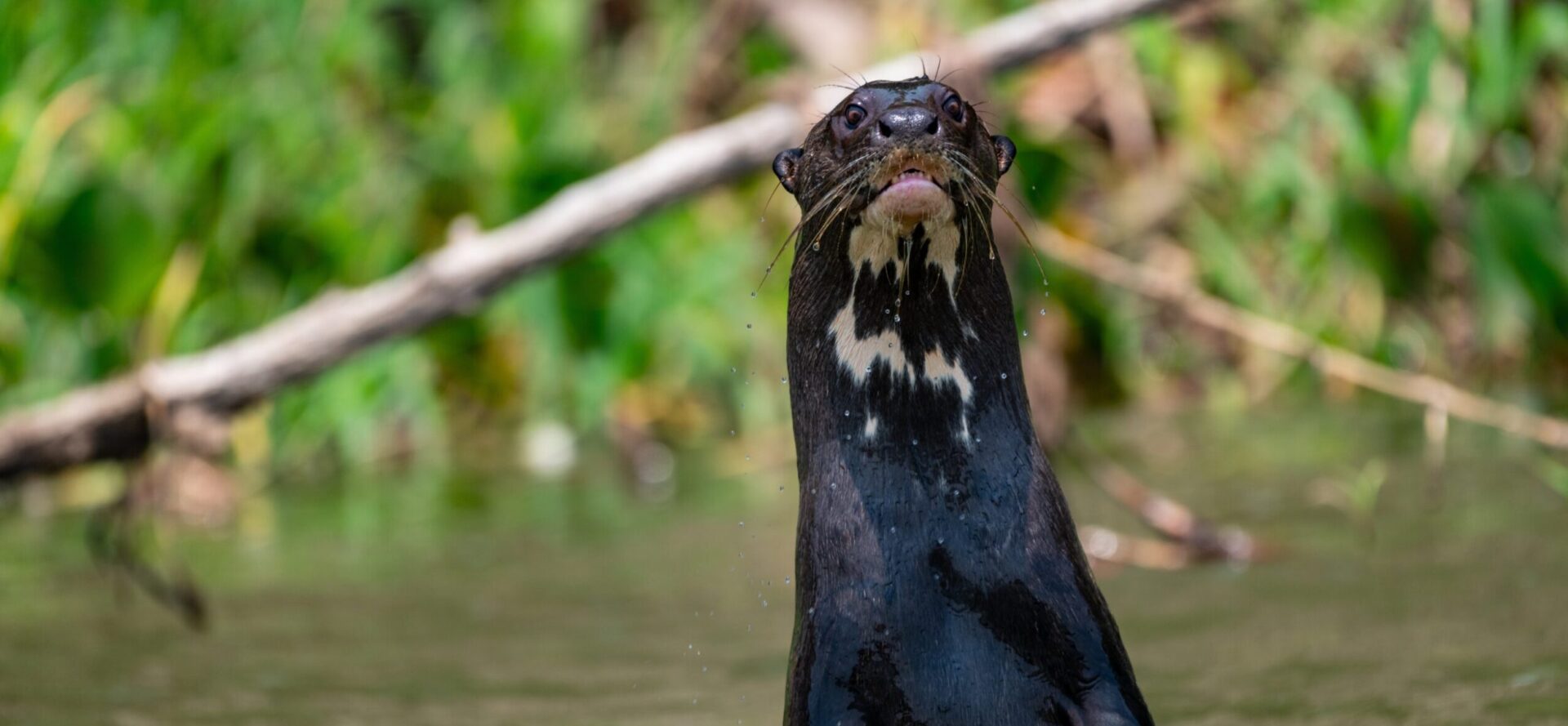
Among the species under discussion, the giant otter has emerged as a flagship case illustrating the broader challenges facing migratory and wide-ranging species. The Wildlife Conservation Society (WCS) is supporting a proposal which would list the species on both Appendix I and Appendix II of CMS – granting it the highest level of protection while strengthening mechanisms for cross-border conservation.
Often described as a sentinel of freshwater ecosystem health, the giant otter depends on vast, interconnected river systems spanning the Amazon, Orinoco, and Pantanal basins. Its decline mirrors wider global patterns, with pressures including habitat degradation, fragmentation, human disturbance, and the spread of illegal and artisanal gold mining – practices which contaminate waterways with mercury.
“Listing the giant otter on both Appendix I and Appendix II of CMS will send a clear signal that urgent, coordinated international action is needed to conserve this species and the freshwater ecosystems it depends on,” said Susan Lieberman, Vice President for International Policy at the Wildlife Conservation Society.
“Appendix I status requires strict protection and prohibits take, while Appendix II enables the cross-border collaboration that is essential for species that move through shared river systems.”
Across its range, the giant otter has already suffered significant population losses and now occupies only around 60 per cent of its historical distribution – an example of the range contractions increasingly seen among migratory species worldwide.
“Following decades of major range contraction due to illegal trade in skins, giant otters are now largely restricted to a few stronghold populations in the Amazon, Orinoco, and Pantanal biomes and many of these strongholds are transboundary across two or more countries,” said Rob Wallace, senior conservation scientist with the Wildlife Conservation Society (WCS) in Bolivia..
“Now, these very same strongholds are under threat from illegal gold mining, associated habitat loss, forest fires, climate change, and disturbance. Protecting this species requires protecting entire freshwater river systems – and that can only happen through coordinated action among countries that share these waters,” he added.
If adopted, the CMS listing would require range states to strengthen legal protections, improve monitoring, and report on conservation progress – steps seen as essential not only for the giant otter, but for reversing wider declines in migratory species. It would also support broader efforts to ensure that any use of migratory wildlife remains legal, sustainable, and safe.
As negotiations continue in Campo Grande, the outcome for the giant otter – and the dozens of other species under review – will serve as a barometer of global ambition. With nearly half of migratory species already in decline, conservationists warn that the decisions taken here could prove pivotal in determining whether these shared natural assets can be safeguarded for the future.


"*" indicates required fields
Printed editions
Current issue
Back issues
Enjoy so much more from Oceanographic Magazine by becoming a subscriber.
A range of subscription options are available.
