No code, no permits: ISA deep-sea mining talks end in stalemate
International Seabed Authority negotiations concluded with no mining approved and no Mining Code adopted. A growing coalition of 40 nations is backing a moratorium, while a compliance inquiry threatens a key contractor's contract.
The latest session of the International Seabed Authority (ISA) Council has drawn to a close with none of the outcomes the deep-sea mining industry had hoped for. No mining was approved, and the long-delayed Mining Code – the regulatory rulebook that would need to be in place before any commercial extraction could legally proceed – remains both unfinished and deeply contested.
The two-week negotiations exposed unresolved disagreements across a range of issues, from environmental safeguards and liability frameworks, to inspection protocols, compliance mechanisms, and benefit-sharing arrangements. France, Germany, Brazil, Mexico, Costa Rica, Palau, and South Africa (speaking on behalf of the Africa Group) all raised what they described as fundamental scientific, environmental, and governance gaps.
Several governments went further, insisting that all outstanding issues must be fully resolved before any mining could even be considered.
“This meeting once again exposed the scale of the unknowns surrounding deep-sea mining and why a moratorium is the credible way forward. Pushing ahead regardless is reckless, and risks sacrificing the ocean, and humanity’s common heritage, for short-term commercial interests,” said Sofia Tsenikli, global campaign director of the Deep Sea Conservation Coalition (DSCC).
For campaigners at the DSCC, the outcome is unambiguously positive. Each ISA session without an adopted Mining Code is, in effect, a reprieve for the ecosystems of the abyssal plain – environments that scientists warn could take millions of years to recover from large-scale industrial disturbance.
The session also brought into sharp focus a separate and potentially more urgent controversy – the question of unilateral mining. Concerns have grown in recent months around attempts by certain actors to pursue deep-sea mining outside the international framework – bypassing the ISA and seeking authorisation through national processes instead. Central to those concerns is Nauru Ocean Resources Inc. (NORI), a subsidiary of The Metals Company (TMC).
In a significant development, Member States supported the ISA’s Legal and Technical Commission (LTC) in pursuing an inquiry and publishing a preliminary report into contractor non-compliance. That report indicated that an ISA contractor may be in breach of its contract, including obligations to act in accordance with the multilateral framework established under the United Nations Convention on the Law of the Sea (UNCLOS).
The Council adopted a decision calling on the LTC to continue its inquiry, with a full report expected at the July meeting – the same session at which NORI’s exploration contract is due for extension.
Emma Wilson, policy lead at the DSCC, said: “The ISA’s response to threats of unilateral mining is a critical test for the Authority. Contractors cannot hold exploration contracts under the international system while simultaneously undermining it by seeking to mine unilaterally. If breaches are confirmed, contracts must be terminated.”

In other news


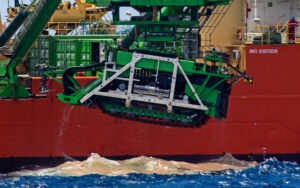



Meanwhile, concern is spreading beyond the ISA itself. The Netherlands and Switzerland have both seen questions raised domestically about whether companies and nationals in their jurisdictions could become entangled in TMC’s USA-based operations.
“The LTC inquiry goes directly to the ISA’s core responsibility to the deep seabed as the common heritage of humankind,” said Duncan Currie, Legal Advisor at DSCC. “ If companies attempt to bypass the Authority by pursuing mining through a unilateral national process, it would constitute an unauthorised appropriation of the global commons under the United Nations Convention on the Law of the Sea.”
What happens next now hinges significantly on outcomes this July. If the LTC confirms that a contractor has violated its obligations, the pressure on the ISA to act – including potentially terminating contracts – will be substantial. For the moratorium movement, which has now gathered support from 40 countries alongside major businesses, financial institutions, human rights experts, Indigenous leaders, scientists, fishing associations, and civil society groups worldwide, the political momentum appears to be shifting.
Matthew Gianni, co-founder and political advisor at DSCC, added: “Deep-sea mining would open vast areas of the ocean floor to large scale and likely irreversible damage. States have clear obligations under international law to protect the marine environment, and must now ensure that their nationals and companies do not engage in unilateral deep-sea mining activities.”
The deep seabed remains one of the least understood ecosystems on Earth. This week’s ISA session simply confirms that the scientific, legal, and political picture is far from settled, yet campaigners take heart that a growing share of the international community believes that extracting its mineral wealth without clarity would be a gamble the ocean cannot afford.


"*" indicates required fields
Printed editions
Current issue
Back issues


Enjoy so much more from Oceanographic Magazine by becoming a subscriber.
A range of subscription options are available.
