One in five gray whales entering San Francisco Bay die there
Gray whales displaced by climate change are foraging in San Francisco Bay's busy shipping waters - and new research reveals that nearly one in five individuals identified there did not survive.

Scientists tracking gray whales in San Francisco Bay have found that nearly one in five individuals identified there died in its waters after becoming victims of vessel strikes, starvation, and a migration route that was never meant to pass through one of the world’s busiest ports.
Gray whales have long made one of the animal kingdom’s great migrations – journeying between the rich feeding grounds of the Arctic and the warm lagoons of Baja California. San Francisco Bay was never part of that route. Until now.
Since 2018, scientists have been documenting a troubling new phenomenon: gray whales entering the busy, boat-filled waters of San Francisco Bay in search of food. What drew them there – hunger, desperation, a prey base collapsing under the weight of a warming ocean – is becoming clearer. But it’s what happens to them once they arrive that makes for worse reading.
A new study published in Frontiers in Marine Science, led by researchers at the Marine Mammal Center and the California Academy of Sciences, has pieced together seven years of survey data, citizen science photographs and necropsy records to build the most detailed picture yet of these so-called ‘Bay Grays’. Between 2018 and 2025, scientists identified 114 individual whales entering the bay. Of those, 21 were later found dead in the surrounding area – a minimum mortality rate of 18%. Just four individuals were recorded returning in more than one year.
The Golden Gate Strait, through which every whale must pass to enter or exit the bay, is also one of the busiest maritime corridors on the US Pacific coast. Ferries, container ships, and recreational vessels funnel through the same narrow bottleneck, in conditions that make spotting a surfacing whale far from straightforward.
“Gray whales have a low profile to the water when they surface, and this makes them difficult to see in conditions like fog which are common to San Francisco Bay,” explained Josephine Slaathaug of Sonoma State University, lead author of the study.
“Additionally, San Francisco Bay is a highly trafficked waterway, and the Golden Gate Strait serves as a bottleneck through which all traffic and whales must enter and exit.”

In other news

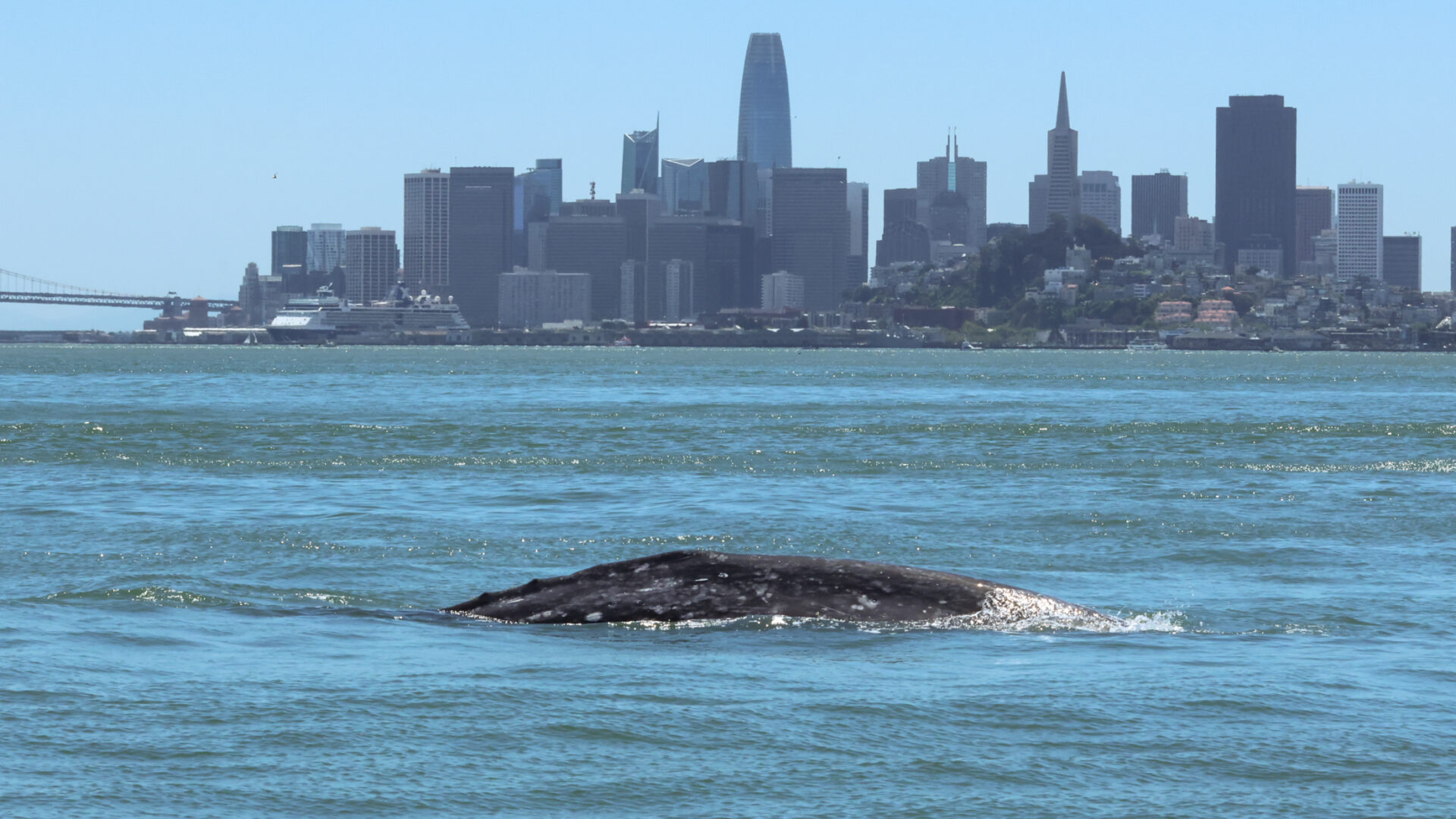
Gray whales rely almost exclusively on prey in their Arctic feeding grounds, making them acutely vulnerable to the climate-driven shifts reshaping those ecosystems. According to the National Oceanic and Atmospheric Administration, the population has dropped by more than 50% since 2016. On top of this, very few calves are being spotted while emaciated whales have been recorded foraging in habitats they would not ordinarily use.
Of the 70 gray whales found dead in the local area between 2018 and 2025, 30 showed injuries consistent with vessel strike. Many others died of malnutrition. It’s argued that the two causes may be more connected than they first appear: a starving whale is a slower, less responsive whale, and therefore less capable of detecting and avoiding an oncoming hull.
“At least 18% of the individuals identified in San Francisco Bay later died in the area,” said Bekah Lane of the Center for Coastal Studies, co-author of the study. “Our broader analysis of local strandings both inside and outside San Francisco Bay found that over 40% of these whales died of trauma from vessels.”
The scale of the problem is growing. In 2025 alone, 36 whales entered the bay – sometimes more than ten at a time. Researchers are calling for dedicated monitoring programmes, expanded necropsy capacity, and a serious assessment of whether commercial vessel routes and speed restrictions could reduce the toll.
“In San Francisco Bay, the biggest threat to these whales is vessel traffic,” said Lane. “Continued monitoring will help illuminate their distribution patterns and behaviours while within the Bay, which can impact risk. Route changes and speed restrictions have been found to significantly reduce vessel strike mortality to large whales, and an assessment of risk can help identify the most effective strategies to protect these animals.”
For the scientists behind the study, the bay has become a window into a population attempting to adapt to a world now changing faster than evolution can follow.
“This study is our best analysis of the data we collected, but it’s important to consider that we do not have the full picture of each whale’s movements on a daily timescale,” said Slaathaug. “These results are an important piece of the larger puzzle of what is going on in the overall population as they attempt to adapt to climate change in real time.”


"*" indicates required fields
Printed editions
Current issue
Back issues



Enjoy so much more from Oceanographic Magazine by becoming a subscriber.
A range of subscription options are available.
