Scientists listen in on sperm whale communication with new tech
Scientists with Project CETI are using advanced bio-logging technology and artificial intelligence to record and analyse sperm whale communication, capturing high-fidelity audio and behavioural data to better understand how these deep-diving cetaceans communicate.
A new generation of ocean research technology is enabling scientists to listen closer than ever to sperm whale communication, leading one study to conclude the species may use its own form of alphabet, while another reports the use of vowel-like sounds and diphthongs – features that mirror elements of human speech.
While these suggestions might still be up for debate, by deploying advanced bio-logging devices capable of recording high-fidelity audio alongside behavioural data, researchers are now certainly beginning to unravel how these deep-diving cetaceans communicate with one another.
Project CETI (the Cetacean Translation Initiative) is a nonprofit, multi-institutional effort aiming to decode communication between sperm whales using artificial intelligence and machine learning. At the heart of this effort is a newly developed bio-logger – an advanced listening device engineered by researchers at Harvard’s John A. Paulson School of Engineering and Applied Sciences (SEAS) and collaborators – which attaches directly to whales to capture high-fidelity audio and contextual data during their deep-sea dives.
The bio-logger records whale vocalisations known as codas, which sound to human ears like rhythmic clicking patterns, alongside environmental and behavioural information including depth, movement, and orientation. Crucially, the device has been explicitly designed to generate datasets suitable for machine-learning analysis, allowing researchers to identify communication structures and patterns beyond human perception.
The technology has already been deployed on sperm whales off the Caribbean coast of Dominica, where whales routinely dive to depths of more than a mile. Details of the device’s design and development have been published in PLOS One.
“When we were looking to decode the language of whales, a key value was to have the mics placed at the best spots, for the best audio recording possible,” said Daniel Vogt, lead Harvard SEAS engineer for Project CETI and first author of the bio-logger paper. “We looked at the state of the art, what was available out there, and there was nothing that really matched what we were looking for. So we made our own.”

In other news



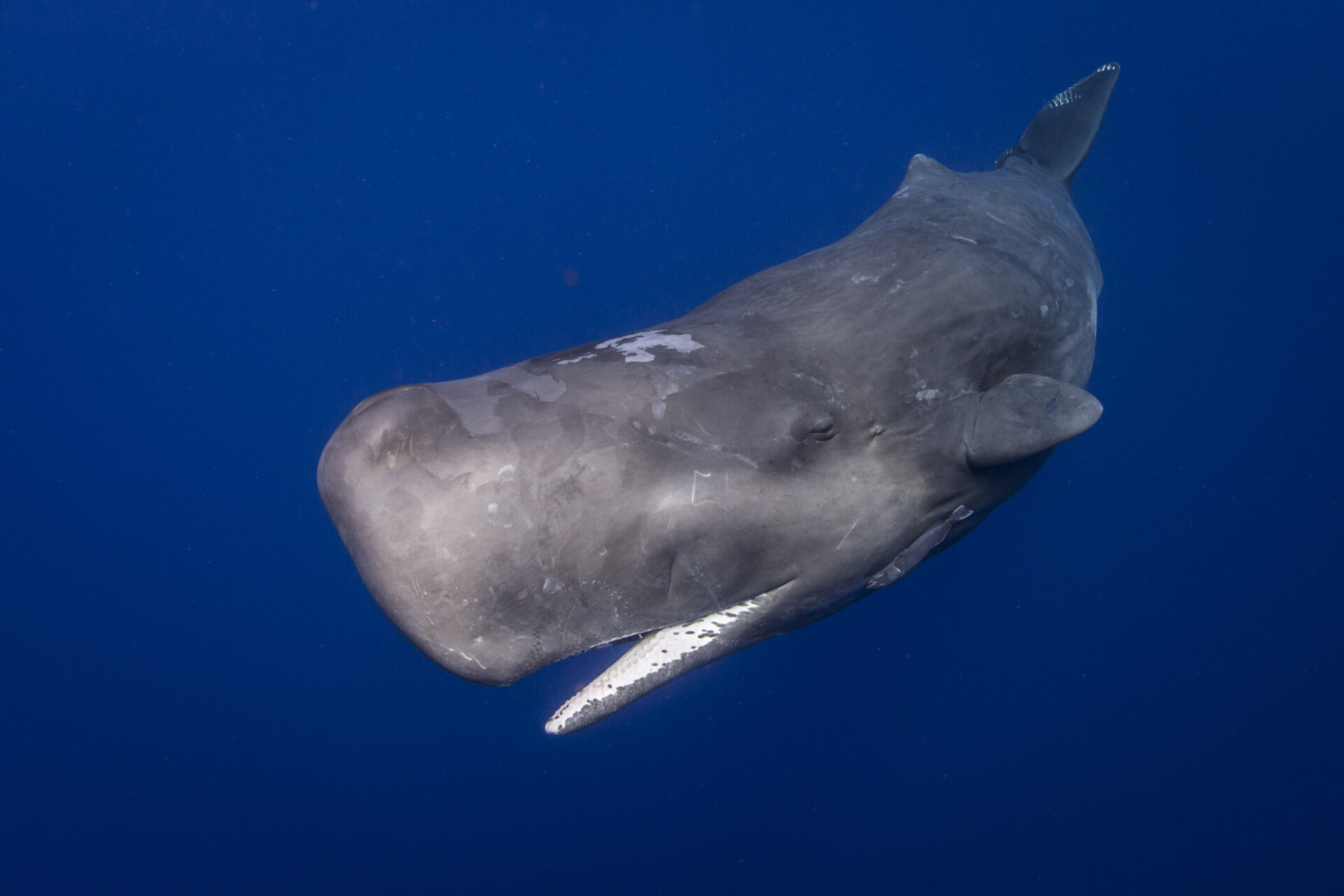
The non-invasive bio-logger attaches to whales using suction cups developed by Harvard robotics researchers, inspired by the anatomy of clingfish. Once deployed, the device uses three synchronised hydrophones to record sound from multiple whales at varying distances, alongside GPS data and sensors measuring depth, temperature, light, and movement. Designed to withstand long, deep dives, the device operates for up to 16 hours and captures higher-frequency sounds beyond the range of human hearing.
Unlike earlier whale-tagging technologies – which primarily captured vocalisations – the CETI bio-logger gathers a richer array of data and can distinguish between individual whales by analysing the origin of recorded sounds. This enables researchers not just to listen, but to interpret communication in context.
Early findings suggest the approach is working. One study using data collected by the bio-loggers indicates that sperm whales may use a form of alphabet, while another reports vowel-like sounds and diphthongs – features that mirror elements of human speech.
The entire bio-logger system, including hardware designs and software, has been made open-source. Researchers hope this will accelerate innovation across marine science and beyond.
“This really democratises and opens up the field of marine science, to biologists across the world,” said David Gruber, founder and lead scientist of Project CETI and a National Geographic Society Program.
Founded in 2020, Project CETI has grown into the world’s largest interspecies communication initiative, bringing together eight institutions and around 50 scientists working across artificial intelligence, linguistics, cryptography, marine biology, and robotics. Harvard researchers play key roles across the project, including robotics, linguistics, and autonomous drone systems used to locate whales and predict surfacing behaviour for tagging.
Adhering a recording device to a free-swimming sperm whale presents a series of technical and ethical challenges – from deploying tags via drones without disturbing the animals, to ensuring devices remain attached in rough ocean conditions, to retrieving and interpreting vast datasets. Project CETI researchers report progress across each of these fronts.
Looking ahead, the team believes the technology could have applications far beyond sperm whales.
“This technology could now be expanded to the millions of other species we share the planet with” Gruber said. “I see this as a massive moment, because the field of bioacoustics and artificial Intelligence can now vastly expand.”
By refining how scientists listen to the ocean’s largest communicators, Project CETI hopes not only to understand what whales are saying – but one day, to answer back.


"*" indicates required fields
Printed editions
Current issue
Back issues

Back Issues
Issue 43 Sir David Attenborough’s ‘Ocean’


Back Issues
Issue 41 Holdfast to the canopy
Enjoy so much more from Oceanographic Magazine by becoming a subscriber.
A range of subscription options are available.
