Tour boats are routinely violating whale shark protections in Mexico
In the turquoise expanse off Mexico’s Yucatán coast, one of the planet’s most celebrated whale shark aggregation sites is revealing troubling signs of strain. A new study led by University of South Florida biologist Lucas Griffin has found that tour boats and swimmers are routinely violating Mexico’s whale shark tourism rules – even when the waters are far less crowded than regulations permit.
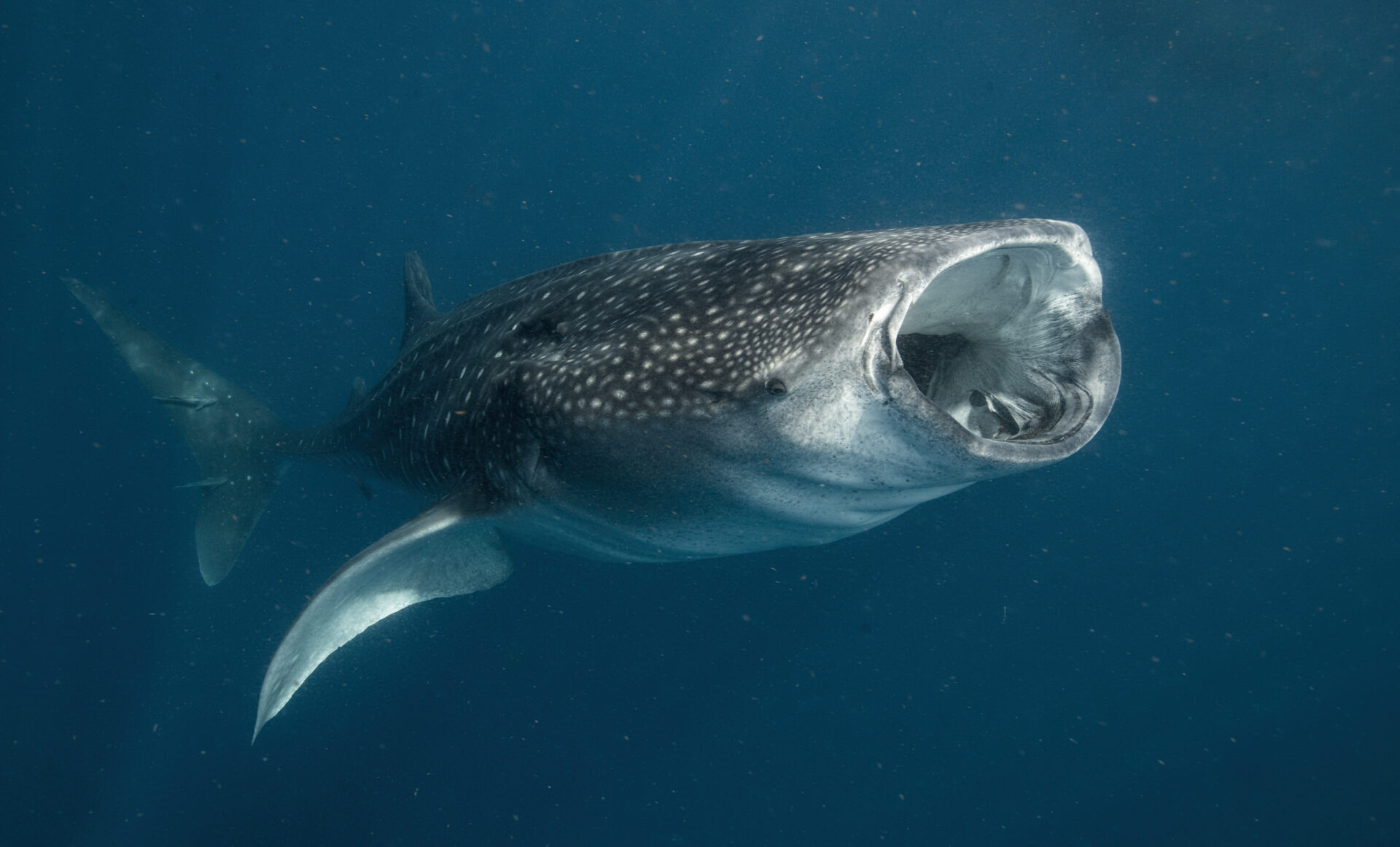
Drawing on drone observations from 2016 and 2022, the research paints a portrait of a booming wildlife tourism hotspot struggling to keep pace with its own popularity. The findings, now published in the Journal of Sustainable Tourism, suggest that the world’s largest fish – these docile, filter-feeding giants that can reach nearly 60 feet in length – may be absorbing the cost of ‘unchecked human enthusiasm.’
Griffin’s interest in the issue was sparked years earlier during a family trip, when he and his father, University of Massachusetts Amherst biologist Curtice Griffin, witnessed ‘chaotic tour operations’ firsthand. “We were on a whale shark tour and watched multiple groups of snorkelers converging on a single whale shark,” he said. “It was chaotic, and it was clear something wasn’t working.”
That moment launched a formal investigation into peak tourism weeks at El Azul, a 400-square-kilometre whale shark hotspot. From above, drones captured hundreds of violations, such as boats steering too close, swimmers touching animals, and groups crowding beyond the distances required by law. Regulations at the time limited each shark to one boat and only two swimmers plus a guide, all of whom were required to stay at least five metres from a shark’s head and tail.
“We knew it was already pretty hectic, so we knew that our results were going to come back showing that,” Griffin said.
The expected trend held – more boats and more visitors meant more violations. But one result caught the team off guard. “What we weren’t expecting was that when there were a lot of whale sharks, infractions actually continued to increase,” he said. “That’s a bit counter to what we would think.”
As dozens of sharks surfaced, vessels spread out and pursued separate animals, a pattern that should have eased pressure. Instead, the study found, it diluted accountability. “When there are a lot of whale sharks around, no one is really watching one another,” Griffin said. “Every boat ends up with its own shark to do as it pleases, and any sense of peer pressure or mutual enforcement just breaks down.”
In other news

The pattern persisted even when boat numbers fell far short of Mexico’s 120-vessel cap. Drone footage recorded a maximum of 82 boats in 2016 and 68 in 2022, yet infractions remained constant. Patrol boats did little to stem the problem; with vessels dispersed over such a large area, enforcement officers struggled to maintain oversight.
Most swimmers often failed to realise they were being monitored at all.
“If we’re disturbing them from their feeding behaviours, that could be energetically expensive,” Griffin said. “You’ll also see a handful of prop scars on these whale sharks from being run over.”
Large commercial ships transiting the region also pose a collision risk, though researchers are still assessing its full impact.
For coastal communities, whale sharks are more than seasonal visitors – they are economic lifelines and cultural icons, emblazoned on murals, sculptures, and even local nicknames. With tourism demand soaring since the early 2000s, the study’s authors stress that regulatory reform must go hand-in-hand with community partnership.
“Certainly more enforcement, and more continuous enforcement, would help,” Griffin said. “But it really comes down to self-regulation within the guiding community.”
Training for boat captains and guides is already mandatory, but Griffin has argued that there is room for improvement. “Clearly maybe some more involvement needs to be taking place.”
He has also argued that the findings illuminate a global blind spot in wildlife tourism, which is frequently marketed as environmentally benign. “When you really break it down, is it actually harming the species and can it be called ecotourism?” he asked.
The question extends across marine and terrestrial attractions alike, from manta ray swim encounters to sea turtle tours and elephant parks. It’s his belief that any solutions must preserve both wildlife health and the economic well-being of communities that depend on tourism.

Co-author Rafael de la Parra, a conservation scientist and veteran whale shark guide, has underscored the shared responsibility among operators and visitors. Rules for safe encounters are widely published, and operators must complete government-approved training covering both ecology and regulations. Yet compliance ultimately hinges on behaviour at sea.
“The key is choosing responsible operators who clearly explain and actively enforce current guidelines,” de la Parra said. “More broadly, tourists should think of themselves as stewards of these animals. Maintaining your distance and respecting their space ensures these encounters remain sustainable for future generations.”
He recommends that visitors ask operators in advance about group sizes and distance-keeping protocols.
Griffin sees promise in collaborative, tech-supported approaches. Some Mexican regions have successfully adopted co-developed codes of conduct and operator-collected data to improve compliance. Local agencies in the whale shark zone are already testing drone-based monitoring, but sustained progress will require resources.
Local officials, he said, “are doing all the right steps and working towards that, including drones to help monitor activity. But it’s challenging because they simply don’t have the financial resources to fully support these initiatives.”
Next, the team plans to deploy accelerometer tags to quantify how disturbances affect whale sharks’ energy use – a key step in assessing long-term health impacts. “Can we quantify those actual disturbance metrics now?” Griffin said. “We haven’t solved that piece yet.”
The project was conducted in collaboration with the University of Massachusetts Amherst and conservation scientist Rafael de la Parra of Ch’ooj Ajauil AC. Additional co-authors include Hoa T.T. Ninh, Curtice R. Griffin, Andy J. Danylchuk, and Kimberly L. Ovitz.


"*" indicates required fields
Printed editions
Current issue
Back issues
Enjoy so much more from Oceanographic Magazine by becoming a subscriber.
A range of subscription options are available.